
Everything You Need to Know About Tooth Extraction and Dentures
What You Need to Know About Tooth Extraction and Dentures
Tooth extraction and dentures go hand in hand for millions of Americans facing significant tooth loss. Here's a quick overview of how the process works:
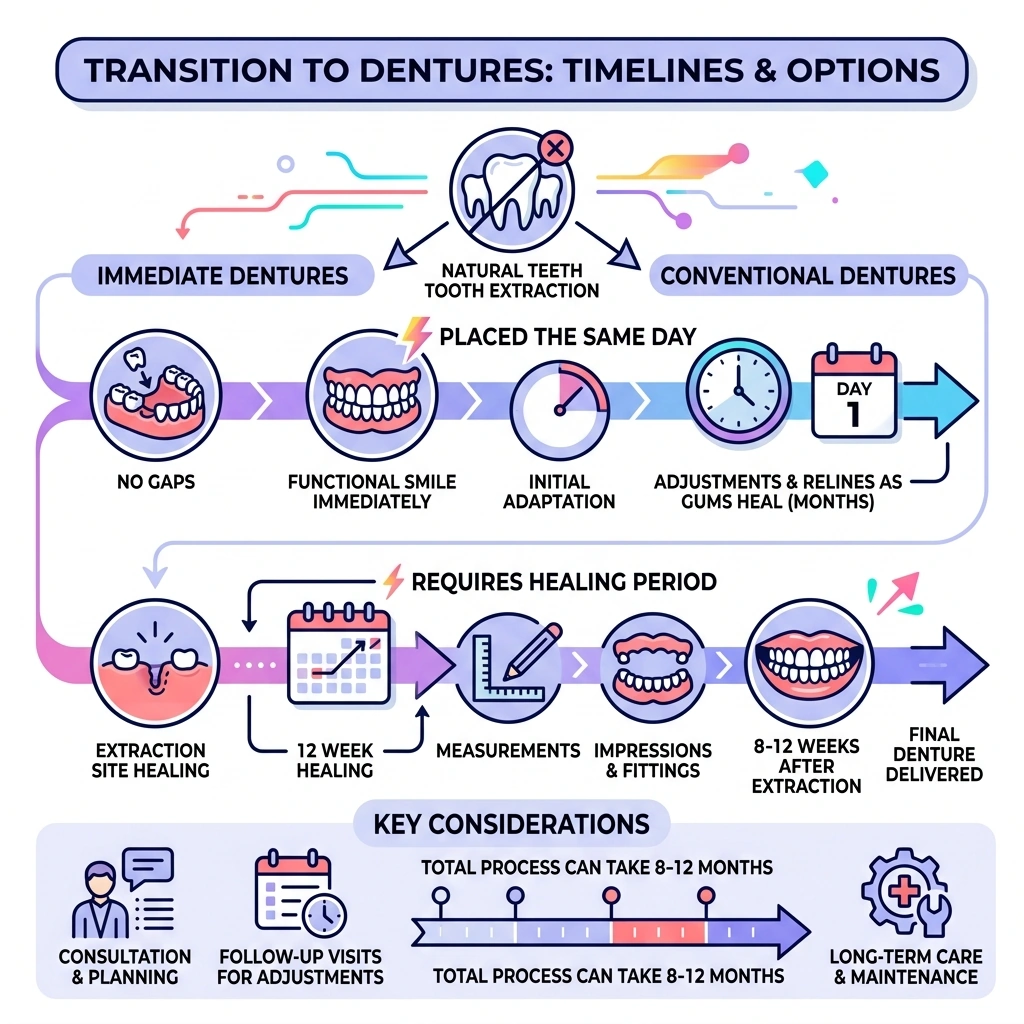
- Immediate dentures are placed the same day as your extractions — no gap in your smile
- Conventional dentures are made after your gums heal, typically 8–12 weeks after extraction
- Either way, you will have a path to a functional, natural-looking smile
- The full process — from extraction to final dentures — can take 8–12 months
- Multiple follow-up visits for adjustments are normal and expected
Losing teeth is more common than most people realize. Nearly 10% of adults 65 and older have lost all their teeth, and roughly 36 million Americans currently wear complete dentures. If you're facing extractions and wondering what comes next, you're not alone — and you have real options.
The transition from natural teeth to dentures can feel overwhelming. There's the fear of pain, the worry about appearance, and the uncertainty about how long the whole process takes.
The good news: modern dentistry has made this transition more manageable than ever. Whether you need one tooth removed or a full-mouth extraction, understanding your choices ahead of time makes a big difference.
This guide walks you through everything — from choosing the right type of denture, to what to expect the day of surgery, to long-term care and maintenance.
Tooth extraction and dentures terms to know:
Choosing Between Immediate and Conventional Tooth Extraction and Dentures
When we talk about tooth extraction and dentures, the most common question we hear at Logan Dental Care is: "How long will I have to go without teeth?" The answer depends entirely on which type of denture you choose.
Immediate Dentures: The "Same-Day" Smile
Immediate dentures (often called temporary dentures) are fabricated before your teeth are even pulled. On the day of your surgery, we extract the teeth and immediately seat the dentures.
Pros:
- You never have to appear in public without teeth.
- The denture acts as a "bandage," protecting the extraction sites and helping to control bleeding.
- You can begin the process of learning to speak and eat with dentures right away.
Cons:
- Because they are made while your teeth are still in your mouth, the fit is an "educated guess."
- As your gums and bone heal and shrink, the denture will become loose, requiring frequent relines.
Conventional Dentures: The Patient Approach
Conventional dentures are made only after the gum tissue has fully healed and the jawbone has stabilized. This usually takes 8 to 12 weeks after the extractions.
Pros:
- A much more accurate and comfortable fit from day one.
- Fewer adjustments are typically needed compared to immediate options.
Cons:
- You must go without teeth for several months during the healing period.
Immediate dentures are placed the same day your teeth are removed, so there is no waiting period and no gap in your smile. The first fit is estimated, which means they may feel loose as your gums heal. They often cost a bit more because temporary relines and adjustments are usually needed.
Conventional dentures are made after your gums have healed, usually after 8-12 weeks. That means you may go without teeth during healing, but the final fit is typically more accurate because the denture is molded to your healed gums. The adjustment period is often easier.
As the jawbone undergoes a process called resorption (where the bone shrinks because the tooth roots are no longer there), your Dentures will naturally lose their snug fit. This is why immediate dentures require a professional reline or even a replacement after 3 to 6 months. For more details on the financial side of this transition, check out our Dentures Cost Complete Guide.
The Step-by-Step Procedure for Same-Day Dentures
The journey toward a new smile involves several stages of preparation. We don't just "pull and pray"—every step is meticulously planned to ensure your False Teeth look as natural as possible.

- Impressions and Molds: Before any teeth are removed, we take detailed impressions of your existing teeth and jaw. This allows the dental lab to create a model of your mouth.
- Bite Registration: We measure how your upper and lower jaws relate to each other so your new bite feels natural.
- Tooth Shade Selection: We work with you to pick a tooth color that matches your complexion and looks realistic.
- The Extraction Appointment: Using Tooth Extractions techniques designed for comfort, we remove the remaining teeth. Many patients choose sedation dentistry to help them relax during this 1-to-3-hour procedure.
- Immediate Insertion: Once the teeth are out, we place the pre-made dentures immediately. You’ll leave our office with a full set of teeth!
Preparing for Tooth Extraction and Dentures
Preparation starts weeks before the surgery. During your initial consultation, we perform a full oral health assessment and review your medical history. We’ll discuss whether a Root Canal vs Extraction is the right path for specific "borderline" teeth.
In some cases, we might recommend "preliminary extractions." This involves removing the back molars first and letting those areas heal for 4 to 8 weeks. This creates a stable foundation for the immediate denture to rest on when the front teeth are eventually removed.
Recovery and Healing: What to Expect After Surgery
The first few days after tooth extraction and dentures placement are the most critical. You aren't just healing from a surgery; you're also training your mouth to hold a foreign object.
The 24-Hour Rule
This is the most important instruction we give: Do not remove your dentures for the first 24 hours. Even if they feel tight or uncomfortable, leave them in. Your gums will swell significantly after extractions. If you take the dentures out, the swelling may prevent you from getting them back in for several days. The denture acts as a compression bandage to keep the swelling under control and protect the blood clots in the sockets.
Managing the First Week
- Swelling: Swelling usually peaks 3 to 4 days after surgery. Use ice packs (20 minutes on, 20 minutes off) during the first 48 hours to minimize this.
- Bleeding: Some oozing is normal for the first 24 to 72 hours. If you notice excessive bleeding, gently bite down on clean gauze.
- Diet: Stick to a liquid or soft food diet. Think smoothies, yogurt, and mashed potatoes. Avoid spicy foods or anything with seeds that could get stuck under the denture.
- Hygiene: Starting the day after surgery, you can gently rinse with warm salt water. Do not brush the extraction sites directly.
For a deeper dive into making this period easier, see our Tooth Extraction Recovery Tips. Once you transition to daily cleaning, our Denture Care Advice will help you keep your new smile sparkling.
Managing Pain After Tooth Extraction and Dentures
Pain is a valid concern, especially if you are getting all your teeth pulled at once. On a scale of 1 to 10, most patients report a pain level of 5 to 7 on the first day. By the end of the first week, this usually drops to a 2 or 4.
We provide specific instructions for Tooth Extractions Bellefontaine patients regarding medication. Usually, a combination of prescribed pain relievers and over-the-counter anti-inflammatories (like ibuprofen) does the trick.
Watch for Infection: While rare, keep an eye out for a fever, foul taste, or discharge from the gums. If you experience these, call us immediately. We’ll see you for a follow-up appointment about 24 hours after surgery to check the "bite" and make any necessary early adjustments.
Long-Term Adjustments and Maintenance
A denture that fits perfectly on day one will likely feel loose by month three. This isn't a flaw in the denture; it's a natural result of your body healing.
Gum and Bone Remodeling
Once your natural teeth are gone, the alveolar ridge (the part of the jawbone that held the teeth) begins to shrink. This process is most rapid in the first 6 months. As the bone recedes, the "pink" part of your denture will no longer sit flush against your gums.
Professional Relining
To fix a loose fit, we perform a "reline." We add new material to the underside of the denture to fill the gaps created by gum shrinkage. Most immediate denture wearers need at least one or two temporary relines before they are ready for a "hard" permanent reline or a new set of conventional dentures about 6 to 12 months later.
Adapting to Your New Smile
- Speech: You might notice a slight lisp or a "clicking" sound when you talk. Practice reading out loud in front of a mirror.
- Eating: Chewing takes practice. Try to chew on both sides of your mouth simultaneously to keep the denture from tipping.
- Adhesives: While we don't recommend adhesives for the first few weeks while the sockets are open, they can be a great tool later on for added stability.
If you only lost a few teeth, you might wonder Is Partial Denture for Top from Teeth Good Option. Partials often require less adjustment than full dentures because they use your remaining natural teeth for stability.
Modern Alternatives to Traditional Dentures
If the idea of "floating" dentures makes you nervous, you aren't stuck with traditional options. Modern technology has introduced "snap-in" and fixed options that feel much more like your original teeth.
Implant-Supported Overdentures
Instead of resting solely on your gums, these dentures snap onto dental implants (usually 2 to 4 per arch). This provides incredible stability. You won't have to worry about your teeth slipping while you eat or talk. Curious about the investment? Read our guide on How Much Do Snap-in Dentures Cost.
Fixed Partial Dentures and All-on-4
For those who want a permanent solution that doesn't come out at night, Fixed Partial Denture Options or All-on-4 treatments are the gold standard. These are screwed into implants and can only be removed by a dentist. They also help prevent bone loss by stimulating the jawbone, just like natural tooth roots do.
Frequently Asked Questions about Dentures
Can a dentist safely pull all teeth at once for dentures?
Yes. For patients who are medically stable, extracting all teeth in one sitting is standard practice. It allows for a single healing period and ensures that your immediate dentures can be seated right away. The procedure usually takes between 1 and 3 hours depending on the condition of the teeth.
How long do immediate dentures last before needing replacement?
Immediate dentures are designed to be temporary. While they can physically last for years, their fit usually only lasts about 6 to 8 months. After your jawbone has finished its initial major shrinking phase (usually around the 6-month mark), you will either need a permanent "hard reline" or a new set of conventional dentures.
What are the most common problems after getting dentures?
The most common issues include:
- Sore spots: Areas where the denture rubs against the gum. These are easily fixed with a quick adjustment in our office.
- Increased Saliva: Your brain initially thinks the new denture is food and triggers your salivary glands. This settles down within a few days.
- Gagging: If the denture feels too long in the back, it can trigger a gag reflex. We can often trim the denture to resolve this.
Conclusion
At Logan Dental Care, we know that the transition to tooth extraction and dentures is a major life event. It’s not just about "fixing teeth"—it’s about restoring your ability to laugh with friends, enjoy a meal, and feel confident when you look in the mirror.
As a family-focused practice in Bellefontaine, we treat our patients like neighbors. We combine the latest dental technology with the warmth of a community-oriented team to make sure you feel supported at every stage of your journey. Whether you’re from Zanesfield, Valley Or right here in Bellefontaine, we’re here to help you navigate your new smile with transparency and compassion.
Ready to take the first step toward a healthier, more confident you? Schedule a consultation for dentures with us today, and let’s create a plan that fits your life.