
Coffee Stain Removal Survival Guide – Logan Dental Care, family-focused in Bellefontaine, OH, is an ADA/ODA-accredited practice with an A+ BBB rating. (Note: We do not offer payment plans or sedation dentistry.)

Remove Coffee Stains Without Giving Up Your Morning Cup
Teeth whitening for coffee drinkers works best when you pair safe whitening with simple stain-control habits. Start with a professional cleaning and a dentist-recommended whitening option for deeper stains. Then rinse with water after coffee, avoid sipping it for hours, and wait about 30 minutes before brushing. Whitening toothpaste can help polish new surface stains, but it will not bleach deep yellowing on its own.
Coffee contains dark pigments and tannins that cling to the thin protein layer on teeth and work into tiny enamel surface spaces over time. The good news: you do not have to quit coffee to keep your smile brighter. You just need a routine that removes stains safely and helps prevent new ones.
At Logan Dental Care, our family-focused team helps Bellefontaine-area patients make practical choices for their smiles. We are located at 1021 N. Main Street in Bellefontaine, Ohio, are accredited members of the American Dental Association and Ohio Dental Association, and hold an A+ BBB rating. Please note that we do not offer payment plan options or sedation dentistry.
The Logan Dental Care Team will walk you through the safest ways to lift coffee stains and protect your results between visits.
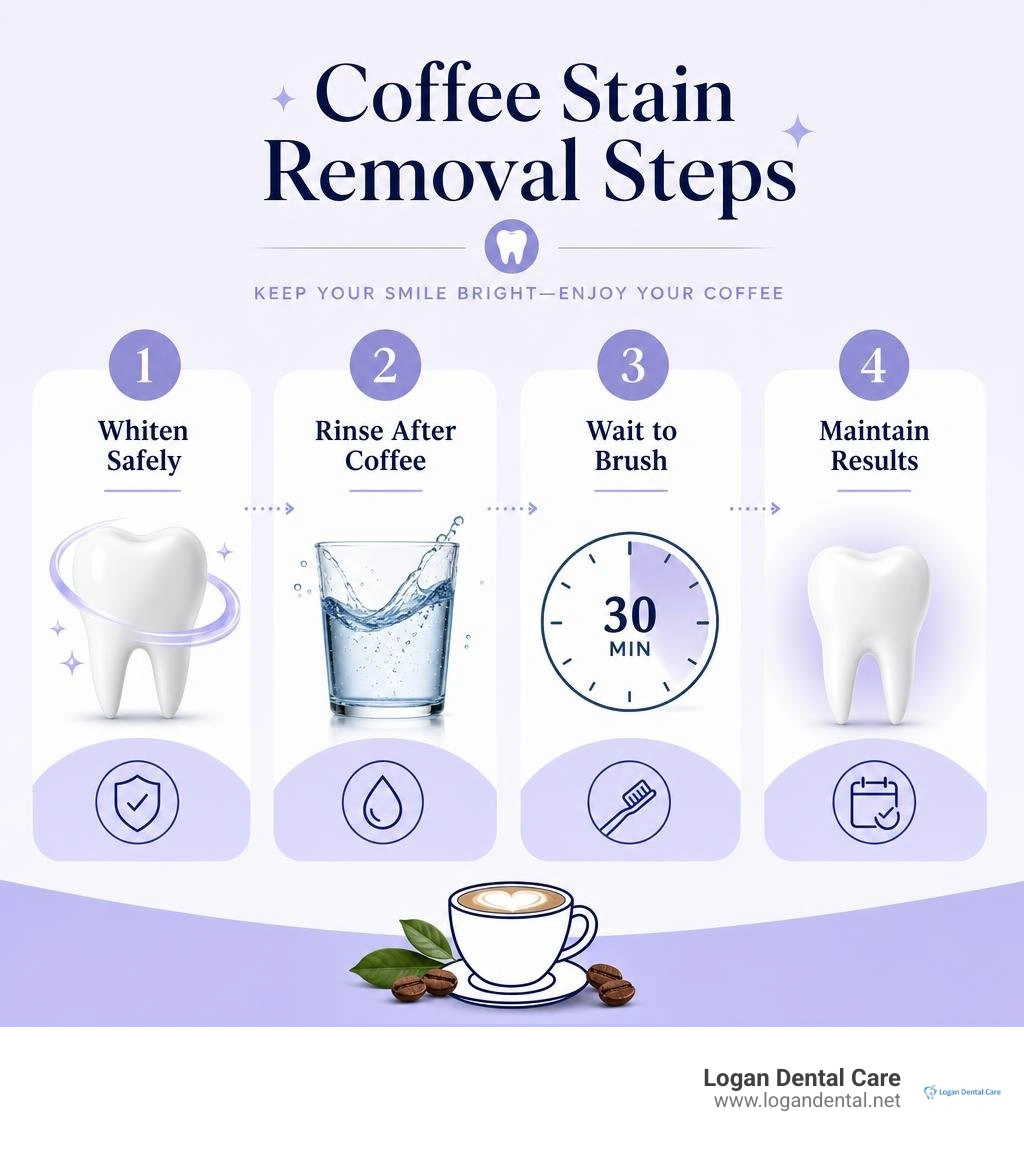
Quick teeth whitening for coffee drinkers terms:
Why Coffee Stains Teeth: The Science of Tannins and Enamel
A 2024 survey revealed that 74% of adults consider their morning brew a non-negotiable part of their daily routine. It is no surprise, then, that coffee remains one of the largest dietary culprits behind dull, yellowing smiles. Nearly 67% of adults have tried some form of brightening treatment to combat stubborn tannins. To clear away discoloration effectively, it helps to understand why your favorite dark roast latches onto your teeth in the first place.
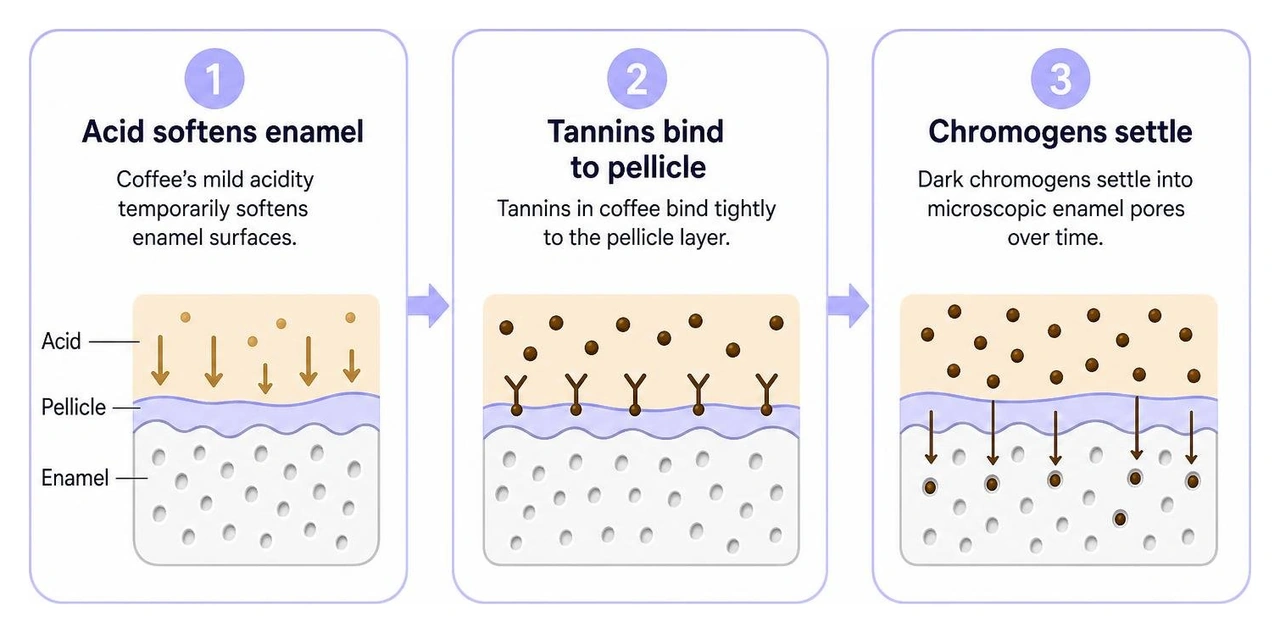
Under a microscope, your outer tooth enamel is not a smooth sheet of glass; it is filled with microscopic ridges, micropores, and tiny crystalline structures. Naturally coating this enamel is the acquired pellicle—a microscopic film of salivary proteins designed to protect your teeth. While this pellicle performs essential duties in basic oral hygiene, it also behaves like a magnet for dark chromogens (pigment compounds) and polyphenols found in coffee.
Coffee is rich in chlorogenic acids (CGAs), which are plant-derived polyphenols often referred to as tannins. According to research on chlorogenic acids and coffee staining, typical medium-roast coffees contain 4.0 to 6.0 mg/ml of CGAs. These tannins break down in liquid and bind tightly to surface proteins. Combined with coffee's mild natural acidity (a pH generally between 4.8 and 5.1), the liquid temporarily softens enamel surfaces. This allows dark chromogens to settle into porous microscopic channels. Over months and years, what began as light extrinsic (surface) discoloration slowly settles deeper toward the inner dentin layer, giving teeth a persistent yellow or brownish tint.
Safest Methods of Teeth Whitening for Coffee Drinkers
Finding the safest teeth whitening method involves balancing stain removal power with enamel safety and sensitivity management. Whether you opt for in-office care or a daily at-home routine, active whitening generally relies on oxygen-releasing agents like hydrogen peroxide or carbamide peroxide. These peroxide compounds penetrate enamel micropores, breaking apart the double chemical bonds of trapped chromogens through gentle oxidation.
When choosing between professional teeth whitening vs at home kits, coffee drinkers should evaluate how quickly they need results and how prone their teeth are to temporary nerve sensitivity.
Choosing Professional Teeth Whitening for Coffee Drinkers
For coffee lovers facing years of accumulated discoloration, chairside in-office bleaching or custom take-home trays under dental supervision offer the highest level of safety and shade transformation. In-office systems utilize controlled, high-potency peroxide gels paired with protective barriers that isolate and protect your sensitive gum tissues from irritation.
If you want a dependable, noticeable boost, exploring teeth whitening in Bellefontaine allows our team to assess your enamel health beforehand, clean away hardened tartar that blocks bleaching gels, and personalize your shade lift without the guesswork of generic store-bought strips.
At-Home Maintenance and Teeth Whitening for Coffee Drinkers
Because daily coffee drinking introduces fresh tannins every morning, an at-home maintenance plan keeps your smile glowing long after an initial brightening session. Using low-abrasive whitening toothpastes, portable touch-up pens, or custom dental trays ensures that fresh surface biofilms do not set into stubborn deep stains.
When selecting at-home maintenance tools, consider:
- Low-Abrasive Whitening Toothpaste: Check the Relative Dentin Abrasivity (RDA) index to ensure your daily paste polishes surface pigments without wearing away enamel.
- Peroxide Touch-Up Pens: Great for localized stain lifting after consuming dark coffee beverages.
- Custom-Fitted Take-Home Trays: Dentist-crafted trays keep professional-grade carbamide peroxide firmly against your enamel while preventing gel leakage onto gums.
- Electric Toothbrushes: Modern oscillating brush heads provide thorough mechanical plaque removal to eliminate the sticky film coffee pigments cling to. Following solid dental hygiene tips makes all the difference.
The Dangers of Abrasive DIY Remedies
With countless kitchen hacks circulating online, it can be tempting to turn to pantry staples like baking soda pastes, activated charcoal powders, mashed strawberries, or apple cider vinegar rinses. However, clinical research and dental professionals strongly advise against these methods.
Abrasive powders act like sandpaper across tooth enamel, creating micro-scratches that actually give coffee tannins more places to hide in the future. Meanwhile, acidic hacks involving lemon juice or vinegar erode the protective enamel layer directly, exposing the naturally yellow dentin underneath and triggering permanent tooth sensitivity. Reading the truth about diy teeth whitening will protect you from irreversible enamel thinning.
The 48-Hour Recovery Window and Post-Whitening Care

During any peroxide whitening treatment, your tooth enamel experiences temporary dehydration, and microscopic dentinal tubules (tiny fluid-filled channels that connect to the inner nerve) open up slightly. In addition, the protective acquired pellicle is temporarily stripped away during active bleaching.
Because your teeth act like a dry sponge during this immediate healing phase, they are up to 50% more vulnerable to absorbing dark pigments. For the first 24 to 48 hours after treatment, coffee drinkers should adhere strictly to the "White Diet."
- Follow the White Shirt Rule: If a food or beverage would leave a dark mark on a crisp white cotton shirt (such as black coffee, soy sauce, red wine, or berries), avoid it during this 48-hour window.
- Safe Foods: Enjoy skinless chicken breast, white fish, egg whites, white rice, cauliflower, and plain yogurt.
- Safe Beverages: Stick to plain water, skim milk, and clear liquids to prevent early rebound staining.
- Sensitivity Relief: For the first two days, avoid boiling hot liquids or icy cold drinks, as freshly treated enamel is sensitive to thermal shock. Reviewing painless teeth whitening guidelines will help you navigate this brief window comfortably.
Daily Habits and Brewing Tweaks to Prevent Future Stains
You do not need to give up your daily coffee ritual to maintain a radiant smile. By adopting smart consumption habits and exploring low-tannin brewing methods, you can dramatically cut down on daily stain accumulation:
- Rinse Immediately with Plain Water: Swishing plain water in your mouth for 30 seconds right after finishing your coffee washes away residual tannins and helps neutralize oral acids before pigments bond to your enamel.
- Add a Splash of Dairy Milk: Animal milk contains casein proteins that chemically bind to coffee tannins in the cup, preventing them from adhering to your enamel. (Plant-based milks do not contain casein, making traditional dairy the gold standard for stain reduction).
- Switch to Cold Brew or Low-Acid Roasts: Cold brew coffee is typically up to 67% less acidic than hot-brewed coffee, reducing the acid-softening effect on enamel. Similarly, specially processed blends like Everest Peak Coffee reduce ~70% of the chlorogenic acids (CGAs) that cause staining.
- Drink Through a Straw: When enjoying iced coffee, using a glass or silicone straw directs dark liquids past the front surfaces of your teeth, reducing liquid-to-enamel contact by up to 85%.
- Consolidate Your Coffee Time: Sip your coffee within a 15 to 20-minute window rather than sipping slowly over several hours. Prolonged sipping keeps your mouth in an acidic state for hours on end.
- Wait 30 Minutes to Brush: Because coffee acid temporarily softens tooth enamel, brushing immediately can scratch the surface. Wait 30 minutes for your saliva to naturally remineralize your teeth, or rely on routine professional dental cleanings to gently clear away stubborn calculus and stains every six months.
Frequently Asked Questions About Coffee Stains and Whitening
How long should coffee drinkers wait before drinking coffee after whitening?
Dentists strongly advise waiting at least 48 hours before consuming dark coffee. During this initial recovery period, enamel micropores are open and the protective salivary protein film is reforming. If you must consume caffeine during this period, opt for light-colored alternatives or diluted coffee with plenty of dairy milk sipped carefully through a straw.
What should you do if you accidentally drink coffee right after whitening?
If you slip up and drink coffee during your 48-hour post-whitening window, do not panic. Immediately rinse your mouth thoroughly with plain tap water for 30 to 60 seconds to wash away loose chromogens and buffer oral acidity. Do not scrub your teeth immediately with an abrasive brush; wait 30 minutes for the enamel to settle, then brush gently with a soft-bristled brush and clear water.
Can whitening toothpaste alone remove deep coffee stains?
No. Whitening toothpastes contain mild polishing agents (like hydrated silica) that buff away everyday extrinsic surface films. However, they lack the peroxide concentration and contact time necessary to penetrate the enamel and lift deep-set intrinsic discoloration. Whitening toothpastes are best utilized as maintenance tools alongside professional treatments.
Conclusion
Lifting coffee stains and maintaining a vibrant, healthy smile should fit smoothly into your everyday life. At Logan Dental Care, we believe caring for your smile is about building confidence and feeling your best, not stressing over rigid restrictions. Our family-focused team is proud to serve our neighbors from our practice located at 1021 N. Main Street in Bellefontaine, Ohio. We are an accredited member of the American Dental Association and the Ohio Dental Association, holding an A+ BBB rating.
Please keep in mind that we do not offer payment plans or sedation dentistry, but we are committed to transparent, comfortable, and personalized care for every patient. Ready to refresh your smile and keep your morning coffee? Contact our welcoming team to schedule professional tooth whitening today.