
A Comprehensive Guide to Natural Looking Teeth Whitening Methods
Understanding Tooth Discoloration and Enamel Health
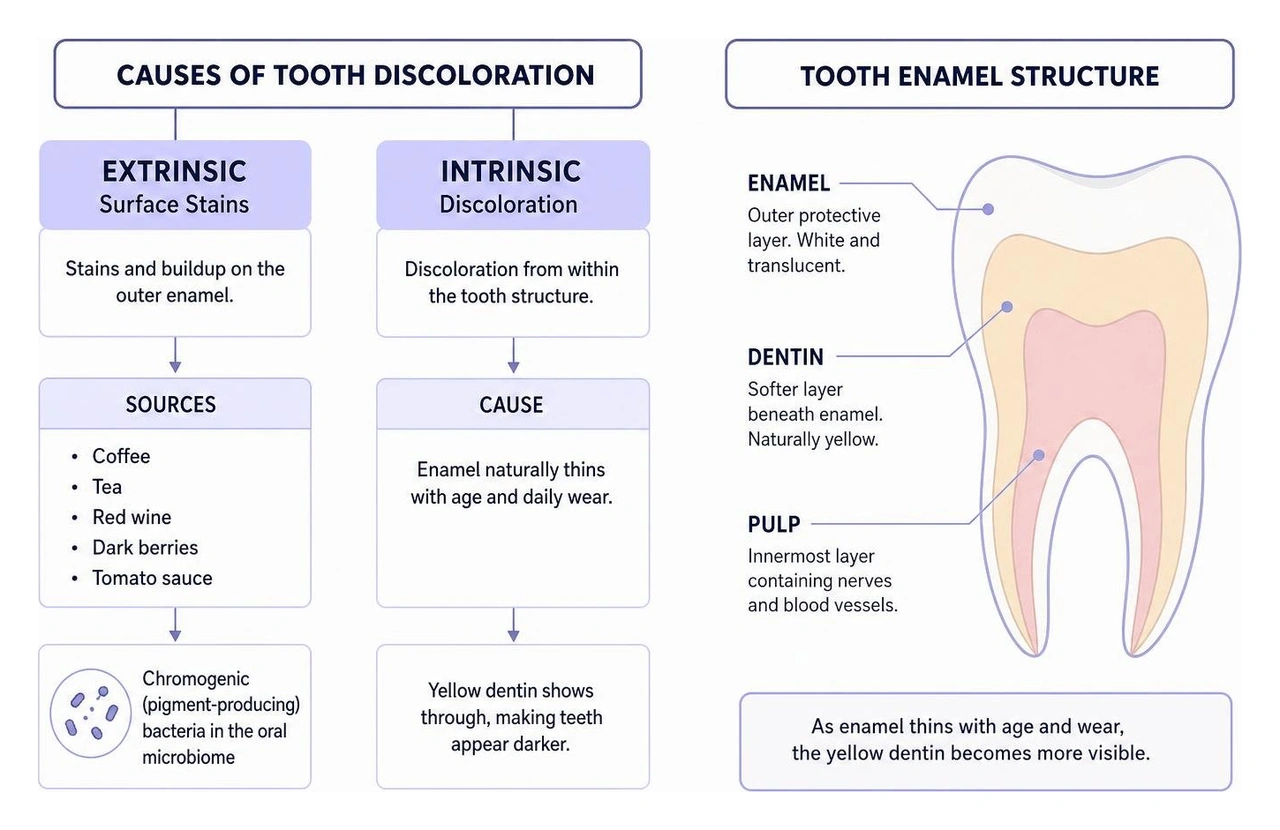
To achieve natural looking teeth whitening, it helps to understand why teeth change color in the first place. When surveyed about what they would most like to improve about their smile, the vast majority of people select whiter teeth. However, tooth discoloration isn't one-size-fits-all. It generally falls into two categories: extrinsic and intrinsic.
- Extrinsic Surface Stains: These occur on the outer layer of the tooth. Daily exposure to dietary tannins and dark pigments—found in coffee, tea, red wine, dark berries, and tomato sauce—creates surface buildup. Additionally, natural chromogenic (pigment-producing) bacteria in the oral microbiome can cause teeth to look dull over time.
- Intrinsic Discoloration: This happens deeper within the tooth structure. As we age, the outer enamel naturally thins due to daily wear. Beneath this white enamel lies dentin, a softer, naturally yellow tissue layer. As enamel thins, the yellowish dentin becomes more visible, making the tooth appear darker regardless of surface cleanliness.
Understanding these mechanisms prevents you from over-scrubbing surface stains when the underlying issue might actually be enamel thinning. For a deeper breakdown of safely brightening your smile, review our overview on teeth whitening options in Bellefontaine.
Safe and Effective Approaches to Natural Looking Teeth Whitening
When exploring home remedies for natural looking teeth whitening, safety must come first. Tooth enamel consists of roughly 95% inorganic calcium and phosphate ions locked in hydroxyapatite crystals. Once enamel erodes, your body cannot grow it back.
Scientific research indicates that the ideal oral environment during whitening maintains a pH between 6.8 and 7.4. If your oral pH drops below 4.0, enamel undergoes rapid demineralization, leading to sensitivity and decay.
Before trying internet trends, read our guide on why some DIY teeth whitening is too good to be true.
Achieving Natural Looking Teeth Whitening at Home
If you prefer subtle, gradual brightening at home, a few gentle methods can support surface stain removal without destroying your enamel:
- Baking Soda Paste: Baking soda (sodium bicarbonate) is a mild abrasive that gently polishes away extrinsic stains. Studies show that baking soda toothpastes effectively reduce plaque and gum inflammation while creating an alkaline environment that inhibits harmful bacteria like Streptococcus mutans. Mix 1 teaspoon of baking soda with 2 teaspoons of water, brushing gently once or twice a week.
- Diluted Hydrogen Peroxide Rinse: A low-concentration (1.5%) hydrogen peroxide rinse can help lift surface discolorations. You can create this by diluting standard 3% drugstore hydrogen peroxide with equal parts water. Swish briefly before brushing, but never swallow it. Clinical evidence shows toothpastes with balanced hydrogen peroxide levels safely brighten enamel over 12 weeks.
- Coconut Oil Pulling: Swishing 1 tablespoon of coconut oil for 10 to 20 minutes daily is a traditional practice that helps disrupt surface bacteria. While oil pulling offers subtle stain prevention rather than dramatic bleaching, it remains a safe, non-acidic addition to your routine. Just remember to spit the oil into a trash can to protect your plumbing!
Risks of Dangerous DIY Whitening Trends
Not all "natural" recipes featured online are safe. In fact, some viral DIY hacks cause permanent dental damage:
- Lemon Juice & Vinegar Rinses: Citrus fruits and raw apple cider vinegar are highly acidic. Applying them to your teeth strips away essential minerals, drops oral pH far below safe thresholds, and dissolves enamel.
- Abrasive Activated Charcoal Scrubs: Pure, unrefined charcoal powder acts like sandpaper on your teeth. According to findings published by the American Dental Association, there is no conclusive evidence proving raw charcoal products are safe or effective. Scrubbing with coarse charcoal strips away enamel, exposing the yellow dentin underneath and making your teeth look darker over time.
Science-Backed Peroxide-Free Ingredients and Modern Products

For patients seeking gentle, peroxide-free whitening, modern biomimetic dental science offers excellent alternatives. You can explore products like Fluoride-Free Whitening Toothpaste or Natural Teeth Whitening Strips that utilize gentle ingredients to brighten teeth without irritation.
Key modern whitening ingredients include:
- Nano-Hydroxyapatite (nHa): Because natural enamel is made of hydroxyapatite, synthetic nHa integrates directly into the tooth structure. It fills microscopic surface lesions, smooths enamel to reflect light better, and remineralizes weak spots while blocking sensitivity.
- Proteolytic Fruit Enzymes: Natural enzymes derived from papaya (papain) and pineapple (bromelain) selectively break down the protein pellicle layer on teeth where stains lock in. Clinical studies demonstrate that enzyme complexes reduce visible enamel stains by up to 85% after one month without altering enamel hardness.
- PAP+ (Phthalimidoperoxycaproic Acid): A non-peroxide whitening agent that oxidizes organic stains without releasing the harsh free radicals responsible for post-whitening tooth sensitivity.
- Prebiotics: Ingredients like alpha-glucan oligosaccharides nourish beneficial oral bacteria while targeting pigment-producing microbes, supporting a balanced microbiome.
Everyday Dietary and Hygiene Habits to Maintain White Teeth

The most effective way to keep your smile naturally white is preventing stains from settling in the first place. At Logan Dental Care, we always emphasize that general and preventive dentistry is the essential foundation for long-term oral health and confidence.
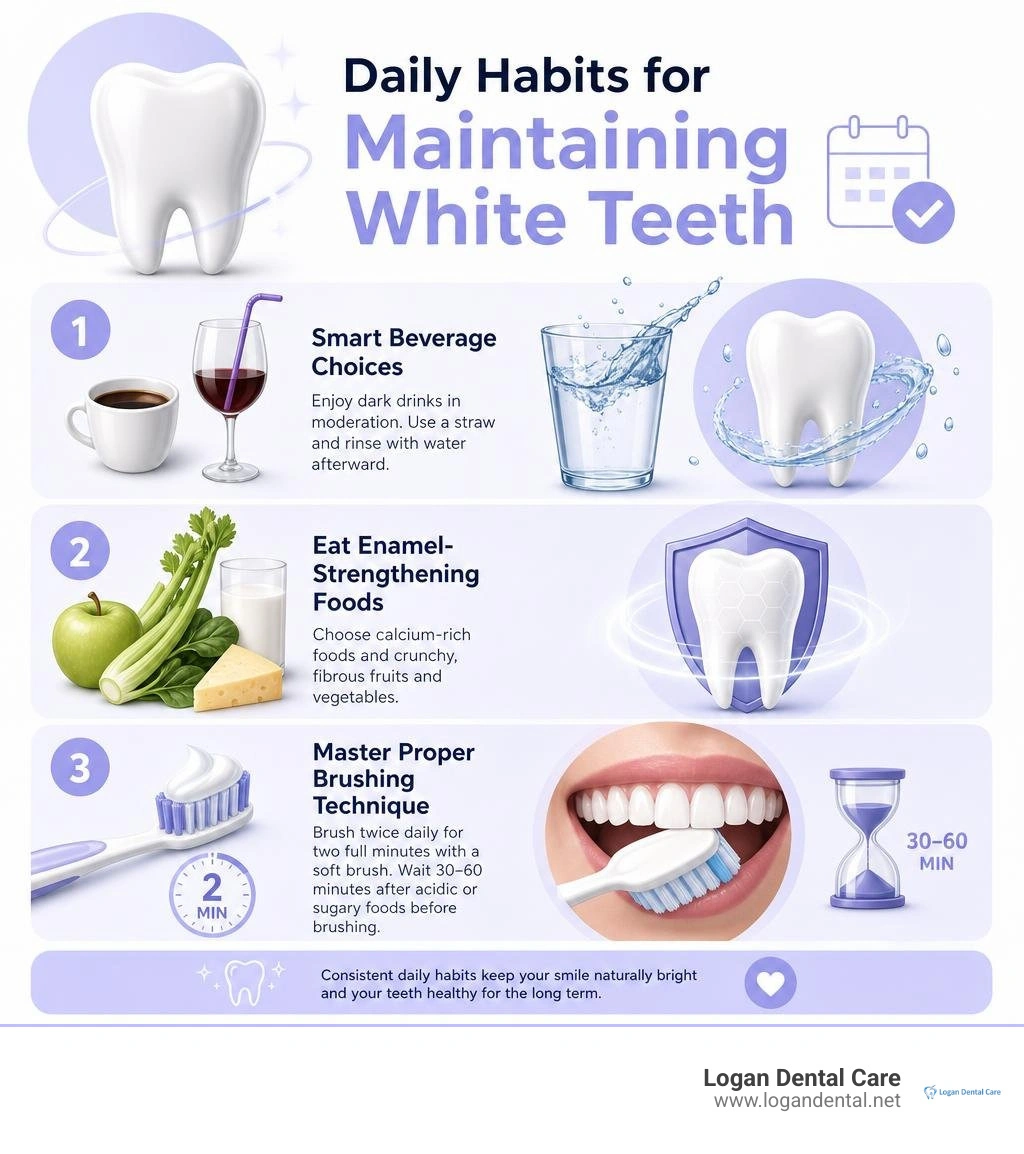
Incorporate these proactive daily habits:
- Smart Beverage Choices: Enjoy coffee, tea, and red wine in moderation. Use a reusable straw for cold dark drinks to limit contact with front teeth, and swish with water immediately after finishing dark beverages.
- Eat Enamel-Strengthening Foods: Incorporate calcium-rich foods like milk, cheese, and leafy greens to support enamel density. Crunchy, fibrous fruits and vegetables like apples and celery stimulate saliva production, which naturally washes away food debris.
- Master Proper Brushing Technique: Brush twice daily for two full minutes using a soft-bristled toothbrush. Avoid scrubbing aggressively. If you consume acidic or sugary foods, wait 30 to 60 minutes before brushing so you don't scrub softened enamel.
- Floss Daily: Plaque buildup between teeth creates dark shadows and yellow borders. Daily flossing removes hidden plaque before it calcifies into stubborn tartar. For helpful hints, check out our favorite dental hygiene tips and tricks.
Professional Dental Care vs. At-Home Natural Whitening
While at-home habits maintain surface shine, natural remedies have clear physical limits. They cannot lift deep, intrinsic discoloration caused by aging, past trauma, or medications.
When you want predictable, noticeable improvements while keeping a completely natural look, cosmetic dentistry offers tailored solutions focused on your overall confidence rather than vanity. Read our guide on professional whitening vs. at-home kits to explore the options.
Professional Strategies for Natural Looking Teeth Whitening
During a personalized consultation, a dentist carefully evaluates your facial features, natural enamel shade, and skin tone using precise shade guides to ensure your results look authentic:
- Custom Take-Home Whitening Trays: Professional-grade trays are custom-molded to fit your exact bite. They keep calibrated, low-sensitivity whitening gel evenly against enamel while protecting delicate gum tissues.
- Dental Bonding: For isolated, stubborn intrinsic spots or small chips, tooth-colored composite resin is sculpted directly onto the tooth surface to restore uniform color.
- Porcelain Veneers: When discoloration is paired with heavy wear or alignment issues, ultra-thin porcelain shells offer a permanent, custom-shade solution.
If you grind or clench your teeth at night, severe wear can thin your enamel quickly. Custom nightguards and mouthguards are smart, proactive investments that safeguard your natural tooth structure and protect your cosmetic investment for years to come.
Frequently Asked Questions About Natural Teeth Whitening
Do natural teeth whitening methods work for deep intrinsic stains?
No. Natural home methods—such as baking soda, oil pulling, or enzyme toothpastes—only target extrinsic surface stains. Deep intrinsic discoloration located inside the tooth structure requires professional cosmetic treatments like custom whitening trays, bonding, or veneers.
Are peroxide-free whitening products safe to use every day?
Most peroxide-free products containing nano-hydroxyapatite, xylitol, or gentle fruit enzymes are specifically designed for safe daily use. However, always review product labels and avoid over-using coarse powders or scrubs that rely on physical abrasion.
How do I choose a safe whitening toothpaste that protects tooth enamel?
Look for toothpastes featuring remineralizing minerals like nano-hydroxyapatite or low-abrasion baking soda. Avoid products containing acidic fruit juices, raw charcoal, or high concentrations of harsh silicas. Selecting products that bear professional dental credentials ensures both safety and quality.
Conclusion
Achieving natural looking teeth whitening is all about striking the right balance between effective stain removal and enamel protection. By avoiding harsh DIY acids and charcoal scrubs, adopting healthy dietary habits, and choosing gentle remineralizing ingredients, you can keep your smile radiant and resilient for a lifetime.
When home habits reach their limit, professional guidance ensures your smile stays bright, healthy, and completely natural.
At Logan Dental Care, we are proud to be a family-focused dental practice located at 1021 N. Main Street in Bellefontaine, Ohio. Our practice is an accredited member of the American Dental Association and the Ohio Dental Association, holding an A+ BBB rating. We treat every patient like an extension of our own family, taking the time to celebrate milestones, answer questions, and provide accessible, transparent care without high-pressure sales.
Please note that Logan Dental Care does not offer payment plan options or sedation dentistry. To keep dental care accessible and simple for uninsured individuals and families, we consistently promote our Smile Protection Savings Plan to help you keep up with routine preventive care.
Whether you have questions about home care routines or want to explore our professional tooth whitening services, our warm, approachable team is always here to help. Contact Logan Dental Care today to schedule your next checkup and keep your smile shining naturally!