
In Depth Guide to Comparing Effective Teeth Whitening at Home Kits
A Quick Guide to Choosing a Teeth Whitening at Home Kit
A teeth whitening at home kit can be a practical way to brighten natural teeth affected by coffee, tea, red wine, tobacco, and everyday aging. The best choice depends on your goals, how sensitive your teeth are, and whether you have crowns, veneers, fillings, or braces.
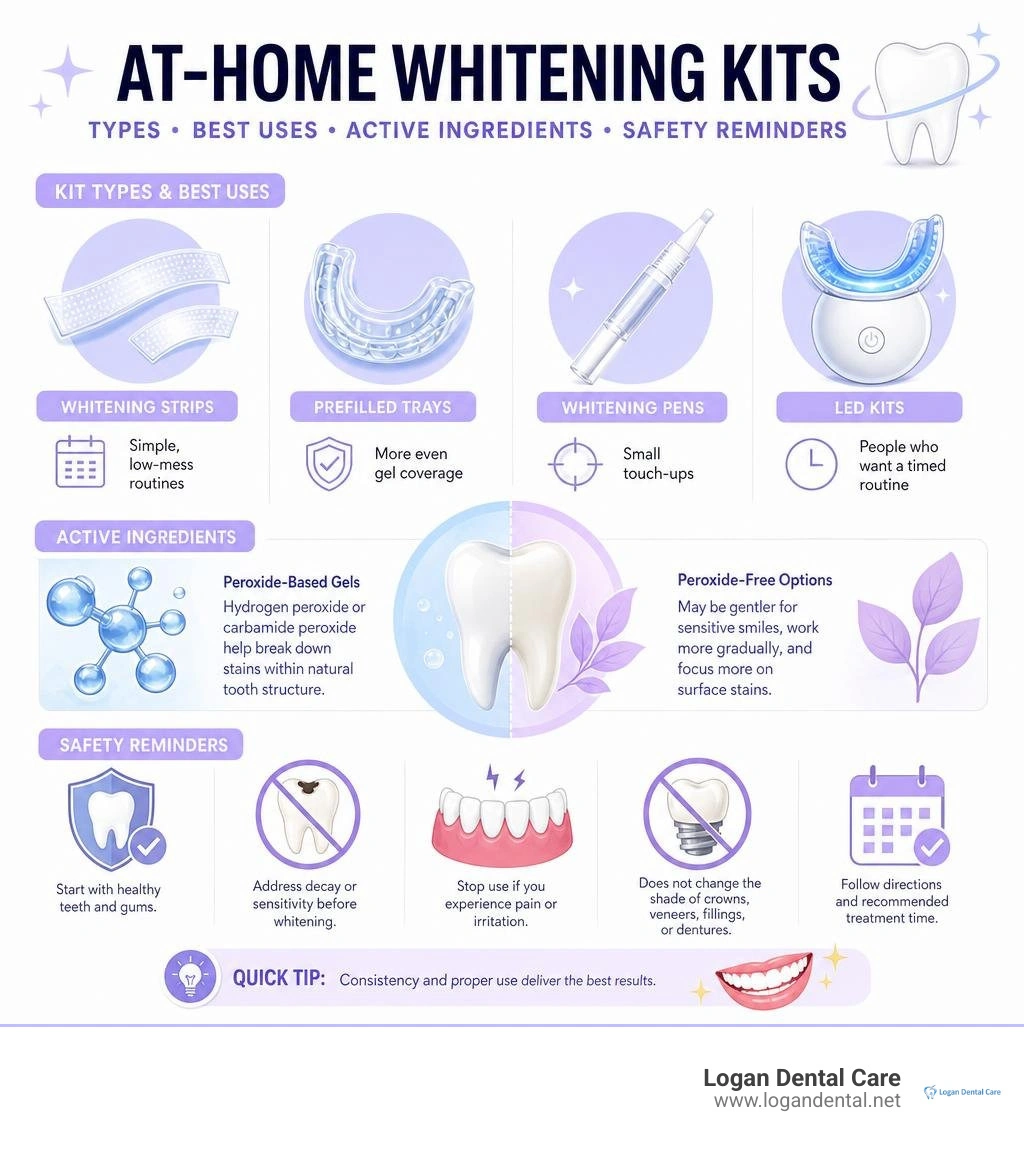
Common kit options include:
- Whitening strips: Best for simple, low-mess routines involving daily wear for a set treatment period.
- Prefilled trays: Best for more even gel coverage using a snug tray worn for a planned amount of time.
- Whitening pens: Best for small touch-ups with precise gel application to visible front teeth.
- LED kits: Best for people who want a timed routine pairing gel or strips with a light device.
Most effective kits use peroxide-based gels, such as hydrogen peroxide or carbamide peroxide, to break down stains within natural tooth structure. Peroxide-free options may be gentler for sensitive smiles, but they may work more gradually and focus more on surface stains. No home kit can change the original shade of crowns, veneers, fillings, or dentures.
This roundup compares popular kit formats, ingredients, comfort features, expected results, and safety concerns so you can narrow down the options without getting lost in marketing claims. It is also wise to start with healthy teeth and gums, since whitening can make untreated decay, exposed roots, or gum irritation feel worse.
At Logan Dental Care, we are a family-focused dental practice at 1021 N. Main Street in Bellefontaine, Ohio, accredited by the American Dental Association and Ohio Dental Association with an A+ BBB rating; we do not offer payment plan options or sedation dentistry.
Comparing Types of At-Home Whitening Formats

When you start browsing for a teeth whitening at home kit, the sheer variety of delivery methods can feel overwhelming. Every design approaches stain removal differently, balancing convenience, application accuracy, and active gel contact with your tooth surface.
Whitening Strips and Gel Pens
Whitening strips remain one of the most widely used over-the-counter choices. These thin, flexible plastic strips are coated on one side with a peroxide gel formulation that adheres directly to the front surfaces of your teeth. Most strips feature advanced non-slip technology, allowing you to talk or drink water while wearing them for 30 to 60 minutes a day.
Gel pens offer targeted spot treatments for individual teeth that may catch extra stain from daily coffee or tea. The pen brush tip allows you to paint active whitening gel precisely onto specific areas. While pens are incredibly convenient for quick on-the-go touch-ups, they lack a physical barrier to keep saliva from washing the gel away prematurely. For broad, even smile brightened results, combining daily care routines with structured over-the-counter whitening kits provides better contact time across all your visible enamel.
Prefilled Gel Trays as a Teeth Whitening at Home Kit
Prefilled gel tray kits take the guesswork out of gel application. These kits feature flexible, pre-loaded trays containing dentist-inspired whitening gel formulations, such as 10% hydrogen peroxide. Many modern prefilled systems utilize body heat inside your mouth to conform naturally to the contours of your smile, wrapping snugly around crowded or uneven teeth without requiring custom impressions or molds.
Prefilled trays ensure even gel distribution across all outer surfaces while holding the active ingredients securely against enamel. Most regimens require 30 to 60 minutes of daily wear over 10 consecutive days, lifting stains by several shades. Because the trays are disposable and single-use, cleanup is as simple as removing the inner tray and rinsing remaining gel from your mouth.
LED Light Accelerator Systems
LED accelerator systems pair peroxide gel pens, strips, or tray applicators with a blue LED mouthpiece. Blue light wavelengths help speed up the oxidation process, breaking down tough surface discoloration faster. Many contemporary systems feature automatic built-in timers that shut off after 10 to 15 minutes to prevent over-exposure.
Some LED mouthpieces also incorporate secondary red light cycles designed to soothe soft tissues along the gumline. While LED acceleration can shorten daily application times, the core whitening power still comes from the quality and concentration of the bleaching gel itself.
Active Ingredients, Enamel Safety, and Tooth Sensitivity
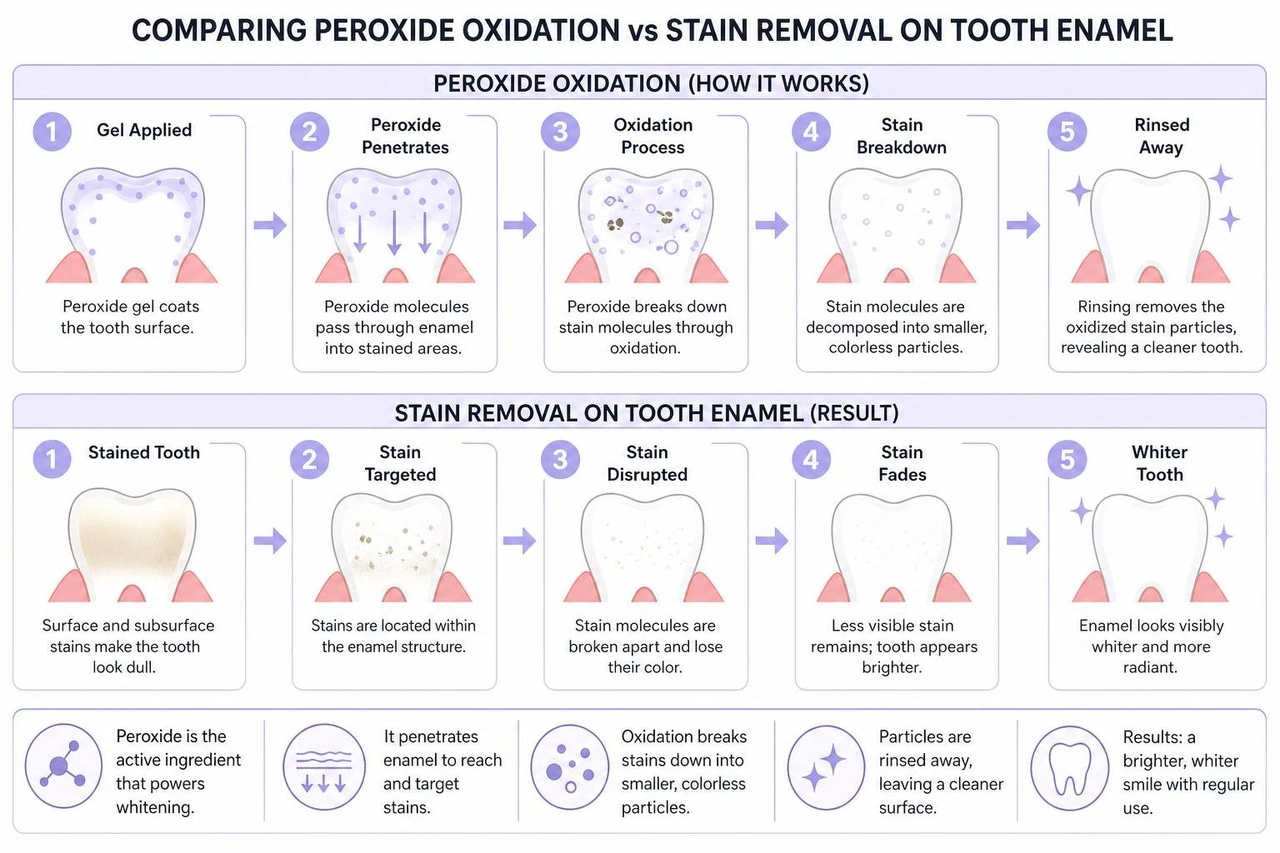
Understanding the chemical actions inside a teeth whitening at home kit helps protect your enamel while achieving a brighter smile. Whitening occurs through an oxidation reaction where active peroxide molecules penetrate porous enamel to break apart dark pigment bonds. However, aggressive chemical application without proper guidance carries DIY teeth whitening risks, such as chemical gum burns or painful nerve discomfort.
Hydrogen Peroxide vs. Carbamide Peroxide
Peroxide-based whitening relies on two main active compounds: hydrogen peroxide and carbamide peroxide.
- Hydrogen Peroxide: Acts rapidly, releasing the majority of its bleaching power within the first 30 to 60 minutes of contact. It is commonly found in whitening strips, prefilled trays, and LED kits ranging in concentration from 8% to 15%.
- Carbamide Peroxide: Breaks down into hydrogen peroxide and urea upon contact with moisture. It releases its whitening power gradually over several hours, making it an ideal ingredient for overnight pens or multi-hour tray systems. A 35% carbamide peroxide gel breaks down to approximately 10% to 12% active hydrogen peroxide.
Both compounds are safe for natural tooth enamel when used according to manufacturer guidelines and recommended daily exposure limits.
Sensitivity Protection with Potassium Nitrate and Hydroxyapatite
Temporary tooth sensitivity occurs when whitening agents travel through microscopically porous enamel to reach the underlying dentin, temporarily irritating inner nerve signals. To counteract this, high-quality home kits incorporate sensitivity-relieving ingredients:
- Potassium Nitrate: Calms the nerves inside the tooth, preventing sharp sensitivity triggers from cold fluids or air.
- Nano-Hydroxyapatite (HAp): A biocompatible mineral that naturally makes up 97% of your tooth enamel. It fills microscopic enamel tubules, smoothing the tooth surface while reducing sensitivity.
- Natural Minerals and Essential Oils: Options utilizing Dead Sea salt minerals, coconut oil, and non-acidic lemon peel oil offer gentle stain-lifting without chemical peroxide penetration.
Exploring these safe tooth whitening options ensures a comfortable whitening experience tailored to your personal sensitivity threshold.
Choosing the Right Teeth Whitening at Home Kit for Your Smile
Finding the right teeth whitening at home kit requires looking beyond flashy packaging. Evaluating active ingredient percentages, brand credentials, and restoration compatibility ensures you select a safe and effective product.
Selection Guidelines and ADA Acceptance Criteria
When selecting a kit, look for the American Dental Association (ADA) Seal of Acceptance on the box. This seal verifies that the product has undergone rigorous independent safety and efficacy testing. Always check the packaging expiration date, review ingredient transparency, and verify whether the brand is widely recommended by dental professionals nationwide.
Dental Restoration and Orthodontic Compatibility
It is crucial to remember that peroxide whitening gels only interact with natural tooth enamel. Synthetic materials—including composite resin fillings, porcelain crowns, veneers, and partial dentures—will not lighten. If you have visible dental work on your front teeth, whitening your surrounding natural enamel may result in an uneven smile shade.
Surprisingly, certain prefilled tray kits can be used over traditional orthodontic wire braces. Hydrogen peroxide gel naturally diffuses across the entire tooth structure, allowing the area beneath bracket adhesives to whiten alongside exposed enamel surfaces.
How to Safely Use a Teeth Whitening at Home Kit
To maximize your whitening results and keep your gums healthy, follow a proper application routine:
- Avoid Pre-Brushing Irritation: Do not brush vigorously immediately before applying whitening strips or trays, as freshly scrubbed gums are more vulnerable to chemical gel irritation.
- Control Gel Dosage: If using syringe-based tray kits, apply a tiny dot (0.3 to 0.5 mL) of gel into each tooth impression to prevent overflow onto your gums.
- Wipe Excess Gel Away: Promptly use a cotton swab to wipe away any excess gel touching your gum tissue.
- Maintain Consistent Routine Hygiene: Pair your whitening routine with strong basic oral hygiene habits, brushing gently after each session to remove leftover residue.
- Proper Storage: Store your whitening kit in a cool, dry place away from direct sunlight to preserve active ingredient potency.
At-Home Kits vs. Professional In-Office Whitening
While over-the-counter kits offer accessible stain removal, comparing them against professional care highlights distinct differences in speed, shade dramatically, and supervision:
- Cost and Accessibility: Home kits are budget-friendly alternatives for gradual surface stain removal over several weeks.
- Application Speed: In-office treatments deliver shade improvements in roughly one hour using clinical-strength formulations under direct professional supervision.
- Custom Fit Trays: Professional take-home systems use custom-fitted trays crafted from exact dental impressions, keeping gel firmly against enamel while shielding delicate gum tissue.
- Clinical Supervision: A dental evaluation ensures your gums and enamel are healthy before whitening begins, identifying underlying decay that could cause acute pain if exposed to bleaching gel.
For patients seeking dentist-guided take-home systems, options like professional take-home whitening systems combine clinical potency with home convenience. Reading a thorough professional vs at-home whitening comparison can help you decide which path fits your goals.
At Logan Dental Care, cosmetic dentistry is about building personal confidence rather than chasing unrealistic perfection. We focus on helping you feel bright, comfortable, and proud every time you share your smile with family and neighbors across Logan County.
Frequently Asked Questions About At-Home Whitening
How long do whitening results typically last?
At-home whitening results generally last between 6 and 12 months. Shade longevity depends heavily on dietary habits, such as daily coffee, tea, or red wine consumption, as well as tobacco use. Practicing routine brushing and scheduling regular dental cleanings help maintain your brightened smile.
Can home whitening kits damage tooth enamel permanently?
When used strictly according to product instructions, ADA-accepted at-home kits do not cause permanent enamel damage. Temporary tooth sensitivity or mild gum discomfort may occur during treatment, but these mild side effects typically subside within a few days after finishing the whitening cycle.
What should I do if my teeth become sensitive during whitening?
If you experience tooth sensitivity, pause treatment for two to three days to allow your tooth nerves to relax. Switching to a desensitizing toothpaste containing potassium nitrate, shortening daily wear time, or using lower-concentration peroxide gels can eliminate discomfort while allowing you to finish your whitening routine safely.
Conclusion
Choosing the ideal teeth whitening at home kit comes down to matching your personal lifestyle, sensitivity needs, and smile goals with the right gel formulation and applicator format. Whether you prefer the convenience of whitening strips, the full coverage of prefilled trays, or targeted gel pens, maintaining healthy underlying teeth and gums is always the true foundation of a beautiful smile.
At Logan Dental Care, we view general preventive care as the starting point for a lifelong relationship built on trust, warmth, and small-town care. Our team delights in celebrating patient milestones, staff anniversaries, and community moments together across Bellefontaine, West Liberty, Zanesfield, Lakeview, and surrounding Logan County neighborhoods.
For uninsured community members looking for affordable preventative care, our Smile Protection Savings Plan offers clear value and peace of mind without confusing fine print. We also encourage proactive habits like custom nightguards and mouthguards to protect your smile from nighttime grinding or sports activities.
To keep your smile healthy and bright, explore our comprehensive professional teeth whitening services. We are a family-focused dental practice located at 1021 N. Main Street in Bellefontaine, Ohio, accredited by the American Dental Association and the Ohio Dental Association with an A+ BBB rating. Please note that Logan Dental Care does not offer payment plan options or sedation dentistry. Contact our friendly team today to schedule your next visit!