
Teeth Bridge Options 101: Compare & Choose
Your Teeth Bridge Options at a Glance
If you're researching teeth bridge options, here's a quick summary before we dive deeper:
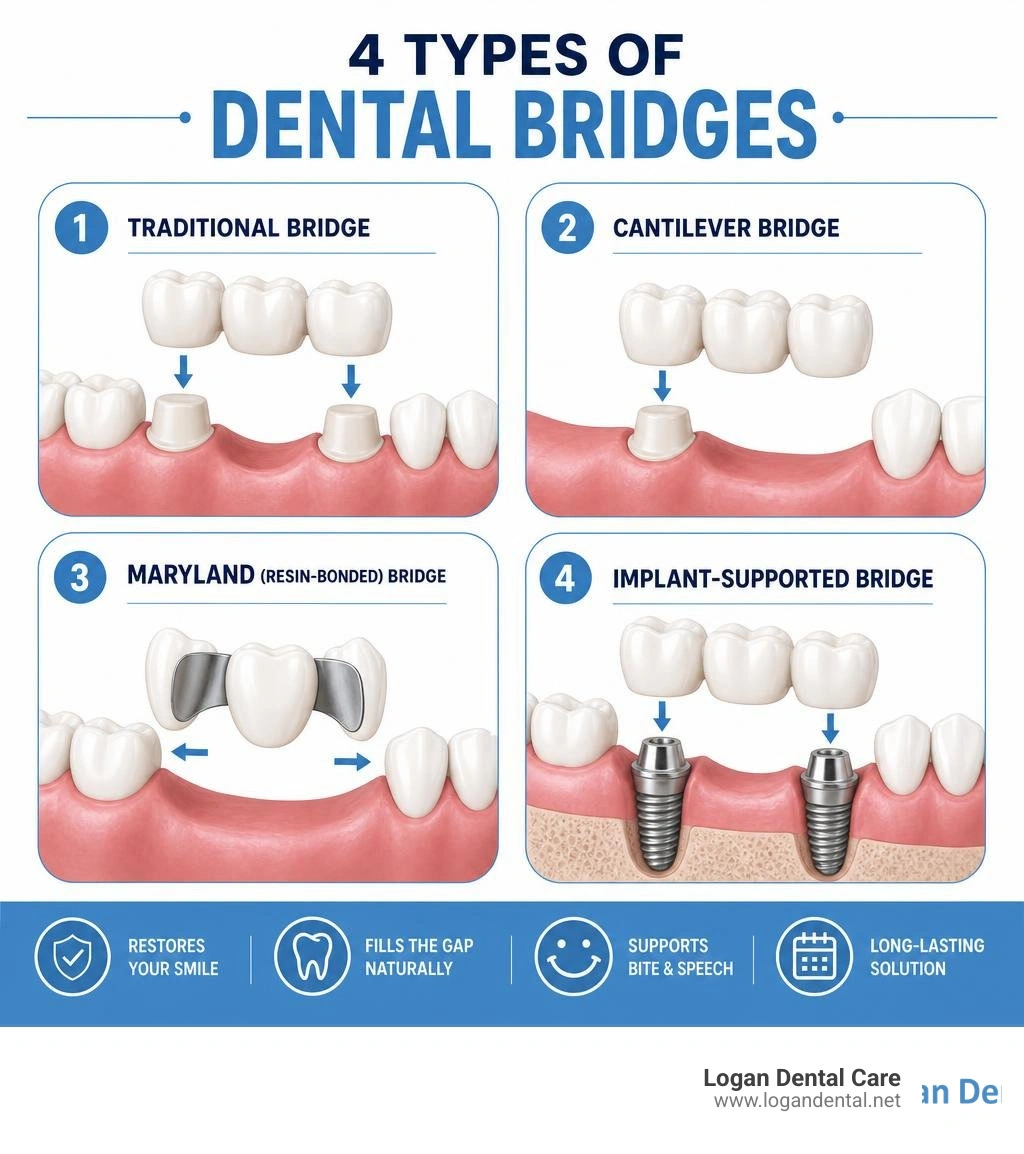
- Traditional bridge - Most common type; crowns on both neighboring teeth support a false tooth in the gap
- Cantilever bridge - Like a traditional bridge, but anchored to only one neighboring tooth
- Maryland (resin-bonded) bridge - A metal or porcelain framework bonded to the backs of adjacent teeth; no crowns needed
- Implant-supported bridge - Uses titanium implants in the jawbone instead of neighboring teeth for support
Each option works differently, costs differently, and suits different situations. Keep reading to find out which one might be right for you.
Losing a tooth changes more than just your smile. It can affect how you chew, how you speak, and over time, how your jaw and surrounding teeth hold up. Neighboring teeth can drift into the gap. Your bite can shift. And the longer the gap stays empty, the more complicated things can get.
The good news? A dental bridge is one of the most reliable, time-tested ways to fill that gap — without surgery, in most cases.
But not all bridges are the same. The right option for you depends on where the missing tooth is, how healthy your surrounding teeth are, and what your long-term goals look like.
At Logan Dental Care in Bellefontaine, Ohio, we walk patients through these decisions every day. This guide breaks down each type of bridge in plain language so you can go into that conversation feeling informed and confident.
Teeth bridge options further reading:
What is a Dental Bridge and How Does It Work?
If you are missing teeth, you might wonder how we go about filling that empty space. A dental bridge does exactly what its name suggests: it literally bridges the gap left behind by one or more missing teeth.
But how does it stay anchored? A bridge relies on two main components:
- Abutments: These are the support structures. In a traditional bridge, the abutments are your natural teeth on either side of the empty space.
- Pontic: This is the artificial tooth (or teeth) that fills the gap. It is custom-crafted to match the shape and shade of your natural teeth so that it blends in seamlessly.
To secure the pontic, we place custom dental crowns over the healthy abutment teeth. The false tooth is fused between these crowns, creating a single, sturdy restoration that is cemented permanently in place.
According to the American Academy of Prosthodontics, millions of adults are missing at least one tooth. Choosing a reliable tooth replacement is essential not just for cosmetics, but to keep your remaining teeth from shifting out of alignment. If you want to learn more about how crowns and bridges work together, check out our Crowns & Bridges Complete Guide or read what the Cleveland Clinic has to say about Dental Bridges: Types & Who Needs Them.
Comparing Your Teeth Bridge Options
Selecting the right bridge depends heavily on your unique oral anatomy, which teeth are missing, and the health of your surrounding teeth.
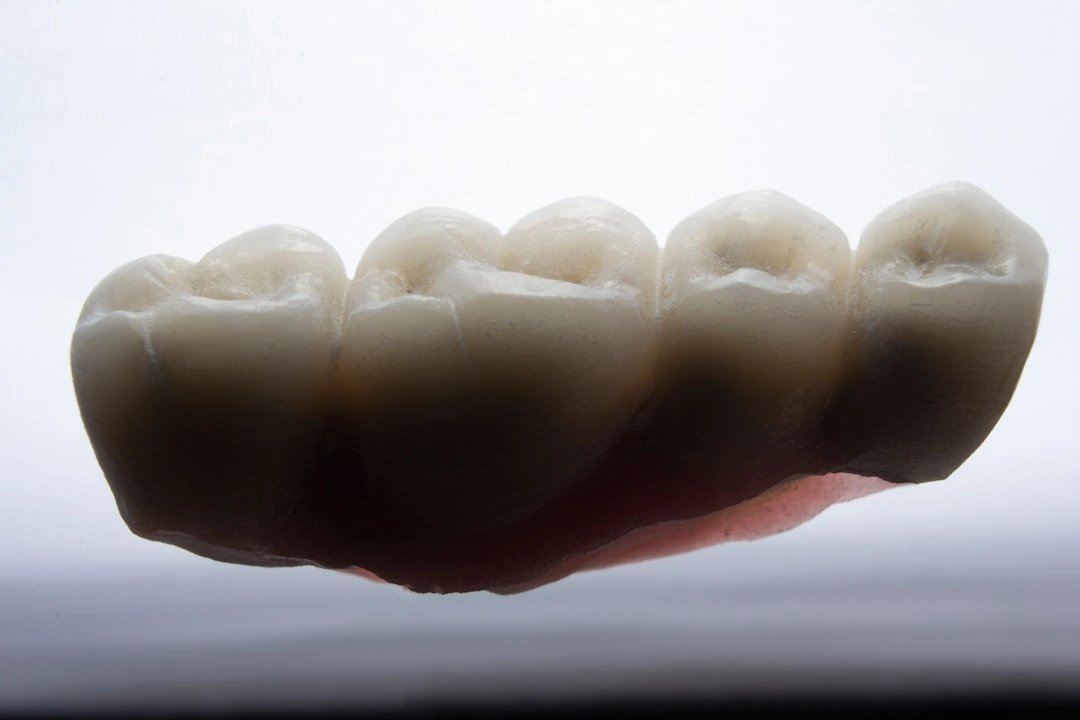
When evaluating your teeth bridge options, we typically look at four main varieties. Each has its own set of structural benefits and clinical requirements. You can read a broad overview of these options in this guide on Dental Health Bridges: Types, Benefits, Care & Cost Explained or explore our breakdown of Fixed Partial Denture Options.
Traditional and Cantilever Teeth Bridge Options
The traditional dental bridge is the most widely used restoration in modern dentistry. It requires healthy, strong adjacent teeth on both sides of the gap. We shape these neighboring teeth to accommodate dental crowns, which act as the anchors. This design provides maximum structural integrity and easily withstands the daily forces of chewing.
But what if you only have a healthy tooth on one side of the gap? That is where a cantilever bridge comes in.
A cantilever bridge uses single-sided support. The pontic is anchored to only one neighboring tooth. Because it is only supported on one side, it acts a bit like a diving board. As you can imagine, this creates extra leverage and physical stress on that single supporting tooth. For this reason, we rarely use cantilever bridges in the back of the mouth where chewing forces are strongest. However, they can be a highly effective, conservative option for front teeth under the right circumstances. To learn more about how these feel in everyday life, see our article on having a Bridge in Mouth.
Maryland and Implant-Supported Teeth Bridge Options
If you want to preserve your natural teeth without shaping them for crowns, a Maryland bridge (also known as a resin-bonded bridge) is a fantastic alternative. Instead of using crowns, a Maryland bridge uses a metal or porcelain framework with "wings" that bond directly to the backs of your adjacent teeth. This keeps your natural tooth structure completely intact. Because they are less invasive, they are most commonly recommended for replacing missing front teeth.
On the opposite end of the spectrum is the implant-supported bridge. This is the premier option for replacing multiple missing teeth in a row.
Instead of relying on your natural teeth for support, this option uses titanium posts surgically placed directly into your jawbone. Over a period of several months, these posts undergo osseointegration, meaning they fuse permanently with your bone to mimic natural tooth roots. Once healed, we attach a custom bridge to these implants. This option provides unmatched stability and prevents the jawbone loss that typically occurs when teeth are missing.
For a deeper dive into multi-implant restorations, read this resource on Multiple Teeth Implants: Implant-Supported Bridges and Full-Arch Solutions or check out our Bridgework Teeth Complete Guide.
The Dental Bridge Procedure: What to Expect
Getting a dental bridge is a straightforward process that we divide into a few comfortable visits. We want you to feel completely at ease during your time in our chair, so here is exactly what you can expect during the journey.

- Preparation: During your first visit, we prepare the abutment teeth. This involves gently reshaping them so the dental crowns can fit over them properly. We will numb the area thoroughly with local anesthesia so you will not feel any pain—just some mild pressure.
- Impressions: Once the teeth are shaped, we take highly accurate impressions of your mouth. These are sent to our trusted dental laboratory, where technicians custom-craft your permanent bridge to match your natural bite and tooth color.
- Temporary Bridge: Because it takes about two weeks to fabricate your custom bridge, we will place a lightweight temporary bridge to protect your prepared teeth and gums in the meantime. We recommend avoiding highly sticky or hard foods during this two-week waiting period.
- Permanent Placement: When your final bridge is ready, you will return to our office. We will remove the temporary bridge, check the fit and alignment of your new custom bridge, and make any necessary micro-adjustments. Once we are both happy with how it looks and feels, we cement it permanently in place.
Most patients adjust to their new bridge within a week or two, experiencing only mild, temporary cold sensitivity. For a step-by-step breakdown of this process, read our guide on getting a Bridge for Teeth.
Dental Bridges vs. Implants and Dentures
When you are deciding how to restore your smile, you will likely compare bridges to other popular alternatives like individual dental implants or removable partial dentures.
Here is how they stack up side-by-side:
- Dental Implants: Widely considered the gold standard for tooth replacement because they function independently and preserve your jawbone health. However, they require surgery and a healing period of several months.
- Dental Bridges: A fantastic middle-ground. They are fixed (non-removable), completed in just a few weeks, and do not require surgery. The trade-off is that we must alter healthy adjacent teeth to support them.
- Partial Dentures: Removable appliances that are highly affordable and flexible. However, they do not offer the same chewing power or stability as a fixed bridge or implant.
If your adjacent teeth already have large fillings, wear, or cosmetic issues, a bridge is often the most cost-effective choice because it restores those damaged teeth with crowns while simultaneously filling the gap. For a complete 2026 breakdown of these options, read this Dental Implants vs Bridge vs Denture: Complete 2026 Comparison Guide or explore our comparison article, Dental Implants vs Bridges Which Tooth Replacement Option is Best for You.
Cost, Longevity, and Maintenance of Dental Bridges
While we do not discuss specific pricing details without a personalized exam, we can tell you that the cost of a bridge depends on the materials used (such as high-strength zirconia or porcelain fused to metal), the number of teeth being replaced, and your insurance coverage. Many dental insurance plans cover a significant portion of restorative care.
In terms of longevity, a dental bridge typically lasts between 5 and 15 years. With meticulous care, many bridges last even longer!
To maximize the lifespan of your bridge, daily care is essential. Because the pontic sits just above your gumline, food particles and plaque can accumulate underneath it. You cannot clean this area with standard floss alone. You will need to use a specialized floss threader, super floss, or a water flosser to clean beneath the artificial tooth daily.
Combine this home care with regular checkups and professional cleanings at our office, and your bridge will stay bright and healthy for years to come. For more on maintenance, read about Dental Bridges: Types, Cost, and Longevity and explore the factors behind Dental Crown Cost.
Frequently Asked Questions About Dental Bridges
How long do dental bridges typically last?
On average, a dental bridge has a lifespan of 5 to 15 years. Its durability depends heavily on the health of the supporting teeth and your oral hygiene habits. Brushing twice a day, flossing under the bridge, and visiting us regularly are the best ways to keep it in great shape.
Is getting a dental bridge painful?
Not at all! We use local anesthesia to completely numb the area before preparing your teeth, so you should only feel mild pressure. You might experience some mild sensitivity or gum soreness for a few days after your appointments, but this is easily managed with over-the-counter comfort measures.
What are the best non-surgical alternatives to a bridge?
If you want to avoid altering adjacent teeth and prefer a non-surgical route, removable partial dentures are the most common alternative. These use lightweight, removable frames to hold artificial teeth in place. Learn more about this option by reading Is Partial Denture for Top from Teeth Good Option.
Conclusion
Restoring your smile is a personal journey, and there is no one-size-fits-all solution. Whether you choose a traditional bridge, a conservative Maryland option, or want to explore implants, the team at Logan Dental Care is here to guide you with warmth and honest advice.
Located right here in Bellefontaine, Ohio, we are proud to serve families across Logan County, including our neighbors in Zanesfield, Valley West Liberty, Russels Point, and Lakeview. We treat our patients like extended family, prioritizing your comfort, peace of mind, and long-term health over clinical schedules.
To maintain total transparency, we want to let you know that we do not offer payment plans or sedation dentistry at this time. However, we do accept a wide range of insurances and are always happy to help you maximize your benefits.
Ready to take the next step toward a complete, confident smile? Contact us today at our Main Street office to schedule your consultation!
Explore your options further: More info about dental implant services