
Bridging the Gap: Your Guide to Dental Bridges
What Are Bridgework Teeth? A Quick Answer
Bridgework teeth refers to the dental procedure and prosthetic device used to replace one or more missing teeth by anchoring an artificial tooth (called a pontic) to the natural teeth on either side of the gap.
Here's a quick breakdown of how it works:
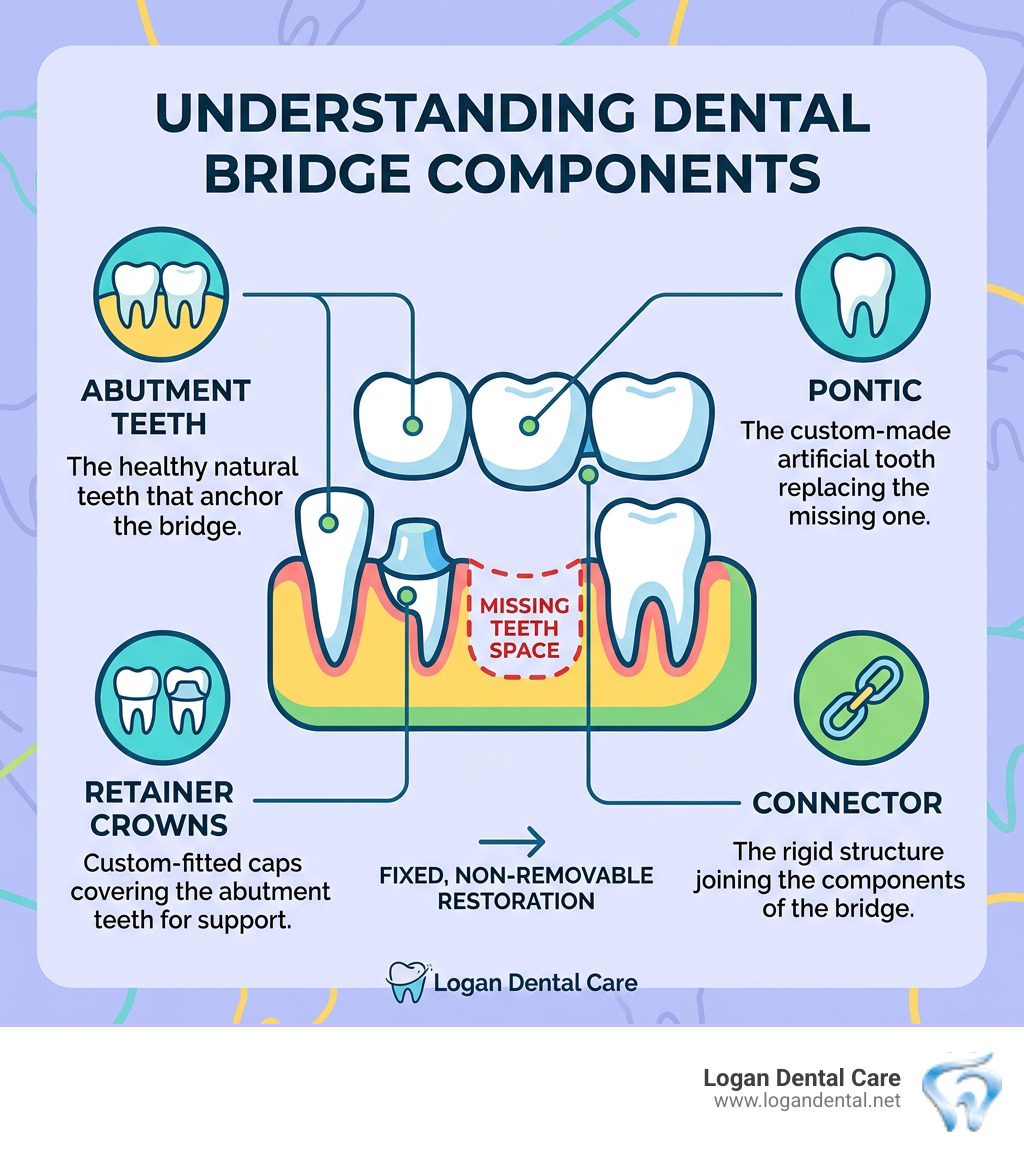
- Pontic - the false tooth that fills the empty space
- Abutment teeth - the natural teeth on either side that support the bridge
- Retainers (crowns) - the caps placed over abutment teeth to hold the bridge in place
- Connector - the part that joins the pontic to the retainers
The result is a fixed, non-removable restoration that looks and functions like natural teeth.
Tooth loss is more common than most people realize. In fact, nearly 47% of adults over 30 in the United States have periodontal disease — one of the leading causes of tooth loss. For adults 65 and older, that number climbs to 70%.
Losing even a single tooth can cause surrounding teeth to shift, make cleaning harder, affect your bite, and change the way you speak or chew. A dental bridge addresses all of that with a permanent, fixed solution — no surgery required in most cases.
At Logan Dental Care in Bellefontaine, Ohio, we help families find the right tooth replacement option that fits their needs, their comfort level, and their long-term oral health goals. This guide will walk you through everything you need to know about dental bridges — from how they work to how long they last.
Bridgework teeth terms to remember:
Understanding Dental Bridge Functionality
When we talk about a bridge in mouth setup, we are describing a sophisticated piece of dental engineering. A dental bridge is a fixed prosthesis, meaning it is cemented into place and cannot be removed by the patient. Its primary job is to "bridge" the gap created by one or more missing teeth.
But how does it actually function day-to-day? It all comes down to three main roles:
- Mastication (Chewing): Missing teeth make it difficult to break down food properly. A bridge restores the chewing surface, allowing you to enjoy your favorite foods again without favoring one side of your mouth.
- Occlusal Stability: Your teeth like to have neighbors. When a tooth is lost, the surrounding teeth often begin to tilt or drift into the empty space. This shifting can ruin your bite alignment (occlusion). A bridge acts as a placeholder, keeping everyone in their proper lane.
- Speech Improvement: Certain sounds, like "s" or "th," require your tongue to press against your teeth. Filling a gap can immediately improve clarity in your speech.
The pontic (the artificial tooth) is designed to mimic the shape and size of your original tooth, while the abutments (the support teeth) provide the foundation. The retainers are essentially the custom crowns that sit on those support teeth, and the connectors are the sturdy joints that fuse the whole unit together.

The Main Types of Bridgework Teeth
Not every gap in a smile is the same, which is why there are several fixed partial denture options available. Choosing the right one depends on the location of the missing tooth, the health of your surrounding teeth, and the "span length" of the gap.
One fascinating bit of dental physics we consider is the "deflection" of the bridge. If a bridge replaces two teeth instead of one, the amount of bending or "deflection" under pressure is 8 times greater. If it replaces three teeth, that deflection jumps to 27 times greater! This is why selecting the right design and strong connectors is vital for long-term success.
Traditional Bridgework Teeth
The traditional bridge is the most common type used today. It involves creating a dental crown for the teeth on either side of the gap, with a pontic in between. To make this work, we have to prepare the anchor teeth by removing a portion of their enamel. This allows the crowns to fit snugly over them. We pay close attention to parallelism during this stage, ensuring the bridge can slide into place smoothly and stay securely attached.
Conservative Maryland and Cantilever Options
If we want to be more conservative with your natural tooth structure, we might look at other designs:
- Maryland Bridge (Resin-Bonded): This is often used for front teeth. Instead of full crowns, it uses a metal or porcelain framework with "wings" that are bonded to the backs of your adjacent teeth. It requires minimal preparation, meaning we don't have to file down your healthy teeth as much.
- Cantilever Bridge: This is used when there is an abutment tooth on only one side of the gap. While it’s less common now, it can be a good solution for specific areas of the mouth that don't face heavy chewing pressure. However, it can act like a lever, so we use it cautiously to avoid stressing the single support tooth.
The Clinical Procedure and Materials Used
Getting bridgework teeth is a blend of art and science. We want the result to be strong enough to withstand the incredible pressure of your jaw muscles—some of the strongest in the body—while looking indistinguishable from your natural teeth.
Modern materials have come a long way. While Gold alloys are still used for their incredible durability in the back of the mouth, most patients today prefer aesthetic options like:
- Porcelain Fused to Metal (PFM): The "gold standard" for decades, PFM bridges have a 95% success rate over a 10-year period.
- Zirconia: This is a high-strength ceramic that is virtually indestructible. Using 3x3 mm zirconia connectors can increase fracture resistance by 20%.
- IPS Emax: A lithium disilicate glass-ceramic known for its stunning translucency, making it perfect for front-tooth restorations.
For a deeper dive into these materials, check out our complete guide to crowns and bridges.
Step-by-Step Fitting Process
The journey to a new smile usually takes two main appointments:
- Initial Assessment & Prep: We start by examining your oral health and using a local anesthetic to ensure you're comfortable. We then file down the abutment teeth to make room for the crowns.
- Impressions: We take a highly accurate mould (or digital scan) of your teeth. This is sent to a dental lab where your custom bridge is fabricated.
- Temporary Bridge: While the lab works its magic, we provide a temporary bridge to protect your prepared teeth and fill the gap.
- Final Cementation: Once your permanent bridge arrives, we check the fit, bite, and color. When everything is perfect, we cement it into place.
Benefits, Risks, and Candidate Selection
Who is a good candidate for a bridge for teeth? Ideally, you have healthy teeth on either side of the gap with strong bone support.
Dentists often refer to Ante’s Law when planning a bridge. This "law" suggests that the total root surface area of the abutment teeth should be equal to or greater than the root surface area of the teeth being replaced. We also look for a favorable crown-root ratio (ideally 2:3) to ensure the foundation can handle the load.
The Benefits:
- Restores your smile and confidence.
- Prevents remaining teeth from drifting.
- Distributes the forces in your bite properly.
- A permanent, non-surgical alternative to implants.
The Risks:
- Secondary Caries: Decay can form under the crowns if oral hygiene is neglected.
- Mechanical Failure: The bridge can fracture or the cement can wash out over time.
- Plaque Retention: Bridges are naturally more "plaque-retentive" than single crowns, meaning you have to be extra diligent with cleaning.
FeaturePFM BridgeZirconia BridgeDurabilityHigh (95% success over 10 yrs)Extremely HighAestheticsGood (metal may show at gumline)Excellent (metal-free)PreparationSignificant filing requiredModerate filing required
Longevity and Maintenance of Your Restoration
A dental bridge is an investment in your health. While most bridges last 10 years or longer, their lifespan depends entirely on how well you care for the teeth underneath them. If the abutment teeth develop decay or gum disease, the entire bridge will fail.
Because the teeth are joined together, you can't pass regular floss between them. This is where specialized tools become your best friends:
- Floss Threaders: These allow you to "thread" floss under the pontic.
- Superfloss: A pre-cut strand with a stiff end for easy threading.
- Interdental Brushes: Small, pine-tree-shaped brushes that slide into the gaps at the gumline.
Long-term Success of Bridgework Teeth
To keep your bridgework teeth in top shape for the long haul:
- Brush twice daily with fluoride toothpaste.
- Clean under the bridge daily using the tools mentioned above.
- Avoid hard foods like ice, hard candy, or unpopped popcorn kernels that could crack the porcelain.
- Visit us every six months for professional cleanings and checkups. We can spot minor issues like a loose margin before they become big problems.
Alternatives and Cost of Dental Bridges
While bridges are a fantastic option, they aren't the only way to fill a gap. When deciding, it’s helpful to look at dental implants vs. bridges to see which fits your lifestyle.
- Dental Implants: These involve a titanium post that undergoes osseointegration (fusing with the jawbone). Unlike bridges, implants don't require us to file down the neighboring teeth. They are often considered the "gold standard" but do involve a surgical component and a longer healing time.
- Removable Partial Dentures: If you are missing many teeth or are looking for a more budget-friendly entry point, a partial denture might be the answer. These can be taken out for cleaning but are generally less stable than a fixed bridge.
Regarding costs, dental bridges are typically more expensive than removable dentures but less costly upfront than dental implants. Most dental insurance plans provide some level of coverage for bridgework, as it is considered a restorative necessity. At Logan Dental Care, we provide transparent treatment plans so you know exactly what to expect.
Frequently Asked Questions about Dental Bridges
How long do dental bridges typically last?
With proper care, a bridge generally lasts about 10 years. Many patients find that with excellent oral hygiene and regular dental visits, their bridges can last significantly longer—sometimes 15 years or more.
Is the dental bridge procedure painful?
Not at all! We use local anesthetics to numb the area during the tooth preparation phase. You might experience some mild sensitivity or soreness for a few days after the procedure as your gums adjust, but this is easily managed with over-the-counter pain relief.
Can a loose dental bridge be re-cemented?
In many cases, yes. If the bridge itself is still in good condition and the underlying teeth are healthy, we can often clean and re-cement it. However, if the bridge came loose because of decay in the support teeth, we will need to treat the decay first, which might require a new bridge.
Conclusion
Replacing missing teeth is about more than just aesthetics; it’s about protecting your long-term oral health and your quality of life. Whether you choose a traditional bridge or a more conservative Maryland design, bridgework teeth offer a reliable, time-tested way to restore your smile.
At Logan Dental Care, we take pride in serving the Bellefontaine, Ohio community with the warmth of a small-town practice and the technology of a modern dental office. We treat every patient like family, ensuring your treatment plan is as unique as your smile.
Ready to fill the gap and get back to smiling with confidence? Schedule your consultation for crowns and bridges with our team today!