
Detailed Guide to Crowns and Bridges

Understanding Your Options for Restoring Damaged or Missing Teeth
Crowns and bridges are two of the most common dental restorations used to repair damaged teeth or replace missing ones. Here's what you need to know:
What They Are:
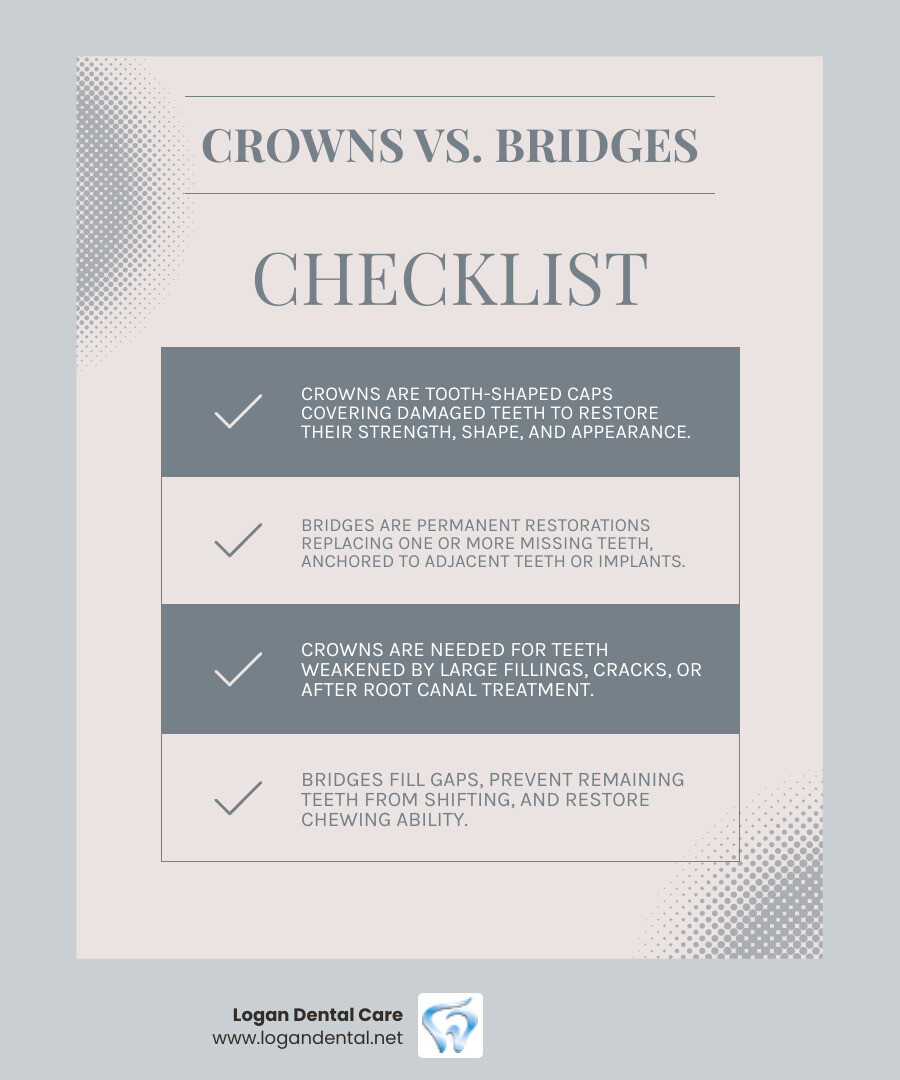
- Crown - A tooth-shaped cap that covers a damaged tooth to restore its strength, shape, and appearance
- Bridge - A permanent restoration that replaces one or more missing teeth by anchoring artificial teeth to surrounding natural teeth or implants
When You Might Need Them:
- Crowns for teeth weakened by large fillings, cracks, or root canal treatment
- Bridges to fill gaps left by missing teeth and prevent remaining teeth from shifting
- Both to restore your ability to chew properly and improve your smile's appearance
Missing, chipped, or fractured teeth can cause more than just self-consciousness about your smile. They can make speaking difficult and lead to further dental damage if left untreated. According to research, crowns typically last 10-15 years while bridges last 5-15 years with proper care.
The good news? Modern dental technology has made getting crowns and bridges more comfortable and efficient than ever. Many dental offices can even create same-day crowns using advanced CAD/CAM technology.
Whether you're dealing with a damaged tooth or missing teeth, understanding your restoration options helps you make informed decisions about your oral health. Both crowns and bridges offer reliable solutions that can restore your smile's function and appearance for years to come.
Your Complete Guide to Dental Crowns and Bridges
At Logan Dental Care, we believe a healthy smile is key to your well-being and confidence. We offer personalized solutions like crowns and bridges to restore your oral health. Let's explore what these treatments involve and how they can bring your smile back to life.
What Are Crowns and Bridges and When Are They Needed?
Crowns and bridges are common and effective restorative treatments.
A dental crown, or "cap," is a custom-fit covering that fits over a damaged or weakened tooth, restoring its original shape, strength, and appearance while shielding it from further harm.
A dental bridge is designed to replace one or more missing teeth. It "bridges" the gap using artificial teeth (called pontics) that are anchored by crowns (called abutment crowns) on the adjacent healthy teeth or dental implants. Unlike removable dentures, bridges are a fixed, permanent solution.
We might recommend a crown or bridge if you have:
- Severe tooth decay that is too extensive for a regular filling.
- A cracked, broken, or severely worn tooth.
- A tooth that needs protection after a root canal procedure.
- One or more missing teeth that leave a gap.
- A significantly discolored or misshapen tooth affecting your smile.
- Pain when biting or chewing.
- Difficulty chewing or speaking due to missing teeth.
- Shifting of teeth next to a gap.
If any of these sound familiar, contact us to discuss the best ways to restore your oral health.
The Process, Materials, and Longevity
Getting crowns and bridges is a straightforward process.
The Process of Getting a Dental Crown or Bridge
The traditional method typically requires two appointments:
- First Appointment: We numb the area and carefully prepare the tooth (or abutment teeth for a bridge) by reshaping it. Then, we take a precise impression using a digital scanner or putty-like material. A temporary crown or bridge is placed to protect the tooth while your permanent restoration is crafted by a dental lab.
- Second Appointment: Your temporary is removed, and we check the fit and appearance of your permanent crown or bridge. After any minor adjustments, it is securely cemented into place, becoming a fixed part of your smile.

Thanks to advanced CAD/CAM technology, we can often offer a same-day crown in a single, convenient visit.
Materials Used for Crowns and Bridges
Materials are chosen for strength, durability, and aesthetics:
- Porcelain: Looks very natural and is an excellent choice for front teeth.
- Zirconia: An exceptionally strong ceramic that offers both durability and a natural appearance for any tooth.
- Gold Alloys: Highly durable and gentle on opposing teeth, often used for back molars.
- Porcelain-Fused-to-Metal (PFM): Combines a strong metal base with a natural-looking porcelain exterior.
- Metal Alloys: Valued for superior strength, especially for back teeth.
- Composite: Typically used for temporary crowns.
For more detailed information, explore our blog: Dental Crown Options: Ultimate Guide.
How Long Do Dental Crowns and Bridges Typically Last?
With proper care, these restorations are designed for longevity.
- Lifespan of Crowns: Dental crowns generally last 10 to 15 years or longer.
- Lifespan of Bridges: A dental bridge can be expected to last 5 to 15 years, and often much longer.
While crowns and bridges are resilient, they can be damaged by new decay, injury, or chewing on hard objects. Consistent home care and regular dental visits are essential for their long-term success. For more general information, you can refer to authoritative sources like Colgate's guide.
Comparing Alternatives, Costs, and Care for Crowns and Bridges
It's helpful to understand all your options for restoring your smile.
FeatureDental CrownDental BridgeDental ImplantProcedureCaps a damaged tooth, restoring its structure.Replaces missing teeth, anchored to adjacent teeth/implants.Surgically placed root, topped with a crown.Longevity10-15 years or more with proper care.5-15 years with proper care.Often 20+ years, potentially a lifetime.Ideal Use CasesDamaged, fractured, post-root canal, large filling, aesthetic improvement.1-4 consecutive missing teeth, adjacent healthy teeth.Single missing tooth, multiple missing teeth, bone preservation.Key BenefitStrengthens and protects existing tooth.Fills gap, prevents shifting, restores function.Replaces tooth root, preserves bone, independent.
Alternatives to Crowns and Bridges
- Dental Implants: Often considered the gold standard, dental implants are titanium posts placed in the jawbone to act as artificial tooth roots. They preserve bone and don't rely on adjacent teeth for support. Learn more by comparing Dental Implants vs. Bridges.
- Veneers: For cosmetic concerns, veneers are thin shells bonded to the front of teeth to improve their appearance with minimal tooth preparation.
- Dentures: Dentures are a removable option for replacing multiple or all teeth in an arch.
Cost Factors for Crowns and Bridges
The cost of crowns and bridges depends on several factors, and we will always provide a clear estimate. Key factors include:
- Material Used: Porcelain, zirconia, and gold have different costs.
- Number of Units: A bridge with multiple teeth will cost more than a single crown.
- Complexity of the Case: Intricate situations may require additional procedures.
- Insurance Coverage: Many dental plans cover a portion of the cost.
For a detailed breakdown, read our Dental Crown Cost: Complete Guide. While general estimates suggest bridges might cost $700 to $1,500 per tooth, a personalized quote is essential.
How to Care for Your Dental Crowns and Bridges
Proper care extends the life of your restorations:
- Brush Regularly: Brush twice a day with a non-abrasive fluoride toothpaste.
- Floss Daily: This is crucial for removing plaque. For bridges, use tools like floss threaders or superfloss to clean underneath the artificial tooth (pontic).
- Avoid Hard and Chewy Foods: Chewing on ice, hard candies, or using your teeth as tools can damage your restorations.
- Regular Dental Check-ups: Visiting us at Logan Dental Care for routine cleanings and exams is the most important step to monitor your crowns and bridges and ensure the health of your entire mouth.
Take the Next Step Towards a Healthier Smile
Crowns and bridges do more than just fix teeth—they restore your ability to chew with ease, improve your facial appearance, and renew your confidence. These treatments also protect your existing teeth from future oral health problems.
Here at Logan Dental Care in Bellefontaine, OH, we are dedicated to helping our Logan County community achieve healthy, confident smiles. We combine a friendly, small-town feel with the latest dental technology, treating every patient like family.
If you have a damaged tooth, are missing teeth, or are experiencing tooth pain, don't wait. Addressing these issues early can prevent more complex problems. We invite you to schedule a consultation to discuss whether crowns and bridges are the right solution for you.
Ready to restore your complete, functional smile? Take the first step today.