
Don't Crack Under Pressure with These Molar Repair Tips
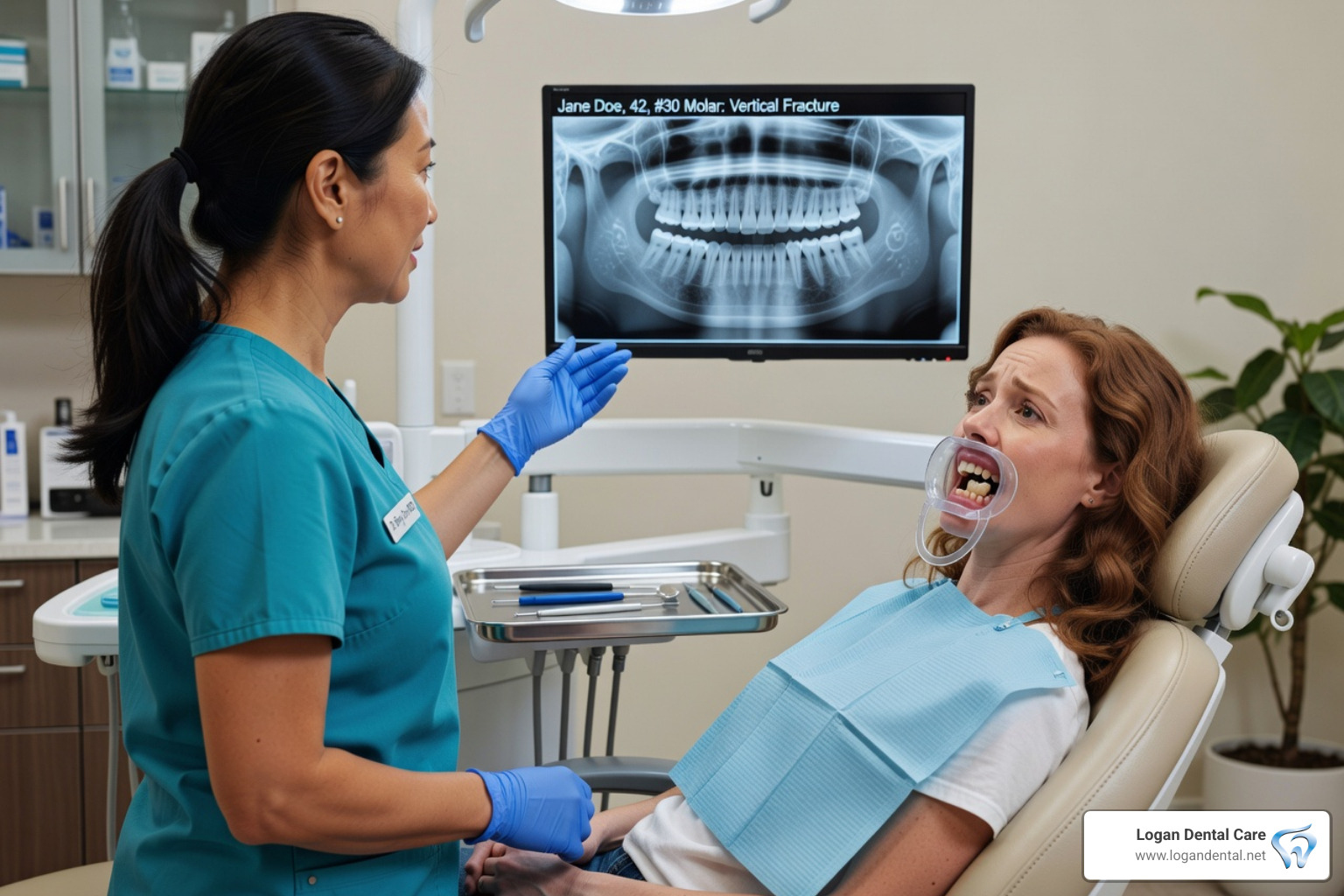
What You Need to Know About Half Broken Molar Tooth Repair
Half broken molar tooth repair is something that can't wait — and the good news is that in most cases, your tooth can be saved.
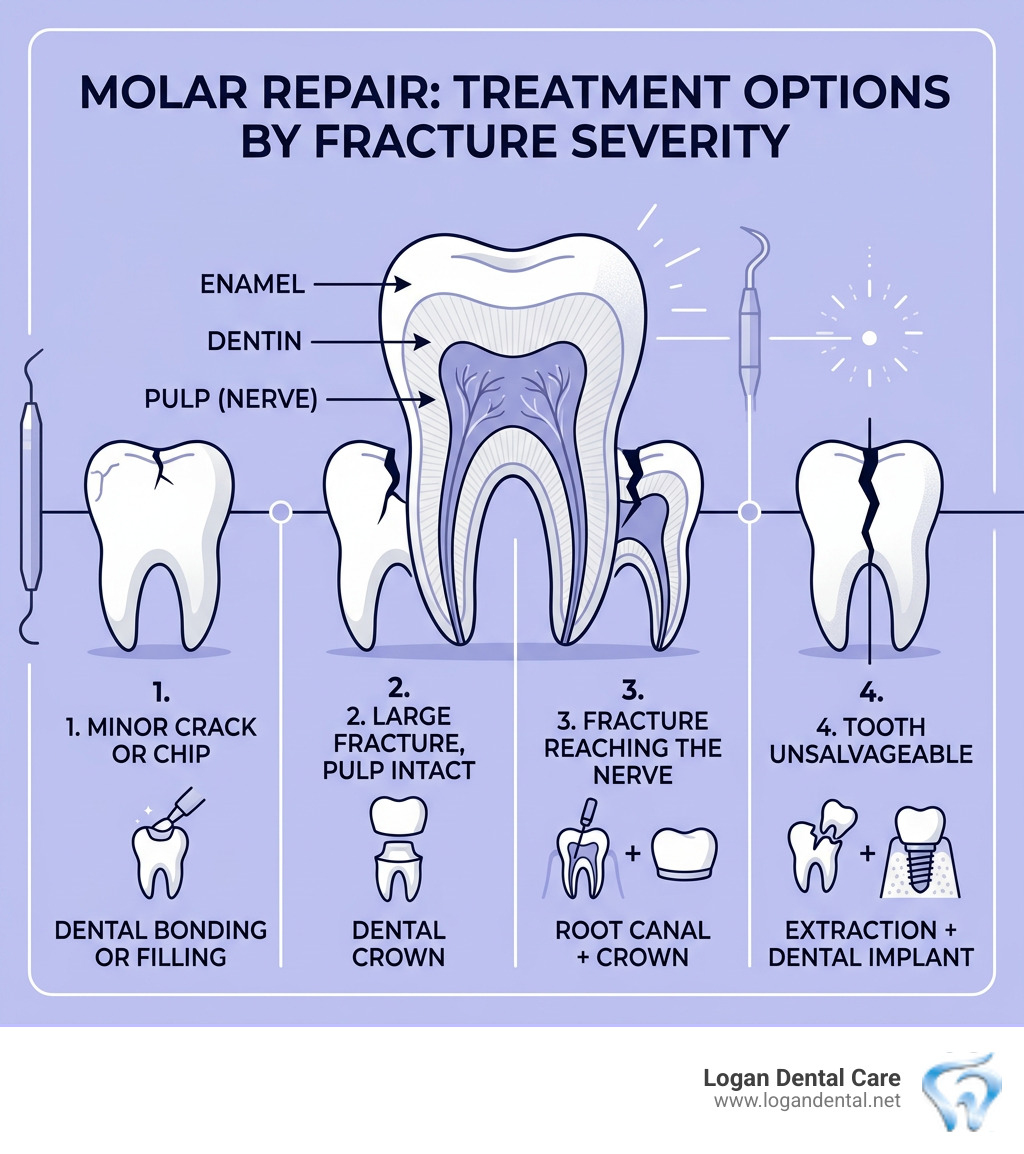
Here's a quick overview of your main treatment options based on how severe the break is:
| Severity | Recommended Treatment |
|---|---|
| Minor crack or chip | Dental bonding or filling |
| Large fracture, pulp intact | Dental crown |
| Fracture reaching the nerve | Root canal + crown |
| Tooth unsalvageable | Extraction + dental implant |
Picture this: you bite down on something hard — a piece of candy, a popcorn kernel, maybe a chunk of ice — and suddenly you feel something wrong. A piece of your tooth is loose in your mouth.
It's a frightening moment. But it's also more common than you might think.
Over 5 million teeth are lost or fractured every year in the U.S. due to accidents and sports-related injuries alone — and that doesn't even count breaks caused by decay, grinding, or worn-down fillings.
Molars take on the most chewing force of any teeth in your mouth. That makes them especially vulnerable to fractures. When one breaks, it can feel like a dental emergency — because it often is.
The sooner you act, the more likely your dentist can repair the tooth rather than remove it. Waiting can turn a simple fix into a much bigger problem.
Common Causes and Symptoms of a Half-Broken Molar
Understanding why a molar breaks is the first step in preventing it from happening again. While our tooth enamel is the hardest substance in the human body, it isn’t invincible. Think of your molars as the "workhorses" of your mouth; they endure incredible pressure every time you chew.

Several factors can lead to a molar snapping in half:
- Tooth Decay: This is the most common culprit. Untreated cavities eat away at the internal structure of the tooth, leaving a hollow shell that eventually collapses under the pressure of chewing.
- Physical Trauma: A fall, a sports injury, or a sudden blow to the face can easily fracture a tooth.
- Biting Hard Objects: We’ve all been tempted to crunch on ice, hard candy, or unpopped popcorn kernels. Unfortunately, these objects are often harder than the tooth itself.
- Bruxism (Teeth Grinding): If you wake up with a sore jaw, you might be grinding your teeth at night. This constant friction wears down enamel and creates "craze lines" or micro-fractures that eventually lead to a clean break.
- Large, Old Fillings: Over time, large silver (amalgam) fillings can act like a wedge. As the metal expands and contracts with temperature changes, it puts pressure on the surrounding natural tooth, eventually causing it to split.
- Enamel Erosion: Acidic foods and drinks can thin your enamel, making the tooth brittle and prone to chipping.
If you are experiencing Tooth Pain, it is your body's way of signaling that the structural integrity of your tooth has been compromised.
Identifying the Signs of a Fracture
Sometimes a break is obvious—you spit out a piece of enamel. Other times, the break is internal or below the gum line. Look out for these symptoms:
- Temperature Sensitivity: Sharp zingers when drinking hot coffee or cold water often mean the inner dentin or nerve is exposed.
- Sharp Pain when Biting: You might feel a sharp pain only when you release your bite; this is a classic sign of "cracked tooth syndrome."
- Gum Swelling: If the break reaches the root or causes an infection, the gums around that specific molar may become red and puffy.
- Jagged Edges: Your tongue is incredibly sensitive; it will likely find a sharp or rough spot on the molar before you even look in the mirror.
- Visible Discoloration: A dark spot inside the break could indicate underlying decay or a dying nerve.
Immediate Steps for Half Broken Molar Tooth Repair
If you find yourself with a broken tooth in the middle of dinner or during a weekend hike in Logan County, don't panic. Taking the right steps immediately can save the tooth and manage your discomfort until you can reach us.
- Rinse with Warm Salt Water: This cleans the area and helps kill bacteria that could lead to an infection.
- Manage Pain and Swelling: Use a cold compress on the outside of your cheek for 15 minutes at a time. Over-the-counter anti-inflammatories like ibuprofen can help, provided you have no medical contraindications.
- Protect Your Soft Tissue: If the broken molar has a sharp edge that is cutting your tongue or cheek, cover it with a piece of dental wax or even a small piece of sugar-free gum.
- Stick to Soft Foods: Avoid chewing on the side of the break. Stick to yogurt, mashed potatoes, or smoothies until you see a professional.
For more detailed guidance on handling these situations, check out our Emergency Dental Care page or our Dental Emergency Near Me Guide.
Preserving the Broken Fragment
If you found the piece of tooth that broke off, pick it up! While we can't always "glue" it back on, seeing the fragment helps us understand the nature of the fracture.
- Handle with Care: Touch only the "crown" (the chewing surface) and not any attached root tissue.
- Keep it Moist: Place the fragment in a small container of milk or a saline solution. If neither is available, keep it in your mouth between your cheek and gums (be careful not to swallow it!).
- See Us Quickly: Reattachment or immediate assessment is most successful when handled within the first few hours.
Professional Treatment Options for Repairing a Half-Broken Molar
At Logan Dental Care, we always aim to preserve as much of your natural tooth as possible. The treatment we choose depends entirely on the severity of the break and whether the "pulp" (the nerve and blood supply) is involved.
| Treatment | Best For | Recovery Time |
|---|---|---|
| Bonding | Minor chips/cracks | Immediate |
| Filling | Small breaks caused by decay | Immediate |
| Crown | Large fractures/Structural loss | 1-2 weeks |
| Root Canal | Exposed or infected nerves | 1-2 weeks |
Choosing the right path is a collaborative process. We’ll walk you through Your Guide to Root Canals and Crowns to ensure you feel confident in your care plan.
Dental Bonding and Fillings for Minor Damage
If the break is small and hasn't reached the inner sanctum of the tooth, we can often perform a quick, single-visit repair.
Dental bonding involves using a tooth-colored composite resin. We "etch" the surface of the tooth to create a grip, apply the resin, and shape it to look exactly like your natural molar. We then use a special UV light to harden the material instantly. This is a fantastic, cost-effective way to restore the look and feel of a tooth that has suffered a minor chip.
Dental Crowns for Half Broken Molar Tooth Repair
When a molar is broken in half, bonding usually isn't strong enough to handle the thousands of pounds of pressure that molars endure. In these cases, a dental crown is the gold standard.
A crown is essentially a custom-made "cap" that covers the entire visible portion of the tooth. It holds the remaining pieces together and prevents the fracture from spreading. We offer various Dental Crown Options Ultimate Guide, including porcelain, ceramic, and zirconia, which are incredibly durable and look just like real teeth.
You can learn more about how we restore strength and beauty on our Crowns and Bridges service page.
The Role of Root Canal Therapy in Half Broken Molar Tooth Repair
If the break is deep enough to expose the pulp, you will likely feel significant pain. This exposure allows bacteria to enter the nerve chamber, which can lead to an abscess or severe infection.
In this scenario, a Root Canal Treatment is necessary to save the tooth. We remove the damaged nerve tissue, clean the canal, and seal it. Despite their reputation, modern techniques mean that Root Canals Don't Hurt more than a standard filling. After the Root Canal is complete, the tooth will need a crown to protect its now-brittle structure.
When Extraction and Implants Become Necessary
Sometimes, despite our best efforts, a molar is simply too far gone. This usually happens if:
- The fracture extends vertically down into the root (Vertical Root Fracture).
- The decay has reached so deep into the jawbone that there isn't enough healthy tooth left to support a crown.
In these cases, we have to look at Root Canal vs Extraction. If the tooth must come out, Tooth Extractions are performed with the utmost care for your comfort.
To prevent your other teeth from shifting and to maintain your jawbone health, we often recommend a dental implant. This involves placing a tiny titanium post into the jawbone, which eventually supports a beautiful, permanent replacement tooth.
Recovery and Aftercare Following Extraction
If an extraction is necessary, the first 24 hours are the most important for healing. You need to allow a blood clot to form in the socket to protect the bone and nerves.
We provide comprehensive Tooth Extraction Recovery Tips, including avoiding straws, sticking to soft foods, and keeping the area clean with gentle salt water rinses. Most patients return to their normal routine within a few days, though complete bone healing takes a few months.
Preventing Future Fractures and Maintaining Oral Health
We would much rather help you prevent a break than have to fix one! Here is how you can protect your molars from future damage:
- Wear a Mouthguard: If you play contact sports or grind your teeth at night (bruxism), a custom-fitted mouthguard is your best defense. It acts as a shock absorber for your teeth.
- Ditch the Ice Chewing: It’s a hard habit to break, but your teeth will thank you.
- Use Fluoride Toothpaste: Fluoride helps remineralize your enamel, keeping it tough against acids and wear.
- Regular Check-ups: During your six-month cleanings in Bellefontaine, we look for tiny "craze lines" or failing fillings. Catching these early allows us to reinforce the tooth before it actually breaks.
- Balanced Diet: Reducing sugar and acidic drinks prevents the decay that weakens the tooth from the inside out.
Frequently Asked Questions About Molar Repair
How much does it cost to repair a half-broken molar?
The cost varies significantly depending on whether you need a simple filling or a full root canal and crown. Most dental insurance plans cover a portion of these restorative procedures because they are considered "medically necessary" to maintain oral health. We recommend reviewing our guides on Dental Crown Cost and the Dental Crowns Cost Complete Guide for a better understanding of how insurance and financing work.
What happens if a half-broken molar is left untreated?
Ignoring a broken tooth is a recipe for disaster. Even if it doesn't hurt now, the exposed interior of the tooth is a breeding ground for bacteria. This can lead to:
- Abscesses: Painful pockets of infection at the root.
- Systemic Infection: Bacteria from a tooth infection can enter the bloodstream.
- Bone Loss: Infection can eat away at the jawbone supporting the tooth.
- Shifting Teeth: If the tooth eventually fails, surrounding teeth will tilt into the gap, ruining your bite.
How long does recovery take after treatment?
For bonding or fillings, you can usually eat normally as soon as the numbness wears off. For crowns or root canals, you might experience some mild sensitivity for a few days. The permanent crown usually takes about two weeks to be fabricated in a lab, during which you’ll wear a temporary one. Once the permanent one is placed, it can last 10 to 15 years or longer with good care!
Conclusion
A half-broken molar can certainly put a "crack" in your day, but it doesn't have to be a permanent problem. Whether you're in Bellefontaine, Zanesfield, or anywhere in the Logan County area, our team at Logan Dental Care is here to help you get your smile back on track.
We pride ourselves on providing high-quality, family-focused dentistry in a warm and welcoming environment. We don't just see patients; we see neighbors and friends. If you’ve suffered a dental injury or noticed a sharp edge on your tooth, don't wait for the pain to start.
Schedule your consultation for Crowns and Bridges today and let us help you keep your smile strong for years to come.