
The Root of the Matter: Does a Root Canal Really Hurt?

Debunking the Myths of Root Canal Pain
Do root canals hurt? The short answer is no - modern root canal procedures are no more painful than getting a regular filling. Here's what you need to know:
Quick Facts About Root Canal Pain:
- During the procedure: Local anesthesia makes it virtually painless
- After the procedure: Mild soreness for 2-3 days is normal
- Pain relief: Over-the-counter medications manage any discomfort
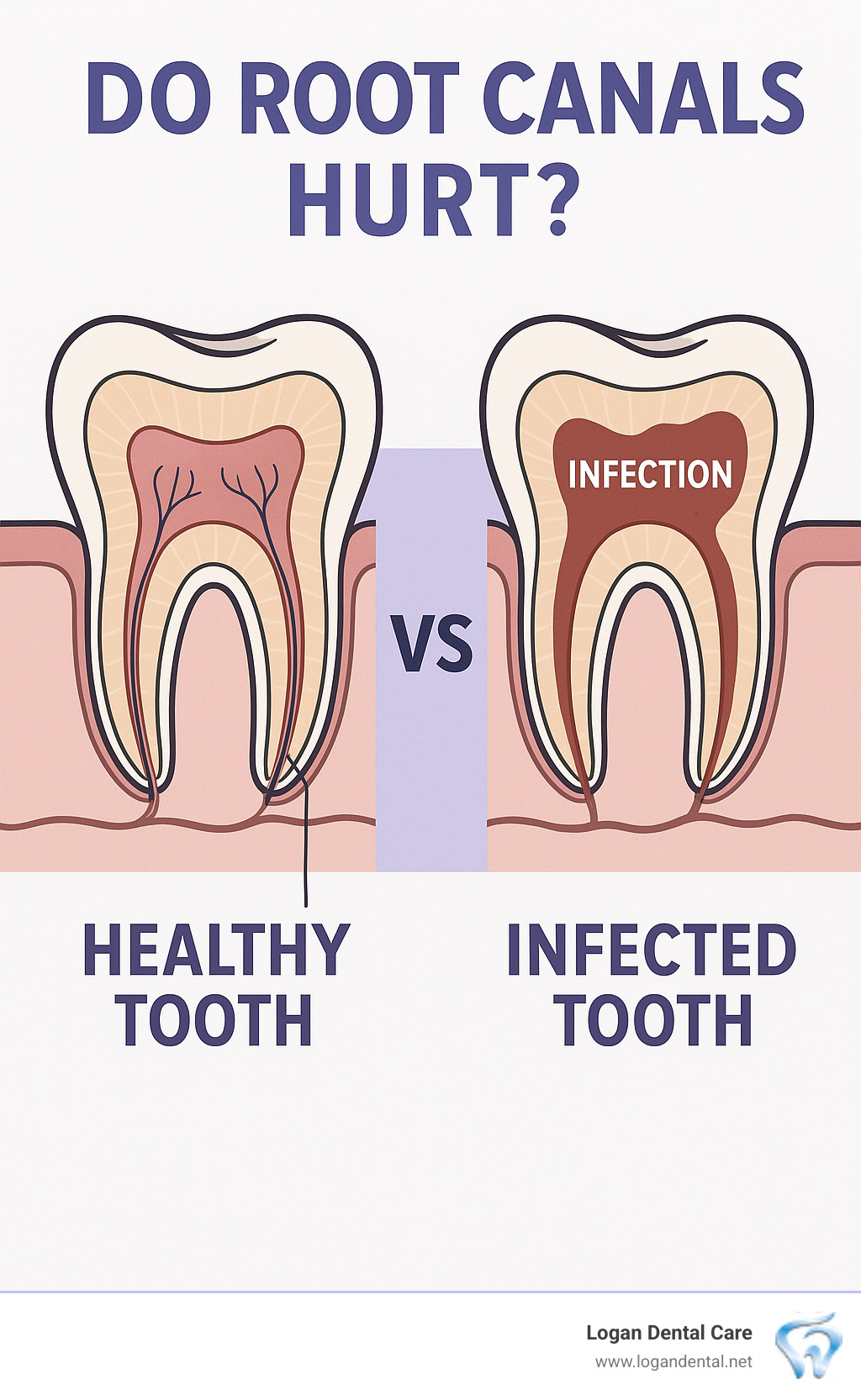
- The real pain: Comes from the infection, not the treatment
- Success rate: Over 95% of root canals are successful
If you're one of the many people who wince at the words "root canal," you're not alone. 67% of Americans say their fear of pain keeps them from having a root canal, according to recent studies. But here's the truth: that fear is based on outdated information.
The root canal procedure has earned an unfair reputation over the years. Most of this fear comes from stories passed down from decades ago, when dental technology wasn't as advanced as it is today.
Modern root canals are designed to relieve pain, not cause it. The intense throbbing you feel from an infected tooth? That's what a root canal fixes. With today's advanced anesthetics and improved techniques, patients report that getting a root canal feels similar to having a cavity filled.
The real pain comes from delaying treatment. An untreated tooth infection only gets worse over time, leading to more severe pain, swelling, and potentially serious health complications.
So, Do Root Canals Hurt? A Look at the Modern Procedure
The question "do root canals hurt?" comes up in almost every conversation we have with patients at Logan Dental Care. And honestly, we completely understand why you'd ask! The good news? We're here to put those worries to rest.
Thanks to incredible advances in dental technology and techniques, getting a root canal today feels about the same as having a regular filling. Our main focus is always making sure you're comfortable throughout the entire process, and we use every tool available to keep your experience as pain-free as possible.
The Modern Procedure: Why Don't Root Canals Hurt Anymore?
Remember those old stories about painful dental work? Well, you can forget them. Modern root canal therapy has been completely transformed, and the difference is night and day.
Local anesthesia is our secret weapon against any discomfort. Before we start, we thoroughly numb your tooth and the surrounding area. You might feel some pressure or gentle movement as we work, but pain? Not a chance. Our team knows exactly how to administer anesthesia effectively, so your tooth stays completely comfortable throughout the procedure.
If you're feeling nervous about the appointment, we've got options for that too. Sedation can help you relax - whether it's nitrous oxide (that's the "laughing gas" that makes everything feel easier) or other sedation methods to keep you calm and comfortable.
But here's where things get really exciting: the tools we use today are incredibly advanced. We work with rotary instruments that clean your tooth's canals precisely and efficiently. Our digital imaging gives us crystal-clear views of what's happening inside your tooth, so we can work with amazing accuracy. These microscopic tools mean less invasive treatment and faster healing for you.
You can see more about our commitment to the latest dental innovations on our Our Technology page - we're always staying ahead of the curve to make your visits better.
The experts agree with us too. The American Association of Endodontists explains post-treatment soreness and confirms that with today's technology and anesthetics, you won't experience any more pain than getting a cavity filled.
So when someone asks "do root canals hurt?" - the answer is simple. The discomfort people associate with this treatment is truly a thing of the past. Today's root canal is a routine, comfortable procedure designed to get you out of pain and back to enjoying life.

Signs You Might Need a Root Canal
Before we talk more about how comfortable the procedure is, let's discuss why you might need one. A root canal becomes necessary when the soft tissue inside your tooth (called the pulp) gets infected or severely inflamed. This pulp contains nerves and blood vessels, and when something goes wrong with it, you'll definitely feel it.
While only we can give you a definitive diagnosis, there are some telltale signs to watch for:
Persistent tooth pain is usually the biggest red flag. If you have a toothache that won't go away, or keeps coming back, that's your tooth trying to tell you something important. This pain might get worse when you chew or put pressure on the tooth. Our Tooth Pain page has more details about what different types of pain might mean.
Sensitivity to hot and cold that lingers is another warning sign. A little sensitivity is normal, but if the pain sticks around long after you've finished that hot coffee or cold ice cream, your tooth's pulp might be in trouble.
Swollen or tender gums around a specific tooth can signal an infection spreading. Sometimes you might even see a small pimple-like bump on your gums - that's called an abscess, and it's definitely something we need to address quickly.
Tooth discoloration is a visual clue that shouldn't be ignored. If one of your teeth starts looking darker or grayish, the pulp inside might have died.
Sharp pain when biting down is another common sign, especially if it's focused on one particular tooth. You can learn more about this symptom on our Tooth Pain When Biting Down page.
Sometimes a deep cavity, crack, or previous injury can lead to needing a root canal, even without obvious pain. That's exactly why regular check-ups are so important - we can often spot these problems before they become painful emergencies.
If any of these symptoms sound familiar, don't wait. Early treatment can save your tooth and prevent the problem from getting much worse.

Understanding Post-Procedure Discomfort: Do root canals hurt afterward?
Now let's talk about what happens after your treatment. Do root canals hurt once you leave our office? You might experience some mild soreness for a few days, but this is completely normal and part of your body's natural healing process.
Think of it like the tenderness you feel after any minor injury - it's actually a good sign that things are healing properly. The mild soreness you might feel is your body recovering from the inflammation, not from the procedure itself.
Some patients also notice jaw soreness from keeping their mouth open during the treatment. This is temporary and fades quickly - kind of like how your jaw might feel after a long dental cleaning.
Here's the important part: this post-procedure tenderness is easily manageable. Most patients find that over-the-counter pain relievers like ibuprofen or acetaminophen handle any discomfort just fine. We'll give you specific instructions custom to your situation.
The key thing to remember is that this mild, temporary soreness is nothing like the intense pain you probably felt before the root canal. That throbbing, aching pain came from the infection in your tooth's pulp. The root canal eliminates that source of pain completely.
Most patients actually feel significant relief almost immediately after treatment, because we've removed what was causing all that severe pain. While you might have a little tenderness as you heal, it's a world away from the agony of an untreated infection.
For more helpful tips on managing dental discomfort, check out our guide on Toothache Pain Relief.
Managing Recovery and When to Call Your Dentist
Taking care of yourself after a root canal is straightforward, but knowing what to expect helps everything go smoothly. Here's what we recommend for the best recovery:
Stick to soft foods for the first few days. Think mashed potatoes, yogurt, smoothies, or pasta - anything that won't put pressure on your healing tooth. Avoid hard, crunchy, or sticky foods that could irritate the area or dislodge your temporary filling. Try not to chew directly on the treated tooth until we place your permanent crown.
Keep up with gentle oral hygiene by brushing after meals and flossing daily, but be extra gentle around the treated area. An antibacterial mouthwash can help keep things clean while you heal. Our Dental Hygiene page has more tips for keeping your mouth healthy.
Over-the-counter pain relievers like ibuprofen or acetaminophen work well for any mild soreness. A cold compress on the outside of your cheek can also help reduce swelling and provide some numbing relief.
Avoid very hot or cold items for a short while to minimize sensitivity, and if you smoke, it's best to avoid it during recovery since it slows healing.
Don't forget your follow-up appointment to replace that temporary filling with a permanent crown. This final step protects your treated tooth and restores its full strength.
While most recoveries are smooth sailing, you should call us right away if you experience severe pain that over-the-counter medications can't handle, fever, excessive swelling that spreads to your face or neck, or if your bite feels significantly uneven.
These could indicate complications that need immediate attention. For urgent concerns, our Emergency Dental Care services are always available.
The Benefits of Saving Your Tooth: Why a Root Canal is Worth It
Beyond getting you out of pain, the biggest advantage of a root canal is saving your natural tooth. This might not seem like a big deal at first, but it makes a huge difference for your long-term oral health and quality of life.
Your natural tooth is irreplaceable. Nothing looks, feels, or functions quite like the tooth you were born with. Saving it means maintaining your natural smile and keeping your full chewing power so you can continue enjoying all your favorite foods.
When we save your tooth, we're also protecting your other teeth. If we had to extract it instead, your neighboring teeth might shift into that empty space, leading to bite problems and misalignment. Saving the tooth prevents this domino effect and keeps your entire smile stable.
There's also the matter of your jawbone. Your tooth roots stimulate the bone, keeping it strong and healthy. Remove the tooth, and that bone can start to deteriorate, potentially changing your facial structure and complicating future treatment options.
From a practical standpoint, a root canal followed by a crown is often more cost-effective than extracting the tooth and replacing it with a bridge or implant. These alternatives typically involve more complex procedures and may require work on neighboring teeth too.
The success rate for root canals is impressive - many treated teeth last a lifetime with proper care. Root canal treatment is generally less painful than extraction and typically involves a smoother recovery process.
If you're weighing your options, our Root Canal vs Extraction article can help you understand the differences. And since most root canals are followed by a crown, you might want to read Your Guide to Root Canals and Crowns to see how these treatments work together.
The bottom line? A root canal is one of the most effective ways we can eliminate your pain, save your natural tooth, and protect your oral health for years to come.
Your Comfortable Root Canal Experience in Bellefontaine, OH
Here at Logan Dental Care, we know that even thinking about dental work can make your palms a little sweaty. But after reading this far, we hope you're feeling much better about the answer to "do root canals hurt?" - which is simply no, not with today's gentle techniques and caring approach.
What makes us different? We're not just another dental office. We're your neighbors here in Bellefontaine, OH, and we treat every patient like they're part of our family. You won't find any cold, clinical atmosphere here - just genuine smiles, friendly faces, and a team that truly cares about your comfort.
We believe that great dental care happens when cutting-edge technology meets old-fashioned compassion. That's exactly what you'll find when you walk through our doors. We've invested in the latest dental innovations, but we never forget that behind every tooth is a real person with real concerns.
Our approach is simple: listen first, explain everything clearly, and make sure you feel completely comfortable before we begin. No surprises, no rushing, and definitely no judgment if you're feeling nervous. We've helped countless patients overcome their dental fears, and we'd love to help you too.
Ready to Relieve Your Tooth Pain?
If you're dealing with tooth pain right now, you don't have to suffer through it. And if someone has told you that you need a root canal, please don't let old myths and outdated stories keep you from getting the relief you deserve.
Pain relief is what we do best. Our modern, comfortable treatment approach means you can finally say goodbye to that throbbing toothache and hello to saving your natural tooth. We'll walk you through every step of the process, answer all your questions (yes, even the ones you think might sound silly), and make sure you know exactly what to expect.

Living in Bellefontaine and the surrounding Logan County area means you're part of a tight-knit community - and that's exactly how we treat our dental family. You get the personal attention and care of a small-town practice combined with technology and techniques that rival any big-city office.
Ready to get back to enjoying life without tooth pain? Contact us today to learn more about our comfortable Root Canal procedures. We're here to help you return to pain-free eating, sleeping, and smiling. Because honestly, life's too short to spend it worrying about your teeth.