
Everything You Need to Know About Dental Implants

Dental Implants: A Way to Replace Missing Teeth
Dental implants replace missing tooth roots with small posts placed in the jawbone. Once the bone heals around a post, it can support a crown, bridge, or denture. The result is a stable replacement that helps you chew and smile with confidence.
Getting an implant usually takes several visits over a few months. A dentist will check your gums, jawbone, and overall health first. Some people need treatment, such as a bone graft, before an implant can be placed.
We’re the Logan Dental Care Team, a family-focused practice in Bellefontaine, Ohio, and we’re here to help you understand whether implants fit your needs.
Understanding How Dental Implants Work and Their Core Benefits
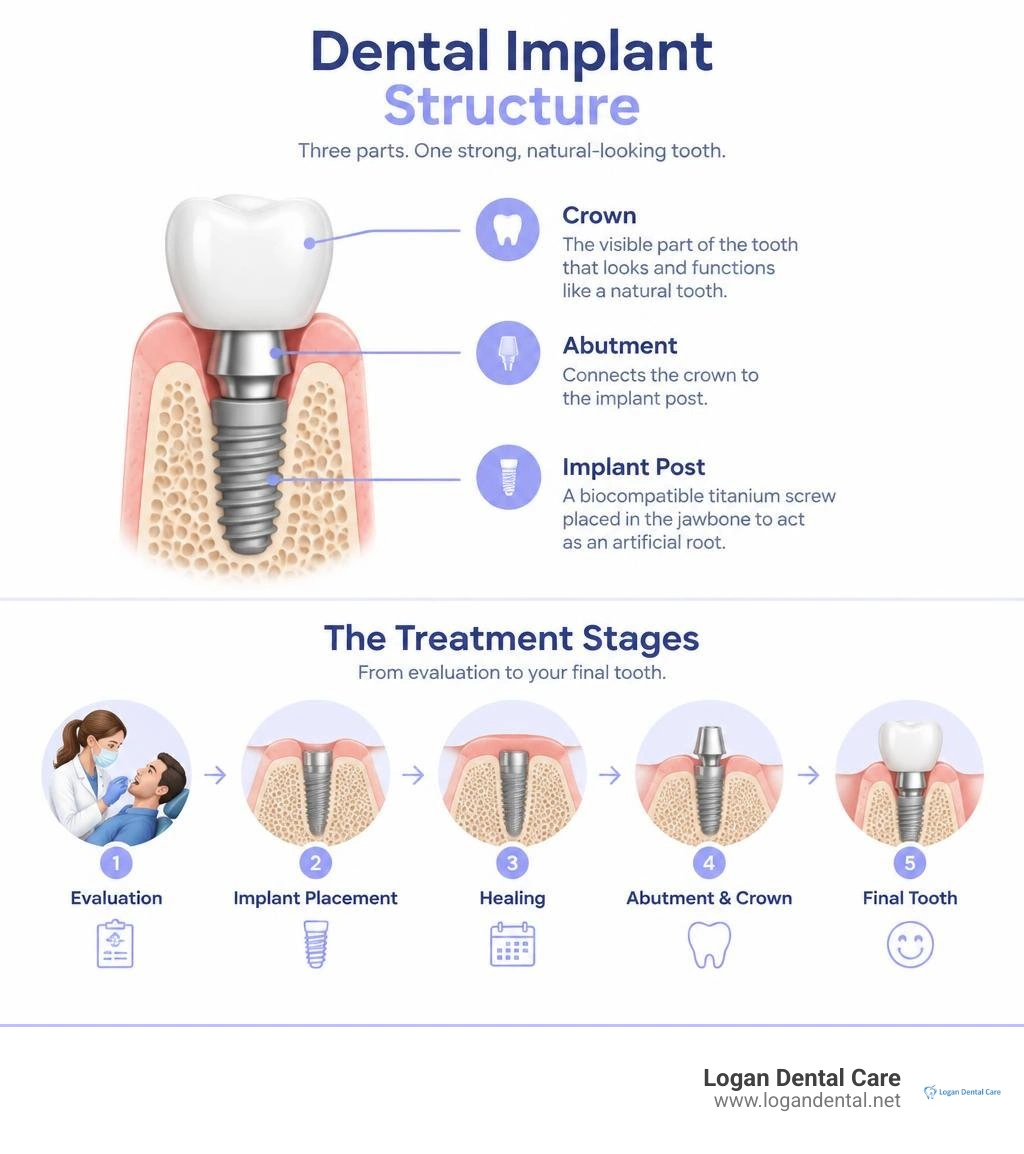
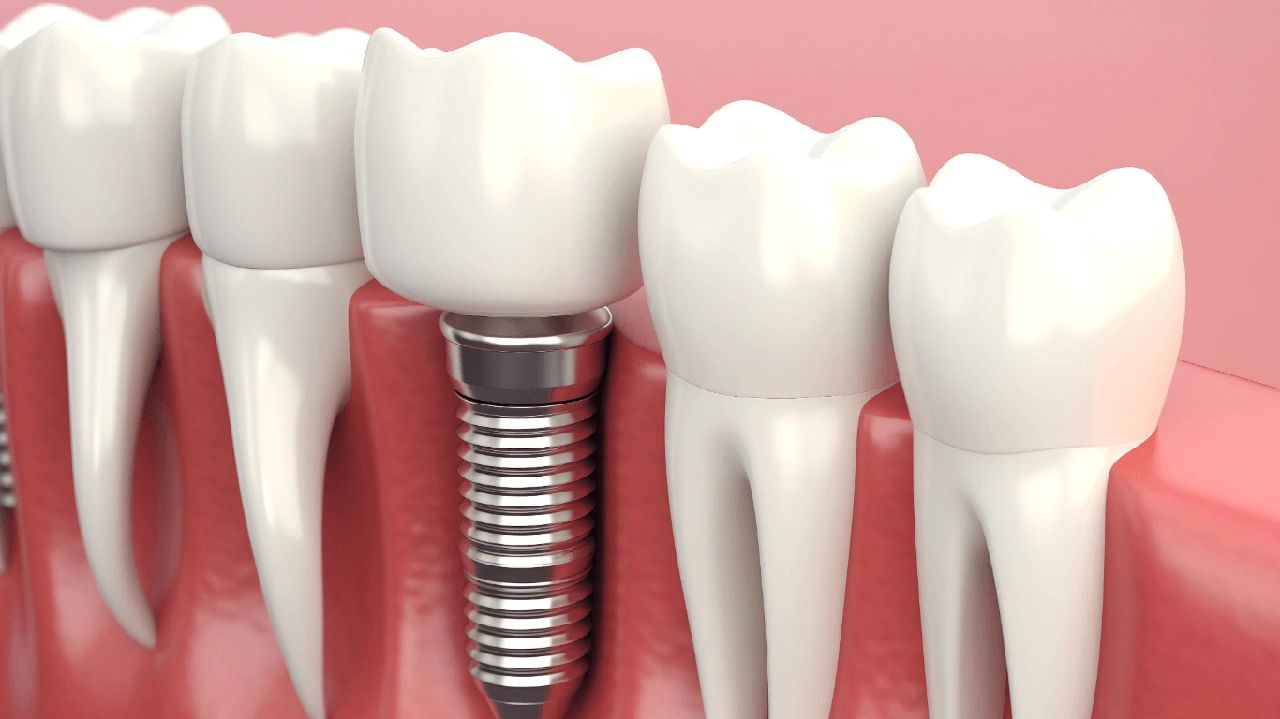
To understand how dental implants function, it helps to look at the three main parts:
- The Implant Post: A small, biocompatible screw—most commonly made of medical-grade titanium—that is placed directly into the jawbone to act as an artificial root.
- The Abutment: A sturdy connector piece attached to the top of the post once healing is complete.
- The Prosthetic Crown: A custom-crafted artificial tooth designed to blend with your surrounding natural teeth in shape, color, and size.
When you lose a tooth, the root no longer stimulates the surrounding jawbone. Over time, that lack of stimulation leads to bone loss, which can shift neighboring teeth and cause the face to take on a sunken look. Dental implants stimulate the bone, helping maintain your jawbone density and natural facial profile. Research documented in dental implant clinical reviews demonstrates that implants are reliable for long-term functional stability and bone preservation.
Beyond strengthening the jaw, implants offer major aesthetic and daily living benefits. You can eat your favorite meals, speak without worrying about clicking sounds, and enjoy a confident grin. Learn more about how modern restorations support dental implants improving oral health and facial aesthetics.
Who Is an Ideal Candidate for Dental Implants?
Most adults in good general health who are missing one or more teeth are eligible for dental implants. Good candidates typically have:
- Fully matured jawbone development (generally ages 18 and older)
- Adequate bone volume and density to secure the post
- Healthy gum tissue free of active inflammation or infection
- A commitment to thorough daily oral hygiene and routine dental checkups
If you are dealing with missing teeth, an evaluation helps determine if your oral anatomy is ready. As outlined in candidacy guidelines from Harvard Health, successful treatment depends on assessing both oral wellness and systemic health.
Potential Contraindications and Preparatory Treatments
Certain health conditions or habits require extra planning before moving forward with implant surgery:
- Uncontrolled Chronic Conditions: Conditions like uncontrolled diabetes can slow the body's natural healing response.
- Active Periodontal Disease: Gum infections must be fully treated and resolved before placing an implant.
- Tobacco Use: Smoking or chewing tobacco restricts blood flow to the gums, increasing the risk of delayed healing or implant failure.
- Bone Loss: If a tooth has been missing for a long time, the bone in that area may have thinned out.
Fortunately, experiencing bone loss does not mean you are out of options. Modern procedures like bone grafting or sinus lifts can rebuild the jaw's foundation. If you are concerned about thin bone levels, read about options for dental implants without bone to see how preparatory procedures restore bone volume.
The Step-by-Step Surgical and Restoration Process
Getting an implant is a planned, multi-stage journey:
- Initial Exam and 3D Imaging: We assess your mouth using advanced digital imaging and 3D scans to evaluate bone height, nerve pathways, and sinus locations.
- Surgical Placement: Under local anesthesia, the implant post is gently positioned into the jawbone.
- Healing and Integration: The bone bonds securely with the post over several months.
- Abutment Placement: A small connector is secured to the implant to hold your new tooth.
- Final Crown Delivery: Your permanent, custom-made crown is attached, completing your smile.
Understanding the tooth implant process helps you know what to expect at each step. You can also review the surgical overview by Mayo Clinic for more clinical background on the procedure.
Osseointegration and Recovery Timeline
The foundation of implant success is a biological process called osseointegration—where natural bone cells attach directly to the titanium surface.
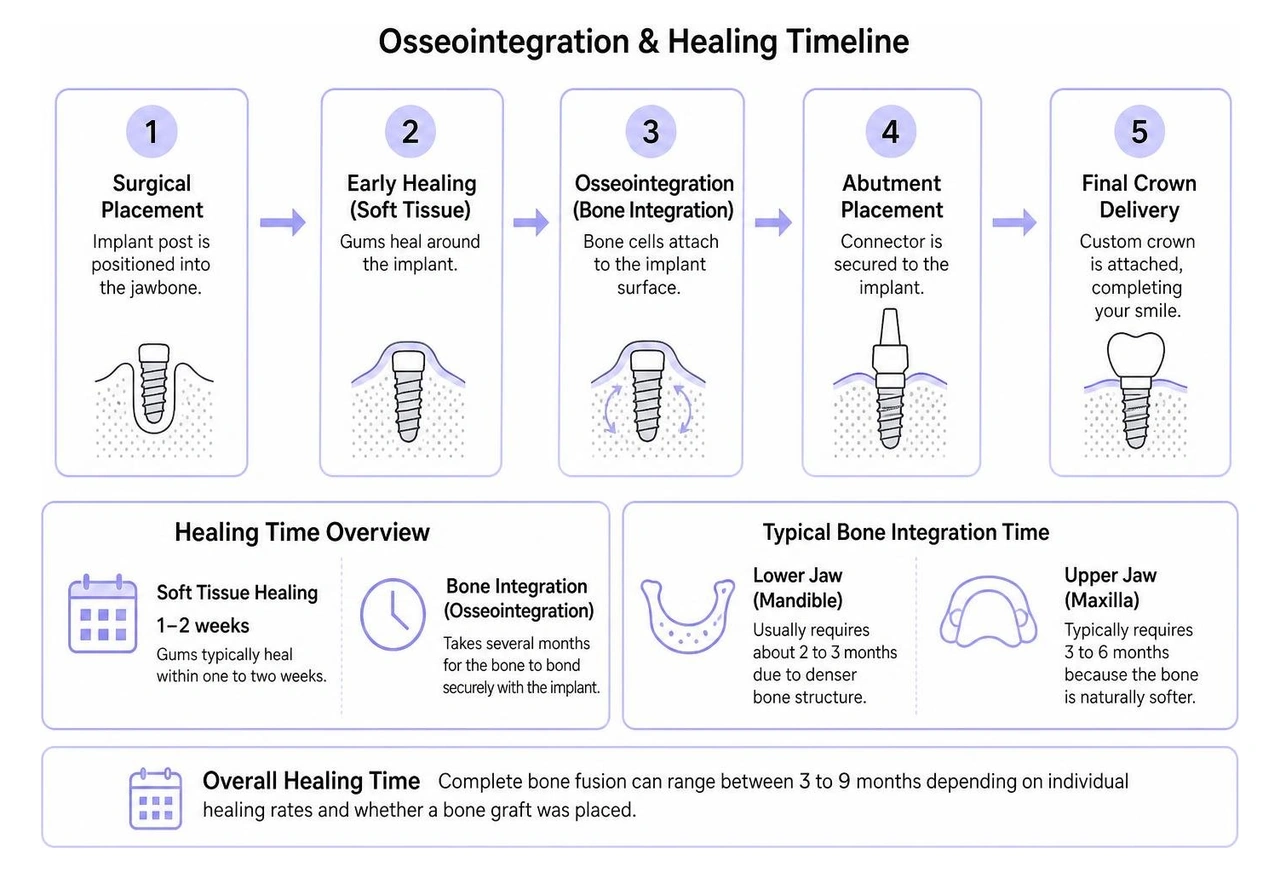
Soft tissue typically heals within one to two weeks, but the bone integration phase takes time:
- Lower Jaw (Mandible): Usually requires about 2 to 3 months of healing due to denser bone structure.
- Upper Jaw (Maxilla): Typically requires 3 to 6 months of healing because the bone is naturally softer.
Overall, complete bone fusion can range between 3 to 9 months depending on individual healing rates and whether a bone graft was placed. For a clear breakdown of milestones, check our guide on how long does it take to get a tooth implant.
Potential Surgical Risks and Safety Considerations
Dental implant placement has a 10-year success rate exceeding 97%. However, as with any minor surgical procedure, there are safety factors to keep in mind:
- Infection Risk: Known as peri-implantitis, bacterial buildup around the implant can cause inflammation if proper hygiene is neglected.
- Anatomical Proximity: Careful 3D planning prevents irritation to the inferior alveolar nerve in the lower jaw or the sinus cavities in the upper jaw.
- Early Mobility: Avoiding hard foods during the early healing window protects the post while it fuses to the bone.
For more details on patient safety, review our overview on are tooth implants safe.
Implant Configurations and Replacement Alternatives
Implant therapy is adaptable to different levels of tooth loss:
- Single-Tooth Implants: A standalone post and crown that replaces an individual missing tooth without altering neighboring teeth.
- Implant-Supported Bridges: Ideal when replacing two or more adjacent teeth using fewer posts. Learn more about dental implants multiple teeth options.
- Full-Arch Solutions: Several strategically positioned posts can support an entire upper or lower set of teeth.
To see all available styles, explore our guide on different types of dental implants and the Cleveland Clinic dental implant overview.
Comparing Implants with Bridges
When deciding how to replace a tooth, patients often compare implants with traditional dental bridges:
- Natural Tooth Preservation: Traditional bridges require grinding down the healthy enamel of adjacent teeth to serve as anchors. An implant stands alone without altering nearby teeth.
- Bite Force and Bone Health: Implants replace the tooth root, preserving the jawbone and restoring natural chewing power. Bridges replace only the visible crown above the gumline.
- Longevity: Traditional bridges typically last around 10 to 15 years before needing replacement, whereas an implant post can last a lifetime with proper care.
Read our full comparison on dental implants vs bridges to see which option fits your lifestyle best.
Cost Considerations and Long-Term Maintenance
The overall investment for implant care depends on several personalized elements:
- The number of teeth being replaced
- The necessity of preparatory treatments like bone grafting or extractions
- The materials chosen for the final custom crown or bridge
To understand the factors that shape your treatment plan, read our guides on the cost of dental implants per tooth and full mouth dental implants cost.
How to Properly Care for Dental Implants
Maintaining implants is straightforward because they look and function like natural teeth. Keep your smile healthy with these daily habits:
- Brush twice daily using a soft-bristled toothbrush and non-abrasive toothpaste.
- Clean around your restorations daily using a proper implant flossing technique or an interdental brush.
- Keep up with regular dental cleanings and exams so our team can check the stability of your restorations.
With good oral hygiene, implants provide outstanding longevity. Learn more about their lifespan in our article on how long do tooth implants last.
Frequently Asked Questions About Tooth Replacement
How painful is the procedure to receive a dental implant?
The procedure is comfortable. We use local anesthesia to completely numb the treatment area so you do not feel pain during surgery. Afterward, most patients report mild tenderness that is easily managed with over-the-counter pain relievers and cold compresses for a couple of days.
How long do dental implants last compared to traditional restorations?
While traditional dental bridges or partial dentures generally last 7 to 15 years, an implant post can last a lifetime when properly cared for. The custom crown attached to the post may experience normal wear and tear over 15 or more years, but it can be replaced without disturbing the integrated implant post in your bone.
What happens if an implant fails to integrate with the jawbone?
If an implant fails to integrate securely during the healing phase, it is removed under local anesthesia. The site is cleaned, allowed to heal, and often augmented with a minor bone graft. After approximately three months of recovery, a new implant can usually be placed.
Conclusion
Replacing missing teeth restores your smile's appearance, supports natural chewing function, protects neighboring teeth, and preserves long-term jawbone health.
Logan Dental Care is a family-focused dental practice located at 1021 N. Main Street in Bellefontaine, Ohio, serving Bellefontaine and surrounding Logan County communities. Logan Dental Care is an accredited member of the American Dental Association and the Ohio Dental Association, and holds an A+ BBB rating. We provide general and preventive dentistry, family dentistry, cosmetic dentistry (teeth whitening, veneers, smile makeovers), orthodontics (Invisalign and traditional braces), restorative dentistry (implants, crowns, bridges), emergency dental care (including same-day and outside standard business hours availability), the Smile Protection Savings Plan (in-house membership for uninsured patients), and nightguards/mouthguards.
If you are ready to explore your tooth replacement options with a team that treats you like family, schedule your consultation for dental implants in Bellefontaine with us today.