
A Comprehensive Guide to Dental Implant Alternatives Without Bone
Dental Implants Without Bone: Options for Low Jawbone Density
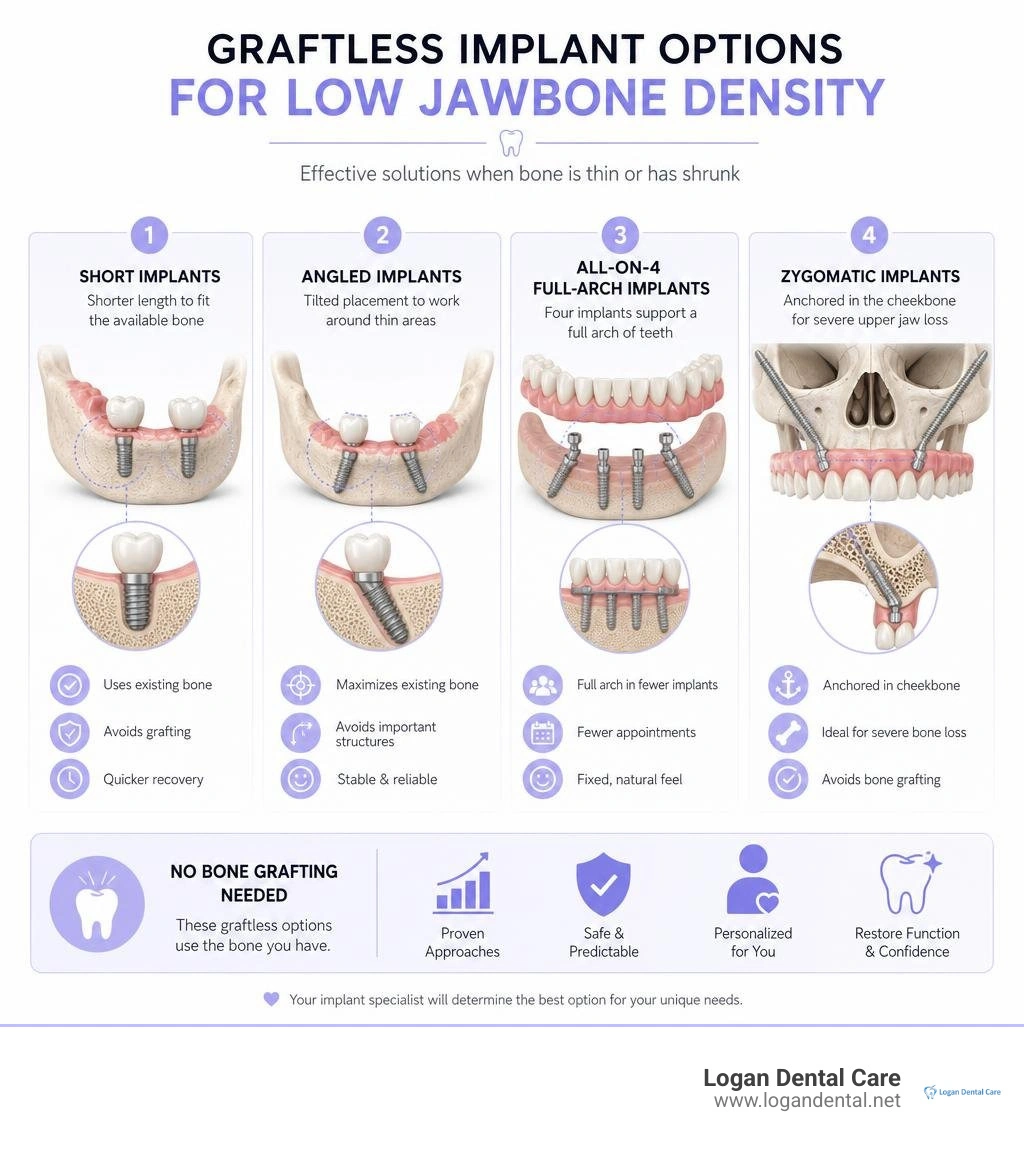
Yes, dental implants may still be possible when jawbone is thin or has shrunk. The right option depends on where bone remains, how much is available, and your overall health. A 3D CBCT scan can help an implant specialist assess options such as short or angled implants, an All-on-4 full-arch treatment, or specialized upper-jaw implants anchored in the cheekbone. Bone grafting is still useful in some cases, but it is not the only path.
Jawbone loss often follows missing teeth, gum disease, tooth removal, or years of denture wear. Without the normal pressure from chewing, the body can gradually absorb bone in that area. That can make standard implants harder to place safely, but it does not automatically mean dentures are your only choice.
At Logan Dental Care, we believe you deserve clear answers and a comfortable place to ask questions. We are a family-focused dental practice at 1021 N. Main Street in Bellefontaine, Ohio, an accredited member of the American Dental Association and Ohio Dental Association with an A+ BBB rating. Please note that we do not offer payment plan options or sedation dentistry.
The Logan Dental Care Team will walk through the modern options, what makes someone a candidate, and the long-term care these restorations need.
Simple guide to dental implants without bone:
Understanding Jawbone Resorption and Traditional Implant Limitations
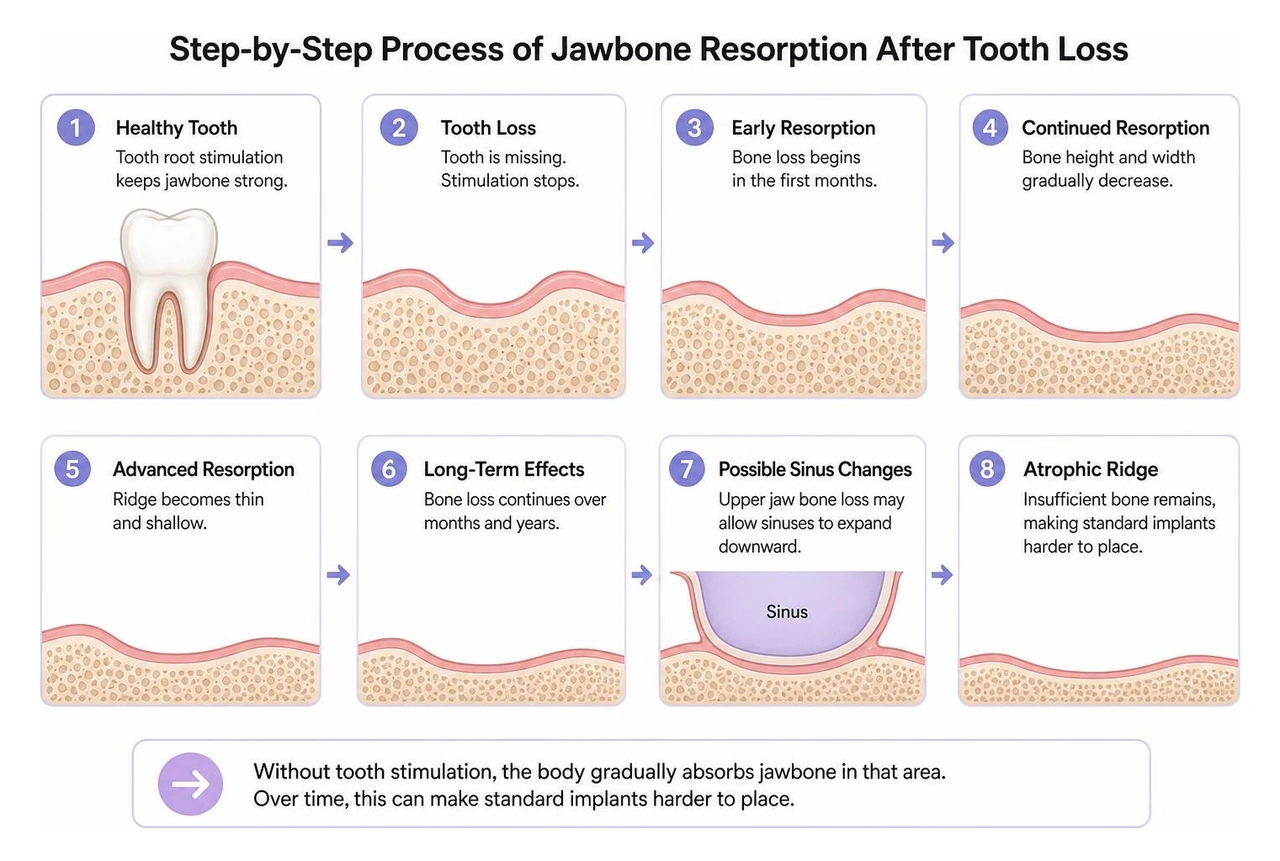
The jawbone relies on constant biological signals to stay strong. When natural teeth bite and chew, they send tiny mechanical vibrations down the tooth roots directly into the alveolar bone (the ridge of bone that holds your teeth). This process, known as bone remodeling, prompts the body to continually rebuild and strengthen local bone tissue.
When teeth are missing, that stimulation disappears. The body interprets the lack of pressure as a sign that the surrounding bone is no longer needed, beginning a process of gradual bone loss known as disuse atrophy. For individuals exploring different types of dental implants, recognizing how bone structure changes over time is the first step toward finding an effective solution. In the upper jaw, bone loss can also cause sinus pneumatization—an anatomical shift where the air-filled maxillary sinus cavities expand downward into the space once occupied by tooth roots.
Mechanisms Behind Severe Jawbone Loss
Several common factors accelerate jawbone deterioration:
- Tooth Extraction and Delay in Replacement: Bone resorption begins almost immediately after a tooth is pulled, with significant horizontal and vertical bone loss occurring within the first year.
- Periodontal (Gum) Disease: Advanced gum infections destroy both the delicate gum attachment and the underlying structural jawbone.
- Long-Term Denture Wear: While traditional dentures restore the appearance of teeth, they rest solely on top of the gums. They do not stimulate the deeper bone tissue; in fact, the constant rubbing pressure can accelerate ridge flattening over decades.
- Systemic Conditions: Bone health conditions like osteoporosis reduce overall bone mineral density throughout the skeletal system, including the jaws.
Standard Ridge Dimensions vs. Atrophic Ridges
For a standard dental implant to fuse securely with the jaw, a patient typically needs at least 10 millimeters of vertical bone height and 6 millimeters of horizontal ridge width.
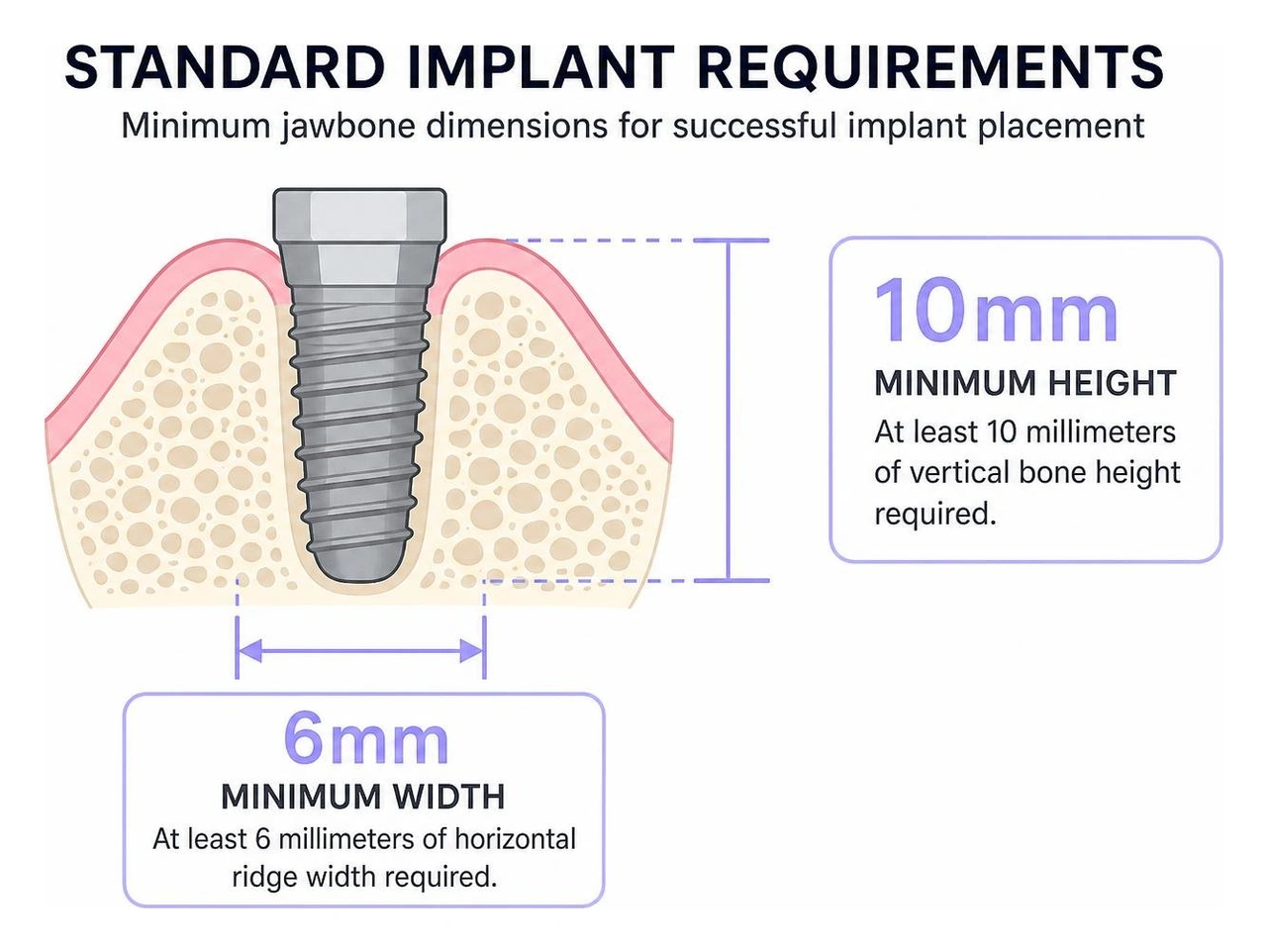
When long-term tooth loss leads to severe ridge atrophy, the bone can narrow to the width of a pencil or flatten down near critical structures like the lower jaw's nerve canal. Placing standard fixtures in these depleted areas without specialized techniques creates significant risks, requiring tailored restorative methods.
Modern Approaches to Dental Implants Without Bone
Patients facing significant bone loss often assume that extensive, multi-stage bone grafting is mandatory. While rebuilding bone volume remains a reliable technique, modern surgical strategies often allow clinicians to bypass traditional grafting altogether. By anchoring into dense, remote bone structures or tilting fixtures strategically, patients can frequently access fixed implant options for missing teeth with fewer surgical appointments and shorter overall healing timelines.
Zygomatic and Pterygoid Fixation for Severe Maxillary Atrophy
When the upper jawbone has completely deteriorated, zygomatic implants provide an effective alternative. Rather than anchoring into the thin upper jaw ridge, these specialized fixtures (measuring between 30 and 55 millimeters in length) reach upward to anchor firmly into the zygomatic bone—the dense cheekbone. Cheekbone density remains strong throughout life and does not resorb following tooth loss.
Similarly, pterygoid implants anchor into the solid pterygoid plate located at the back of the upper jaw, avoiding the maxillary sinus entirely. These advanced techniques boast long-term success rates over 90% across 10-year follow-ups, allowing patients with severe upper bone loss to receive stable, non-removable teeth.
Angled All-on-4 Systems for Full-Arch Stability
The All-on-4 approach revolutionizes full-arch tooth replacement by utilizing just four strategically positioned implants to anchor an entire row of teeth.
Rather than placing all fixtures vertically into depleted back areas:
- Two front implants are placed vertically into the naturally denser anterior jawbone.
- Two back implants are tilted at precise 30-to-45-degree angles.
This tilting strategy maximizes contact with existing healthy bone while carefully bypassing sensitive areas like the sinus cavities and mandibular nerve canals. By joining the four implants together with a rigid full-arch bridge, chewing forces are distributed evenly across the jaw.
Narrow and Short Fixtures for Moderate Bone Loss
For localized areas of bone loss, specialized fixture dimensions can eliminate the need for preparatory grafts:
- Short Implants: Measuring 8 millimeters or less in length, short implants provide reliable stability in areas with restricted vertical height, such as above the lower jaw nerve canal.
- Mini and Narrow Implants: Designed with diameters under 3 millimeters, these narrow posts fit into thin, horizontal ridges where standard-width fixtures cannot safely sit, often providing exceptional support for stabilizing loose lower dentures.
Advanced Diagnostics and Minimally Invasive Ridge Strategies
Modern implant dentistry relies on precision planning to map existing bone anatomy down to the fraction of a millimeter. Understanding the step-by-step tooth implant process helps patients feel confident and informed throughout their smile journey.
3D CBCT Scans and Computer-Guided Planning
Three-dimensional Cone Beam Computed Tomography (CBCT) imaging is essential for evaluating low-bone cases. Unlike traditional flat 2D X-rays, a CBCT scan produces a complete 3D digital model of your mouth, revealing exact bone height, width, and bone quality—classified from dense D1 cortical bone to softer D4 spongy bone. Clinicians use this data to virtually simulate implant placement, crafting custom 3D-printed surgical guides that ensure optimal positioning.
Minimally Invasive Flapless Ridge Preservation
Preserving natural bone during tooth extractions is always the easiest way to prevent future bone deficiency. Innovative approaches like the Open Healing: A Minimally Invasive Protocol with Flapless Ridge Preservation in Implant Patients study demonstrate that placing bovine bone minerals beneath a protective collagen membrane and non-resorbable PTFE sutures—without surgically cutting large gum flaps—achieves a 98.5% implant survival rate while protecting natural tissue contours.
Assessing Candidacy for Dental Implants Without Bone
Determining whether you qualify for graftless or low-bone implant options involves a thorough review of several oral and general health factors:
- Periodontal (Gum) Health: Active gum infections must be fully resolved before placing implants. General and preventive care, including routine cleanings and checkups, serves as the ideal foundation for lasting oral health.
- Systemic Health: Conditions like well-managed diabetes allow for normal healing, whereas uncontrolled systemic issues may require medical coordination.
- Tobacco Habits: Smoking restricts blood supply to gum and bone tissues, increasing the risk of complications during integration.
- Bite Forces & Grinding: If you clench or grind your teeth (bruxism), protecting your investment with custom nightguards or mouthguards is a smart, proactive step to shield restorations from excessive wear.
- Smile Goals: For many patients, replacing lost teeth is not just functional—it is an empowering journey in cosmetic dentistry that restores everyday self-esteem, speech clarity, and youthful facial volume.
For uninsured patients seeking comprehensive preventive care and diagnostic evaluations, our Smile Protection Savings Plan provides transparent value to keep dental wellness simple and affordable.
Long-Term Prognosis of Dental Implants Without Bone
When placed in adequate native or remote cortical bone, graftless implant restorations exhibit outstanding longevity. Learning more about how long tooth implants last demonstrates that these modern alternatives perform with comparable clinical success to traditional grafted implants when supported by proper bite alignment and steady hygiene care.
Frequently Asked Questions About Implant Options for Low Bone Density
Can you get dental implants if you have no jawbone left?
Yes. Even if your jaw ridge is severely resorbed, alternatives like zygomatic cheekbone implants, pterygoid implants, or custom-milled subperiosteal frames (which sit securely on top of the bone beneath the gum) allow for fixed tooth replacement without traditional jawbone grafting.
How do zygomatic implants differ from standard implants?
Standard dental implants measure roughly 10 to 14 millimeters in length and anchor directly into the alveolar ridge of the jaw. Zygomatic implants are considerably longer (30 to 55 millimeters) and pass through the upper mouth area to anchor securely into the dense zygoma (cheekbone), completely bypassing deteriorated upper jawbone and sinus cavities.
What is the success rate for graftless implant placements?
Graftless and angled implant protocols, such as All-on-4 and zygomatic placements, consistently demonstrate clinical success rates between 90% and 98%. Long-term stability depends on achieving solid primary anchoring on day one, following balanced loading guidelines, and maintaining diligent daily oral hygiene.
To keep your restorations healthy for decades, follow this daily care routine:
- Brush twice daily using a soft-bristle toothbrush and non-abrasive paste.
- Clean beneath implant-supported bridges daily using specialized floss threaders or a water flosser.
- Wear a protective nightguard if you clench or grind your teeth while sleeping.
- Attend routine preventive cleanings and clinical exams every six months.
Conclusion: Personalized Implant Solutions in Bellefontaine
Having low jawbone density does not mean you have to give up on a secure, permanent smile. Thanks to modern 3D imaging, angled placement techniques, and remote-bone anchoring, patients with moderate to severe bone loss can achieve stable, natural-looking tooth replacement.
At Logan Dental Care, we take immense pride in our welcoming, family-oriented practice located at 1021 N. Main Street in Bellefontaine, Ohio. We are an accredited member of the American Dental Association and the Ohio Dental Association, holding an A+ BBB rating. Whether we are celebrating our team's work anniversaries or cheering on local patient milestones, our focus is always on building genuine, trusting relationships with our neighbors across Logan County. Please keep in mind that we maintain transparent financial policies and do not offer payment plan options or sedation dentistry.
If you are exploring the top dental implant providers in Bellefontaine and want clear, honest guidance about your options, we invite you to schedule a personalized consultation for dental implants today. Let our caring team help you find the right path forward to restore your oral health and daily confidence.