
An Essential Guide to Dental Implants Multiple Teeth
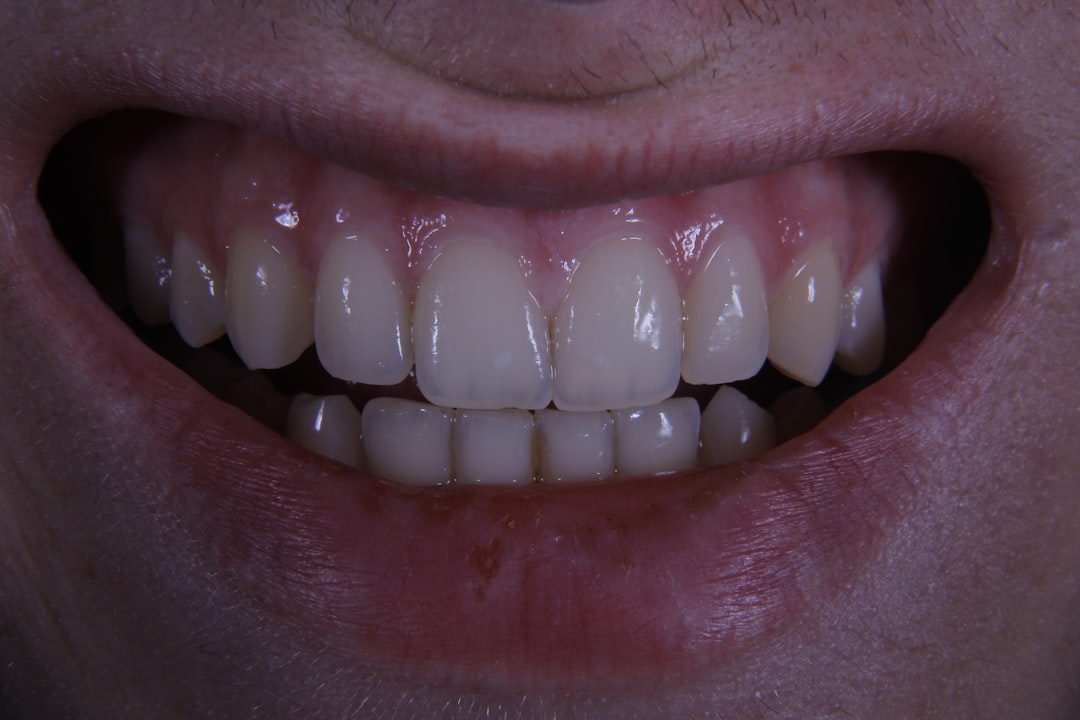
What to Know About Dental Implants for Multiple Missing Teeth
Dental implants for multiple teeth are one of the most effective ways to replace several missing teeth at once — and you don't need one implant for every missing tooth.
Here's a quick overview of your main options:
- Implant-supported bridge - 2 implants support 3-5 replacement teeth in a row
- Individual implants - One implant per tooth, best for gaps that aren't adjacent
- All-on-4 / Full-arch restoration - 4-6 implants support an entire arch of teeth
- Implant-supported partial denture - A removable option anchored by implants for stability
Each option restores your ability to chew and speak normally, protects your jawbone from shrinking, and looks like natural teeth.
The American College of Prosthodontists estimates that 178 million Americans have lost at least one tooth. Many have lost several. And the consequences go beyond appearance — missing teeth can cause the jaw to shrink, neighboring teeth to shift, and everyday tasks like eating and speaking to become harder over time.
The good news? Modern implant dentistry has come a long way. You can now replace multiple missing teeth with fewer implants than you might expect, using techniques that are predictable, long-lasting, and designed to work with your natural bone rather than against it.
At Logan Dental Care, we understand that this kind of treatment can feel overwhelming — the unknowns, the timeline, the cost questions. This guide walks you through everything clearly, so you can make a confident, informed decision about your smile.
Understanding Dental Implants Multiple Teeth Solutions
When you lose more than one tooth, your mouth undergoes structural changes. The jawbone begins to reabsorb because it no longer receives the chewing stimulation it needs from the natural tooth roots. Fortunately, dental implants for multiple teeth are specifically designed to mimic those lost roots, providing a stable foundation for your new smile.
Unlike traditional tooth replacement methods that sit on top of your gums, implants are anchored directly into your bone. If you are missing several teeth, we do not always need to place an implant for every empty space. By strategically placing titanium posts, we can support multiple custom crowns or bridges with incredible stability. To get a better sense of what might work best for you, you can learn more about different types of dental implants or read about multiple teeth implant options from leading clinical authorities.
How Dental Implants Multiple Teeth Systems Work
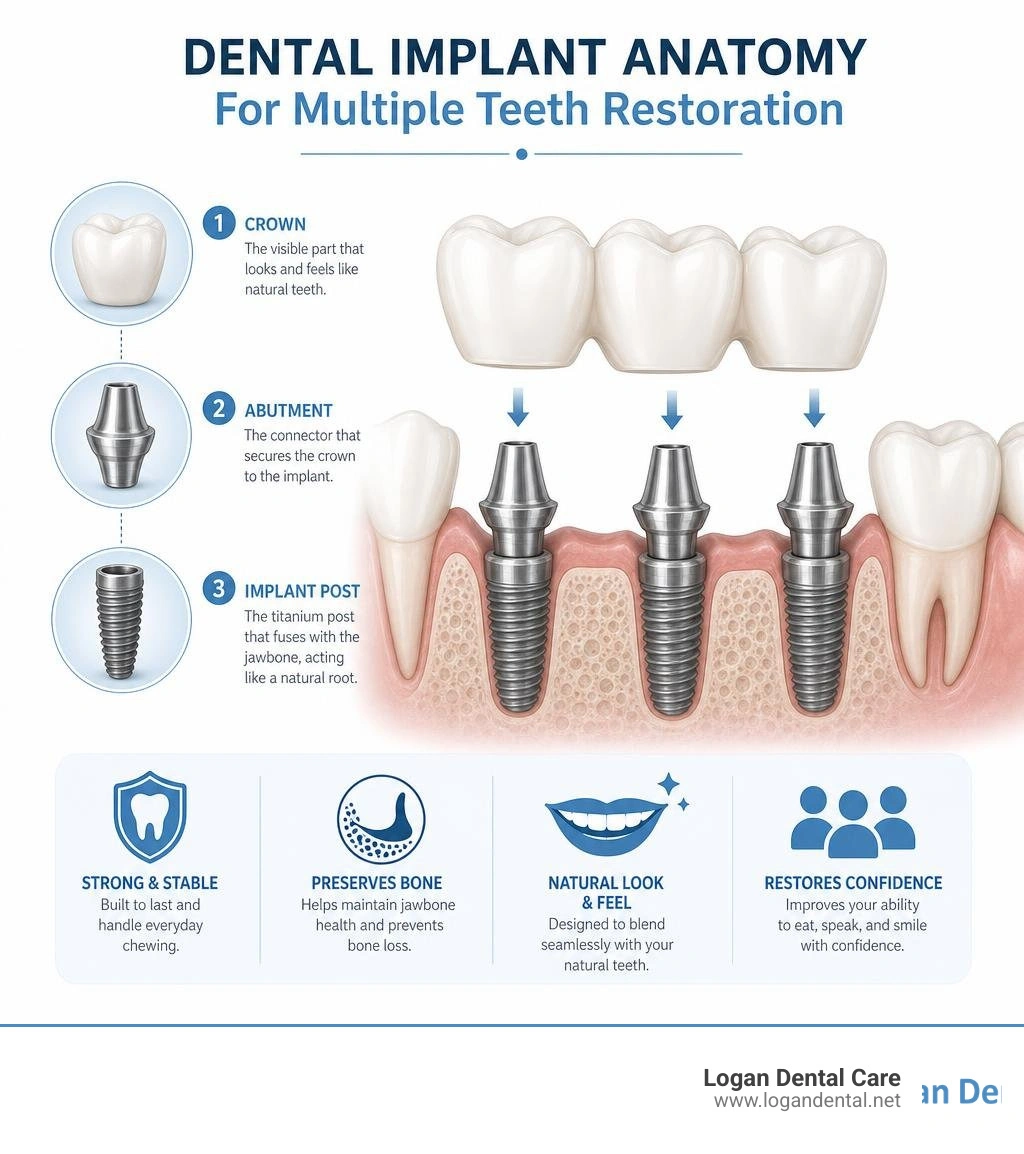
The magic of dental implants lies in a natural process called osseointegration. This is a fancy way of saying that the titanium post actually fuses with your jawbone over a period of several months, becoming a permanent part of your body.
Once this fusion is complete, we attach a small connector piece called an abutment to the post. Your custom-made bridge or crown is then securely fastened to the abutment. This multi-piece system provides a durable, lifelike restoration that feels and functions exactly like your natural teeth. If you are exploring how to fill the gaps in your smile, you can discover implant options for missing teeth that fit your unique lifestyle.
Implant-Supported Bridges vs. Traditional Alternatives
When deciding how to replace multiple missing teeth, many patients compare implant-supported bridges to traditional fixed bridges or removable partial dentures.
Traditional fixed bridges require us to grind down the healthy neighboring teeth on either side of the gap to act as anchors. This compromises otherwise healthy teeth and carries a 1-2% annual risk of the anchor tooth losing its vitality over time. Removable partial dentures, on the other hand, often rely on metal clasps that can wear down adjacent teeth and cause gum irritation. Furthermore, neither of these traditional options prevents jawbone loss.
An implant-supported bridge solves all of these problems:
- No damage to natural teeth - It stands entirely on its own titanium roots.
- Bone preservation - The implants stimulate your jawbone, keeping your facial structure strong.
- Incredible stability - No slipping, clicking, or messy adhesives.
- High success rates - Clinical studies show that implant-supported bridges have a 10-year survival rate exceeding 94%.
To weigh these options further for your specific situation, compare dental implants vs bridges to see which path is right for your smile.
The Step-by-Step Process for Placing Multiple Implants

Getting dental implants is a journey, but we design every step to be as comfortable and straightforward as possible. We start by using advanced 3D CBCT imaging to map your jawbone, nerve pathways, and sinus cavities. This allows us to plan the exact placement of each implant digitally before your surgery even begins. You can understand the tooth implant process in detail to help ease any anxiety, and explore how long it takes to get a tooth implant so you can plan your schedule accordingly.
Surgical Placement and the Healing Timeline
On the day of your procedure, we will carefully place the titanium posts into your jawbone. The surgery itself is highly precise, taking about 30 to 45 minutes per implant. After placement, the healing phase begins.
This recovery and fusion period typically takes anywhere from 3 to 6 months (and sometimes up to 16 weeks depending on bone density). During this time, we can often provide a temporary restoration so you never have to go without teeth. While you heal, you can rest assured knowing that dental implants are a highly proven solution. You can learn if tooth implants are safe to understand the safety protocols and high success rates associated with the procedure.
Restoring Your Smile with Dental Implants Multiple Teeth Prosthetics
Once your implants have fully integrated with your bone, it is time for the most exciting part: the final restoration. We will take precise digital impressions of your mouth to design your custom bridge or crowns.
Our goal is anatomical mimicry — crafting teeth that match the exact shade, shape, and bite of your natural smile. When the final prosthetic is securely attached to your implants, you will walk out of our office with a complete, beautiful, and fully functional smile. If you prefer to avoid traditional dentures, you can read about permanent teeth replacement options without dentures to see how implants can give you back your confidence.
Safety, Candidacy, and Getting Multiple Implants at Once
Is it safe to get multiple implants placed during a single appointment? For the vast majority of healthy patients, the answer is a resounding yes. In fact, placing multiple implants at once is often preferred because it consolidates your healing time into one single window.
Your candidacy depends on a few key factors:
- Sufficient bone density to support the titanium posts.
- Healthy gums free of active periodontal disease.
- Good overall health and a medical history that supports proper healing.
Before moving forward, we always perform a comprehensive evaluation. You can review dental implant safety guidelines to learn more about the surgical standards that keep patients safe and comfortable.
Pros and Cons of Same-Day Multiple Implant Placement
If you are considering getting multiple implants at once rather than staging the procedures, it helps to weigh the benefits and drawbacks:
Pros:
- Fewer office visits - You spend less time in the dental chair overall.
- Single recovery period - You only have to go through the post-operative healing phase once.
- Faster final results - Your entire smile is restored much sooner.
- Cost-efficiency - Consolidating surgical steps can often reduce overall treatment fees.
Cons:
- Longer initial appointment - You will need to keep your mouth open for a longer period of time during surgery.
- Increased initial soreness - Treating a larger area of the mouth can result in more localized tenderness during the first few days of recovery.
Long-Term Care, Maintenance, and Longevity

One of the greatest benefits of dental implants for multiple teeth is how easy they are to care for. Unlike dentures, which require messy adhesives and overnight soaking, implants are maintained just like your natural teeth.
To keep your implants healthy for decades, you should:
- Brush twice daily with a soft-bristled toothbrush.
- Floss daily using specialized tools like floss threaders or a water flosser to clean beneath your implant bridge.
- Visit us regularly for professional cleanings and examinations.
With proper care, dental implants can easily last 30 years or even a lifetime. To ensure you are protecting your investment, you can master the implant flossing technique and find out how long tooth implants last under optimal care.
Frequently Asked Questions About Multiple Tooth Implants
How many teeth can be replaced with dental implants?
You can replace anywhere from a single tooth to an entire upper or lower arch of teeth. For a full arch, protocols like All-on-4 use just four strategically angled implants to support a complete set of permanent teeth.
Does getting multiple dental implants at once hurt more than getting one?
While you may experience slightly more localized soreness because a larger area of your mouth was treated, the discomfort is highly manageable. Most of our patients find that any post-operative tenderness is easily controlled with standard over-the-counter pain relievers and usually subsides within three to five days.
How do multiple implants help preserve my jawbone?
When you lose teeth, the jawbone naturally begins to melt away (resorb) due to a lack of physical stimulation. Because dental implants act as artificial roots, they transmit chewing forces directly into the bone, stimulating healthy bone growth and preserving your natural facial structure. You can learn how implants improve oral health and facial aesthetics to see how this simple benefit keeps you looking youthful.
Conclusion
At Logan Dental Care, we believe that restoring your smile shouldn't feel cold or clinical. Located at 1021 N. Main Street in Bellefontaine, Ohio, our family-focused practice is dedicated to providing warm, neighborly care to our community throughout Logan County, including Zanesfield, West Liberty, Lakeview, and Russells Point. We combine modern dental capabilities with the genuine, small-town warmth you deserve.
We want to be as transparent as possible: At this time, we do not offer payment plan options, and we do not offer sedation dentistry. We believe in being upfront so you can make the best decisions for your family’s care—please reach out if you have questions about coverage or alternatives!
If you are ready to explore how dental implants for multiple teeth can bring back your confident, comfortable smile, we are here to guide you every step of the way. Schedule a consultation for dental implants with our friendly team today!