
Beginner's Guide to Dental Implant Options
Why So Many People Are Searching for Implant Options for Missing Teeth
When it comes to implant options for missing teeth, you have more choices today than ever before. Here is a quick look at the main solutions:
| Option | Best For | Removable? |
|---|---|---|
| Single-tooth implant | One missing tooth | No |
| Implant-supported bridge | 2-4 missing teeth in a row | No |
| All-on-4 / full-arch implant | Full upper or lower arch | No |
| Implant-supported overdenture | Full arch, wants removable option | Yes |
| Mini implants | Low bone volume, denture stabilization | No |
Missing a tooth — or several — is far more common than most people realize. Over 178 million Americans are missing at least one permanent tooth. By age 64, the average adult has three or more missing or decayed teeth.
It is not just about appearance. A gap in your smile can cause:
- Neighboring teeth to drift and shift
- Bone loss in the jaw beneath the empty space
- Difficulty chewing and speaking clearly
- Changes in your facial shape over time
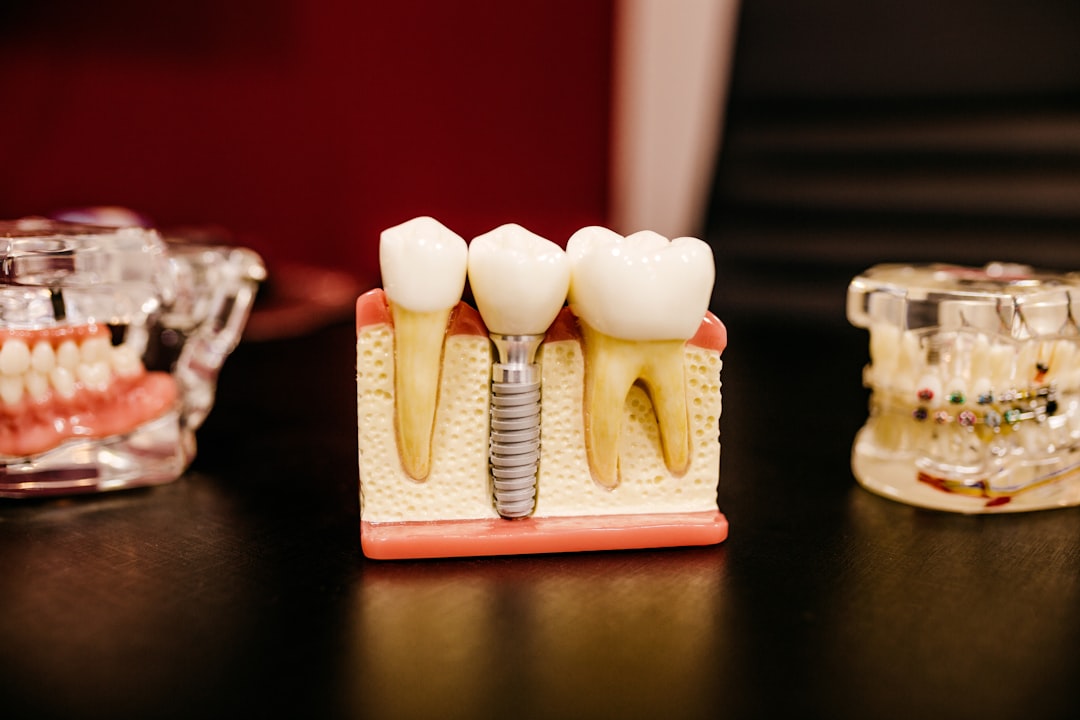
Dental implants have become the most widely recommended solution because they replace the root of the tooth — not just the visible part. That matters because the root is what keeps your jawbone stimulated and healthy.
This guide walks through every major implant option, compares them with alternatives like bridges and dentures, and helps you figure out which approach fits your situation and goals.
Implant Options for Missing Teeth: Which Solution Fits Your Situation?
The right solution depends on how many teeth are missing, where the gap is, how much bone is available, and whether you want something fixed or removable.

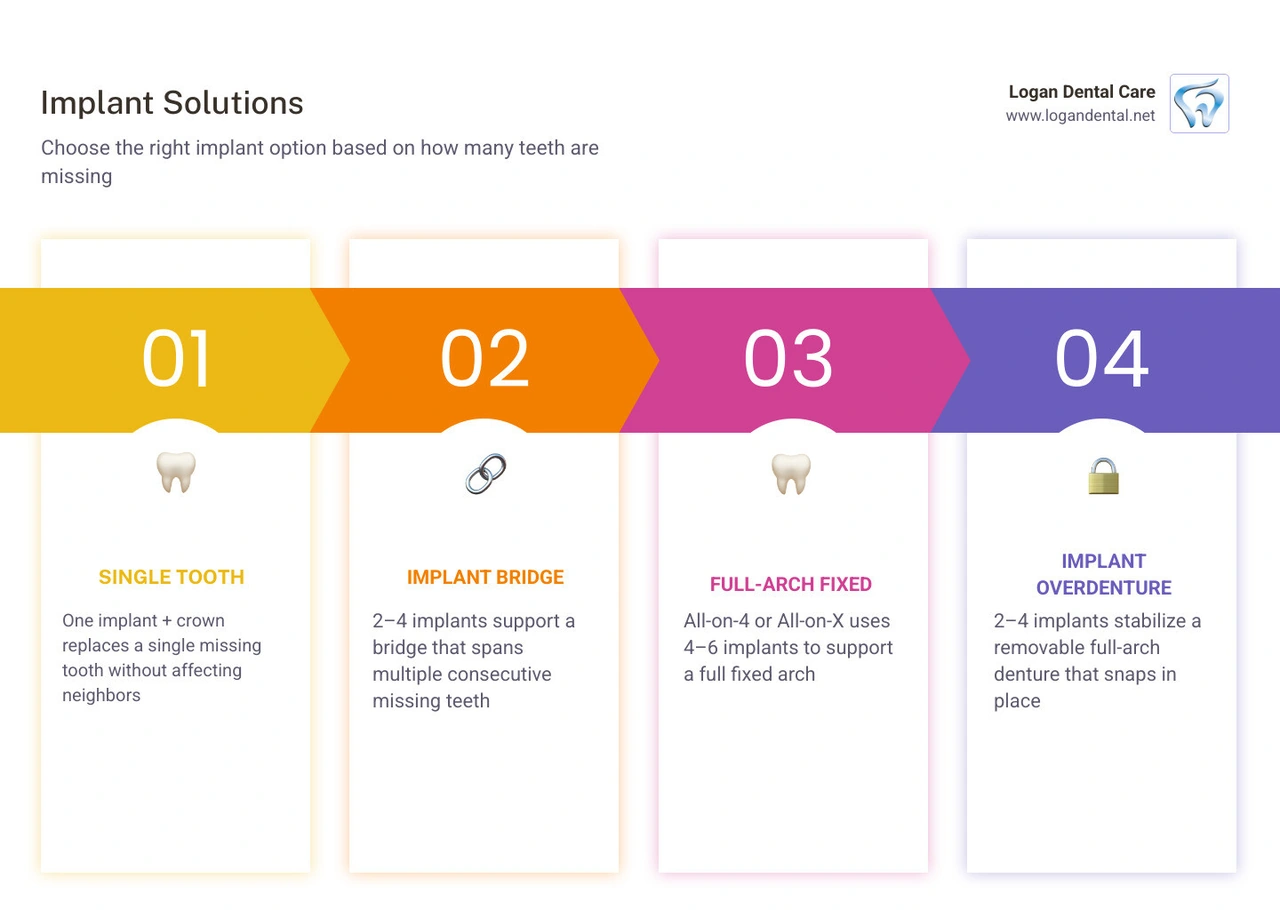
Single-tooth implant options for missing teeth
A single-tooth implant is usually the most natural fixed option when one tooth is missing. A titanium implant post is placed in the jawbone, then topped with a custom crown. The big advantage is that the teeth next to the gap usually do not need to be trimmed down the way they would for a traditional bridge.
This option works especially well when:
- One tooth is missing
- Neighboring teeth are healthy
- You want the most natural feel and function
- Front-tooth appearance matters
For a broader overview, visit our Dental Implants page, and if the missing tooth is in a visible area, see our Dental Implants Front Teeth Complete Guide.
Implant options for missing teeth when several teeth are gone
If several teeth in a row are missing, we may recommend an implant-supported bridge. Instead of placing one implant for every missing tooth, two or more implants can support a bridge that fills the span.
Benefits include:
- Stronger support than a removable partial
- No need to rely on adjacent natural teeth
- Better chewing stability
- Continued bone stimulation in the areas where implants are placed
This can be a smart middle ground between replacing every tooth with an individual implant and wearing a removable appliance. Learn more in Dental Implants vs Bridges Which Tooth Replacement Option Is Best For You.
Full-arch implant options for missing teeth
When all or nearly all teeth in the upper or lower arch are missing, full-arch implant treatment may be the best fit. This includes All-on-4 or All-on-X concepts, where a full set of teeth is supported by four or more implants.
These options are popular because they can:
- Replace a full arch with a fixed restoration
- Improve stability compared with dentures
- Often reduce the need for extensive grafting through angled implant placement
- In some cases allow temporary teeth the same day
For people tired of removable teeth sliding around at dinner, this can be life-changing. You can explore more in Full Mouth Dental Implants Cost.
Implant-supported dentures and overdentures
An implant-supported overdenture is still removable, but it snaps onto implants for much better retention than a conventional denture. This is especially helpful for lower dentures, which are famous for moving around at the worst possible moment.
Research consistently shows that many lower denture wearers benefit from two implants for support and retention. Compared with regular dentures, overdentures often provide:
- Better chewing ability
- More confidence while speaking
- Less slipping
- Fewer sore spots
- Better support for the jawbone than conventional dentures alone
For patients who want more stability without a fully fixed arch, this is often an excellent choice. See Permanent Teeth Replacement Options Without Dentures.
Less common implant designs and special cases
Not every mouth fits the standard textbook picture. In some situations, we may consider:
- Mini implants for denture stabilization or narrow ridges
- Immediate-load protocols for selected cases
- One-stage or two-stage surgical approaches depending on healing goals
These are case-specific solutions, not one-size-fits-all shortcuts. More detail is available in Different Types of Dental Implants.
How Implants Compare With Dentures, Partial Dentures, and Bridges
Here is the simple version: implants usually offer the best stability and bone preservation, while bridges and dentures may be faster, less invasive, or better suited to certain medical or financial situations.
| Option | Stability | Comfort | Bone preservation | Maintenance |
|---|---|---|---|---|
| Dental implants | Excellent | Very high | Best | Similar to natural teeth |
| Traditional bridge | Good | High | Does not replace root | Fixed, needs flossing care |
| Partial denture | Moderate | Variable | Limited | Remove and clean |
| Full denture | Lowest | Variable | Does not stop bone loss | Remove, clean, adjust |
Dental implants vs traditional bridges
A traditional bridge can restore a missing tooth without surgery, and it can be a good option in the right case. But it usually requires reshaping the teeth on either side of the gap to hold crowns. An implant often avoids that.
Implants also support the jawbone underneath the missing tooth, while a bridge does not replace the root. Over the long run, that difference matters.
Implant-supported dentures vs conventional removable dentures
Conventional dentures can restore appearance, but they do not anchor into bone. Over time, the jaw shrinks, fit changes, and the denture may loosen. Implant-supported dentures solve much of that wobble.

For many patients, especially in the lower arch, the improvement in retention and chewing is the biggest benefit.
When non-implant options may still make sense
Implants are excellent, but they are not always the answer. Non-implant options may still make sense if:
- You want to avoid surgery
- You need a temporary replacement while healing
- Medical conditions increase surgical risk
- A flipper, Maryland bridge, partial denture, or conventional bridge better fits the case
A good treatment plan is not about forcing implants. It is about matching the right solution to the right person.
What the Dental Implant Procedure and Timeline Look Like
The implant process usually takes place in stages, because bone healing takes time.
For a full walkthrough, visit Tooth Implant Process.
Step-by-step implant options for missing teeth from consult to final tooth
Typical steps include:
- Exam and 3D imaging
- Treatment planning
- Any needed extraction or gum treatment
- Bone grafting or sinus lift if required
- Implant placement under local anesthesia, sedation, or both
- Healing period
- Abutment placement
- Final custom crown, bridge, or denture attachment
You can read more at Implants for Teeth.
Healing time, osseointegration, and same-day possibilities
The gum tissue often starts feeling better within 1 to 2 weeks, but the important part is osseointegration, when the implant bonds with the bone. That usually takes about 3 to 6 months.
Some patients can receive a temporary tooth the same day, especially in carefully selected full-arch or front-tooth cases. But "same day" usually means a temporary restoration, not the final one. More timeline details are in How Long Does It Take to Get a Tooth Implant.
Preparatory procedures before implants
Some patients need groundwork before implants can succeed. Common reasons include:
- Bone loss after a tooth has been missing for a long time
- Thin bone in the upper back jaw requiring a sinus lift
- Active gum disease that must be treated first
- Tooth extraction with ridge preservation
- Infection or damaged teeth that need removal
Costs, Longevity, and Long-Term Value
We do not list specific pricing here because treatment varies so much from person to person. What matters most is understanding what affects cost and what you are comparing.
Typical cost ranges by implant option
Costs vary based on:
- Single tooth vs several teeth vs full arch
- Whether the solution is fixed or removable
- Number of implants needed
- Need for sedation, grafting, or extractions
- Materials used in the final restoration
- Lab complexity and follow-up care
For related reading, see Cost of Dental Implants Per Tooth and How Much Is a Tooth Implant.
Why implant quotes vary so much
Two implant quotes can look very different because they may include very different things. One plan may include CBCT imaging, temporary teeth, follow-up visits, and premium materials. Another may not. The number of implants, whether grafting is needed, and whether the final teeth are acrylic or zirconia also affect the total.
In other words, comparing implant quotes without looking at the details is a little like comparing cars based only on "it has wheels."
How long implants last compared with bridges and dentures
With good care, implants can last 25 years or longer, and many last much longer. Bridges and dentures can also serve patients well, but they often need more replacement, relines, repairs, or adjustments over time.
Long-term value is where implants often stand out. Some research has even found implant treatment can become more cost-effective over a long timeline because of durability and fewer downstream problems. Read more in How Long Do Tooth Implants Last.
Who Is a Good Candidate, and What Risks Should You Know?
Good candidates for implant options for missing teeth
Good candidates often have:
- One or more missing teeth
- Healthy gums or treatable gum issues
- Enough bone volume, or the ability to rebuild it
- Good oral hygiene habits
- Controlled medical conditions
- A willingness to follow the full process
Dental implants have about a 97% success rate overall, which is excellent. For local guidance, see Dental Implants Logan County Guide.
Who may need extra caution or alternatives
Implants may require extra caution if you have:
- Active gum disease
- Uncontrolled diabetes
- Heavy tobacco use
- Immune system concerns
- History of radiation to the jaw area
- Severe grinding or clenching
- Ongoing jaw growth in younger patients
These factors do not always rule implants out, but they can affect planning and healing.
Success rates, complications, and how to lower your risk
Minimum clinical success standards often reference about 85% success at 5 years and 80% at 10 years, while modern implant care commonly performs much better. Smoking is one of the clearest risk factors. Research shows smokers may have roughly twice the risk of implant failure compared with non-smokers.
Potential complications include:
- Infection
- Delayed healing
- Nerve injury
- Sinus issues in the upper jaw
- Implant loosening or failure
- Peri-implantitis, an inflammatory condition around the implant
You can lower risk by treating gum disease first, controlling health conditions, not smoking, and keeping up with maintenance. Learn more in Are Tooth Implants Safe.
Caring for Dental Implants Long Term
Implants are low-maintenance, not no-maintenance. Big difference.
Daily cleaning and maintenance habits
Daily care usually includes:
- Brushing twice a day with a soft brush
- Using non-abrasive toothpaste
- Cleaning between teeth and implants with floss or interdental brushes
- Using a water flosser if recommended
- Following any antibacterial rinse instructions
Professional maintenance and warning signs
Most patients still need regular cleanings and exams every 3 to 6 months depending on risk. We also watch for warning signs such as:
- Bleeding around the implant
- Soreness or swelling
- A loose crown or denture
- Changes in your bite
- Bone changes on X-rays
How implants support oral health and facial appearance over time
Because implants replace tooth roots, they help preserve jawbone and support facial structure better than options that rest only on the gums. They can also improve chewing, speech, and confidence in a very everyday way, like not thinking about your teeth every time you order something crunchy.
Learn more in Dental Implants Improving Oral Health and Facial Aesthetics.
Frequently Asked Questions About Implant Options for Missing Teeth
Are implant-supported dentures better than regular dentures?
For many patients, yes. They are usually more stable, especially on the lower arch, improve chewing strength, and reduce slipping. They also tend to feel more secure during speaking and eating.
Can you get dental implants if you have bone loss?
Often, yes. Bone grafting, sinus lifts, angled implants, or mini implants may help in selected cases. The answer depends on how much bone is available and what type of restoration is planned.
Are implants worth the higher upfront cost?
For many people, they are worth it because they are stable, long-lasting, and help preserve bone. They may also reduce the cycle of adjustments and replacements common with some removable options.
Conclusion
Choosing among implant options for missing teeth is not about finding the fanciest treatment. It is about finding the option that fits your health, budget, comfort, and long-term goals.
At Logan Dental Care, we believe patients in Bellefontaine and surrounding Logan County communities deserve clear answers, comfortable care, and a treatment plan that feels personal. If you are ready to compare your options and talk through what fits best, explore our Dental Implants page and schedule a visit with our team.