
A Comprehensive Guide to Comparing Dental Crown Costs

What Shapes Your Dental Crown Price?
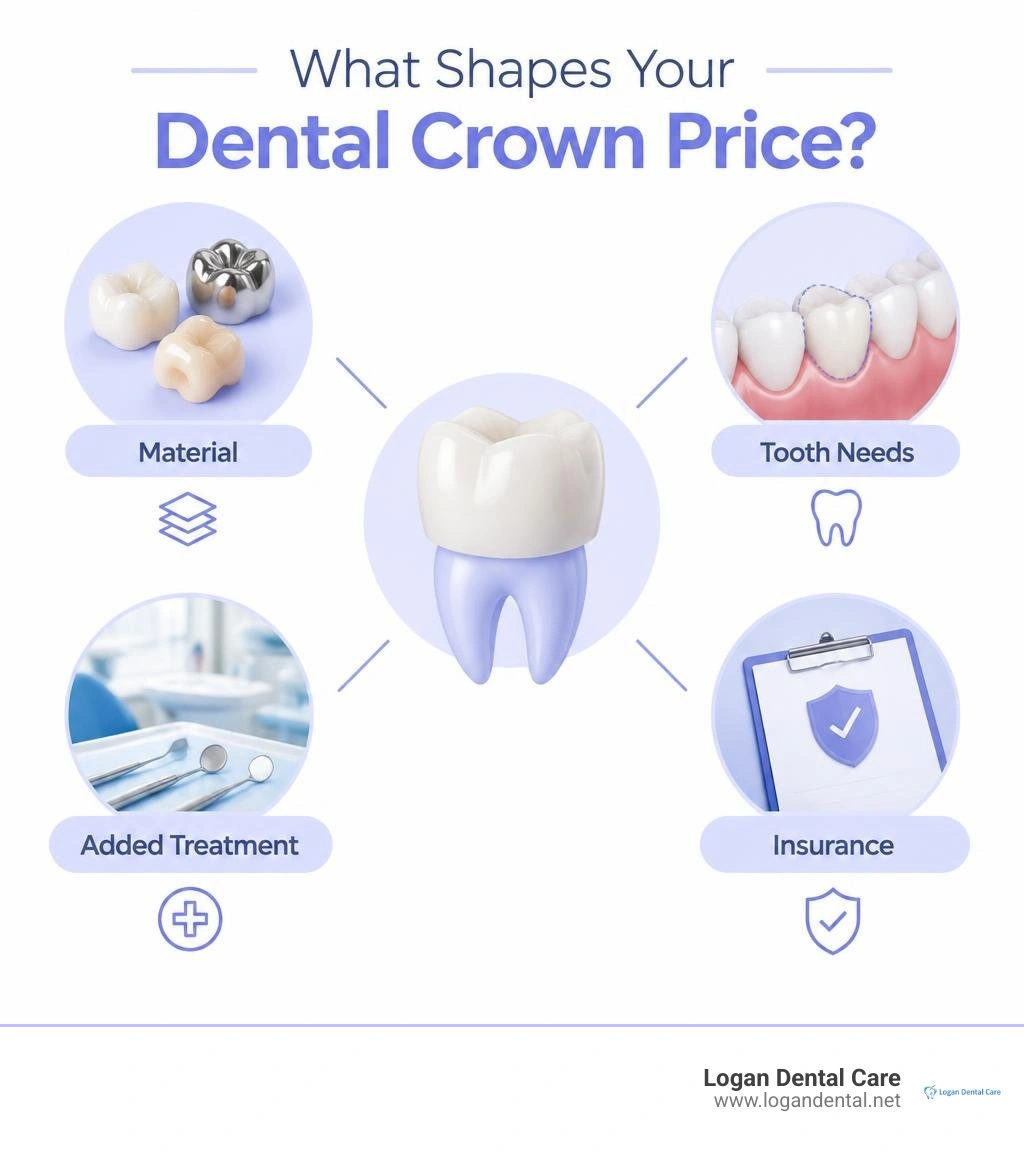
Your dental crown price depends on the material, the tooth being treated, any work needed before the crown, and your insurance benefits. To compare costs, ask for a written estimate that lists the crown and any added treatment separately. That way, you can see what is included before you decide.
A crown can protect a damaged tooth and help you chew comfortably again. At Logan Dental Care, we help families in Bellefontaine and surrounding Logan County communities understand their restorative care options. We're the Logan Dental Care Team, and we'll walk you through the costs and choices that matter most.
What Determines the Total Dental Crown Price?

Every smile is unique, which is why the final expense for restorative dental work varies from person to person. When evaluating the price of a tooth cap, several distinct clinical and logistical factors come into play:
- Tooth Location and Biting Forces: Back molars endure intense chewing pressure every day, requiring exceptionally resilient materials that can withstand heavy forces. Front teeth, on the other hand, sit right in your smile line and require meticulous aesthetic matching to blend seamlessly with your natural enamel.
- Complexity of the Case: A straightforward restoration over an intact tooth structure takes less clinical time than rebuilding a tooth that has fractured below the gumline or suffered extensive decay.
- Specific Billing Codes: Dental practices bill restorations using standardized Current Dental Terminology (CDT) codes. Each code designates the specific construction and material used—such as an all-ceramic cap, a porcelain-fused-to-metal restoration, or a full cast metal crown. Because these restorations require different lab fabrication methods, their baseline fees differ accordingly.
For an extensive breakdown of national trends and diagnostic considerations, independent resources like the GoodRx dental crown cost overview provide helpful consumer insights into how clinical complexity influences dental pricing nationwide.
How Material Choices Shape Your Dental Crown Price
The material you and your dentist select is one of the most significant factors in your overall treatment expense. Understanding the different types of dental crowns allows you to balance aesthetic goals with long-term strength:
- All-Porcelain and Ceramic: These restorations provide unmatched translucency, mimicking the natural light-reflecting qualities of real teeth. They are ideal for visible front teeth where beauty and natural shading are the primary concerns.
- Solid Zirconia: Known for exceptional fracture resistance, BruxZir solid zirconia crowns are milled from a single block of biocompatible mineral. They offer a lifelike appearance while providing the rugged durability needed for patients who clench or grind their teeth.
- Porcelain-Fused-to-Metal (PFM): By bonding a porcelain exterior to an underlying metal framework, porcelain-fused-to-high-noble-metal options provide a balance of cosmetic appeal and structural support. Over time, however, a slight dark line may become visible near the gumline if the tissue recedes.
- Cast Gold and Noble Metal Alloys: Gold alloys are gentle on opposing natural enamel and virtually impossible to chip or crack. While their distinct metallic color makes them less common for front teeth, their exceptional longevity makes them a time-tested choice for out-of-sight rear molars.

Digital Impressions and Traditional Lab Fabrication
The process of creating your custom restoration also impacts overall planning and value. In a traditional two-visit workflow, your dentist carefully shapes the tooth, takes an impression, and places a comfortable temporary crown to protect the prepared area.
That impression is then sent to a specialized dental laboratory, where skilled technicians craft your custom restoration by hand or via precision milling over two to three weeks. Modern practices often utilize high-resolution digital intraoral scanners instead of messy putty impressions. Digital scanning improves marginal accuracy, reduces turnaround times, and ensures your permanent crown seats comfortably with minimal adjustments.
Navigating Insurance, Out-of-Pocket Expenses, and Savings
Understanding your dental coverage is an essential step in planning for your care. Helpful guides like Humana's breakdown of dental crown coverage and costs and the American Dental Association's Dental Insurance Frequently Asked Questions explain how carrier policies generally categorize major restorative procedures.
Comparing the Average Dental Crown Price With and Without Insurance
When a crown is clinically necessary to repair decay, restore a broken tooth, or protect a tooth after endodontic therapy, private dental benefit plans typically classify it as a "major restorative service." Most policies cover around 50% of the allowable fee after you meet your annual deductible, up to your policy's annual maximum limit.
Reviewing your crown coverage with dental insurance helps clarify your expected out-of-pocket costs for crowns. If you are uninsured, your total investment reflects the entire fee for clinical preparation, materials, temporary fabrication, and final bonding.
Additional Procedures That Impact Total Treatment Expenses
A custom dental cap rarely exists in isolation. Depending on the condition of your underlying tooth, several preparatory steps may be necessary to ensure long-term success:
- Diagnostic Digital Imaging and Exams: Up-to-date X-rays are required to evaluate the tooth's root health and surrounding bone levels before treatment begins.
- Core Build-Up: When a tooth has experienced deep decay or a severe fracture, there may not be enough natural enamel left to retain a crown. A composite core build-up rebuilds the structural foundation so the crown has solid retention.
- Root Canal Therapy: If trauma or bacterial decay has reached the interior nerve pulp, completing root canals and protective crowns resolves the infection and seals the tooth before capping it.
- Emergency Repairs: Addressing acute trauma or repairing a broken molar promptly helps prevent further structural damage and more invasive treatments later on.
Managing Costs Without Traditional Dental Benefits
If you do not have private dental insurance, you still have dependable ways to manage your dental care budget:
- Health Savings Accounts (HSA) and Flexible Spending Accounts (FSA): These tax-advantaged accounts allow you to pay for medically necessary dental restorations using pre-tax dollars, lowering your net out-of-pocket cost.
- In-House Membership Plans: Many dedicated family practices offer internal savings options. Enrolling in an in-house dental membership plan provides predictable discounts on restorative treatments alongside included preventive cleanings and exams, eliminating claims paperwork, waiting periods, and annual maximum caps.
Longevity, Replacements, and Conservative Treatment Alternatives
A well-placed dental crown is an investment in your daily comfort and oral wellness. Maximizing its lifespan requires consistent home care and proactive protection against excessive wear.
Expected Lifespan and Crown Replacement Costs
Most high-quality dental crowns last between 10 and 15 years, and many endure even longer with excellent hygiene. While the crown material itself cannot decay, the natural tooth structure underneath remains vulnerable at the margin where the crown meets the gumline. Daily brushing, flossing, and regular professional cleanings prevent recurrent decay from undermining the restoration.
For patients who grind their teeth at night (bruxism), wearing a custom-fitted nightguard cushions the restoration against micro-fractures. If a crown eventually fails due to age or new decay, replacement involves removing the old cap, cleaning the underlying tooth, placing a fresh build-up if necessary, and fabricating a new restoration.
Conservative Alternatives: Fillings and Veneers
Before committing to a full crown, your dentist will evaluate whether a more conservative treatment can safely preserve your natural enamel:
- Direct Composite Fillings: Ideal for small-to-moderate cavities where substantial healthy tooth structure remains intact.
- Porcelain Veneers: Excellent for addressing cosmetic chips, gaps, or deep discoloration on front teeth without removing significant enamel around the entire tooth.
- Inlays and Onlays: Sometimes called "partial crowns," these lab-made ceramic restorations rebuild one or more damaged cusps of a molar while preserving the healthy outer walls.
- Why Extraction Is a Last Resort: While pulling a damaged tooth might seem like an economical shortcut, replacing a missing tooth later with an implant or bridge requires a much larger financial investment and allows surrounding teeth to shift out of alignment.
Frequently Asked Questions About Dental Crown Costs
Do I always need a root canal before getting a dental crown?
No. Many teeth receive crowns simply because of large older fillings, extensive surface wear, or outer enamel fractures while the inner nerve remains completely healthy and vital. A root canal is only necessary if the dental pulp is irreversibly inflamed, infected, or exposed by deep decay.
How much will I pay out of pocket for a crown with dental insurance?
Your exact out-of-pocket expense depends on your plan's deductible, whether you have met your annual maximum benefit, and your policy's coinsurance percentage for major restorative services (which is commonly 50%). Your dental team can submit a pre-treatment estimate to your insurer so you have clear figures before beginning treatment.
Is a dental crown worth the investment compared to pulling the tooth?
Preserving your natural tooth is almost always the healthiest, most cost-effective choice for your long-term bite stability. Extracting a tooth without replacing it can cause bone loss in your jaw and allow neighboring teeth to drift, leading to bite collapse and chewing difficulties. Replacing a missing tooth down the road with a bridge or implant often costs significantly more than protecting it early with a crown.
Conclusion
Choosing the right dental restoration means finding a solution that protects your health, fits your family budget, and keeps your smile functioning comfortably for years to come. For more details on planning your treatment, read our complete dental crown cost guide.
Logan Dental Care is a family-focused dental practice located at 1021 N. Main Street in Bellefontaine, Ohio, proudly serving Bellefontaine and surrounding Logan County communities. As an accredited member of the American Dental Association and the Ohio Dental Association with an A+ BBB rating, we are committed to transparent, comfortable care for every generation.
We offer comprehensive general, family, cosmetic, orthodontic, emergency, and restorative dentistry—including custom crowns, bridges, and implants. For our uninsured neighbors, our Smile Protection Savings Plan delivers straightforward discounts without insurance hassles. If you have a damaged or painful tooth, give our friendly team a call today to schedule your exam and get clear, personalized answers for your smile.