
The Definitive Guide to Broken Molar Repair Cost
Why Molar Fractures Require Immediate Attention
Understanding broken molar repair cost is the first step toward making a smart, confident decision after a fracture — and the ranges vary widely depending on how severe the damage is.
Quick Answer: What Does Broken Molar Repair Cost in 2026?
- Bonding or filling: $100-$600, usually for minor chips or small cracks.
- Dental crown: $800-$3,500, often used for moderate to major molar fractures.
- Root canal plus crown: $1,500-$6,000, needed when the crack reaches the nerve.
- Extraction: $150-$400, for teeth that cannot be saved.
- Implant after extraction: $3,000-$6,500, for full tooth replacement.
Costs vary by location, dentist experience, materials used, and insurance coverage.
Molars are the workhorses of your mouth. They handle the heaviest chewing forces of any teeth — which also makes them one of the most common teeth to fracture.
The problem? Teeth cannot heal themselves. Unlike a broken bone, tooth enamel has no blood supply and cannot regenerate on its own. Once a molar cracks, it will not fuse back together without professional treatment.
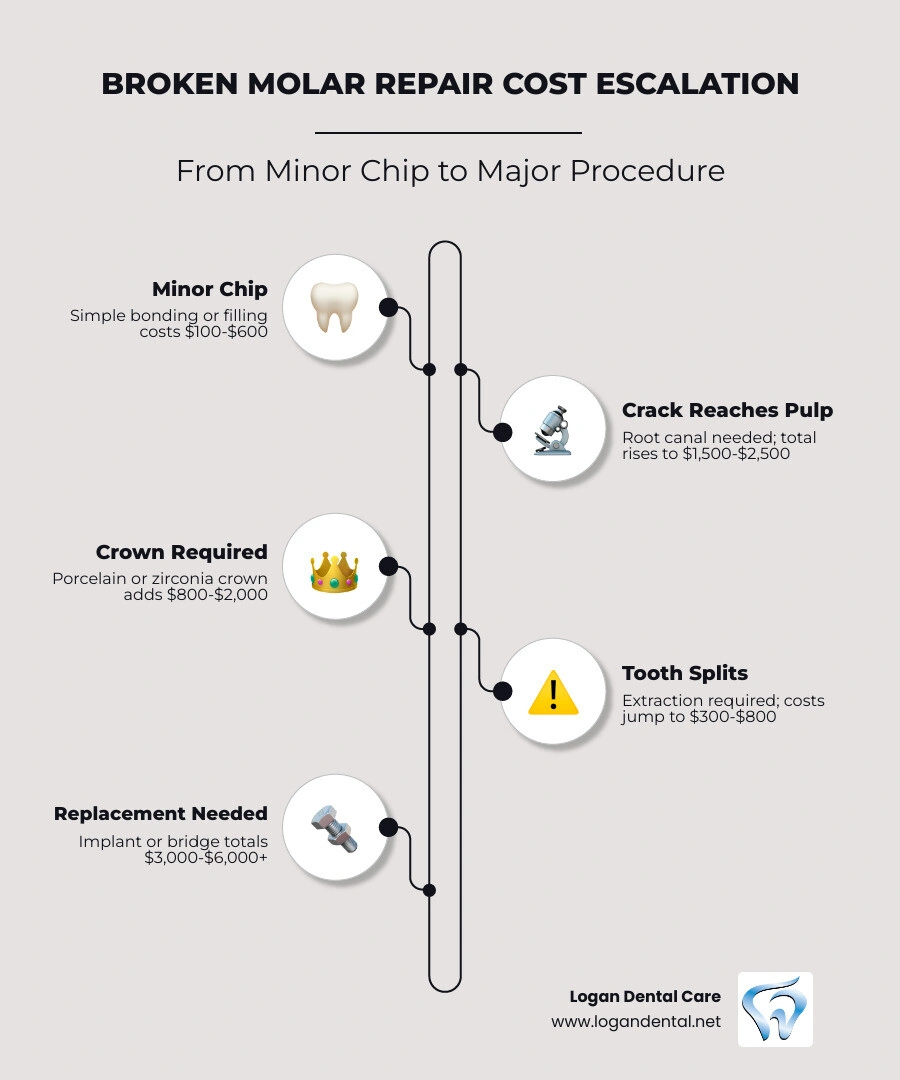
That's what makes timing so critical. A small fracture treated early might cost a few hundred dollars. Left alone, that same crack can reach the nerve, cause infection, and turn into a procedure costing several thousand dollars — or even tooth loss.
Whether your molar broke from biting something hard, years of grinding (bruxism), an old filling weakening the tooth, or simple wear over time, the path forward is the same: get it evaluated quickly and understand your options before costs escalate.
This guide breaks down every repair option, what each one costs in 2026, how insurance applies, and what to do right now if you've just broken a molar.
Common causes of molar fractures include:
- Biting hard foods like ice, popcorn kernels, or hard candy
- Teeth grinding or clenching at night
- Trauma from sports, falls, or accidents
- Large old fillings that weaken the remaining tooth structure
- Uneven bite pressure and long-term wear
Symptoms are not always dramatic. Some people notice a sharp edge right away. Others only feel pain when chewing, sensitivity to cold or sweets, or a quick zing when they release their bite. Swelling, lingering pain, or pressure can mean the crack has reached deeper layers of the tooth.
Treatment Options and Broken Molar Repair Cost Breakdown
The right treatment depends on how much of the molar is left, whether the crack reaches the pulp, and whether the tooth can still be saved. If you want a more detailed look at partial fractures, our guide to half broken molar tooth repair is a helpful next read.
Smoothing or polishing: Minimal to low cost. Best for tiny rough chips in enamel only. Results can be permanent.
Bonding: Usually $100 - $600. Used for small chips and shallow fractures. Often lasts about 5 to 10 years.
Tooth-colored filling: Usually $150 - $500. Helps repair small to moderate broken areas. Often lasts about 5 to 15 years.
Crown: Usually $800 - $3,500. Common for larger breaks or fractured cusps. Often lasts about 15 to 20 years.
Root canal plus crown: Usually $1,500 - $6,000. Needed when deep cracks reach or irritate the nerve. Can be long-term with good maintenance.
Extraction: Usually $150 - $400. Used when the molar cannot be saved. This permanently removes the tooth.
Implant after extraction: Usually $3,000 - $6,500. Replaces a missing molar. With proper care, implants can often last for decades.
A few important notes:
- Molars often need stronger solutions than front teeth because they handle more force.
- Fractured cusps are common in back teeth and may not look severe at first.
- If the break extends below the gumline or into the root, saving the tooth becomes more difficult.
If removal is the only option, our page on Tooth Extractions Bellefontaine explains what to expect. For replacement, implants are often paired with durable materials such as zirconia on posterior teeth because strength matters in the back of the mouth.
Minor Repairs: Bonding and Filling Costs
For small chips or minor broken corners, bonding or a tooth-colored filling may be enough.
Bonding uses composite resin to rebuild the missing area and smooth rough edges. It is usually completed in a single visit and works best when the damage is limited and the tooth still has strong support. In very tiny enamel-only chips, smoothing and polishing may be all that is needed.
Fillings are another common option if the break leaves a small cavity-like defect or if an old filling failed and the surrounding tooth chipped.
These conservative repairs are often the least expensive path, but they are not always the strongest long-term choice for a heavily loaded molar. Think of them as great for smaller problems, less great for a molar that has already started losing major structure. Our article on a dental cap explains when a more protective restoration may make sense.
Moderate to Major Broken Molar Repair Cost: Crowns and Root Canals
When a molar loses a cusp, has a larger fracture, or hurts during chewing, a crown is often the most predictable way to protect it. A crown covers the tooth and helps hold it together under chewing pressure.
For a deeper dive, see our Dental Crowns Cost Complete Guide, Porcelain Fused to High Noble Metal Crown Cost, Dental Crown Same Day, and Ceramic Teeth Cap.
A root canal enters the picture when the crack reaches the pulp, which is the inner part of the tooth containing the nerve. Signs can include:
- Lingering pain to hot or cold
- Throbbing or spontaneous pain
- Swelling near the tooth
- Pain when biting or releasing pressure
In these cases, the nerve tissue is removed, the canals are cleaned, and the tooth is usually restored with a crown afterward. Root canal-treated molars often need crowns because they become more brittle and need reinforcement.
Factors Influencing Your Repair Expenses in 2026
Why can one person pay much less than another for what sounds like the same problem? Because broken molar repair cost is shaped by more than the crack itself.
Key factors include:
- Severity and depth of the fracture
- Whether the nerve is involved
- How much healthy tooth remains
- Material chosen for the restoration
- Whether you need imaging, build-up, or post and core
- Whether treatment is done by a general dentist or specialist
- Insurance participation and annual maximums

Location matters too. In general, higher-cost metro markets tend to charge more than smaller Midwestern communities. Even within the same region, fees can vary based on overhead, technology, and provider experience. That is why we always recommend getting a treatment plan and asking exactly what is included.
If you are considering a crown, our Dental Crown Consultation Complete Guide and High Noble Metal Crown Price can help you compare options by function and durability.
Navigating Insurance and Financing for Broken Molar Repair Cost
Dental insurance often helps with broken molar treatment when it is medically necessary. In many plans:
- Basic restorative work may be covered at a higher percentage
- Major services like crowns may be covered at a lower percentage
- Cosmetic-only procedures may not be covered
- Annual maximums can limit how much the plan pays in one year
That last point matters a lot. Many dental plans have yearly maximums that can be reached quickly if you need a crown, root canal, or implant.
We also encourage patients to ask about:
- Deductibles
- Waiting periods
- In-network versus out-of-network benefits
- Pre-authorization for larger procedures
- HSA and FSA eligibility
- Monthly payment plans or third-party financing
If you are comparing restoration types, our Dental Crown Options Ultimate Guide can help you understand why one material may cost more but last longer.
The Financial Risk of Delaying Molar Treatment
Delaying a repair is one of the fastest ways to make a manageable problem more expensive.
A small chip may start as a simple filling or bonding case. But once bacteria enter the crack, the pulp can become inflamed or infected. Then the treatment may change to a root canal and crown. If the tooth splits or the infection spreads, extraction may be the only option, followed by an implant or bridge if you want the tooth replaced.
Delay can also lead to:
- More pain and sensitivity
- Infection or abscess
- Swelling and emergency visits
- Higher treatment complexity
- Bone loss after extraction
- Bite changes from chewing on one side
In short: waiting rarely saves money. It usually just gives the crack time to become more ambitious. And teeth, unfortunately, are overachievers in the worst moments.
If extraction becomes necessary, our Tooth Extraction Recovery Tips article covers aftercare and healing basics.
Frequently Asked Questions about Molar Repair
Can a broken molar heal on its own?
No. Teeth do not heal the way bones do because enamel has no blood supply. Once a molar cracks or breaks, it needs professional stabilization. Even if pain goes away for a while, the fracture is still there and can keep spreading.
How long do molar repairs typically last?
It depends on the repair and your habits.
- Bonding often lasts about 5 to 10 years
- Fillings may last about 5 to 15 years
- Crowns often last 15 to 20 years or longer
- Implants can last for decades with good care
Longevity improves with brushing, flossing, regular checkups, and protecting teeth from grinding. If you clench at night, a nightguard can help your dental work live a less stressful life.
What are the immediate steps to take after breaking a molar?
Take these steps right away:
- Rinse gently with warm salt water or plain warm water.
- Save any broken pieces in milk or saline if possible.
- Apply gauze if there is bleeding.
- Use a cold compress on the outside of the cheek for swelling.
- Cover a sharp edge with sugarless gum or dental wax.
- Avoid chewing on that side.
- Call a dentist as soon as possible.
Do not try to glue the tooth yourself. DIY and molars do not make a good team.
Conclusion
A broken molar is never convenient, but understanding your options makes the situation much less overwhelming. The true broken molar repair cost depends on how soon you act, how deep the damage goes, and which treatment gives the tooth the best long-term chance.
At Logan Dental Care, we believe dental decisions should feel clear, personal, and pressure-free. We are proud to serve Bellefontaine and nearby communities with family-focused care that combines modern treatment with a friendly, comfortable approach.
If you think you may need a crown or more advanced restoration, visit our Services Crowns and Bridges page to learn more about how we help protect damaged teeth and restore comfortable chewing.