
Crown Out of Pocket Cost Explained Without the Royal Headache

What Will You Pay Out of Pocket for a Dental Crown?
Your out-of-pocket cost is the crown fee plus any needed care, minus what insurance pays. The final amount depends on the crown material, the condition of your tooth, and your plan's benefits. Ask for a written, itemized estimate before treatment so you can see what is included and what you may owe.
We're the Logan Dental Care Team in Bellefontaine, Ohio, and we'll help you understand that estimate without the guesswork. Knowing your crown out of pocket cost before treatment begins makes it easier to plan comfortably and avoid surprises.
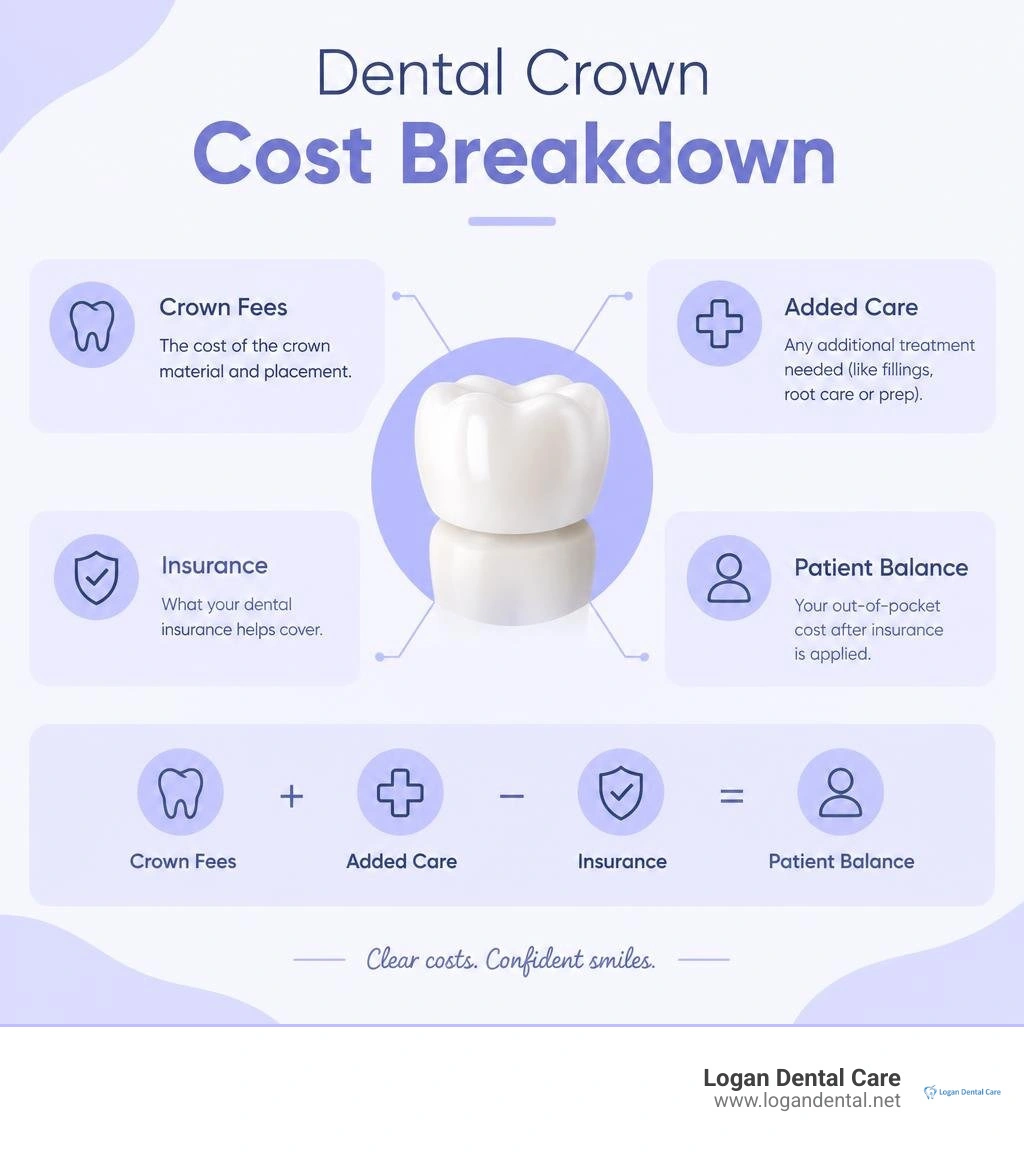
Crown out of pocket cost terminology:
Understanding Your Crown Out of Pocket Cost Breakdown

When you receive a dental quote, the total out-of-pocket amount is shaped by more than just the physical cap placed over your tooth. A dental crown functions as a custom protective cover designed to restore a damaged, cracked, or heavily decayed tooth to its natural shape, size, and strength. Because every smile presents a unique situation, what you end up paying out of pocket depends on several interwoven components.
Your final balance is influenced by the restorative material you choose, the specific tooth requiring treatment, dental laboratory fees, diagnostic imaging, and any preparatory procedures needed to create a stable foundation. Regional factors and provider overhead also play a role in baseline restorative pricing, as detailed in the CoveredUSA overview of uninsured crown pricing. While a baseline fee covers the fabrication and cementation of the restoration itself, additional services are often required to ensure long-term clinical success.
Estimating Crown Out of Pocket Cost by Material
The material selected for your restoration directly impacts both the durability of the tooth and your personal financial investment. Modern dentistry provides several distinct material choices, each balanced for specific functional chewing forces and cosmetic goals:
- Zirconia: Known for exceptional fracture resistance, solid zirconia is a popular tooth-colored choice for back molars that endure intense daily grinding and bite pressure.
- Porcelain-Fused-to-Metal (PFM): A time-tested restorative design featuring an inner metal coping coated with outer porcelain. While durable, reviewing your porcelain fused to high noble metal crown cost is helpful because noble metal alloys fluctuate in laboratory fabrication expenses.
- All-Ceramic and Lithium Disilicate: Highly translucent materials, such as E-max, that blend seamlessly with natural enamel. These are frequently favored for highly visible front teeth where lifelike aesthetics are the top priority.
- Cast Gold Alloys: Extremely gentle on opposing enamel with outstanding longevity. Gold rarely chips or fractures, making it a reliable solution for back teeth when patients prefer durability over a white shade.
- Base Metal Alloys: Strong, non-precious metal options that offer maximum wear resistance with minimal tooth structure removal.
- Composite Resin: Typically utilized for temporary or transitional coverage, offering a budget-friendly option with a shorter functional lifespan.
Additional Dental Procedures and Hidden Add-On Fees
A frequent reason a treatment estimate differs from a standalone crown quote is the necessity of supporting dental care. A crown requires a healthy, sturdy base of natural tooth structure to stay securely bonded. If dental decay has undermined the tooth, or if a significant portion of the natural enamel has fractured away, your dentist must first rebuild the underlying structure.
Comprehensive care often involves pre-operative diagnostic imaging, such as digital periapical radiographs, to evaluate the roots and surrounding jawbone. These diagnostic steps ensure that no hidden infections linger below the gumline before permanent restoration begins.
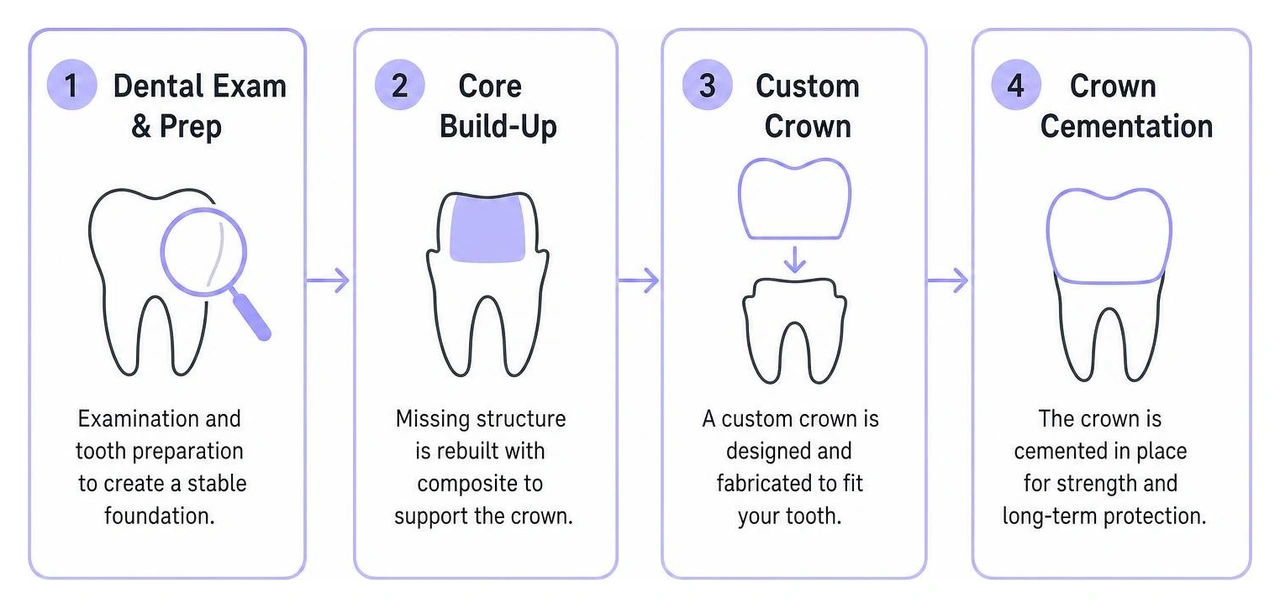
Prep Work, Core Buildups, and Crown Lengthening
When assessing broken molar repair cost, patients often encounter specific supportive procedures listed on their treatment plans:
- Core Buildup: Replaces missing tooth structure using specialized composite resin materials so the crown has sufficient surface area to grip securely.
- Post and Core: If a tooth has previously undergone endodontic therapy, a small post may be anchored into the root canal space to provide an internal anchor for the buildup material.
- Crown Lengthening: A minor periodontal procedure that reshapes excess gum tissue and bone to expose more sound tooth structure. This ensures adequate biological width so the crown margin can seat securely without irritating gum tissue.
Managing Total Crown Out of Pocket Cost with Add-On Procedures
If a damaged tooth involves nerve inflammation or deep bacterial infection, a root canal may be required alongside your crown. These services are billed as separate clinical steps rather than bundled into a single charge.
Requesting an itemized treatment plan allows you to review the exact procedure codes for the consultation, x-rays, core buildup, and crown fabrication in advance, ensuring complete financial clarity before treatment begins.
Navigating Dental Insurance, Benefit Limits, and Patient Protections
Dental insurance plans generally categorize crowns as major restorative services, as outlined in the GoodRx guide on dental crown expenses. Most standard policies cover major restorative procedures via a coinsurance percentage after your annual deductible is satisfied.
Understanding how your policy handles coverage tiers helps you anticipate your out-of-pocket balance when planning restorative treatment.
Annual Maximums, Waiting Periods, and Replacement Clauses
Insurance coverage for major dental restorations is subject to several common plan limitations:
- Annual Maximums: Most dental benefit plans establish a capped dollar amount that the insurer will contribute toward your care within a single calendar year. Once this limit is reached, you are responsible for any remaining expenses.
- Waiting Periods: New policies may require an initial enrollment period before benefits activate for major restorative procedures like crowns or bridges.
- Replacement Frequency Clauses: Many contracts enforce a five-year or seven-year replacement rule, meaning the policy will not contribute toward replacing an existing crown on the same tooth until that time has elapsed.
- Downgrade Clauses: Some insurers calculate benefits based on the least expensive alternative treatment (such as a standard metal or PFM restoration), leaving the patient responsible for the remaining balance if an all-ceramic or zirconia option is chosen.
- Missing Tooth Clauses: Policies may restrict benefits for restoring a tooth that was extracted prior to the effective date of the current insurance coverage.
Good Faith Estimates and the No Surprises Act
Under patient protection standards and the No Surprises Act, uninsured and self-pay patients have the right to receive a written Good Faith Estimate before scheduling non-emergency medical and dental care.
This estimate provides an itemized breakdown of anticipated charges, including specific procedure codes for diagnostic imaging, foundational buildup work, and the final restoration. Having a clear written estimate allows you to budget confidently and avoid unexpected billing surprises.
Affordable Alternatives and In-House Savings Options
For patients without traditional dental insurance, managing restorative treatment costs is entirely achievable through dedicated in-house programs and strategic oral health planning.
Dental Savings Plans
To ensure high-quality care remains accessible, our practice offers the smile protection savings plan. This in-house membership is designed specifically for uninsured individuals and families across Logan County. By providing built-in preventive care alongside predictable discounts on major restorative treatments, our membership plan helps you maintain optimal oral health without insurance claim hassles, waiting periods, or annual maximums.
Crowns vs. Implants and Bridges
When evaluating restorative options for a severely damaged tooth, it helps to consider the long-term value of tooth preservation versus replacement:
- Dental Crowns: Preserve your natural tooth root, supporting jawbone health and maintaining your natural bite alignment. With proper hygiene and routine dental checkups, crowns provide dependable service for ten to fifteen years or longer.
- Dental Bridges: Used to replace a missing tooth by anchoring artificial teeth to adjacent natural crowns. While effective for filling gaps, bridges require modifying healthy neighboring teeth. You can explore how crowns and bridges work together to restore complete dental function.
- Dental Implants: Replace both the root and crown of an extracted tooth with a titanium post integrated into the jawbone. While implants provide an exceptional permanent solution for non-restorable teeth, preserving your natural tooth with a crown is generally more conservative when sound tooth structure remains.
Frequently Asked Questions About Crown Costs
How much does dental insurance typically cover for a crown?
Most dental insurance policies classify crowns as major restorative services and cover a percentage of the allowable fee once your annual deductible has been met. The final out-of-pocket amount you owe depends on your remaining annual maximum, any applicable material downgrade clauses, and whether supportive treatments like core buildups are included on your claim.
Can a loose or dislodged crown simply be re-cemented?
Yes, if your existing crown is intact, undamaged, and the underlying natural tooth structure remains healthy and free of new decay. During an examination, your dentist will evaluate the tooth to ensure the margins fit tightly before cleaning and re-bonding the restoration into place.
Why do back molar crowns cost more than front teeth?
Back molars endure heavy chewing pressure, often necessitating high-strength materials like solid zirconia or cast alloys. Additionally, molars frequently require more extensive foundational prep work, such as composite core buildups, to ensure a stable, long-lasting anchor.
Conclusion
Understanding your restorative dental options should never feel overwhelming. At Logan Dental Care, we believe that open communication and clear treatment estimates are the foundation of exceptional family dentistry.
Logan Dental Care is a family-focused dental practice located at 1021 N. Main Street in Bellefontaine, Ohio, serving Bellefontaine and surrounding Logan County communities, including Zanesfield, Valley West Liberty, Logansville, Russells Point, and Lakeview. Logan Dental Care is an accredited member of the American Dental Association and the Ohio Dental Association, and holds an A+ BBB rating.
Our welcoming team provides a comprehensive range of oral health services tailored for every stage of life:
- General and Preventive Dentistry: Comprehensive exams, professional cleanings, and digital diagnostics.
- Family Dentistry: Gentle, friendly dental care for children, teens, adults, and seniors.
- Cosmetic Dentistry: Professional teeth whitening, porcelain veneers, and complete smile makeovers.
- Orthodontics: Clear Invisalign aligners and traditional braces for patients of all ages.
- Restorative Dentistry: Custom dental implants, high-quality crowns, and durable bridges.
- Emergency Dental Care: Prompt care for sudden tooth pain or broken teeth, including same-day and outside standard business hours availability.
- Smile Protection Savings Plan: An in-house membership designed to make dental care simple and affordable for uninsured patients.
- Protective Appliances: Custom-fitted nightguards for teeth grinding and athletic mouthguards.
Please note: Logan Dental Care does not offer payment plan options and does not offer sedation dentistry.
If you have questions about restoring a damaged tooth or want to review our complete dental crowns cost guide, we welcome you to visit our office or contact our team today to schedule your personalized consultation.