
A Practical Guide to Comparing Types of Teeth Crowns
What Are the Different Types of Teeth Crowns?
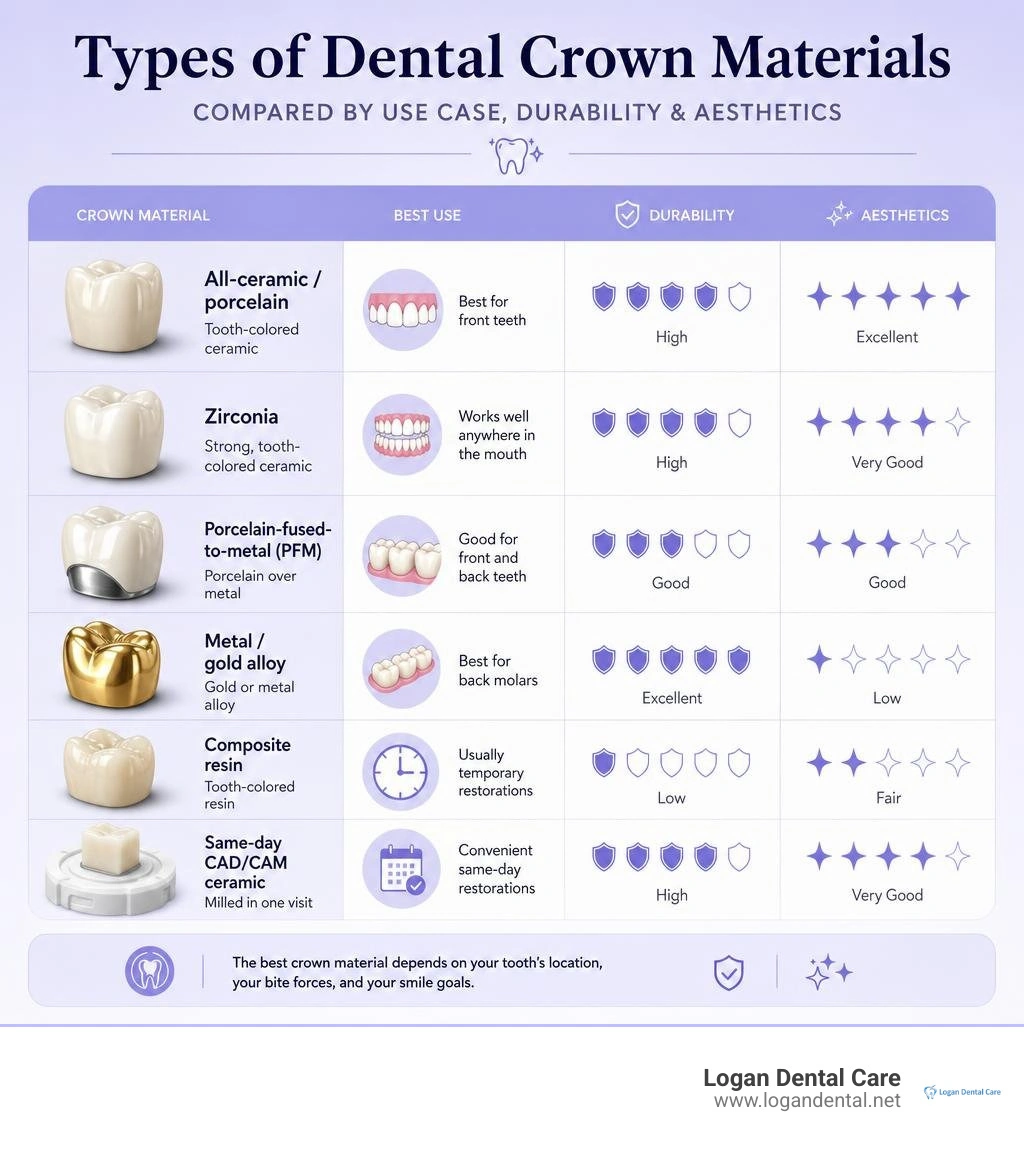
When you're trying to compare types of teeth crown materials, here's a quick breakdown of your main options:
- All-ceramic / porcelain - Best natural look; ideal for front teeth
- Zirconia - Strong and tooth-colored; works well anywhere in the mouth
- Porcelain-fused-to-metal (PFM) - Combines strength with aesthetics; some darkening at the gumline over time
- Metal / gold alloy - Most durable; best for back molars; very visible
- Composite resin - Usually temporary; shortest lifespan (3-5 years)
- Same-day CAD/CAM ceramic - Milled in one visit; no temporary crown needed
Not all dental crowns are the same — and the wrong choice can mean replacing your crown sooner than you'd like.
A dental crown is a custom cap placed over a damaged, decayed, or weakened tooth to restore its shape, strength, and appearance. Single crown placement is actually the most common dental restoration performed in the United States. Yet most patients walk into a dental office knowing very little about the materials available to them.
That matters. The material your crown is made from affects how long it lasts, how natural it looks, and how well it holds up to everyday chewing forces. Gold behaves very differently from porcelain. Zirconia is not the same as a resin temporary. Making an informed choice — with your dentist's guidance — can mean the difference between a crown that lasts 30 years and one that needs replacing in three.
Here at Logan Dental Care, our team has helped families throughout Bellefontaine, Ohio navigate these exact decisions, and we're here to walk you through everything you need to know.
Understanding Dental Crowns and When You Need One
A dental crown acts like a protective helmet for a compromised tooth. When a natural tooth structure is heavily damaged, a standard composite filling simply isn't enough to hold everything together under everyday chewing pressure.
Knowing the basic Anatomy of tooth crowns helps explain why this is necessary. Teeth consist of an outer protective enamel layer, a shock-absorbing dentin layer, and a delicate inner pulp. When tooth decay or physical trauma compromises these outer layers, a crown fits over the remaining natural structure, shielding it from further breakdown and restoring complete oral function.
Dentists frequently recommend crowns following a root canal procedure. When the inflamed pulp inside a tooth is removed, the remaining tooth structure can become brittle over time. Placing a cap over the tooth prevents severe fractures down the road. If you'd like to learn more about this connection, read your guide to root canals and crowns.
Restorative and Cosmetic Indications
Beyond post-root canal protection, we recommend dental crowns for several functional and aesthetic reasons:
- Protecting weak or decayed teeth: Preventing a cracked tooth from breaking apart under pressure.
- Restoring broken or severely worn teeth: Rebuilding teeth flattened by chronic clenching or grinding (bruxism).
- Supporting dental bridges: Serving as stable anchor caps on natural teeth on either side of a gap.
- Completing dental implants: Topping a titanium implant post with a custom natural-looking tooth replacement.
- Cosmetic enhancements: Covering severe intrinsic discoloration or misshapen teeth to reshape your smile.
Difference Between Dental Caps and Crowns
Patients frequently ask us whether a "dental cap" is different from a "dental crown." The short answer is no!
Both terms describe the exact same restorative treatment. "Cap" is simply a popular lay term because the restoration sits right over the prepped enamel like a snug hat. Whether your dentist refers to it as a crown or a dental cap, the functional goal is identical: complete structural reinforcement.

Exploring the Main Types of Teeth Crown Materials
When evaluating different types of teeth crown solutions, material selection depends on tooth location, bite force, durability needs, and personal aesthetic goals.
Ceramic and Porcelain Types of Teeth Crown Solutions
All-ceramic and full porcelain crowns offer unmatched natural translucency and color-matching precision. Because ceramic mimics the light-reflecting qualities of natural enamel, these crowns blend seamlessly alongside natural teeth.
Modern ceramic options often feature zirconia (zirconium dioxide), a medical-grade ceramic known for incredible fracture resistance. Zirconia provides great strength while keeping a pleasing, tooth-colored look. If you are looking to restore visible front teeth, a custom ceramic teeth cap is often the top recommendation.
Metal and Alloy Types of Teeth Crown Materials
Metal crowns represent the classic gold standard for structural longevity. Made from gold alloys, platinum, or base metals like nickel and chromium, metal crowns require minimal natural tooth removal because the material is incredibly strong even in thin layers.
Because gold and base metals don't chip or fracture, they withstand heavy grinding forces better than any other material. For patients suffering from severe nighttime teeth grinding, a metal crown on posterior molars remains a highly effective choice. However, their bright metallic appearance means they are almost exclusively reserved for out-of-sight back teeth. If you are weighing costs for posterior restorations, exploring a metal crown dental cost guide can help clarify your options.
Porcelain-Fused-to-Metal (PFM) Crowns
Porcelain-fused-to-metal (PFM) crowns offer a middle ground between metal's strength and porcelain's natural look. A PFM crown consists of a durable metal core covered by an outer shell of tooth-colored porcelain.
While PFM restorations are strong enough for both front and back teeth, they do have a cosmetic drawback. Over time, as natural gums recede, a subtle dark metal line can become visible near the gumline. To understand how premium metals affect longevity and expenses, take a look at our breakdown of porcelain fused to high noble metal crown cost.
Composite Resin and Same-Day CAD/CAM Crowns
All-resin crowns are crafted from composite materials similar to white fillings. While they are the most budget-friendly upfront, resin crowns wear down much faster than ceramic or metal, carrying an average lifespan of just 3 to 5 years. Consequently, they are primarily used as temporary restorations.
On the tech-forward side, same-day ceramic crowns use CAD/CAM (Computer-Aided Design and Computer-Aided Manufacturing) technology. Using digital intraoral scanners, your dentist can capture precise 3D images of your prepped tooth and mill a permanent ceramic crown right in the office during a single appointment. Check out our guide on dental crown same day options to learn how single-visit technology works.
Step-by-Step Dental Crown Procedure and Timeline
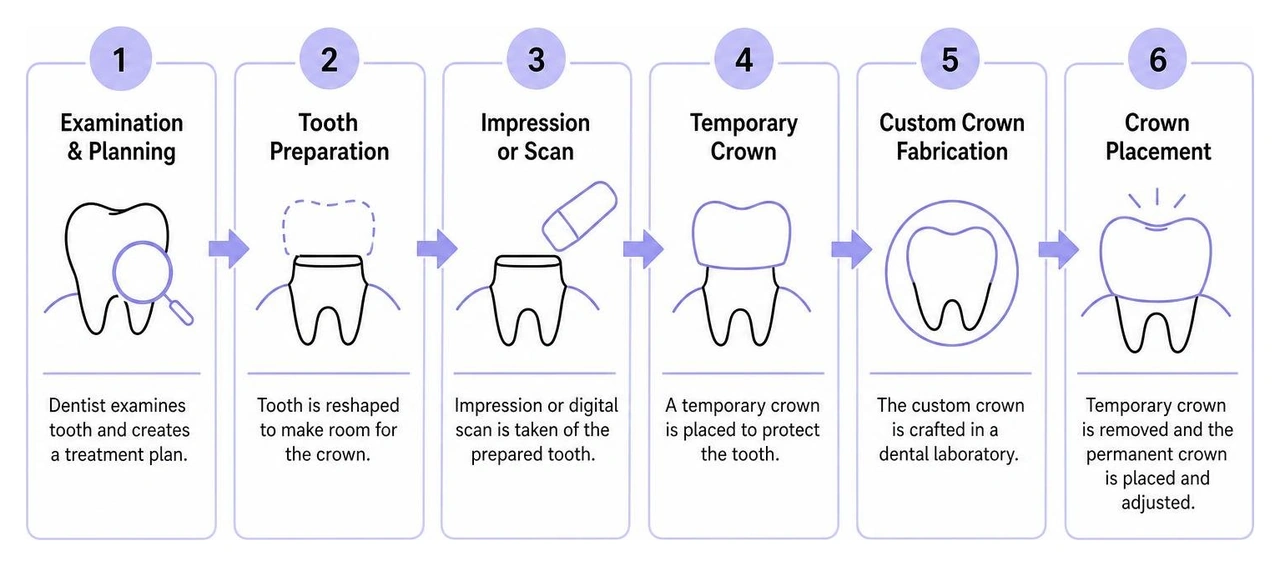
Getting a dental crown placed is a straightforward process designed to maximize your long-term comfort.
Traditional Multi-Visit Appointment Timeline
For traditional crowns made in an off-site dental laboratory, the treatment spans two distinct visits spaced 2 to 3 weeks apart:
- First Visit - Preparation & Impressions: We numb the treatment area with local anesthesia, gently remove damaged tooth decay, and shape the tooth enamel so the custom crown fits comfortably. Next, we take precise digital impressions and place a comfortable temporary crown to protect your prepped tooth.
- Lab Fabrication: A specialized technician crafts your permanent crown from the chosen material using your exact digital impressions.
- Second Visit - Fitting & Bonding: We remove the temporary cap, check the permanent crown's fit, alignment, and color match, and permanently bond it in place.
For a deeper look into what happens during your initial consultation, check out our dental crown consultation complete guide.
Post-Placement Recovery and Risks
It is completely normal to experience mild tooth sensitivity to hot or cold temperatures for a few days after your permanent crown is bonded. Local anesthesia wears off after a few hours, and any light gum soreness near the restoration typically resolves quickly.
If your bite feels uneven or high when chewing, let your dentist know right away so a quick, painless adjustment can be made.
Comparing Longevity, Maintenance, and Alternatives
Most dental crowns last between 5 and 15 years, but with exceptional care and proper maintenance, high-quality crowns can easily last upwards of 30 years!

Essential Care Tips to Maximize Lifespan
While a crown cannot decay, the natural tooth structure beneath it and the surrounding gum line still can. To keep your crown in top shape:
- Maintain great daily habits: Brush twice daily with soft bristles and fluoride toothpaste, and floss daily around the crown margins.
- Avoid harmful chewing habits: Never chew on ice cubes, hard nuts, popcorn kernels, or sticky candies like taffy that can dislodge or fracture restorations.
- Wear a custom nightguard: If you clench or grind your teeth while sleeping, a custom nightguard shields ceramic surfaces from excessive force.
- Keep routine dental visits: Regular cleanings allow us to verify that the seal around your crown remains sound.
According to long-term Permanent dentition research, protecting the health of the underlying natural tooth tissue is the most important factor in keeping a crown functioning well for decades.
Common Alternatives to Full Coverage Crowns
Depending on how much remaining tooth structure you have, full coverage crowns aren't always the only path forward:
- Dental Veneers: Thin ceramic shells bonded solely to the front of teeth, ideal for purely cosmetic updates.
- Inlays & Onlays: Also known as partial crowns, these custom restorations repair damaged tooth cusps while preserving more natural enamel.
- Dental Implants: The best replacement choice when a natural tooth is beyond saving and requires full extraction.
Evaluating Costs, Financial Factors, and Decision Criteria
Understanding the financial commitment behind restorative dental care helps you plan comfortably for your family's health.
Key Factors Influencing Crown Costs
The cost of a crown depends on several specific factors:
- Material Selection: High-grade gold alloys and advanced monolithic zirconia carry different material expenses than composite resin.
- Preparatory Procedures: Needing extra decay removal, core buildup, or root canal therapy before placement increases overall care needs.
- Lab & Fabrication Fees: Custom hand-finished laboratory artistry differs from automated, single-visit in-office milling.
To explore details regarding investment expectations and coverage options, read through our dental crowns cost complete guide and review our guide on high noble metal crown price details.
How to Choose the Right Crown for Your Smile
To select the perfect types of teeth crown material for your specific smile, consider these four core questions:
- Where is the tooth located? Front teeth benefit most from all-ceramic aesthetics, while back molars demand metal or zirconia strength.
- Do you grind your teeth? High-pressure bite forces favor solid gold or high-strength zirconia.
- Do you have metal allergies? Metal-free ceramic or zirconia options provide total peace of mind for sensitive patients.
- What are your long-term aesthetic goals? Balancing natural color matching with durable functionality is key.
Frequently Asked Questions About Dental Crowns
How long do dental crowns typically last?
Dental crowns typically last between 5 and 15 years on average. However, with consistent daily flossing, soft-bristled brushing, and regular preventive care, high-quality crowns can last 20 to 30 years or longer.
Is getting a dental crown a painful procedure?
No, getting a dental crown is not painful. We completely numb the tooth and surrounding gum tissue with local anesthetic before prepping the tooth. You may feel mild temperature sensitivity or slight gum tenderness for a few days after the appointment, which resolves quickly.
What foods should I avoid with a new crown?
While your crown is fully functional, it's best to avoid extremely hard foods like ice cubes, hard candies, and popcorn kernels that can crack porcelain. You should also avoid super sticky foods like taffy or caramel, especially while wearing a temporary crown.
Conclusion
Choosing between different types of teeth crown options doesn't have to feel overwhelming. By evaluating your tooth's location, bite force, and personal aesthetic preferences alongside your dentist, you can select a high-quality restoration that keeps your smile strong and beautiful for decades.
At Logan Dental Care, we treat every patient like a member of our extended family. Serving Bellefontaine and surrounding Logan County communities from our office at 1021 N. Main Street, our warm team provides thoughtful, personalized restorative care tailored around your unique needs.
If you suspect you have a cracked tooth or want to learn more about our custom crowns and bridges services, reach out to us today to schedule your visit!