
How to Budget for High-Strength Zirconia Dental Caps

What Goes Into a Zirconia Cap Price?
A zirconia cap price depends on the tooth being treated, the type of zirconia, the lab work, and any care needed before the crown is placed. To budget for one, ask for a written quote that separates the crown from possible extras, such as X-rays, a root canal, or a build-up to support the crown. Then check what your insurance may cover.
A zirconia cap is a tooth-colored crown made to protect and restore a damaged tooth. Because zirconia is a highly fracture-resistant ceramic, it is especially popular for back molars that do the heaviest chewing, while still offering a natural appearance for visible teeth. At Logan Dental Care, we can help you understand your options, including our Smile Protection Savings Plan if you do not have insurance.
We're the Logan Dental Care Team, a family-focused practice serving Bellefontaine and nearby Logan County communities from 1021 N. Main Street.
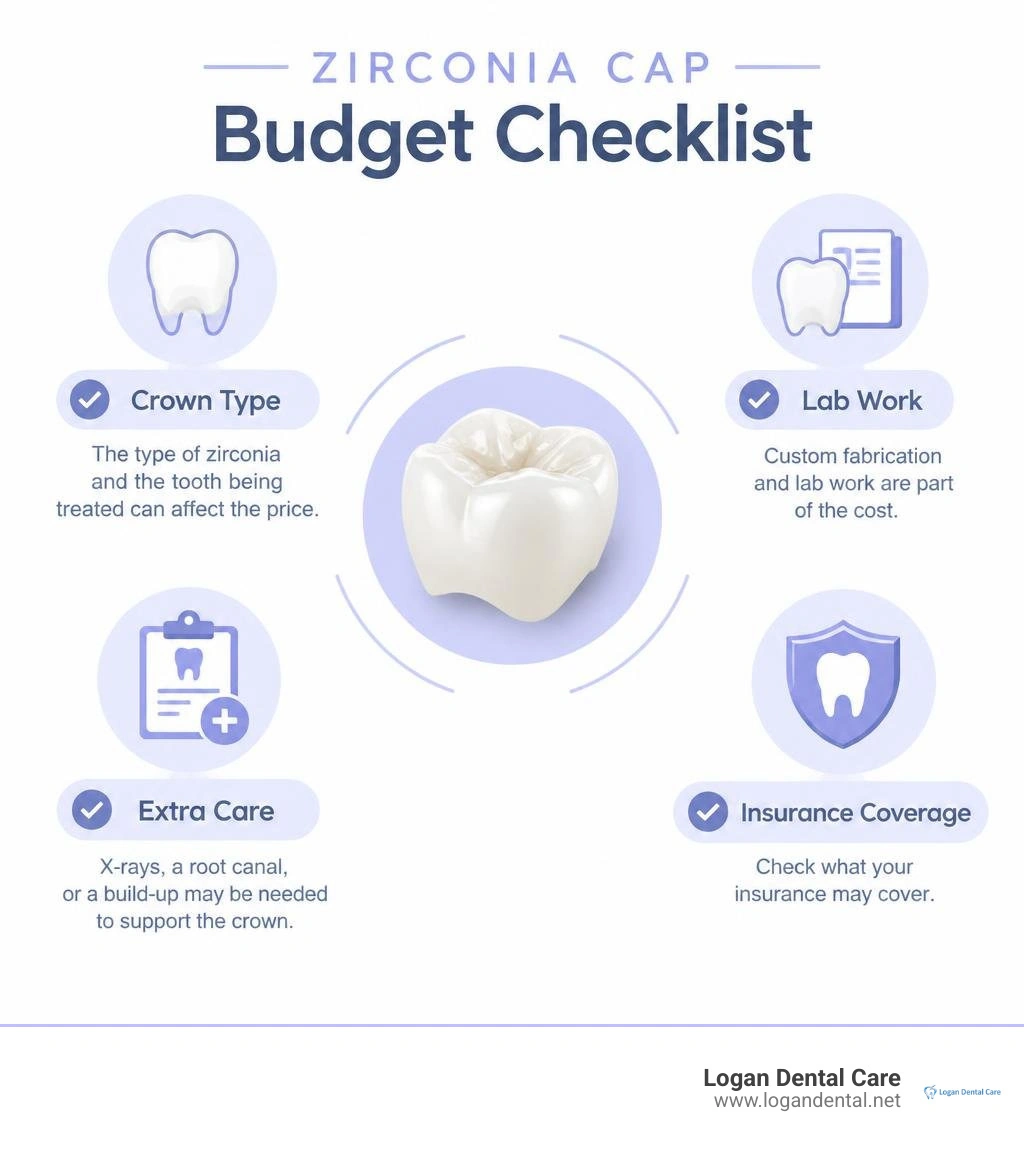
Zirconia cap price vocab explained:
Understanding Average Zirconia Cap Price and Global Cost Variations
Budgeting for restorative dental care starts with understanding how dental restorations are priced across the board. When you look at the total investment for a crown, you are looking at several distinct components: the initial exam, the precision engineering of the material, the custom laboratory fees, and the hands-on care of your dental team. Reviewing a comprehensive breakdown of the cost of tooth cap restorations helps clarify why prices vary across different practices and regions.
Typical Zirconia Cap Price in the United States and Regional Factors
In the United States, the overall cost of a custom restoration reflects local operating overhead, lab partnership standards, and the diagnostic technology used during your visits. Many patients can expect a zirconia cap to fall within a broad range of roughly $1,000 to $2,500, although the final fee depends on the specific tooth, material grade, and any additional procedures required before the crown is seated.

Practices in high-density metropolitan areas often face elevated commercial overhead, which can influence restorative fees. In contrast, family-oriented practices in smaller communities focus on long-term relationships and streamlined, modern care that keeps dependable treatment accessible for neighborhood families. That is one reason patients in the Midwest, including those visiting us from Bellefontaine and surrounding Logan County communities, often find restorative care more predictable and personal than in larger urban centers.
Global Comparison: Private Practices and Dental Tourism
Patients researching care online often encounter international dental quotes from overseas destinations. In the United Kingdom, for example, NHS Band 3 treatment carries a flat patient charge, while private UK fees can vary widely by practice and material. In India, multi-tier clinics may advertise lower base rates, and Turkish tourism packages frequently bundle treatment with travel. While foreign promotional packages can look appealing at first glance, traveling abroad for dental work carries hidden expenses and logistical challenges. Flights, lodging, time away from work, and the absence of local follow-up care add up quickly. If a bite adjustment or warranty check is needed down the road, having your trusted neighborhood dental team right down the street provides invaluable peace of mind.
Key Factors Influencing the Cost of Zirconia Restorations
Zirconium dioxide is an advanced ceramic celebrated for its exceptional fracture resistance and natural appearance. However, not every restoration is fabricated the same way. The overall dental crown cost is shaped by material grade, digital design sophistication, and the unique structural needs of your smile.
Monolithic, High-Translucency, and Layered Zirconia Cap Price Differences
Scientific research on Zirconia as a Dental Biomaterial highlights how different crystal structures yield distinct clinical benefits:
- Monolithic Zirconia (3Y): Milled from a solid block of high-strength ceramic. Because it has no delicate surface layers, it provides maximum resistance against heavy chewing and nighttime clenching, making it ideal for back molars.
- High-Translucency Zirconia (4Y and 5Y): Features a modified microstructure that allows more natural light transmission. It balances structural strength with lifelike aesthetics for premolars and visible teeth.
- Layered Zirconia: Combines an ultra-strong zirconia core with hand-sculpted outer porcelain. This requires extensive artistic laboratory time to match subtle shade gradients on front teeth.
Clinical Preparation, Digital Scanning, and Laboratory Fabrication
Modern crown appointments have traded messy, goopy impression trays for comfortable digital intraoral scanners. These optical wands capture precise three-dimensional digital models of your prepared tooth.
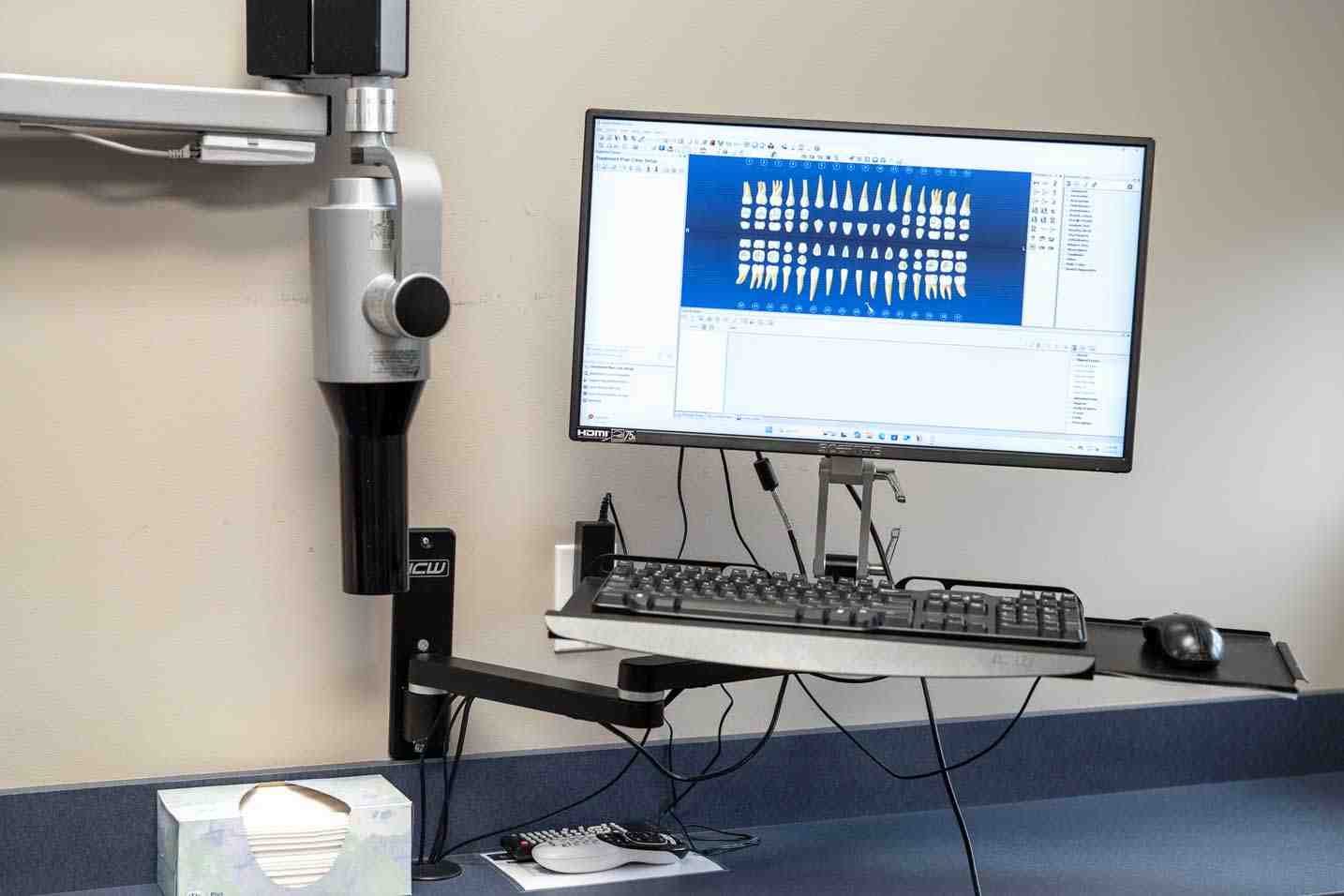
From these digital impressions, certified dental technicians use five-axis CAD/CAM milling machines to carve the crown to microscopic tolerances before sintering it in a high-temperature furnace. This high-tech process ensures a snug, protective seal over your natural tooth.
Natural Teeth Versus Implant-Supported Zirconia Caps
Restoring a natural tooth involves shaping the existing enamel to create a secure foundation. In contrast, replacing a fully missing tooth with an implant-supported crown involves multiple stages. The process includes the surgical placement of the implant post, an internal connector known as an abutment, and the final zirconia cap. Because implant restorations require specialized mechanical components and custom hardware, the total treatment plan naturally reflects those advanced steps. A single implant-supported restoration can range from about $4,000 to $7,000 or more when the surgical placement, abutment, and final crown are all included.
Comparing Zirconia Costs with Alternative Dental Crown Materials
Understanding how zirconia compares to other popular restorative materials makes it easier to select the right option for your goals and budget. Exploring the various types of teeth crown options ensures you find the ideal balance of appearance, strength, and longevity.
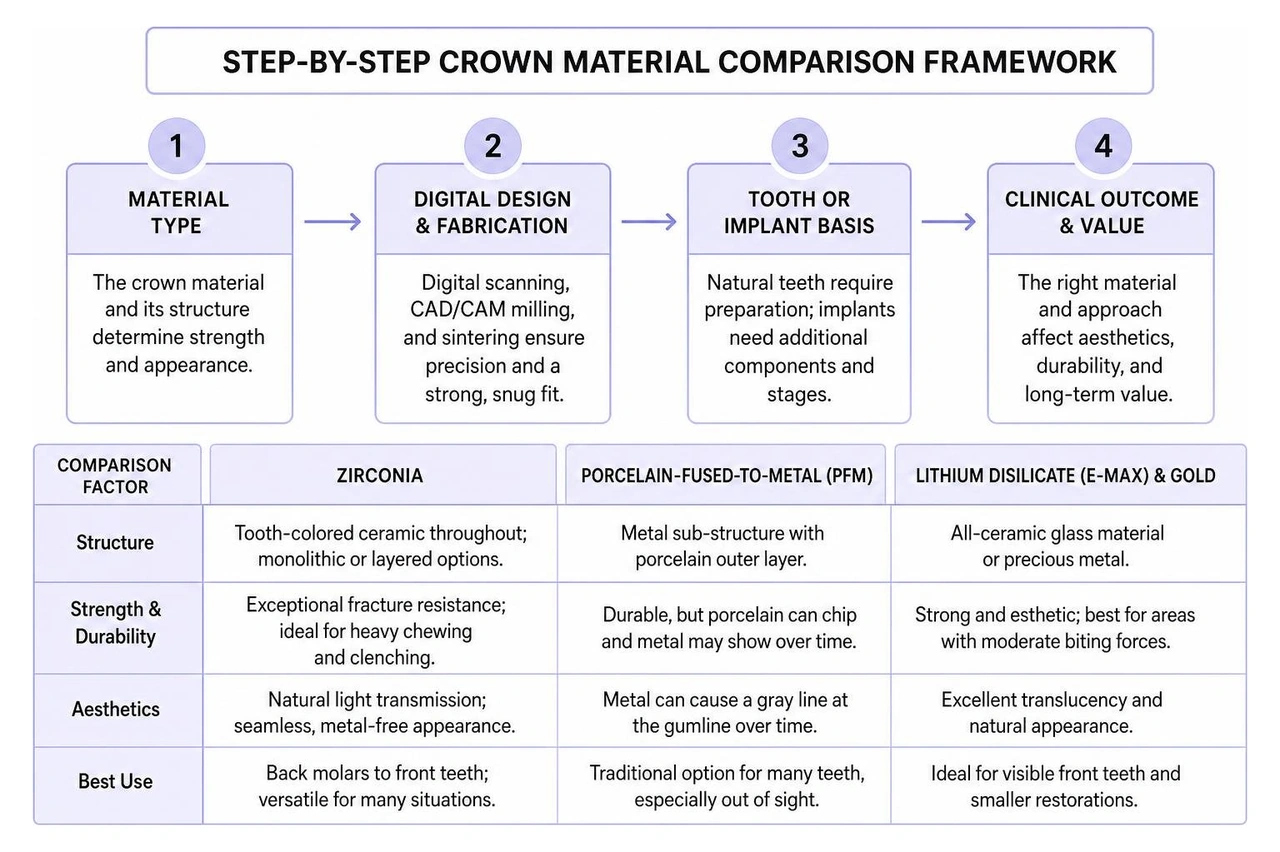
Zirconia Versus Porcelain-Fused-to-Metal (PFM)
Porcelain-fused-to-metal (PFM) crowns have been a traditional standard for decades. While effective, PFM restorations have a dark metal sub-structure beneath an outer porcelain shell. Over time, gum recession can reveal a dark gray line at the gumline, and the outer porcelain can chip away from the metal. Monolithic zirconia solves both issues by providing seamless, tooth-colored strength from top to bottom with zero metal underneath. For many patients, the long-term reliability and natural appearance make zirconia a worthwhile investment even when the initial fee is slightly higher.
Zirconia Versus Lithium Disilicate (E-Max) and Gold
Lithium disilicate (often called E-Max) is an all-ceramic material known for its lifelike translucency, making it a popular choice for front teeth. However, for patients who grind their teeth or need a restoration on a heavy-chewing back molar, zirconia offers superior bite-force resistance. Gold alloys remain exceptionally durable, but their bright metallic appearance leads most modern patients to prefer the discreet, natural beauty of zirconia. Gold prices can also fluctuate over time, while zirconia pricing tends to be more stable and predictable for restorative planning.
Insurance, Hidden Procedures, and Long-Term Value Considerations
Budgeting for long-term restorative care like crowns and bridges means looking at the big picture, from pre-treatment care to everyday maintenance.
Navigating Dental Insurance Coverage and Savings Plans
Many dental insurance policies classify crowns as a major restorative benefit, covering a portion of the fee after deductibles and pre-authorizations are met. Depending on the plan, that coverage often falls in the range of 40 to 60 percent of the approved fee, up to the policy's annual maximum. Because insurance plans often have annual maximum limits, our team works closely with you to review your benefits before treatment begins. For patients without traditional dental insurance, our in-house Smile Protection Savings Plan offers dependable savings on restorative procedures without waiting periods or claim forms.
Ancillary Treatments: Root Canals and Core Build-Ups
A crown quote covers the cap itself, but heavily damaged teeth may need supportive care first:
- Diagnostic Digital X-Rays: To evaluate root health and surrounding bone.
- Root Canal Therapy: Required if deep decay or trauma has reached the inner dental nerve.
- Core Build-Up: A supportive composite foundation placed inside the tooth to ensure the crown has solid retention.
Durability, Maintenance, and Ten-to-Fifteen-Year Value
Zirconia crowns are built to last. With routine daily brushing, flossing, and regular professional cleanings, a high-strength zirconia crown can easily protect your smile for ten to fifteen years or longer.
Avoiding habits like chewing on ice or opening packages with your teeth helps protect your investment for decades to come.
Frequently Asked Questions About Zirconia Dental Caps
How long does a zirconia crown typically last?
With proper oral hygiene and regular dental checkups, a zirconia crown typically lasts between 10 and 15 years, and often much longer. Its high fracture resistance makes it one of the most durable dental materials available today.
Is a zirconia cap worth the extra cost over PFM?
For most patients, yes. Zirconia is entirely metal-free, highly biocompatible, and will never develop a dark gray line along your gums. Because solid monolithic zirconia cannot chip like traditional layered porcelain-fused-to-metal, it offers superior long-term reliability.
Does dental insurance cover zirconia crowns on back teeth?
Most dental insurance plans provide coverage for crowns regardless of whether they are placed on front or back teeth, provided clinical necessity is shown. However, coverage percentages and policies vary, so our front desk team is always happy to verify your specific benefits ahead of time.
Conclusion
Planning for a dental restoration should never feel confusing or stressful. Whether you need to repair a cracked molar or refresh an older restoration, scheduling a personalized dental crown consultation gives you a clear path forward with zero surprises.
At Logan Dental Care, we take pride in serving Bellefontaine and surrounding Logan County communities from our welcoming practice at 1021 N. Main Street. As an accredited member of the American Dental Association and the Ohio Dental Association with an A+ BBB rating, we are dedicated to providing clear, compassionate care for your whole family. For uninsured patients, our in-house Smile Protection Savings Plan makes high-quality treatment straightforward and accessible.
To learn more about your restorative options, explore our complete dental crowns cost guide or contact our friendly team today to schedule your visit!