
The Complete Guide to Crown Teeth Cost Comparison

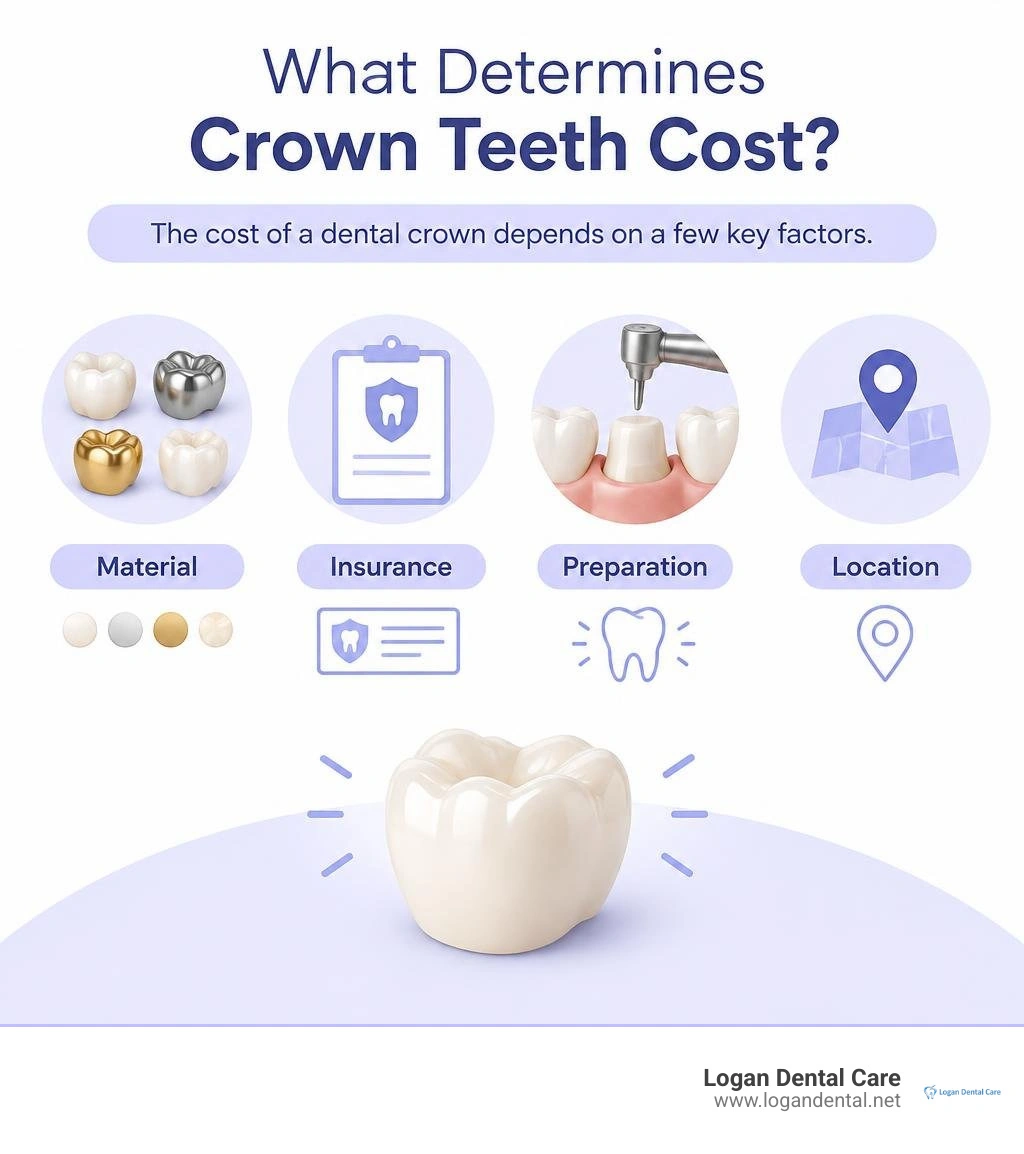
What Determines Crown Teeth Cost?
A dental crown is a custom cover that protects a weak, cracked, heavily filled, or root-canal-treated tooth. Crown teeth cost depends most on the material, the tooth's condition, needed prep work, your location, and insurance benefits. Ask for an itemized estimate before treatment so you can see the crown fee, any needed buildup or root canal, imaging, and what your plan may pay.
A crown can be a smart way to keep a natural tooth working longer. But the number on an ad or a basic fee list is rarely the full picture. The right choice is not always the lowest upfront cost. It should fit the tooth's location, your bite, how visible the tooth is, and your long-term budget.
In this guide, we will compare crown materials, explain common add-on charges, unpack insurance limits, and review practical ways to manage out-of-pocket costs.
The Logan Dental Care Team is here to help Bellefontaine and Logan County families understand their options with clear, personal guidance.
Understanding Crown Teeth Cost and National Averages
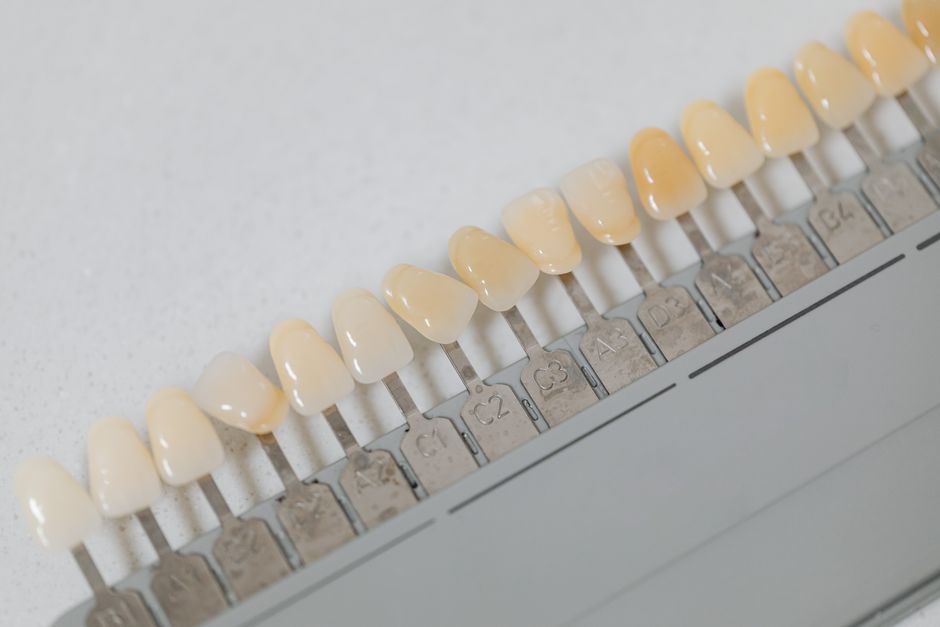
When planning for dental care, understanding how fees are structured helps eliminate surprises. Across the country, treatment fees are recorded using standardized Current Dental Terminology (CDT) codes. Each code corresponds to a specific material and procedural step, such as an all-ceramic restoration or a porcelain-fused-to-metal cap.
Dental fees also vary significantly depending on geography, operational expenses, and local standards of care. A detailed Dental Crown Cost 2026 Guide outlines how these national benchmarks shift between regions and provider settings.
Average Crown Teeth Cost Without Insurance
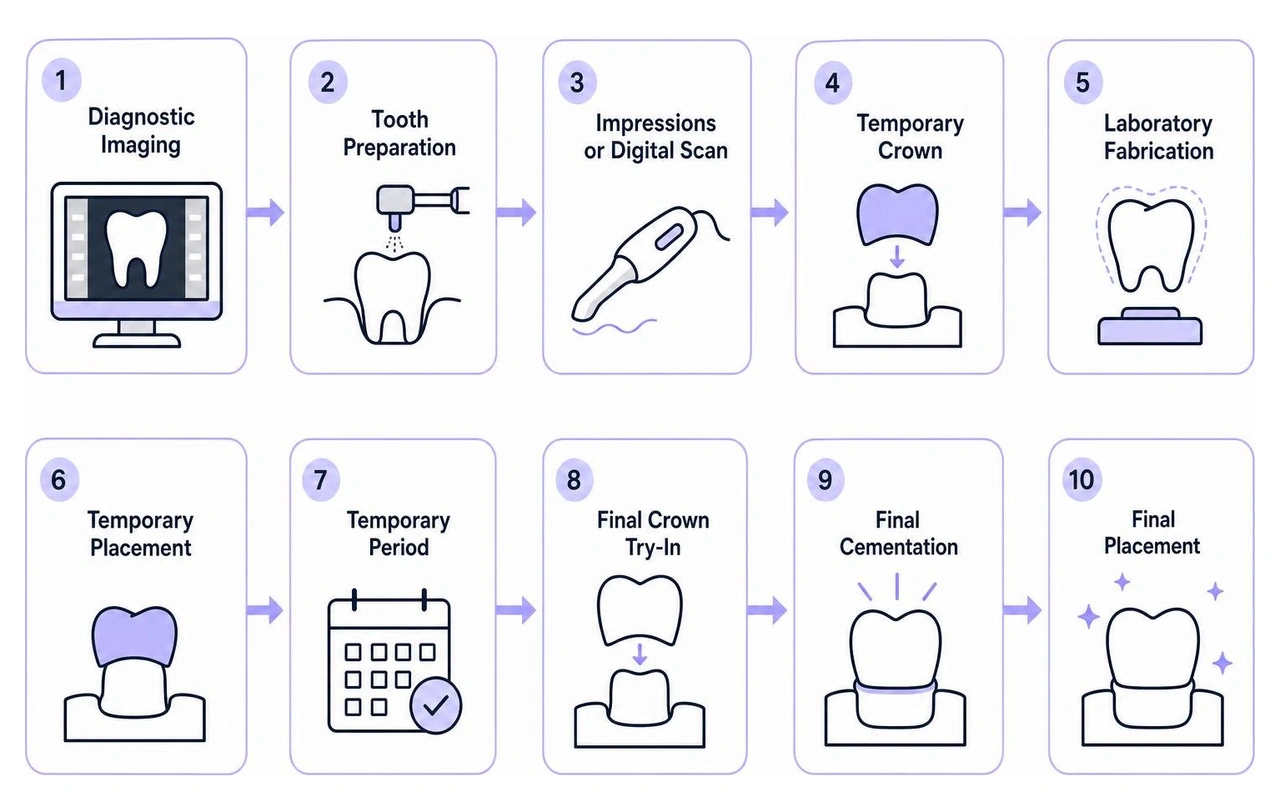
For uninsured patients, understanding overall out-of-pocket expenses requires looking at the total treatment scope rather than just the cap itself. The standard dental crown cost in private family practices generally covers the initial tooth preparation, impressions or digital scans, local anesthesia, crafting a temporary restoration, laboratory fabrication fees, and final cementation.
When paying directly, asking for a comprehensive treatment breakdown allows you to budget for every step.
Crown Material Price Breakdown
The restorative material selected plays a substantial role in your overall investment. Different types of teeth crown offer unique mechanical strengths and cosmetic benefits:
- Porcelain-Fused-to-Metal (PFM): Combines a durable metal core with an aesthetic porcelain exterior. It has served as a reliable workhorse for decades, balancing natural color with dependable strength.
- Monolithic Zirconia: Milled from solid blocks of ultra-durable ceramic, monolithic zirconia is exceptionally resistant to fractures. Evaluating the cost of bruxzir crown restorations reveals why it is frequently recommended for back molars that endure heavy chewing pressure.
- Lithium Disilicate (All-Ceramic / E-max): Renowned for its lifelike translucency and light reflection, making it the premier option for visible front teeth.
- Full Cast Gold and High-Noble Alloys: The gold standard for biocompatibility and longevity. Gold expands and contracts similarly to natural enamel, causing minimal wear on opposing teeth, though its visible shine makes it best suited for posterior molars.
- Pediatric Stainless Steel: Pre-formed caps utilized primarily to preserve primary baby teeth until natural exfoliation occurs.
Additional Treatment Fees and Associated Procedures

A dental crown rarely sits on an undamaged foundation. To ensure the restoration lasts, the underlying natural tooth must be healthy, stable, and completely free of active decay. Assessing a broken molar repair cost requires evaluating diagnostic imaging and preparatory structural support.
Preparatory Procedures and Diagnostic Fees
Before placing a crown, several preparatory steps may be necessary:
- Diagnostic Digital X-Rays: High-resolution digital imaging allows us to inspect the internal root canals, surrounding bone levels, and hidden interproximal decay.
- Endodontic Therapy: When nerve tissue is inflamed or infected, your guide to root canals and crowns explains why a root canal is essential before capping the tooth to avoid sealing in active infection.
- Core Buildup: If extensive decay or old fillings leave minimal tooth structure, a specialized resin core is bonded to rebuild the tooth's shape, providing sufficient retention for the crown.
- Post and Core Placement: If a tooth has undergone a root canal and lacks sound vertical walls, a small post is secured inside the canal to anchor the core buildup.
- Crown Lengthening: A minor periodontal contouring procedure that exposes more sound tooth structure when a fracture occurs below the gumline.
CEREC Same-Day vs Traditional Lab Fabrication
Technological advances have introduced chairside CAD/CAM milling alongside traditional dental laboratories. Reviewing the overall cerec crown cost highlights how digital workflows mill ceramic crowns in a single visit, eliminating the need for temporary restorations and follow-up numbing appointments.
Traditional custom laboratory fabrication, while requiring two separate visits over a couple of weeks, remains an excellent choice for complex multi-unit cases or intricate shade matching.
Navigating Insurance Coverage and Patient Savings
Navigating dental insurance can feel overwhelming, but understanding standard policy structures helps you optimize your available benefits. An overview like Dental Crown Cost: Average Price, Insurance, and More explains how dental policies treat restorative care compared to routine preventive cleanings.
Insurance Coverage Limitations and Alternate Benefit Downgrades
Most dental insurance plans categorize crowns as "Major Restorative" care. Common policy stipulations include:
- Coinsurance Splits: Insurers typically cover roughly 50% of their allowed fee for major procedures after your annual deductible is satisfied.
- Annual Benefit Maximums: Many policies enforce an annual spending cap (often between $1,000 and $2,000 per calendar year). Complex restorative plans may exhaust this maximum quickly.
- Alternate Benefit Clauses (Downgrades): Some policies only reimburse the fee for the least expensive material (such as a basic metal crown), leaving the patient responsible for the difference if choosing all-ceramic or zirconia.
- Waiting Periods and Replacement Clauses: Policies often mandate waiting periods for major care or enforce five-to-ten-year limits before covering replacement crowns on the same tooth.
Managing Crown Teeth Cost with Savings Plans and HSA Funds
For uninsured patients or those whose benefits have capped out, several practical strategies can help manage total out-of-pocket expenses:
- Health Savings Accounts (HSA) & Flexible Spending Accounts (FSA): Utilizing pre-tax dollars for necessary restorative dental care yields significant tax savings.
- In-House Membership Programs: Our Smile Protection Savings Plan provides direct, predictable discounts on preventive, restorative, and cosmetic care without waiting periods, claims forms, or annual maximum caps.
- Strategic Treatment Phasing: When multiple teeth require attention, scheduling procedures across calendar benefit years can help you make the most of two annual insurance maximums.
Evaluating Long-Term Value Against Restorative Alternatives
When comparing restorative treatments, factoring in longevity reveals the true annual cost of maintaining your oral health. A well-placed crown preserves natural root structures, prevents adjacent teeth from drifting, and restores full chewing efficiency. Exploring our comprehensive restorative crowns and bridges options shows how preserving natural teeth supports overall oral health.
Crown Longevity and Material Durability
How long a crown lasts depends heavily on the chosen material, proper oral hygiene, and daily biting habits:
- Gold Alloys: Offer exceptional durability, often lasting 20 to 30 years or more with proper care.
- Monolithic Zirconia: Highly resistant to chipping, delivering 15 to 20+ years of dependable service.
- Porcelain & Ceramic: Average 10 to 15 years, requiring sensible care to prevent edge chipping on hard foods.
- Protective Nightguards: For patients who clench or grind their teeth at night (bruxism), a custom nightguard protects both the natural teeth and restorations from excessive wear.
Dental Crowns vs Implants and Fixed Bridges
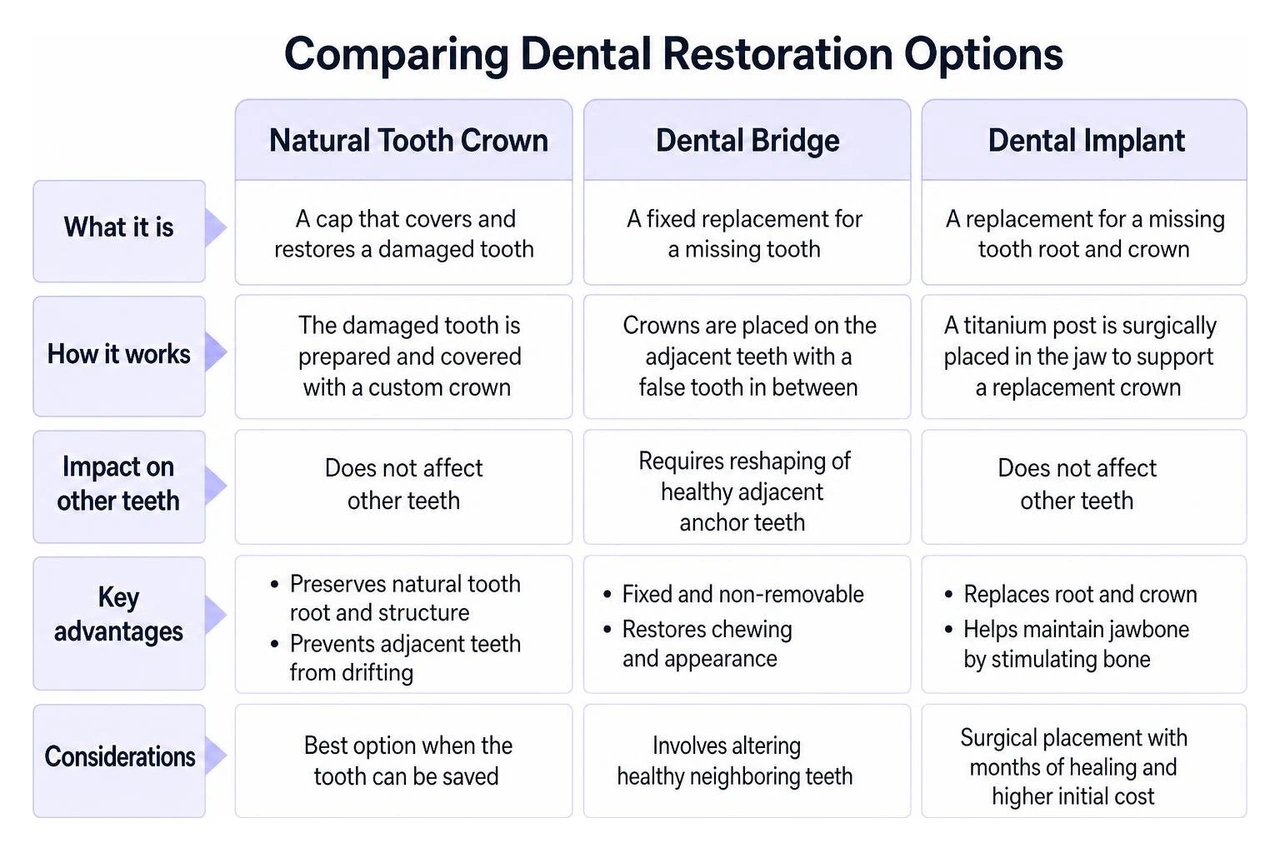
When a tooth is severely damaged, patients often weigh saving the tooth against extraction:
- Preserving Natural Roots: Saving a tooth with a crown maintains the natural periodontal ligament and prevents localized jawbone loss.
- Dental Implants: If a tooth cannot be saved, an implant replaces both root and crown. While highly effective, it involves surgical placement, several months of healing, and higher initial expenses.
- Fixed Bridges: Replace a missing tooth by placing connected crowns over healthy adjacent anchor teeth, which requires reshaping those neighboring teeth.
Frequently Asked Questions About Dental Crowns
How much does a dental crown typically cost with dental insurance?
When medically necessary, most dental plans classify crowns as major restorative services, commonly covering approximately 50% of the allowable fee after your deductible is met, subject to your plan's annual maximum and policy terms.
Which dental crown material offers the best balance of cost and durability?
Monolithic zirconia offers an exceptional balance for back molars due to its high fracture resistance and natural appearance. For visible front teeth, all-ceramic lithium disilicate provides lifelike aesthetics.
Is saving a compromised tooth with a crown worth the cost compared to extraction?
Yes. Preserving your natural tooth with a crown maintains your natural bite, preserves jawbone density, and avoids more extensive and costly tooth replacement procedures down the road.
Conclusion
Restoring a weakened or broken tooth with a custom crown is a lasting investment in your smile, comfort, and general health. By understanding materials, necessary prep work, and insurance details, you can make confident, informed choices for your family's dental care. For a deeper look into the restoration process, explore our dental crowns cost complete guide.
At Logan Dental Care, we treat every patient like a member of our extended family. Located at 1021 N. Main Street in Bellefontaine, Ohio, we proudly serve Bellefontaine and surrounding Logan County communities with comfortable, personalized care. As accredited members of the American Dental Association and the Ohio Dental Association with an A+ BBB rating, our team provides comprehensive general and preventive dentistry, family dentistry, cosmetic treatments (including teeth whitening, veneers, and smile makeovers), orthodontics (Invisalign and traditional braces), restorative care (implants, crowns, and bridges), custom nightguards and mouthguards, and emergency dental care—including same-day and outside standard business hours availability.
To help our uninsured neighbors receive quality, accessible care, we also offer the Smile Protection Savings Plan, our in-house membership designed to make dental health stress-free. (Please note, our office does not offer payment plan options or sedation dentistry.) We welcome you to contact our team today to discuss your smile goals and receive a clear, itemized treatment estimate.