
Why Do My Teeth Hurt? 15 Reasons Your Mouth is Mad at You
Why Do My Teeth Hurt? Quick Answers and What to Do Next
My teeth hurt — and if that's what brought you here, you're not alone. Tooth pain is one of the most common reasons people search for dental answers online.
Here are the most common reasons your teeth may be hurting:
- Tooth decay (cavities) - bacteria erode your enamel, exposing sensitive inner layers
- Gum disease - affects nearly half of adults over 30 and can cause aching, tender teeth
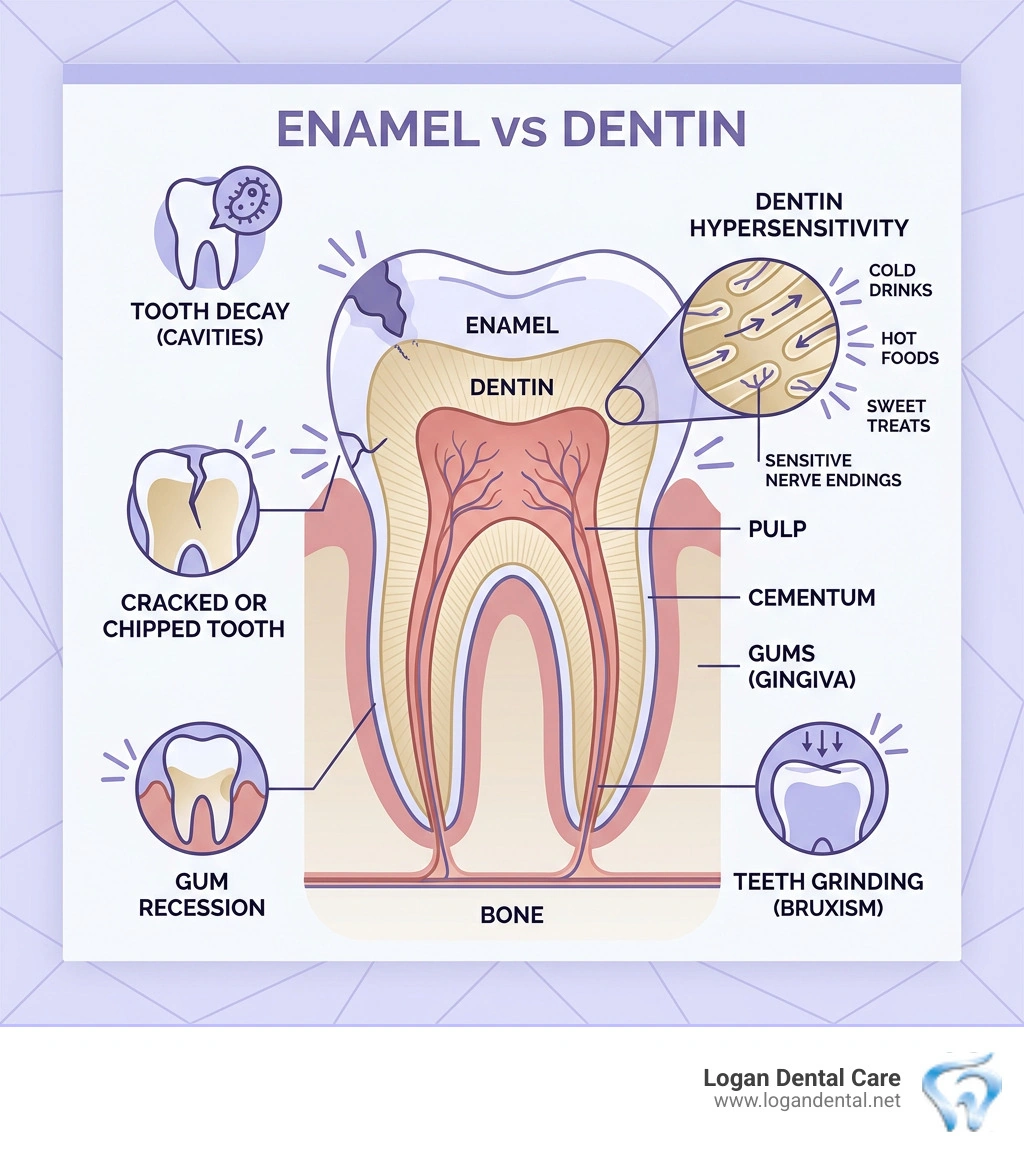
- Dentin hypersensitivity - worn enamel or receding gums expose the layer beneath, causing sharp pain from hot, cold, or sweet foods
- Cracked or chipped tooth - pain when biting down or chewing
- Teeth grinding (bruxism) - often happens at night, wears down enamel over time
- Tooth abscess - a bacterial infection that causes throbbing, intense pain
- Impacted wisdom teeth - common in adults aged 18-24, causes pressure and aching near the back molars
- Sinus infection - can mimic tooth pain in the upper back teeth
- TMJ disorder - jaw joint issues that radiate pain to the teeth
When to act fast: If you have swelling, fever, pus, or pain that wakes you up at night, see a dentist as soon as possible. These can be signs of a serious infection.
Whether it's a sharp sting when you sip something cold or a dull ache that just won't quit, tooth pain is hard to ignore. The discomfort can range from mild and temporary to severe and constant — and the cause isn't always obvious.
What makes tooth pain tricky is that it doesn't always come from where you think. A sore upper molar might be a sinus issue. Jaw pain could point to grinding you don't even know you're doing. That's why understanding the root cause matters.
This guide walks you through the most common causes of tooth pain, what your symptoms might mean, when to get help, and what you can do right now to find relief.
Simple my teeth hurt glossary:
Common Reasons Why My Teeth Hurt
; tooth decay; gum disease; dental examination; bacterial infection; pulpitis; Toothache Due to Cavity; Cause of Teeth Pain; Tooth Pain; [IMAGE] of a dental examination
When we hear a patient say, "my teeth hurt," the first thing we look for is the most common culprit: tooth decay. Most people will experience a cavity at some point in their lives. These occur when bacteria in plaque produce acids that eat away at your tooth enamel. If left untreated, this decay reaches the inner pulp—the "living" part of your tooth filled with nerves and blood vessels—leading to a condition called pulpitis.
Pulpitis is essentially an internal inflammation that causes significant tooth pain. If the decay is caught early, a simple filling can solve the problem. However, if the infection progresses, it can lead to a toothache due to cavity that requires more extensive work like a root canal.
Beyond cavities, gum disease is a massive factor in dental discomfort. Statistics show that gum diseases affect approximately 47% of adults over the age of 30, and that number jumps to 70% for those over 65. Gingivitis and the more severe periodontitis cause the gums to pull away from the teeth, exposing the sensitive roots. This exposure is a primary cause of teeth pain that often feels like a dull, persistent ache across multiple teeth.
Dentin Hypersensitivity and Why My Teeth Hurt
; enamel erosion; temperature triggers; acidic foods; receding gums; desensitizing toothpaste; Toothache When Eating Sweets
Have you ever taken a bite of ice cream or a sip of hot coffee and felt a lightning bolt of pain? That is the classic sign of dentin hypersensitivity. This happens when your protective enamel thins out or your gum line recedes, leaving the underlying dentin exposed. Dentin contains microscopic tubules that lead directly to the tooth’s nerve. When hot, cold, or even a toothache when eating sweets strikes, those stimuli travel through the tubules and trigger a sharp pain response.
Enamel erosion can be caused by several lifestyle factors, including:
- Brushing too aggressively with a hard-bristled brush.
- Frequently consuming acidic foods and drinks like soda or citrus.
- Using whitening products too often.
- Tobacco use, which impairs the body's ability to fight gum infections and delays healing.
Pressure Sensitivity and Cracked Teeth
; biting pain; loose fillings; dental trauma; enamel cracks; Tooth Pain When Biting Down; Tooth Pain After Filling
Sometimes, your teeth feel fine until you actually try to use them. If you experience tooth pain when biting down, it usually indicates a structural issue. This could be a cracked tooth—perhaps from biting on a hard cherry pit or a sports injury—or a loose or damaged filling.
In some cases, you might experience tooth pain after filling procedures if the new restoration is "high," meaning it hits the opposing tooth before the others do. This unbalances your bite (malocclusion) and puts excessive pressure on that single tooth, making it bruised and sore.
Understanding Random Tooth Pain and Why My Teeth Hurt
; sinus pressure; bruxism; referred pain; jaw tension; Can Sinus Cause Tooth Pain; Sinus Infection and Tooth Pain; Random Tooth Pain
One of the most confusing sensations is random tooth pain that seems to come and go without a clear trigger. If your upper rear teeth are aching, the problem might not be in your mouth at all. Because the roots of your upper teeth sit very close to your sinus cavities, inflammation from a cold or allergy can put pressure on those dental nerves. Many people ask, "can sinus cause tooth pain?" and the answer is a resounding yes. A sinus infection and tooth pain often go hand-in-hand, feeling like a heavy, dull pressure in the cheekbones.
Another hidden cause is bruxism, or teeth grinding. Many of our neighbors in Bellefontaine lead busy, stressful lives, and that stress often manifests at night. Grinding your teeth while you sleep wears down enamel and can leave you with a sore jaw, a headache, and teeth that feel sensitive for no apparent reason in the morning.
Serious Symptoms and Emergency Indicators
; tooth abscess; facial swelling; fever; persistent throbbing; Extreme Tooth Pain Can't Sleep; Toothache at Night; [IMAGE] of an abscessed tooth
While some dental issues can wait for a scheduled appointment, others are true emergencies. If you have extreme tooth pain can't sleep through, it is your body's way of screaming for help. A toothache at night is often more noticeable because there are fewer distractions, and blood flow to the head increases when you lie down, intensifying the pressure in an inflamed tooth.
The most dangerous scenario is a tooth abscess. This is a pocket of pus caused by a bacterial infection at the root of the tooth or between the gum and the tooth.
Watch for these "Red Flag" symptoms:
- Fever or general malaise.
- Swelling in the face, cheek, or neck.
- A persistent, throbbing ache that radiates to the jawbone, neck, or ear.
- A foul-tasting salty fluid in your mouth (if the abscess ruptures).
- Difficulty breathing or swallowing (this is a 911 emergency).
When to Seek Emergency Dental Care
; urgent treatment; infection signs; broken tooth; Emergency Dental Care: What to Do When You Have a Toothache or Broken Tooth; Tooth Pain: Get Immediate Relief with Emergency Dental Services Near You
If you are experiencing any of the red flags mentioned above, you need emergency dental care: what to do when you have a toothache or broken tooth becomes the priority. Delaying treatment for an infection can allow it to spread to other parts of the body, including the jawbone or even the bloodstream.
Don't ignore the signs just because the pain temporarily subsides; sometimes the nerve "dies," which stops the pain, but the infection remains active. To tooth pain: get immediate relief with emergency dental services near you, contact a professional immediately.
Professional Treatments and Home Remedies
; saltwater rinse; ice packs; fillings; root canals; extractions; How to Stop a Toothache Fast; How to Get Rid of a Toothache Fast; Toothache Pain Relief; [TABLE] comparing home care vs. professional treatment
When you visit us with a toothache, we start with a thorough diagnosis. This usually involves a physical exam of your mouth, gums, and even your neck, along with dental X-rays to see what is happening beneath the surface.
Depending on the cause, professional treatment might include:
- Fillings: For standard cavities.
- Inlays or Onlays: Custom "puzzle pieces" for cavities too large for a filling but too small for a crown.
- Crowns: To protect and strengthen a cracked or heavily decayed tooth.
- Root Canal Therapy: To save a tooth when the pulp is infected. Modern root canals are designed to eliminate pain, not cause it!
- Extractions: A last resort when a tooth cannot be saved.
While you wait for your appointment, you can try to manage the discomfort at home. Knowing how to stop a toothache fast can make a world of difference.
Saltwater rinse: Mix 1/2 tsp salt in 8 oz warm water, then swish for 30 seconds. This can calm irritated gums, loosen debris, and reduce bacteria.
Cold compress: Hold an ice pack against the outside of your cheek for 20 minutes on, 20 minutes off. This helps numb pain and bring down swelling.
OTC medication: Take ibuprofen or acetaminophen as directed on the label. These can provide short-term pain relief and, in the case of ibuprofen, reduce inflammation.
Clove oil: Dab a tiny amount on a cotton ball and place it near the sore tooth. Clove oil contains eugenol, which may temporarily numb the area.
Learning how to get rid of a toothache fast is helpful, but these are temporary fixes. They provide toothache pain relief but do not cure the underlying infection or decay.
Frequently Asked Questions about Tooth Pain
Why do my teeth hurt when I bite down?
This is usually caused by a cracked tooth, a loose filling, or an abscess at the root. When you apply pressure, the structural defect moves or the infection at the root is compressed, triggering the nerve. It can also be caused by malocclusion, where your teeth don't line up correctly, causing one tooth to take too much force.
Can a sinus infection cause dental pain?
Yes. The roots of your upper molars are in close proximity to your maxillary sinuses. When these sinuses become congested or infected, the pressure pushes against the nerves of your teeth. This usually feels like a dull ache in several upper teeth at once, rather than one specific tooth.
What are the best home remedies for a toothache?
A warm saltwater rinse is the gold standard for home care as it helps draw out fluids and reduce swelling. Cold compresses are excellent for trauma or swelling, and over-the-counter pain relievers can help manage the ache until you can get into the dental chair.
Conclusion
; Bellefontaine; Logan County; family dentistry; personalized care; Emergency Dental Care
At Logan Dental Care, we understand that when your "teeth hurt," it affects your entire life—from your ability to work to your ability to enjoy a meal with your family. We are a family-focused practice proudly serving the Bellefontaine, Ohio community and surrounding areas like Zanesfield and West Liberty.
We believe that every patient should be treated like a member of our own family. Our mission is to provide comfortable, high-quality care in an environment where you feel heard and respected. Whether you need a routine cleaning to prevent future pain or you require Emergency Dental Care for a sudden ache, we are here to help. Don't let dental pain linger; reach out to us so we can help you get back to smiling comfortably.