
Everything You Need to Know About Lower Teeth Crowding with Age
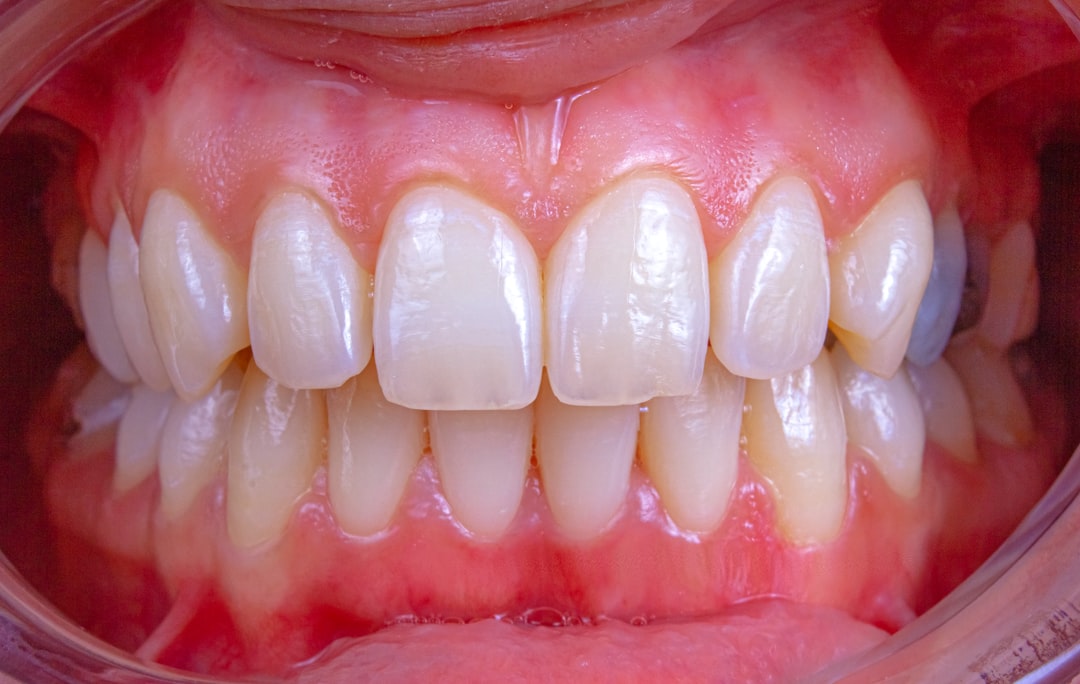
Why Your Lower Front Teeth Get More Crowded Over Time
Lower teeth crowding with age is one of the most common dental changes adults experience — and it catches a lot of people off guard, especially those who had straight teeth or even wore braces as teenagers.
Here's the quick answer:
- Lower front teeth crowd over time because your jaw gradually gets smaller, your gums and bone change, and your teeth slowly drift forward
- This is a normal part of aging, not always a sign something went wrong
- It tends to get worse in your 30s, 40s, and 50s
- The lower front teeth are more affected than the upper teeth due to their size and position
- It can be prevented or corrected, but ignoring it can lead to real oral health problems
You are not alone in dealing with this. Research shows that crowding in the lower front teeth increases by about 1.54 mm between ages 17 and 60 — even in people who never had orthodontic problems to begin with. Teeth simply keep moving throughout your entire life.
The good news? Understanding why it happens is the first step to doing something about it.
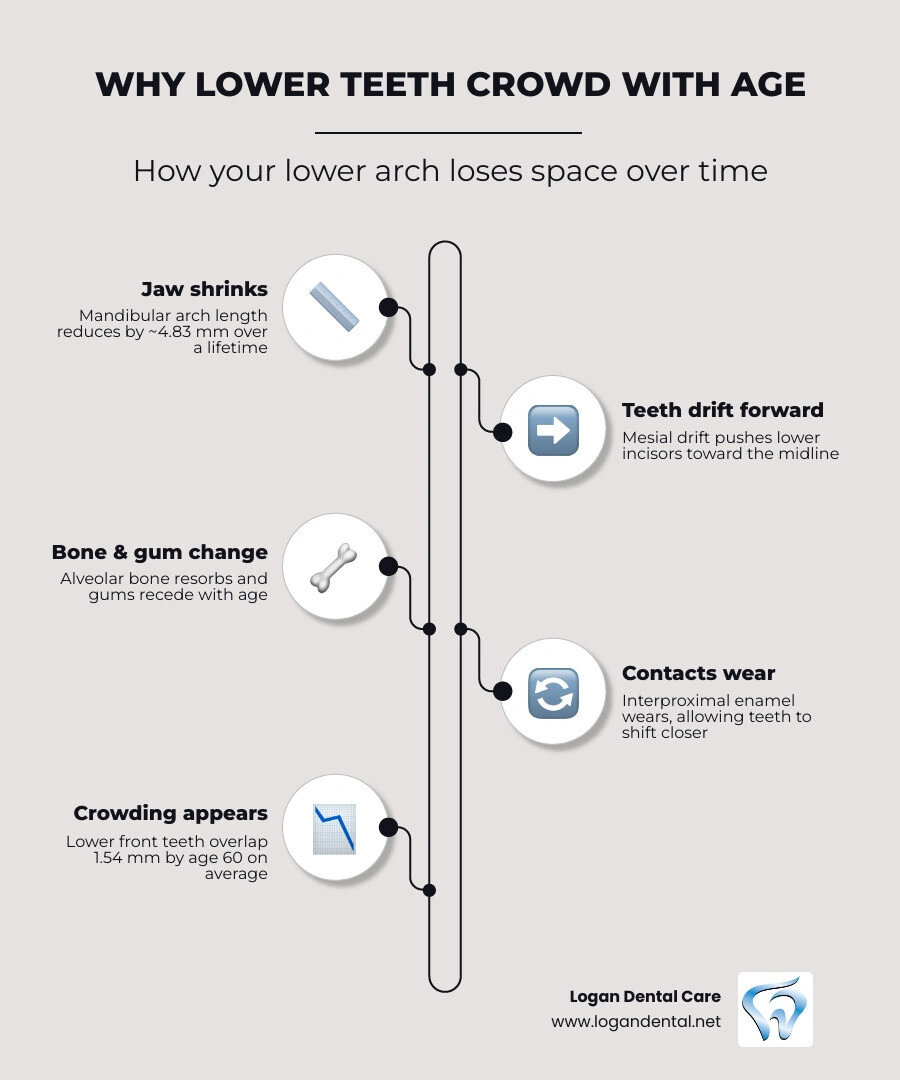
Important lower teeth crowding with age terms:
What Causes Lower Teeth Crowding with Age?
The short version is simple: over time, the lower arch tends to lose space.
That space loss can come from several overlapping changes:
- Mesial drift, which is the natural forward movement of teeth
- A gradual reduction in arch length
- Remodeling of the jawbone and supporting bone around the teeth
- Gum tissue changes and reduced periodontal support
- Tooth wear from grinding or normal chewing
- Soft tissue pressure from the lips, cheeks, and tongue
- Changes after braces if retainers are not worn consistently
- Missing teeth, large restorations, or bite changes that alter force patterns
Why lower teeth crowding with age happens even if your teeth were once straight
A lot of adults assume crooked lower teeth must mean relapse from old orthodontic treatment. Sometimes that is true, but not always.
Even people with untreated, naturally straight teeth can develop late lower crowding. Long-term research on untreated normal bites shows that crowding often increases throughout adulthood as part of normal aging. In other words, your teeth did not get a memo saying they were supposed to stay put forever.
If you had braces years ago, the picture is even more complicated. Teeth naturally want to drift over time, and without long-term retention they are more likely to move. That is why we often explain that some change can reflect both normal aging and post-treatment shifting.
How mesial drift and arch length reduction create crowding over time
Mesial drift is one of the biggest reasons this happens. Teeth naturally move slightly forward over the years. As contacts between teeth wear and shift, the dental arch can shorten.
A major review of lifetime dental changes found that mandibular arch length decreases by about 4.83 mm from ages 9 to 20. That early reduction matters because it sets up the lower front teeth for future space problems. On top of that, lower anterior crowding continues to increase later in life.
When the arch gets a little shorter and the same number of teeth still need to fit, something has to give. Usually, that “something” is the neat alignment of the lower incisors.
How jawbone changes, gum tissue alterations, and palate contraction contribute
As we age, the bone and soft tissues supporting teeth also change. The alveolar bone remodels throughout life, and some adults experience reduced bone density or volume. Gum tissues may thin, collagen support changes, and recession can expose more tooth structure.
These changes do not directly “push” teeth into crowding like dominoes, but they can make the lower front teeth more likely to shift within a smaller, less stable space envelope.
Palate contraction is discussed more often with upper arches, but age-related narrowing and overall changes in arch form can affect how the bite fits together. When the upper and lower arches meet differently over time, the lower incisors may end up taking the hit.

Why Lower Front Teeth Are More Likely to Crowd Than Upper Teeth
Lower incisor crowding is usually more obvious than upper crowding for both biological and mechanical reasons.
Why lower teeth crowding with age is usually worse in the mandibular front teeth
The lower front teeth are especially vulnerable because:
- They are small and packed into a narrow curve
- Their contact points are relatively small, so they resist shifting less well
- The lower arch has less room for expansion than the upper arch
- Lower incisors tend to upright or retrocline with age
- The lips and cheeks can place inward pressure on this area
By contrast, upper teeth may be more likely to show spacing changes or less dramatic crowding. The lower arch simply has fewer “escape routes” when space gets tight.
What long-term studies show about untreated normal occlusion
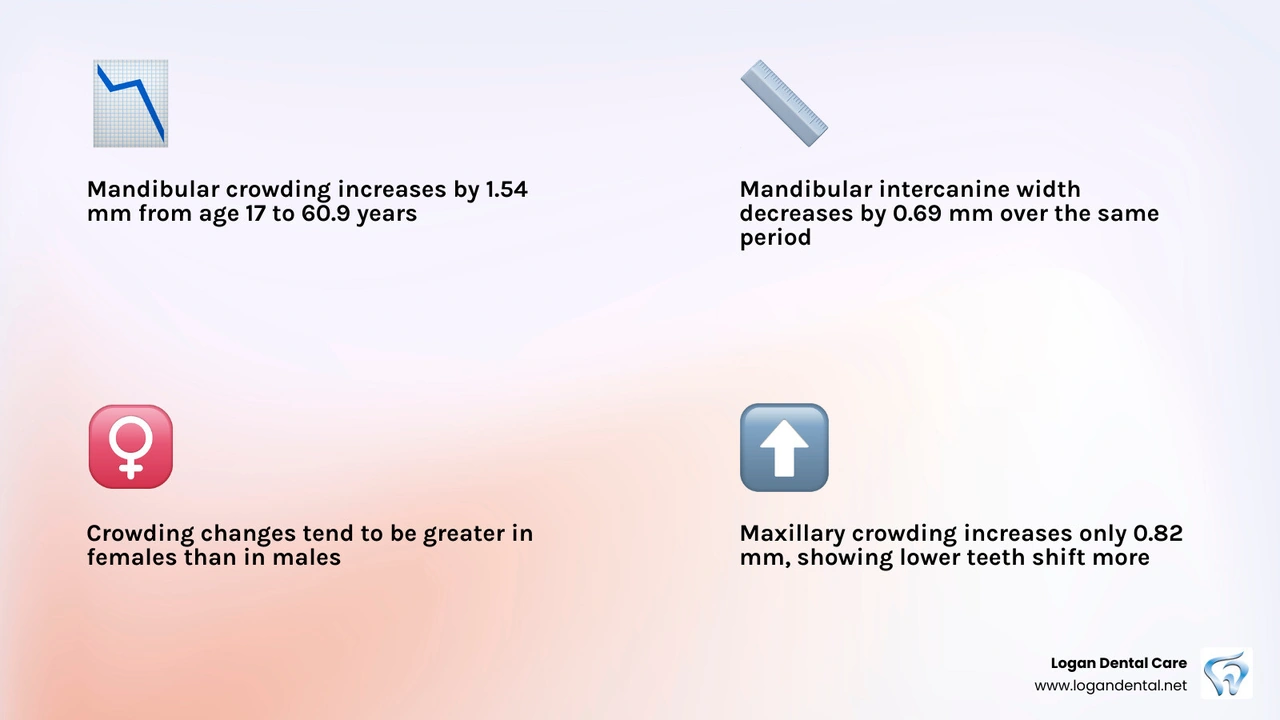
This is where the research gets really interesting. A systematic scoping review of untreated normal occlusion found:
- Mandibular crowding increased by 1.54 mm from age 17 to 60.9
- Maxillary crowding increased less, about 0.82 mm
- Mandibular intercanine width decreased by 0.69 mm from age 13 to 60.9
- Crowding tended to be greater in females
That supports what many adults notice in real life: lower front teeth change more, and they keep changing long after the teen years.
What Makes Lower Crowding Get Worse Faster in Some Adults?
Not everyone experiences the same amount of crowding. Some people have a mild overlap for decades, while others feel like their lower teeth changed “all of a sudden.”
The role of bruxism, enamel wear, and bite pressure
Bruxism, or grinding and clenching, can speed things up. Repeated pressure wears enamel, flattens contacts, and can deepen the bite. That changes how forces are distributed across the teeth and may encourage more shifting.
If you wake up with jaw tension, chipped edges, or unexplained tooth wear, grinding may be part of the story. A night guard can help protect the teeth and reduce the effects of those excessive forces.
How periodontal disease, bone loss, and missing teeth accelerate shifting
Crowding can progress faster when the supporting structures are unhealthy.
Periodontal disease can lead to:
- Bone loss around teeth
- Increased tooth mobility
- Gum inflammation
- More plaque retention in already crowded areas
Missing teeth can also trigger movement. When a tooth is lost and not replaced, nearby teeth may drift or tip into the open space, changing how everything lines up. That can worsen crowding elsewhere, including the lower front teeth.
This is one reason we encourage prompt replacement of missing teeth when appropriate and close monitoring of gum health.

Do wisdom teeth cause lower front crowding?
This is one of the biggest myths in dentistry.
Wisdom teeth may add pressure in some situations, but the evidence linking them directly to lower incisor crowding is weak and inconsistent. Current research does not strongly support removing wisdom teeth just to prevent lower front crowding.
For most adults, age-related space loss, mesial drift, and arch changes are much more important factors.
Health Risks of Untreated Lower Teeth Crowding in Adults
Mild crowding is not always an emergency. But untreated crowding can become more than a cosmetic concern.
When crowding becomes more than a cosmetic issue
Lower crowding can lead to:
- Difficulty flossing between teeth
- Food trapping
- Plaque buildup
- Cavities between teeth
- Gingivitis and gum inflammation
- Uneven enamel wear
- Bite interference
- In some cases, chewing discomfort or TMJ-related strain
Crowded areas are simply harder to keep clean. If your floss shreds, catches, or refuses to cooperate, your lower incisors may be trying to tell you something.
Signs it is time to get an orthodontic evaluation
Consider an evaluation if you notice:
- Your retainer no longer fits
- Increasing overlap or rotation in the lower front teeth
- More difficulty brushing or flossing
- New food traps
- Changes in speech or bite
- Jaw soreness or chewing discomfort
If you are seeing these signs, learn more about orthodontic treatment.
How to Prevent and Treat Lower Teeth Crowding with Age
The best approach depends on how severe the crowding is, your gum and bone health, and whether you had previous orthodontic treatment.
Why retainers matter for lower teeth crowding with age after braces
Retainers are a big deal here. After braces or aligners, teeth are more likely to shift if retention stops. Since natural aging changes continue for life, many adults benefit from long-term, often lifelong, retainer use.
Options may include:
- Removable clear retainers
- Hawley-style retainers
- Bonded fixed retainers in selected cases
Retainers do not freeze time, but they can significantly reduce drift. For more, visit our pages on retainers and bottom teeth crowding after braces.
Best treatment options for adults with mild, moderate, or severe crowding
Treatment may include:
- Monitoring for very mild, stable crowding
- Clear aligners for mild to moderate correction
- Braces for more complex movement
- Interproximal reduction to create small amounts of space
- Selective extraction in certain severe cases
- Bite adjustment and habit management when grinding contributes
In adults, treatment usually works within the existing bone limits rather than trying to dramatically expand the lower arch. That is why careful diagnosis matters.
You can explore orthodontic treatment for adults and braces for adults.
Can expanders help adults with crowding?
Expanders can be very helpful in children because the jaws are still growing. In adults, expansion is more limited and case-specific.
For the upper arch, some adults may benefit from expansion depending on anatomy and treatment goals. For the lower arch, true expansion is usually much more limited because the bone boundaries are tighter. In many adult lower crowding cases, the safer strategy is creating space conservatively and aligning teeth within the supporting bone.
That is why realistic expectations are important. “Just widen it” sounds easy, but biology tends to ask follow-up questions.
Frequently Asked Questions About Lower Teeth Crowding with Age
At what age does lower crowding usually become noticeable?
Small changes can begin in early adulthood, but many people notice them most in their late 30s, 40s, and 50s. It usually happens gradually, not overnight.
Can lower teeth crowding with age be fixed without removing teeth?
Often, yes. Mild to moderate cases may be treated with aligners, braces, or small space-gaining techniques like interproximal reduction. More severe crowding sometimes requires extraction, but not always.
Is adult orthodontic treatment worth it for health and function, not just looks?
For many adults, absolutely. Straighter lower teeth can be easier to clean, more comfortable in the bite, and less frustrating to maintain long-term. If you are comparing options, our page on orthodontic treatment cost may help.
Conclusion
Lower teeth crowding with age is common, normal, and treatable. It usually happens because the lower arch loses space over time through mesial drift, arch length reduction, and changes in bone, gum tissue, and bite forces. The lower front teeth are especially vulnerable, which is why they so often become the “busy intersection” of the smile.
At Logan Dental Care, we help patients in Bellefontaine and surrounding Logan County communities understand whether crowding is mild, progressive, or starting to affect oral health. If your lower teeth are shifting, your retainer does not fit, or cleaning has become harder, this is a good time to act.
You can also read more about adult braces near me or Request an Appointment to take the next step.