
Why Your Bottom Teeth Are Crowding After Braces
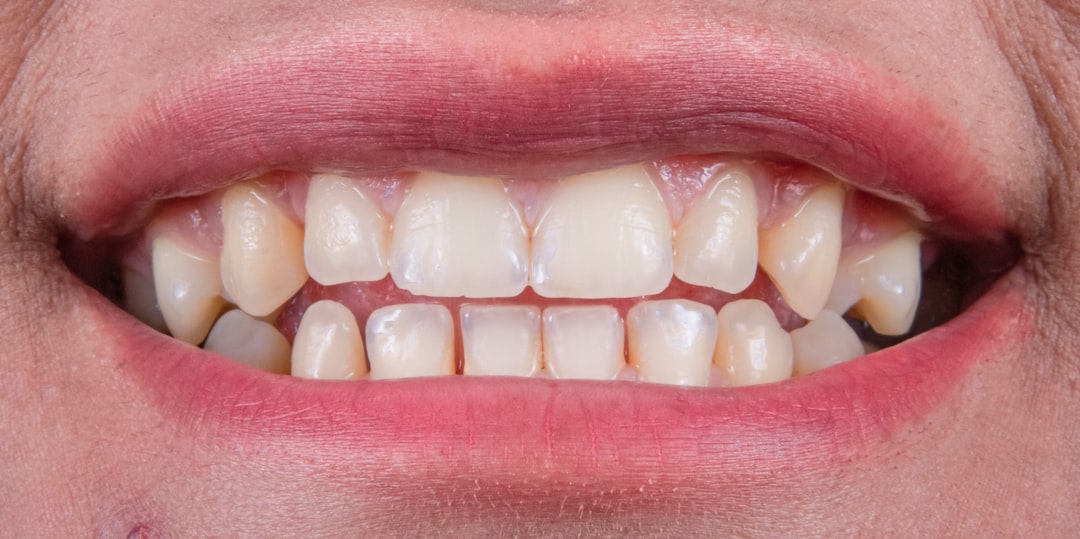
Bottom Teeth Crowding After Braces Is More Common Than You Think
Bottom teeth crowding after braces is one of the most frustrating things that can happen after you've invested time and money into getting a straight smile. You finish treatment, love your results — and then months or years later, you notice your lower front teeth starting to overlap again.
You're not alone. Here's a quick summary of what's happening and why:
- What it is: Your lower front teeth shift and overlap after braces are removed
- Why it happens: Natural jaw changes, aging, ligament memory pulling teeth back, and not wearing a retainer consistently
- Who it affects: Very common — teeth crowding affects around 24% of women and 14% of men overall, and the lower front teeth are especially prone to shifting with age
- Is it fixable? Yes — with retainers, clear aligners, or short-term braces depending on how much shifting has occurred
- How to prevent it: Wearing your retainer long-term (often for life) is the single most effective step
This guide explains exactly why this happens, what you can do about it, and how to keep your lower teeth straight for the long haul.
The lower front teeth are the most vulnerable part of your smile after orthodontic treatment. Even small changes — as little as 1–2mm of late jaw growth — can push those teeth out of alignment. And because this can happen gradually over years, many people don't notice until the crowding is already significant.
The good news? It's a well-understood problem with real solutions.
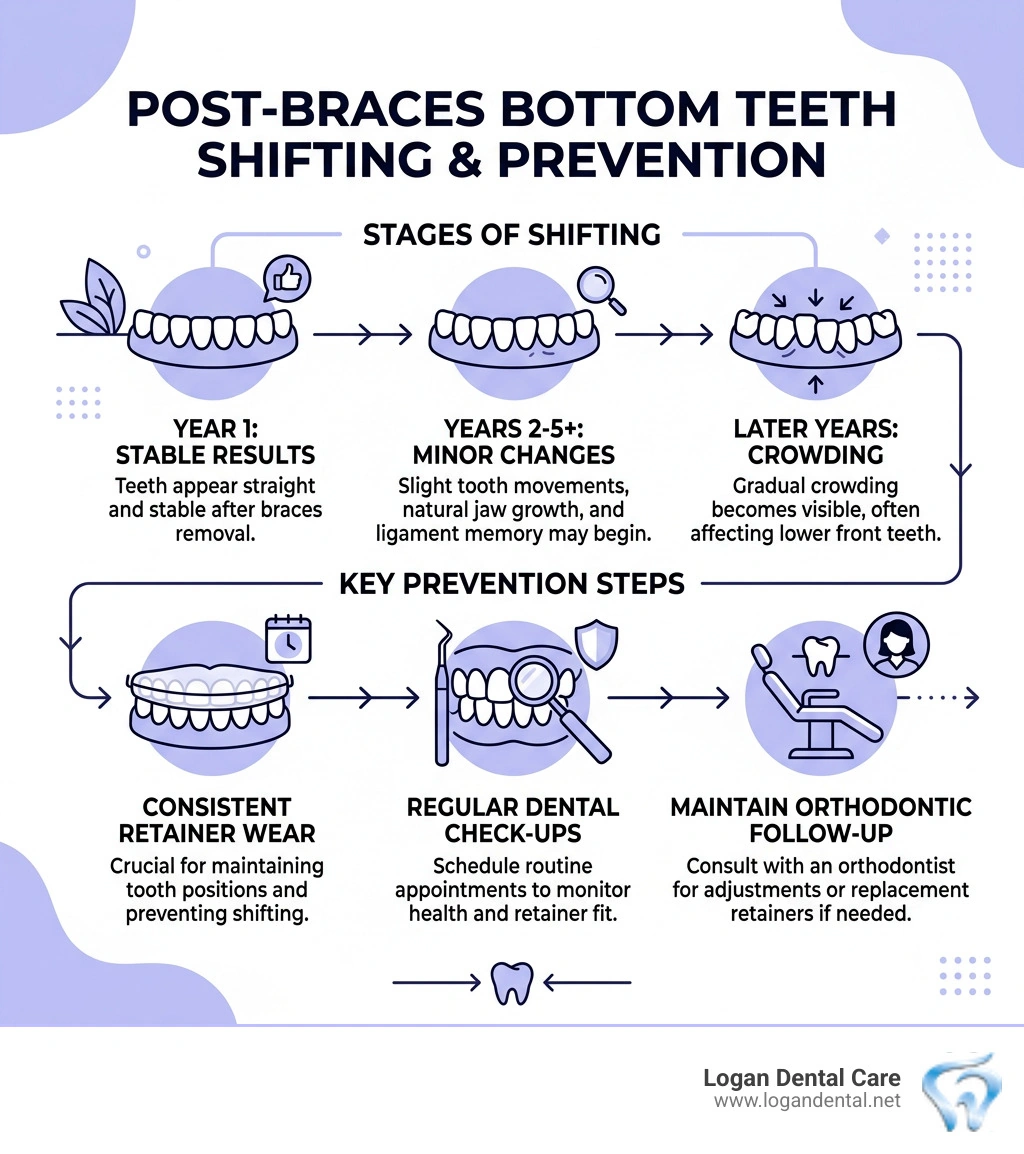
Bottom teeth crowding after braces terms simplified:
Why Bottom Teeth Crowding After Braces Happens
When we talk about bottom teeth crowding after braces, we are usually referring to a phenomenon where the lower incisors (those four front teeth) begin to rotate, overlap, or "jumble" together. Even if your orthodontic treatment was a total success and you left the office with a Hollywood smile, your teeth are not actually "locked" into the jawbone.
Teeth are held in place by a complex system of periodontal ligaments. Think of these ligaments like tiny, elastic rubber bands. During the time you wore braces, those ligaments were stretched and moved into new positions. Once the braces come off, those "rubber bands" have a very long memory. They want to snap back to where they used to be. This is known as physiological drift or orthodontic relapse.
Beyond the ligaments, there are several other reasons why this happens:
- Jaw-Tooth Mismatch: Sometimes, our teeth are simply a bit too large for the amount of space available in our lower jaw. This is often a genetic trait.
- Narrowing Arch: As we age, the lower dental arch naturally tends to narrow slightly, pushing the teeth into a smaller space.
- Hygiene Risks: Crowded teeth are notoriously difficult to clean. When teeth overlap, plaque and tartar find perfect hiding spots that a toothbrush or floss can’t easily reach. This can lead to gum disease and enamel wear, which further weakens the support structure of the teeth, allowing them to shift even more.
At Logan Dental Care, we often see patients who are surprised that their teeth moved decades after their orthodontics were completed. It’s important to understand that your mouth is a living, changing environment. It doesn't stay static just because you finished a treatment plan.
Common Causes of Lower Teeth Shifting
It might feel like your teeth are conspiring against you, but the causes of bottom teeth crowding after braces are actually quite scientific. According to research, teeth crowding affects approximately 24% of women and 14% of men. While orthodontic treatment for adults is more popular than ever, many of these patients are actually seeking a "round two" because of shifting that occurred after their initial braces for kids or braces for teens years ago.
Late Lower Incisor Crowding in Adulthood
One of the most common reasons for this shift is something called "late lower incisor crowding." For a long time, people blamed wisdom teeth for "pushing" the front teeth together. However, modern research suggests this isn't the primary culprit. Instead, it’s often due to late lower jaw growth.
Even after you’ve stopped growing taller, your lower jaw (the mandible) can continue to undergo subtle changes well into your 20s and 30s. These changes are small—often just 1 to 2mm—but in dentistry, a millimeter is a mile. This mandibular maturation causes the lower arch to shorten slightly, forcing the incisors to overlap to fit the smaller space. This is sometimes called "tertiary crowding." It highlights why orthodontic care for children often includes monitoring jaw growth patterns early on.
Preventing Bottom Teeth Crowding After Braces Long-Term
If you want to keep your teeth straight for life, you have to treat retention as a lifelong commitment. Your teeth have a "long memory," and the ligaments will try to pull them back to their original crooked positions for years.
Other factors that contribute to shifting include:
- Bone Density Loss: As we age, we naturally lose some bone density in our jaws. This makes the "foundation" for our teeth less stable.
- Bruxism (Teeth Grinding): If you grind your teeth at night, the heavy forces can push teeth out of alignment.
- Missing Teeth: If you lose a tooth elsewhere in your mouth, the remaining teeth will naturally drift toward the gap, causing crowding in other areas.
To combat this, we recommend long-term retainer use and, in some cases, wearing a night guard if you are a heavy grinder. Understanding the different types of braces and types of braces available can also help you understand how different forces were applied to your teeth in the first place.
The Essential Role of Retainers in Preventing Relapse
If there is one "secret" to preventing bottom teeth crowding after braces, it is the retainer. We like to tell our patients in Bellefontaine that braces get your teeth straight, but retainers keep them straight.
There are two main categories of retainers:
- Fixed Retainers (Permanent): This is a thin wire bonded to the back of your lower front teeth. It’s "set it and forget it," which is great for compliance. However, it requires extra effort to clean around to prevent tartar buildup.
- Removable Retainers:
- Hawley Retainers: The classic metal and acrylic retainer. They are durable and adjustable.
- Essix/Clear Retainers: These look like clear aligners (like Invisalign). They are very discreet but can wear out or warp over time.
When you first get your bottom teeth braces off, your orthodontist will likely have you wear your retainer 22 hours a day for several months. Eventually, you'll move to "nighttime for a lifetime."
The biggest mistake people make is thinking they can stop wearing their retainer after a year or two. If you stop wearing it, your teeth will move. It's not a matter of "if," but "when." If you're curious about the types of braces and cost or the cost of replacement retainers, it is always cheaper to replace a lost retainer than it is to pay for a second round of braces!
Fixing Bottom Teeth Crowding After Braces
So, what happens if the damage is already done? Maybe you lost your retainer during a move, or you simply got tired of wearing it, and now your bottom teeth are visibly overlapping. Don't panic—it happens to the best of us!
Depending on the severity of the crowding, there are several ways we can fix it. For some, braces for adults are the best route, especially if the bite has also shifted. If you're worried about the adult braces cost or looking for a bottom teeth braces price guide, we can help you find a solution that fits your budget.
Fixed retainers are hidden behind the teeth and work all the time, so there is no risk of forgetting to wear them. They can last for years, but cleaning takes more effort because floss threaders or special tools are usually needed.
Removable retainers may be clear or have a small visible wire. They are easier to clean because you take them out to brush and floss, but they only work if you wear them as directed. They can also crack, warp, or need replacement over time.
Fixing Bottom Teeth Crowding After Braces with Modern Solutions
In many cases, we don't need full traditional braces to fix minor relapse.
- Clear Aligners (Invisalign): This is the most popular choice for adults. It’s discreet, removable, and can often correct minor crowding in just a few months.
- Short-Term Braces: Sometimes focusing just on the "social six" (the front teeth) can provide a quick and effective fix.
- Interproximal Reduction (IPR): This sounds scary, but it’s actually very simple. We gently shave a tiny fraction of a millimeter from the sides of the teeth to create just enough space for them to slide back into alignment.
- Veneers: For very mild, cosmetic-only crowding, veneers can mask the appearance of overlapping teeth, though they don't actually move the teeth.
If you are searching for affordable braces near me in the Logan County area, we are here to help you navigate these options.
When to Contact Your Orthodontist
You should reach out for a consultation if you notice any of the following:
- Your retainer feels unusually tight or doesn't fit at all.
- You can see visible overlapping that wasn't there before.
- You notice a change in your bite (your teeth don't fit together like they used to).
- You are experiencing new pain in your jaw or teeth.
Early intervention is key. Fixing a tiny shift is much easier (and more affordable) than fixing a major relapse. If you suspect shifting, it’s time to revisit your orthodontic treatment options.
Frequently Asked Questions about Shifting Teeth
How long should I wear my retainer to prevent crowding?
The short answer? For as long as you want your teeth to stay straight! Most dental professionals now recommend wearing a retainer at night indefinitely. While you might be able to skip a night here and there after the first few years, making it a permanent part of your bedtime routine is the only way to guarantee your smile stays put.
Can wisdom teeth cause my bottom teeth to crowd again?
This is one of the biggest myths in dentistry! While it seems logical that big teeth pushing from the back would move the front teeth, studies have shown that crowding occurs even in people who never developed wisdom teeth or had them removed early. The real culprit is usually the natural aging of the jaw and the "memory" of the dental ligaments.
What should I do if my retainer no longer fits?
If your retainer is tight but still goes on, try wearing it for 22 hours a day for a few days to see if the teeth "settle" back into place. However, if you have to force it, or if it won't go on at all, do not force it. This can damage your teeth. Instead, schedule an appointment with us. We may need to take a new impression and create a new retention plan or a minor alignment correction.
Conclusion
Dealing with bottom teeth crowding after braces can feel like a setback, but it’s a very common part of the "life after braces" journey. Whether it's due to the natural aging process, late jaw growth, or a few forgotten nights with your retainer, there are many ways to get your smile back on track.
At Logan Dental Care, we are proud to be a family-focused practice serving Bellefontaine and the surrounding Logan County communities. We believe in building long-term relationships with our patients, which means we’re here for you long after your initial treatment is over. Our team combines small-town warmth with modern dental technology to ensure you feel comfortable and informed every step of the way.
If you’ve noticed your bottom teeth shifting or if your retainer isn't fitting like it used to, don't wait for the crowding to get worse. We invite you to come see us at our Bellefontaine office. Whether you need a new retainer, a consultation for orthodontics, or just a routine check-up, we’ll treat you like family.
Let’s work together to keep that smile straight and healthy for a lifetime!