
What Your Gums Are Screaming About

What Your Gums Are Trying to Tell You
Gum pain is one of the most common oral health complaints — and it's rarely just a minor annoyance.
Quick answer: What causes gum pain?
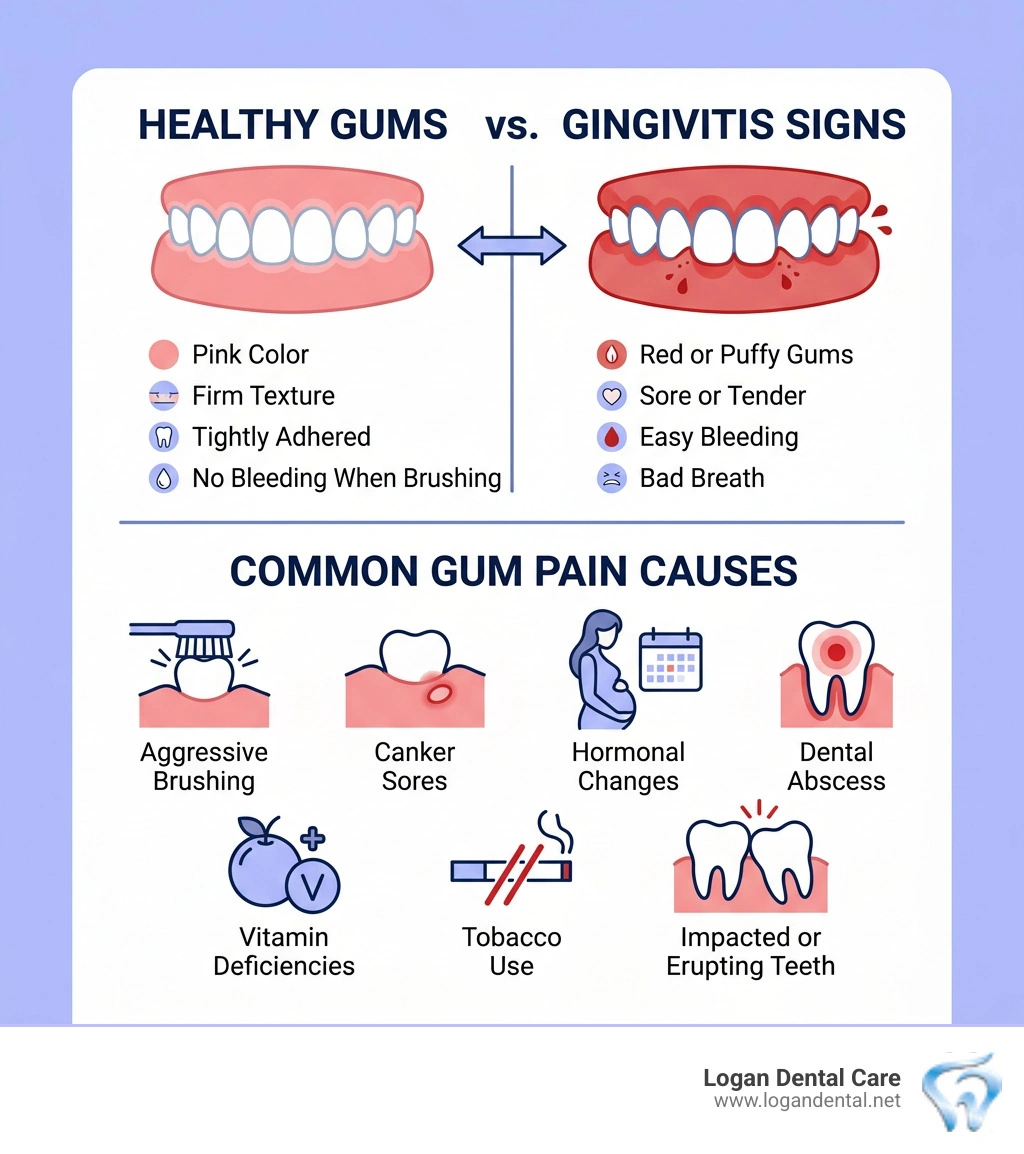
- Gum disease (gingivitis or periodontitis) — the most common cause, triggered by plaque buildup
- Aggressive brushing or flossing — too much pressure damages soft tissue
- Canker sores — small ulcers that appear on or near the gumline
- Hormonal changes — pregnancy, menopause, and menstruation can all affect gum sensitivity
- Dental abscess — a bacterial infection that causes throbbing, localized pain
- Vitamin deficiencies — particularly vitamin C and B12
- Tobacco use — reduces blood flow and masks early warning signs
- Impacted or erupting teeth — especially wisdom teeth pushing through the gums
- Medications or allergies — some drugs cause gum swelling as a side effect
About 2 in 5 people have some form of gum disease — yet many don't realize it until the pain becomes hard to ignore. That's because early gum disease is often painless, which means by the time your gums start hurting, something worth paying attention to is already happening.
Your gums are the foundation your teeth sit in. When they hurt, your body is signaling that something is off — whether it's something as simple as a brushing habit or something that needs professional care.
This guide will walk you through the most common causes of gum soreness, when to worry, what you can do at home, and how to keep your gums healthy long-term.
Gum pain terms explained:
Identifying the Most Common Causes of gum pain
When patients visit us at Logan Dental Care complaining of gum pain, the first thing we do is play detective. Because the gums are sensitive soft tissues, they react to everything from the food you eat to the way you hold your toothbrush. Understanding the "why" behind the ache is the first step toward relief.
Plaque and the Progression of Gum Disease
The most frequent culprit we see in Bellefontaine is periodontal disease. It starts with plaque—that sticky, colorless film of bacteria that constantly forms on your teeth. If it isn't cleaned away, it hardens into tartar (calculus), which can only be removed by a professional dental cleaning.
- Gingivitis: This is the early stage of gum disease. Your gums might look red or swollen and bleed when you brush. The good news? It’s usually reversible with better home care and professional Dental Plaque Treatments.
- Periodontitis: If gingivitis is ignored, it can progress to periodontitis. This is where the inner layer of the gum and bone pull away from the teeth, forming pockets. These pockets collect debris and can become infected. Over time, the bacteria and the body’s immune response actually start to break down the bone and connective tissue that hold teeth in place.

Aggressive Brushing and Flossing
We love it when our patients are dedicated to their oral hygiene, but sometimes you can have too much of a good thing. If you are using a hard-bristled toothbrush or scrubbing your teeth like you’re trying to clean a grout line in the shower, you’re likely causing gum pain. This aggressive technique can wear away the delicate gum tissue, leading to recession and sensitivity. We always recommend a soft-bristled brush and a gentle, circular motion.
Canker Sores and Local Irritants
Canker sores are small, painful ulcers that can develop on the gums. Unlike cold sores, they aren't contagious, but they can make eating and speaking a miserable experience. They usually appear as white or yellowish spots with a red border. Other irritants include:
- Sharp foods (like corn chips) that can scratch the tissue.
- New dental appliances, such as braces or dentures, that rub against the gumline.
- Oral Allergy Syndrome (OAS), where certain raw fruits or vegetables cause a cross-reaction with pollen allergies, leading to itchy or sore gums.
Wisdom Teeth and Erupting Molars
If the pain is focused at the very back of your mouth, it might be Wisdom Tooth Gum Pain. As these third molars try to push through the gum tissue, they can cause significant swelling and soreness. Sometimes, a flap of gum tissue grows over the partially erupted tooth (pericoronitis), trapping food and bacteria, which leads to a painful infection.
Hormonal Changes and Lifestyle Factors
Gums are surprisingly sensitive to hormonal shifts. We often see "pregnancy gingivitis," where increased progesterone levels make the gums more susceptible to plaque-related inflammation. Similarly, menstruation and menopause can cause gums to become red, swollen, and more likely to bleed.
Tobacco use is another major factor. According to the CDC, smokers are twice as likely to get gum disease as non-smokers. Tobacco reduces blood flow to the gums, which not only causes damage but also masks the symptoms. You might have significant gum disease but never see the "warning sign" of bleeding because the nicotine has constricted your blood vessels.
When Soreness Becomes a Dental Emergency
Not all gum pain requires an immediate dash to our office on N. Main Street, but some symptoms are "red alerts" that shouldn't be ignored. If you are experiencing severe, throbbing pain that keeps you up at night, you may be dealing with a dental abscess.
An abscess is a pocket of pus caused by a bacterial infection. It can happen at the root of the tooth or in the space between the gum and the tooth. This is a serious condition because the infection can spread to your jawbone or even other parts of your body.
Comparing Symptoms: When to Call Us
Not every sore spot means an emergency. But some gum symptoms are your mouth’s way of saying, please do not wait.
- Mild bleeding when you floss: This can be an early sign of gingivitis. Schedule a routine check-up, especially if it keeps happening.
- A small white sore on the gum: Often a canker sore. Monitor it at home for 7-10 days, but call if it grows, worsens, or does not heal.
- Severe throbbing with facial swelling: This may point to a dental abscess. Call immediately.
- Fever with a persistent bad taste: This can signal a spreading infection. Call immediately.
- Loose permanent teeth: This may be related to advanced gum disease. Call within 24 hours.
- Pus coming from the gumline: This is a strong sign of infection or abscess. Call immediately.
If you find yourself in a situation where the pain is unbearable, please refer to our guide on Handling Dental Emergencies Your Guide to Urgent Oral Care. We understand that dental issues don't always happen during business hours, and we want our Bellefontaine neighbors to feel supported. If you're worried about costs, we also offer information on Emergency Dental Services No Insurance to ensure everyone has access to the care they need.
Relief, Remedies, and Professional Treatments
When your gums are screaming, you want relief now. While professional treatment is often necessary to fix the underlying cause, there are several ways to manage the discomfort in the meantime.
Home Remedies for Immediate gum pain Relief
- Warm Saltwater Rinse: This is the gold standard for home care. Mix about half a teaspoon of salt into a cup of warm water and swish it around your mouth for 30 seconds. This helps kill bacteria and reduces inflammation.
- Cold Compress: If your gums are swollen, applying a cold pack to the outside of your cheek for 15 minutes can numb the area and bring down the swelling.
- Clove Oil: Clove oil contains eugenol, a natural antiseptic and pain reliever. Dab a tiny amount onto a cotton swab and apply it directly to the sore spot. Be careful, as it can be quite strong! For wisdom-tooth-specific issues, you can find more tips here: How to Ease Wisdom Tooth Pain.
- OTC Anti-inflammatories: Medications like ibuprofen can help reduce the swelling and dull the ache.
- Hydration and Diet: Drink plenty of water to keep your mouth clean and avoid acidic or spicy foods that can sting sensitive gum tissue.
Professional Dental Treatments
If home remedies aren't cutting it, we have several tools at Logan Dental Care to restore your gum health:
- Scaling and Root Planing: Think of this as a "deep cleaning." We remove plaque and tartar from above and below the gumline and smooth out the tooth roots to help the gums reattach.
- Antibiotics: If an infection is present, we may prescribe oral antibiotics or a specialized antimicrobial mouthwash.
- Wisdom Tooth Management: If your wisdom teeth are the source of the problem, we can determine How Long Does Wisdom Tooth Pain Last in your specific case or discuss Painful Wisdom Tooth Removal if the teeth are impacted or causing recurring infections.
Prevention: Maintaining Long-Term Oral Health
The best way to treat gum pain is to make sure it never starts. Prevention isn't just about avoiding pain; it's about protecting your overall health. Research has linked chronic gum disease to systemic issues like heart disease, diabetes, and even respiratory problems.
The Logan Dental Care Daily Routine
We recommend a simple but effective routine for our patients in Logan County:
- Brush Twice Daily: Use a soft-bristled brush and fluoride toothpaste. Don't forget to brush gently along the gumline where plaque likes to hide. For more deep dives, check out our Dental Hygiene Tips and Tricks.
- Floss Daily: Flossing reaches the 35% of tooth surfaces that your brush can't touch. If you struggle with traditional floss, try a water flosser or interdental brushes.
- Regular Check-ups: Professional cleanings every six months are vital. We can spot the early signs of gingivitis before they turn into painful periodontitis. You can learn more about our philosophy on Dental Hygiene here.
- Smoking Cessation: Quitting tobacco is one of the best things you can do for your gums (and your whole body).
- Balanced Diet: Foods rich in Vitamin C (like oranges and peppers) and Calcium (like dairy or leafy greens) strengthen the tissues and bones that support your teeth.
Frequently Asked Questions about Gum Health
Will gum pain resolve on its own?
It depends on the cause. A minor irritation from a sharp chip or a small canker sore will usually heal within a week or two. However, pain caused by gingivitis, periodontitis, or a dental abscess will not go away on its own. In fact, ignoring these issues usually makes the eventual treatment more complex and expensive. If the pain persists for more than a few days, it’s time to give us a call.
When to See a Dentist for Persistent gum pain
We generally recommend the "Two-Week Rule." If you have a sore, a swollen patch, or general gum pain that hasn't improved after 14 days, you need a professional evaluation. You should also see us immediately if you notice:
- Gums that bleed every time you eat or brush.
- Chronic bad breath that doesn't go away with mouthwash.
- A receding gum line (your teeth look "longer").
- New gaps forming between your teeth.
Are smokers at higher risk for gum disease?
Absolutely. Statistics show that smokers have a significantly higher risk of developing advanced gum disease. Because smoking interferes with the normal function of gum tissue cells and reduces blood flow, the gums are slower to heal and more susceptible to infection. This "masked" nature of the disease is dangerous—smokers often don't realize how much bone loss has occurred until their teeth actually begin to loosen.
Conclusion
At Logan Dental Care, we believe that no one in our Bellefontaine community should have to live with persistent oral discomfort. Whether your gum pain is a minor nuisance or a major disruption to your life, we are here to provide the comfortable, high-quality care you deserve.
We take pride in our "family-first" approach. When you walk through our doors at 1021 N. Main Street, you aren't just a patient on a chart—you’re a neighbor. From routine cleanings that prevent disease to urgent care for those unexpected "screaming" gum moments, our team is dedicated to keeping your smile healthy and your foundation strong.
Don't wait for the pain to get worse. Schedule your emergency dental visit or your next routine check-up with us today, and let's give your gums something to smile about!