
Beyond the Pull: Understanding Painful Wisdom Tooth Recovery

Introduction: What to Really Expect After Your Extraction
Concerns about a painful wisdom tooth removal are common, but the reality is often less dramatic than people fear. While some discomfort is a normal part of healing from oral surgery, the worst pain typically lasts just 2-3 days. Understanding the recovery process helps you manage your healing with confidence.
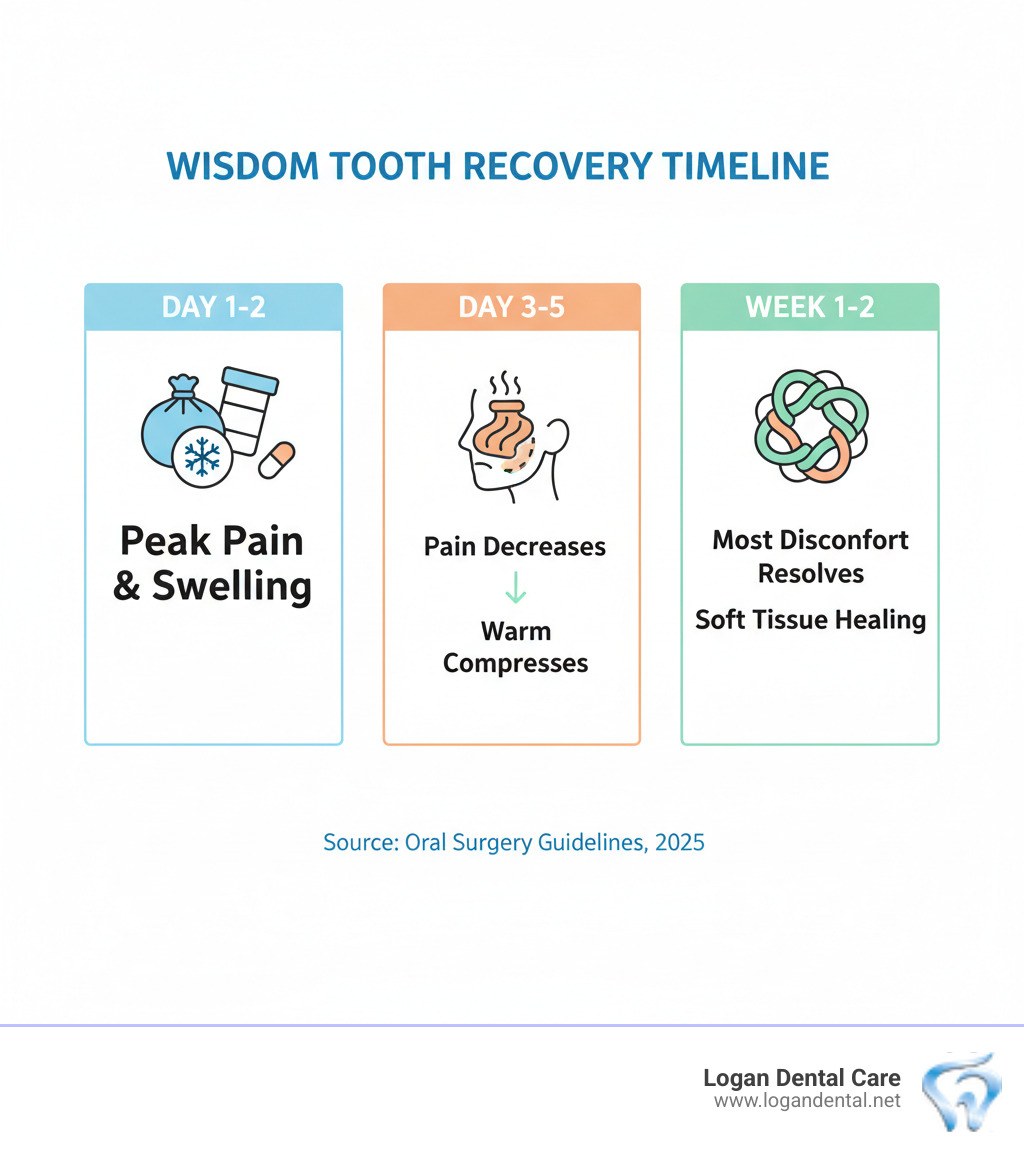
Most patients experience mild to moderate pain that peaks within the first 48 hours. Here's a quick look at what to expect:
- Day 1-2: Peak pain and swelling. Use ice packs and prescribed medication.
- Day 3-5: Pain and swelling should begin to decrease. You can switch to warm compresses.
- Week 1-2: Most discomfort resolves as the soft tissue heals.
Knowing what's normal versus what's a warning sign is key to a smooth recovery. This guide will walk you through the causes of pain, how long it should last, red flags that require urgent care, and proven strategies to minimize discomfort and heal faster.
The Reality of Painful Wisdom Tooth Removal: Causes and Timelines
Discomfort after wisdom tooth extraction is your body's natural response to healing. The main causes are:
- Inflammation: Your immune system rushes to the site, causing swelling, warmth, and discomfort. This is a normal sign that your body is working to repair the tissue.
- Tissue Trauma: The procedure involves working with delicate gum tissue and sometimes bone, especially with an impacted tooth. This manipulation is a primary source of post-operative pain.
- Nerve Sensitivity: Nerves near the tooth roots can become irritated during the procedure, causing throbbing or sharp twinges that fade as you heal.
For most patients in Bellefontaine, the pain follows a predictable pattern. It typically peaks in the first 2-3 days and then improves daily. You can expect mild to moderate discomfort for up to a week, with most soreness gone within two weeks. Deeper bone healing takes longer but is not painful.
Complications like dry socket (alveolar osteitis) can alter this timeline. This occurs when the protective blood clot in the socket is lost, exposing the bone and nerves and causing severe pain. Infection is another potential cause of increased pain, though less common with proper post-operative care. For a general overview of the procedure, see this Wisdom Teeth Removal overview.

Simple vs. Surgical: Comparing Pain and Recovery
Not all extractions are the same. A simple extraction is for a fully erupted tooth and involves less tissue trauma, leading to a quicker recovery. A surgical extraction is needed for an impacted tooth (stuck below the gum line), which requires an incision and sometimes bone removal. This naturally leads to more inflammation and a longer, though still manageable, recovery.
| Feature | Simple Extraction (Fully Erupted Tooth) | Surgical Extraction (Impacted Tooth) |
|---|---|---|
| Pain Onset | Within 6–8 hours post-surgery (as local anesthesia wears off) | After the anesthesia wears off (4–6 hours) |
| Peak Pain | Around 24 hours | 2–3 days after surgery |
| Duration | Improves by day 3, generally gone within a week | Improves by day 5, generally resolved around 10–14 days |
| Typical Recovery Time | Return to normal activities within a few days; full soreness resolution within a week. | May need 1-3 days off work; full soreness resolution within 2 weeks; complete healing can take a few weeks. |
At Logan Dental Care, we'll explain what to expect based on your specific situation. Learn more about our tooth extractions process.
Warning Signs: When a Painful Wisdom Tooth Removal Needs Urgent Care
While some discomfort is normal, certain symptoms require immediate attention. The most common complication is dry socket, which occurs when the protective blood clot is dislodged, exposing bone and nerves. This causes severe, throbbing pain 1-3 days post-extraction that doesn't respond to regular pain medication and may be accompanied by a foul taste or odor. You can find more details at Dry socket - Symptoms and causes.
Contact us immediately if you experience any of these red flags:
- Worsening pain after day 3 or 4.
- Fever above 102°F (38.8°C).
- Pus or discharge from the extraction site.
- Uncontrolled bleeding that doesn't stop with firm pressure.
- Difficulty swallowing or breathing.
- Persistent numbness in your lip, chin, or tongue after 48 hours.
- Swelling that increases after the third day.
Don't wait for these symptoms to worsen. Our team is ready to provide emergency dental care for our Bellefontaine and Logan County patients.
Risk Factors That Can Increase Pain and Complications
Certain factors can increase your risk of a more painful wisdom tooth removal or complications. Knowing them can help you take preventive steps.
- Smoking and tobacco use: The sucking motion can dislodge the blood clot, and chemicals hinder healing. Avoid for at least 48 hours post-surgery.
- Oral contraceptives: Higher estrogen levels can interfere with clot stability. Inform us if you take them.
- Poor oral hygiene: Pre-existing plaque or infection complicates healing.
- Patient age: Younger patients (teens/early twenties) tend to heal faster than older adults, as bone is less dense.
- Degree of tooth impaction: A deeply impacted tooth requires a more invasive procedure, leading to a longer recovery.
- Pre-existing infection: An infection at the site before surgery increases the risk of post-op complications.
- Difficult extraction: Teeth with unusual roots or positioning can lead to more tissue trauma.
We will review your individual risk profile during your consultation at Logan Dental Care to create the safest treatment plan for you.
Your Guide to a Smoother, Less Painful Recovery
Your recovery from a painful wisdom tooth removal is an active process. By following our post-operative instructions, you partner with your body's natural healing abilities for a faster, more comfortable experience. The first 24-48 hours are crucial—prioritize rest and hydration to give your body the energy it needs to heal. Remember to drink plenty of water, but do not use a straw, as the suction can dislodge the protective blood clot and cause a dry socket.
At Logan Dental Care, we treat you like family, which means giving you the knowledge to heal well.

Effective Pain Management at Home
Managing discomfort allows you to rest and heal properly. Stay ahead of the pain by taking medication on schedule, not waiting for agony to set in.
- Medication: A combination of Ibuprofen (Advil) and Acetaminophen (Tylenol) is often effective. Ibuprofen is especially helpful for reducing inflammation. Take any prescribed medication exactly as directed.
- Temperature Therapy: For the first 24 hours, use an ice pack on your cheek (20 minutes on, 20 off) to reduce swelling. After 24 hours, switch to warm, moist compresses to relax the jaw and improve blood flow.
- Oral Hygiene: Avoid vigorous rinsing on day one. Starting the next day, gently rinse with a solution of half a teaspoon of salt in a cup of warm water after meals. You can brush your other teeth normally, being careful around the extraction site.
- Diet: Stick to soft foods like yogurt, mashed potatoes, and lukewarm soup. Avoid anything crunchy, spicy, or very hot that could irritate the wound. And again, no straws.
Your First 48 Hours: What to Do and What to Avoid
| DO'S | DON'TS |
|---|---|
| Take prescribed medications as directed | Smoke or use tobacco products |
| Apply ice packs to reduce swelling | Drink alcohol or very hot beverages |
| Rest with your head liftd | Use straws for drinking |
| Eat soft foods and drink plenty of fluids | Eat hard, crunchy, or chewy foods |
| Gently rinse with salt water (after 24 hrs) | Engage in strenuous physical activity or heavy lifting |
| Keep gauze on as instructed for bleeding | Ignore signs of complications (fever, worsening pain, pus) |
For more detailed guidance, see our helpful tooth extraction recovery tips.
Preparing for Your Procedure to Minimize a Painful Wisdom Tooth Removal
A smooth recovery begins with good preparation. Your pre-operative consultation is key. We'll take X-rays and develop a plan, and you'll have the chance to ask any questions.
Be sure to provide a complete medical history, including all medications (even over-the-counter), supplements, and allergies. If you're receiving sedation, you must arrange for someone to drive you home and follow all pre-surgery fasting instructions for your safety.
We offer several anesthesia options to ensure you are comfortable during the procedure:
- Local Anesthesia: Numbs the extraction area. You'll be awake but feel no pain.
- IV Sedation: Puts you in a deep state of relaxation. You'll be drowsy and are unlikely to remember the procedure.
- Nitrous Oxide (Laughing Gas): Helps you feel calm and relaxed during the procedure.
- General Anesthesia: Puts you completely to sleep. This is for more complex cases.
We'll discuss the best option for you during your consultation. Learn more about our sedation dentistry options.
Long-Term Outlook and Your Oral Health
Removing problematic wisdom teeth offers significant long-term benefits beyond ending a painful wisdom tooth removal recovery. It protects your other teeth from crowding and misalignment, eliminates a source of chronic infection, and makes daily oral hygiene easier by removing hard-to-clean areas. In rare cases, it also prevents cysts or tumors from developing around impacted teeth.
While soft tissues heal in 1-2 weeks, the underlying bone will continue to remodel for several months, ensuring long-term stability.
At Logan Dental Care in Bellefontaine, OH, we serve families throughout Logan County with personalized care that combines a small-town feel with modern technology. If you have concerns about your wisdom teeth, don't let fear hold you back. We're here to guide you through every step. Schedule your tooth extraction consultation with us today for a healthier, more comfortable smile.