
Don't Lose Your Bite: Everything You Need to Know About Dentures
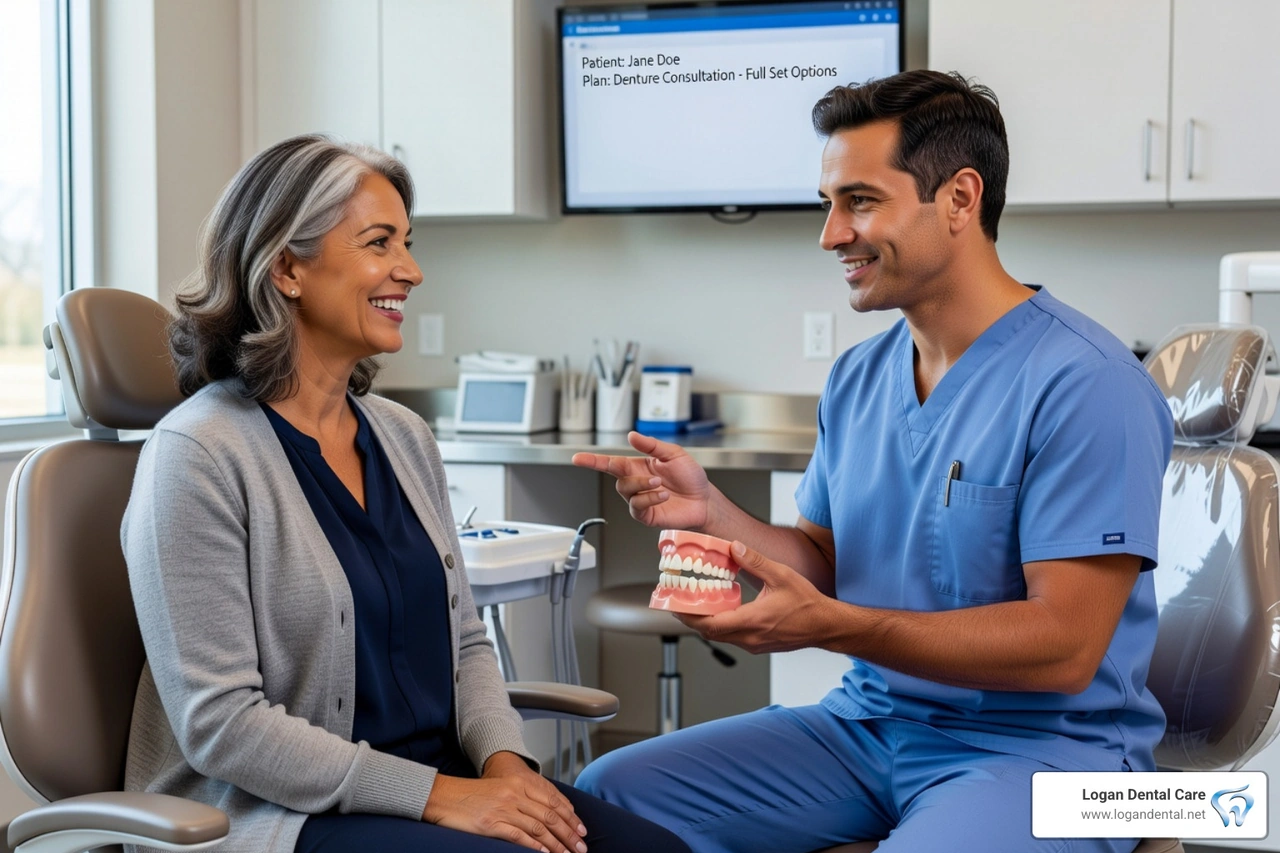
When we talk about dentures bellefontaine ohio, we aren't talking about the "false teeth" of fifty years ago that lived in a glass of water on the nightstand and looked like piano keys. Modern Dentures are a marvel of polymer science and dental artistry. Today, we use advanced acrylic resins and flexible nylon materials that mimic the translucent quality of natural gum tissue and tooth enamel.
Prosthetic dentistry has evolved to focus on both form and function. This means your new teeth won't just look good in a photo; they will support your facial structure, preventing that "sunken" look that often follows tooth loss.
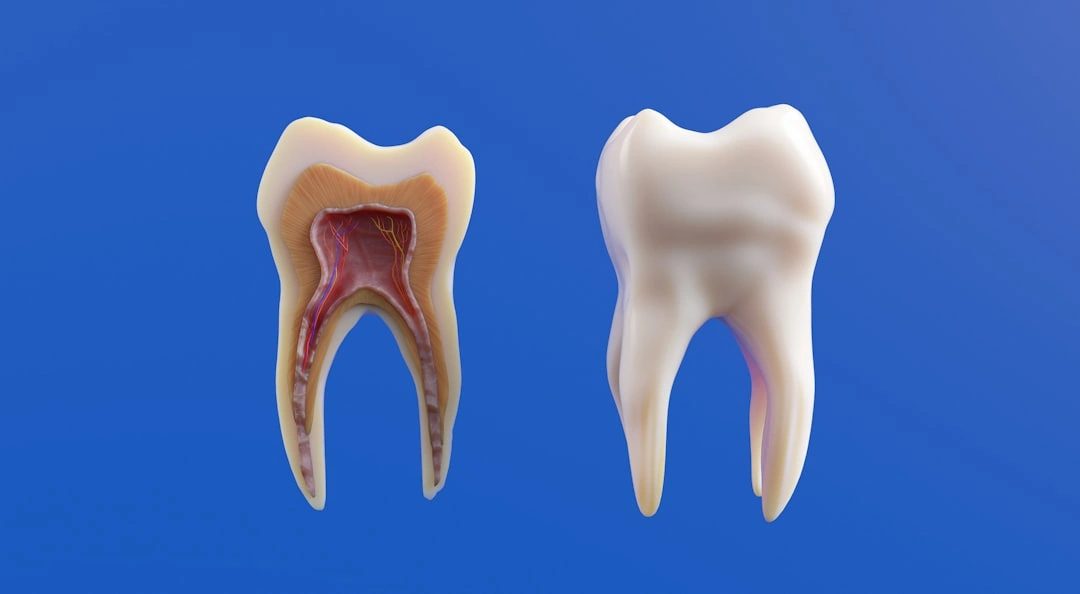
Complete Dentures for Full Arch Replacement
If you have lost all your teeth on either the upper or lower jaw (or both), complete dentures are the traditional solution. These consist of a gum-colored acrylic base that fits snugly over your gums.
The upper denture covers the palate (the roof of your mouth), creating a natural suction that keeps it in place. The lower denture is shaped like a horseshoe to leave room for your tongue and relies more on the coordination of your cheek and tongue muscles to stay seated. While some people refer to these simply as false-teeth, they are actually sophisticated medical devices custom-molded to your unique oral anatomy.
Partial Dentures for Remaining Natural Teeth
Not everyone needs a full set of new teeth. If you still have several healthy natural teeth, a partial denture is often the best route. These act like a puzzle piece, filling in the gaps to create a complete smile.
Partial dentures are typically held in place by inconspicuous metal clasps or "precision attachments" that anchor onto your sturdy natural teeth. Replacing missing teeth with a partial is vital for your oral health because it prevents your remaining teeth from "drifting" or tilting into the empty spaces. If you are wondering is-partial-denture-for-top-from-teeth-good-option, the answer is often yes, as it provides stability and prevents further tissue damage. We also discuss fixed-partial-denture-options for those looking for non-removable solutions like bridges.
Implant-Supported Overdentures in Bellefontaine Ohio
For the ultimate in security, many patients in Bellefontaine are choosing implant-supported overdentures. If you've ever worried about your dentures slipping while eating or speaking, this is the "gold standard" solution.
These dentures "snap" onto dental implants—small titanium posts surgically placed into the jawbone. Because the implants act like natural tooth roots, they provide incredible stability and help preserve jawbone density, which naturally shrinks after tooth loss. While the upfront investment is higher, many find the confidence of "snap-in" security priceless. You can learn more about the variables involved in this procedure by reading how-much-do-snap-in-dentures-cost.
The Step-by-Step Process of Getting New Teeth
At Logan Dental Care, we believe the journey to a new smile should be transparent and stress-free. We don't believe in a "one-size-fits-all" approach; instead, we use advanced technology to ensure your dentures fit the unique contours of your mouth.

From Impressions to Final Fitting
The process begins with a comprehensive oral examination and a personalized treatment plan. Here is what you can generally expect:
- Initial Molds: We take highly accurate dental impressions (molds) of your ridges. These serve as the blueprint for your new teeth.
- Bite Registration: We measure how your upper and lower jaws relate to each other to ensure your "bite" is comfortable and functional.
- Wax Try-In: This is the exciting part! You get to try on a wax version of your dentures. This allows us to check the fit and, more importantly, lets you see how the teeth look. We can adjust the shade, shape, and position of the teeth until you are thrilled with the appearance.
- Final Fitting: Once the lab finishes your permanent dentures, we bring you back for the final fitting and make any necessary minute adjustments.
Immediate and Temporary Dentures
One of the biggest fears patients have is being "without teeth" during the healing phase. We offer immediate dentures to solve this. These are prepared before your extractions and placed the very same day your teeth are removed.
While these are great for aesthetics, it's important to know that your gums and jawbone will undergo "tissue shrinkage" as they heal over the next several months. Because of this, immediate dentures will require a "relining" process later on to tighten the fit once your mouth has reached its permanent shape.
Adapting to Life with Modern Dentures
Getting used to dentures is a bit like getting a new pair of shoes—they might feel a little "full" or awkward at first, but your body is remarkably good at adapting.
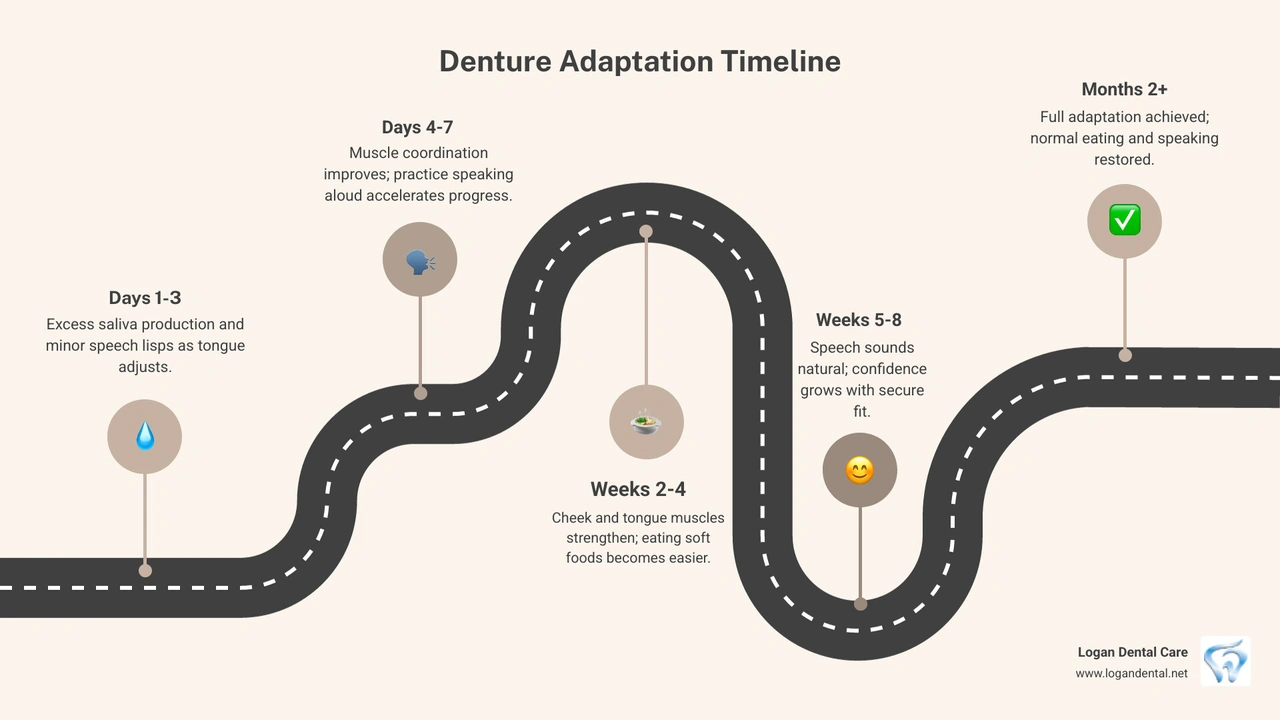
What to Expect During the Adjustment Period
During the first few weeks, your brain is busy figuring out how to coordinate your cheek and tongue muscles to keep the dentures in place.
- Speech Changes: You might notice a slight lisp or find certain sounds (like "s" or "f") tricky. The best trick? Read aloud to yourself or practice singing in the shower! Your tongue will quickly learn its new placement.
- Eating Tips: Start with soft foods like eggs, yogurt, or cooked vegetables. Cut your food into small, bite-sized pieces and try to chew on both sides of your mouth simultaneously. This prevents the denture from tipping.
- Increased Saliva: Your mouth might think the new dentures are food at first, leading to extra saliva. This usually settles down within a few days.
Essential Aftercare for Dentures Bellefontaine Ohio
To keep your smile looking bright and your gums healthy, a consistent routine is key. Even though these teeth aren't "real," they still collect plaque and bacteria.
- Daily Brushing: Use a soft-bristled denture brush and a non-abrasive denture cleaner. Regular toothpaste is often too gritty and can leave microscopic scratches on the acrylic.
- Overnight Soaking: Never let your dentures dry out, as they can lose their shape. Soak them in a denture solution or plain water overnight. This also gives your gum tissues a much-needed "breath" and rest.
- Professional Checks: Even with dentures, you still need to see us! We check the health of your soft tissues and ensure your dentures still fit properly. For more detailed tips, check out our denture-care-advice.
Investing in Your Smile: Costs and Coverage
We understand that budget is a major factor for families in Logan County. The cost of dentures bellefontaine ohio varies depending on the materials used, whether extractions are needed, and if you choose implant stabilization.
Traditional dentures rely on suction or adhesives, provide minimal bone support, need daily cleaning and soaking, and often last 5-7 years with possible relines.
Implant-supported overdentures snap onto implants for better stability, help protect jawbone health, require denture cleaning plus implant care, and may last 10+ years.
For a deeper dive into the financial side, see our dentures-cost-complete-guide.
Insurance, Medicaid, and Financing Options
Many dental insurance plans cover a significant portion of denture treatments. We also work with financing partners like CareCredit to help break the cost down into manageable monthly payments. Our goal is to ensure that high-quality care is accessible to everyone in our community, from Zanesfield to Lakeview.
Frequently Asked Questions about Dentures
How long do modern dentures typically last?
On average, a good set of dentures lasts between 5 and 7 years. While the materials are durable, your mouth is constantly changing. Bone remodeling (the natural shrinking of the jawbone) means that over time, the denture that fit perfectly five years ago may start to feel loose. Regular relines can extend their life, but eventually, a new set is needed to maintain proper facial support.
Can I eat normally with my new dentures?
Yes, but it takes practice! Most patients can return to a full, varied diet. The key is bilateral chewing—using both sides of your mouth at once to stabilize the base. We recommend being cautious with very sticky foods (like taffy) or extremely hard foods (like unpopped popcorn kernels), which can occasionally dislodge or chip the acrylic.
How do I know if my dentures need an adjustment?
If you notice persistent mouth sores, a "clicking" sound when you speak, or if you find yourself using more and more adhesive just to get through lunch, it’s time for an adjustment. A quick visit to our Bellefontaine office can often solve these issues in minutes.
Conclusion
Losing your natural teeth doesn't have to mean losing your "bite" or your confidence. Whether you are in Russels Point, West Liberty, or right here in Bellefontaine, Logan Dental Care is here to support you. As a family-focused practice, we take pride in building long-term relationships and providing care that feels like home.
We combine the warmth of a small-town dentist with the modern capabilities required to create beautiful, functional smiles. Don't let tooth loss direct your life any longer. Schedule your consultation for dentures with us today and let's get you smiling again!