
Understanding Dental Crown Pricing for Bellefontaine Families

What affects the average cost to get a crown?
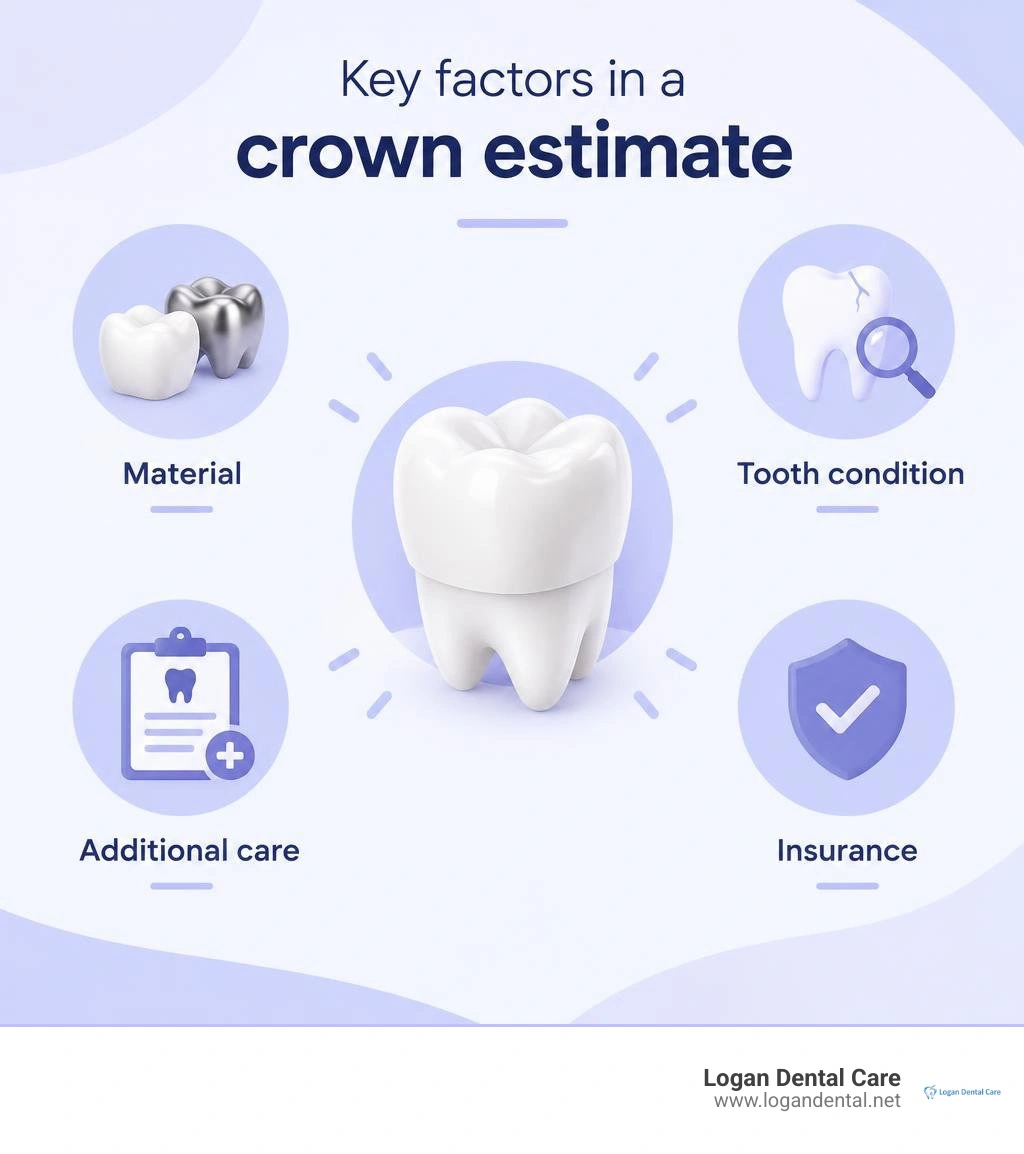
The average cost to get a crown depends on the material, the tooth’s condition, and your insurance. If you need to replace an old crown, ask for an itemized estimate. It should show whether tooth repairs, exams, or X-rays are needed in addition to the new crown.
Logan Dental Care is a family-focused practice at 1021 N. Main Street in Bellefontaine, serving families across Logan County. We’re accredited members of the American Dental Association and Ohio Dental Association and hold an A+ BBB rating. We’re the Logan Dental Care Team, and we’ll help you understand the factors behind your estimate.
Discover more about average cost to get a crown:
Factors Determining the Average Cost to Get a Crown

When you or a loved one needs a tooth restored, understanding the investment helps you make confident decisions for your oral wellness. A dental crown is a custom-crafted cap designed to cover, protect, and restore a tooth that has suffered extensive decay, cracking, or structural trauma. Rather than extracting a compromised natural tooth, placing a crown preserves the underlying root and restores normal chewing and biting function.
The overall investment required for crown treatment reflects several clinical elements:
- Tooth Location and Complexity: Restoring a front tooth often requires higher cosmetic precision and custom shade blending to match adjacent natural teeth, while back molars require high-strength materials capable of enduring heavy chewing pressure.
- Clinical Precision and Chairside Time: Every smile is unique. Thoroughly preparing a tooth, removing compromised structure, taking precise digital impressions, and ensuring a comfortable bite require dedicated professional care.
- Laboratory Craftsmanship: High-quality dental crowns are individually fabricated by skilled dental technicians using medical-grade ceramics, metals, or composite alloys to ensure a secure fit and natural look.
- Restoration Scope: Whether you are receiving a single protective cap or comprehensive crowns and bridges to replace missing teeth influences the treatment plan.
Patients seeking baseline information on medical and dental pricing standards across various geographic regions can also consult non-profit reference tools like Fair Health Consumer.
Comparing Crown Materials and Their Price Ranges
The material you choose with your dentist plays a major role in your total restoration estimate. Different materials provide distinct benefits depending on where the tooth is located in your mouth and your daily oral habits.
- Zirconia Crowns: Highly favored in modern restorative dentistry, solid zirconia offers exceptional fracture resistance and tensile strength. It is an ideal choice for back molars that endure significant bite pressure, while layered zirconia provides a lifelike appearance for visible teeth.
- All-Ceramic and Porcelain Crowns: Ceramic restorations, such as lithium disilicate, deliver unmatched translucency and aesthetic appeal. They blend seamlessly with natural enamel, making them a popular selection for front teeth.
- Porcelain-Fused-to-Metal (PFM) Crowns: These traditional restorations feature an inner metal shell coated with an outer layer of tooth-colored porcelain, combining reliable structural strength with aesthetic coverage.
- Gold and Precious Metal Alloys: Metal alloys remain a premier, conservative choice for back teeth. Gold is exceptionally gentle on opposing natural teeth and resistant to chipping, making it well-suited for patients who grind or clench their teeth.
- Pediatric Stainless Steel Crowns: Typically used on primary baby teeth in children, prefabricated stainless steel caps provide durable, cost-effective protection until the permanent tooth naturally erupts.
For a deeper look into restorative options, explore our guide to crown materials to learn how each fits specific dental needs.
How Additional Preparatory Procedures Impact Total Expenses
A crown quote rarely covers just the custom cap itself. To ensure long-term clinical success, the underlying tooth and surrounding gum tissue must be healthy and structurally sound.
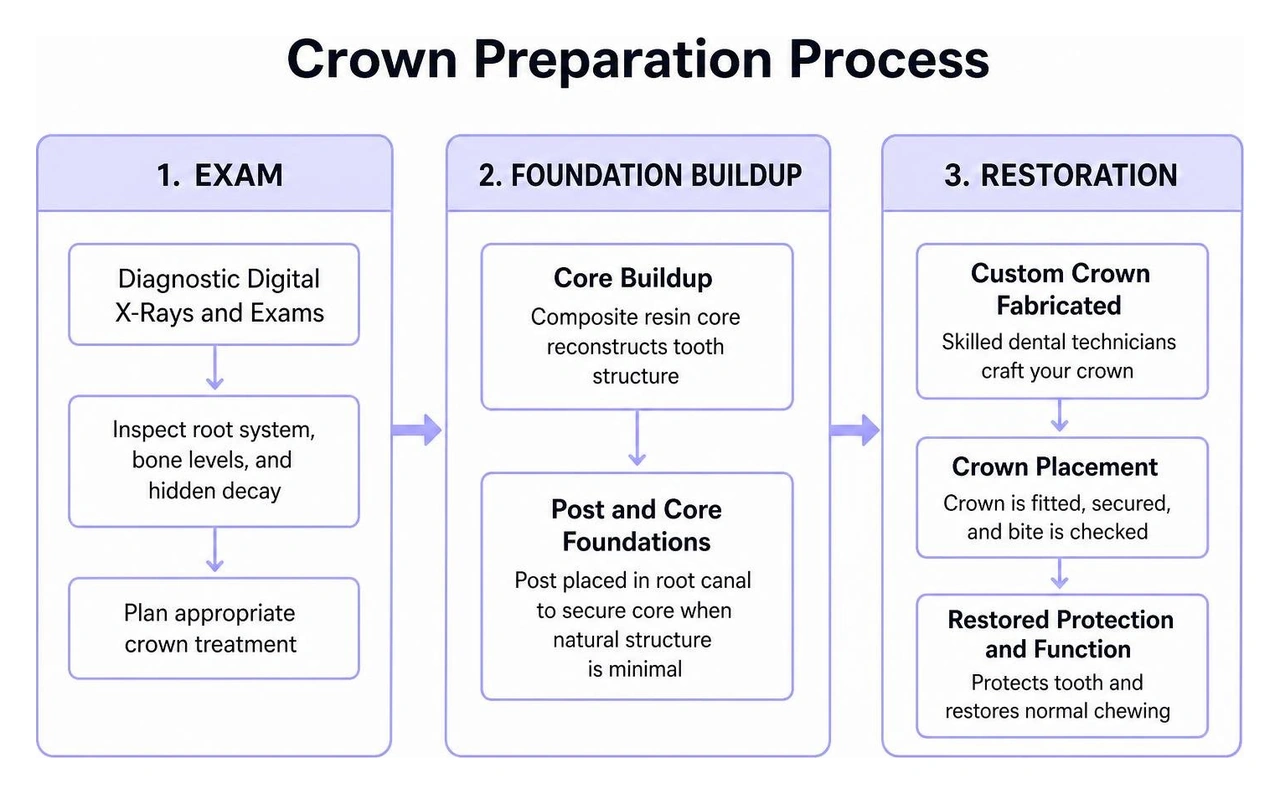
Additional clinical procedures that may accompany crown treatment include:
- Diagnostic Digital X-Rays and Exams: High-resolution digital imaging allows your dentist to inspect the root system, surrounding bone levels, and hidden decay before treatment begins.
- Core Buildup: If a tooth has lost substantial natural structure from decay or fracture, a composite resin core buildup is placed to reconstruct a stable anchor for the crown.
- Post and Core Foundations: Following endodontic therapy, a small supportive post may be placed inside the root canal space to secure the core buildup when natural tooth structure is minimal.
- Endodontic Care: When infection or deep decay reaches the inner nerve pulp, protecting treated teeth with root canals and crowns ensures that the tooth is free from infection before the permanent crown is sealed in place.
Patients interested in learning more about how preparatory steps influence restorative care can read an objective dental crown procedure cost breakdown.
Dental Crown Costs With and Without Insurance
Navigating dental benefits and treatment estimates does not have to be confusing. Whether you are using employer-provided dental insurance or paying directly, understanding how restorative care is categorized helps you plan your family's healthcare budget smoothly. Helpful consumer resources like the Delta Dental insurance coverage guide explain standard benefit structures.
The Average Cost to Get a Crown Without Insurance
For uninsured patients or those receiving care outside of a dental network, the total expense reflects the full clinical fee for the diagnostic imaging, tooth preparation, laboratory fabrication, temporary restoration, and final cementation. Across Ohio and the wider Midwest, self-pay costs vary depending on the chosen material, tooth location, and whether structural buildups are required.
To help families budget comfortably, our practice provides upfront itemized breakdowns for all recommended care, ensuring you understand every phase of treatment before work begins. You can review practical tips for managing out-of-pocket dental crown costs to make your care as predictable as possible.
The Average Cost to Get a Crown With Insurance Coverage
Most private dental insurance policies classify medically necessary crowns as a major restorative benefit. Under typical dental plans:
- Coinsurance Coverage: Insurance policies often cover a percentage (commonly around half) of the approved restorative fee once your annual deductible has been satisfied.
- Annual Maximums: Most dental plans have an annual benefit limit that caps the total amount the insurer contributes within a benefit year.
- Waiting Periods: Some individual or new dental policies enforce waiting periods for major restorative services before crown benefits become active.
- Pre-Treatment Estimates: Requesting a pre-treatment estimate from your dental provider allows your insurance carrier to confirm approved coverage levels and remaining out-of-pocket balances in advance.
Learning how to navigate policy details can assist in maximizing benefits for dental crown coverage.
The Dental Crown Procedure and What to Expect

Receiving a custom crown is a comfortable, routine restorative process designed to revitalize your smile. The standard clinical journey involves distinct stages:
- Comprehensive Examination: Your dental team evaluates the tooth, takes digital X-rays, and reviews your medical and dental history.
- Tooth Preparation: The tooth is gently reshaped under local anesthetic to remove damaged enamel and decay, creating space for the crown to fit naturally along the gumline.
- Digital Impressions and Shade Matching: Precise impressions capture the contours of your prepared tooth and bite alignment, while a shade guide ensures your new restoration blends with your natural teeth.
- Temporary Crown Placement: A provisional acrylic cap is placed over the prepared tooth with temporary cement to protect it while your permanent restoration is crafted.
- Final Fitting and Cementation: Once the permanent crown arrives from the dental laboratory, your dentist checks the fit, color, and bite alignment before bonding it permanently in place.
Temporary Crowns Versus Permanent Restorations
A temporary crown serves an essential role during the interim period between your preparation visit and final placement. Crafted from tooth-colored acrylic or composite resin, the temporary cap safeguards exposed dentin from temperature sensitivity, prevents bacteria from reaching the inner tooth, and holds the space so adjacent teeth do not shift.
Because temporary cement is designed for easy removal, patients should avoid chewing sticky candies or hard foods on that side of the mouth until the permanent restoration is seated.
Conservative Tooth-Preserving Alternatives to Full Crowns
In cases where tooth damage is moderate rather than severe, full crown coverage may not always be required. Conservative alternatives include:
- Inlays and Onlays: Often called partial crowns, onlays restore damaged chewing cusps while preserving healthy natural enamel.
- Dental Veneers: Thin porcelain shells bonded to the front surface of teeth can correct chips, cosmetic wear, and minor fractures without full circumferential reduction.
- Large Composite Restorations: High-strength direct composite fillings can repair moderate decay when sufficient natural wall structure remains intact.
You can learn more about these approaches by exploring personalized dental crown options.
Affordable Pathways and Long-Term Care for Crown Patients
Taking proactive care of your restorative dental work protects your investment and keeps your smile healthy for years to come. While crowns cannot develop cavities, the natural tooth structure along the margin at the gumline remains vulnerable to plaque buildup and decay.
To maximize the longevity of your dental crown:
- Brush thoroughly twice daily with a soft-bristled toothbrush and fluoride toothpaste.
- Floss daily around the crown margin to remove plaque and prevent localized gum inflammation.
- Wear a custom-fitted nightguard if you clench or grind your teeth during sleep to protect ceramic surfaces from excessive pressure.
- Maintain routine professional dental cleanings and exams every six months.
- Utilize pre-tax health accounts, such as Health Savings Accounts (HSAs) or Flexible Spending Accounts (FSAs), to pay for eligible out-of-pocket restorative expenses with pre-tax dollars.
- Inquire about in-house dental membership plans, such as our practice's Smile Protection Savings Plan, which offers uninsured patients preventive care coverage and discounts on restorative procedures.
Frequently Asked Questions About Dental Crown Costs
How long do dental crowns typically last?
With diligent home hygiene and regular professional checkups, high-quality dental crowns typically last between 10 to 15 years or longer. Longevity depends heavily on daily brushing and flossing, avoiding hard items like ice or hard candies, and wearing protective nightguards if you experience nighttime bruxism.
Is a crown always necessary after a root canal?
In most cases involving posterior molars and premolars, placing a full-coverage crown following root canal therapy is critical. Endodontically treated teeth lose their internal blood supply, becoming brittle over time. A crown reinforces the remaining tooth structure, preventing catastrophic fractures caused by daily chewing forces.
What should I do if a temporary crown comes loose?
If a temporary crown comes off, keep the restoration safe and call your dental practice right away. If you cannot visit the office immediately, you can gently place a small dab of over-the-counter temporary dental cement or toothpaste inside the cap and slip it back over the tooth to protect against sensitivity until your appointment.
Conclusion
Restoring a compromised tooth with a custom dental crown is an investment in your smile's long-term health, comfort, and function. At Logan Dental Care, we take pride in serving Bellefontaine and our neighboring Logan County communities with transparent, family-centered dentistry.
Located at 1021 N. Main Street in Bellefontaine, Ohio, our practice provides comprehensive care for patients of all ages, including general and preventive dentistry, family dentistry, cosmetic treatments (teeth whitening, veneers, and smile makeovers), orthodontics (Invisalign and traditional braces), restorative dentistry (implants, crowns, and bridges), emergency dental care with same-day and after-hours availability, custom nightguards, and our in-house Smile Protection Savings Plan for uninsured families. Please note that we do not offer outside payment plans or sedation dentistry, focusing instead on gentle, transparent care in a welcoming setting.
As accredited members of the American Dental Association and the Ohio Dental Association with an A+ BBB rating, we are here to answer your questions and guide your family toward healthy smiles. For further details on restorative care, explore our complete guide to dental crown pricing and restoration or contact our friendly team today.