
Don't Miss Out: Everything About Missing Teeth

Your Guide to Missing Teeth
Missing teeth affect millions of adults, but you don't have to face this challenge alone. Whether you've lost one tooth or several, understanding your options is the first step toward restoring your smile and oral health.
Quick Facts About Missing Teeth:
- 178 million Americans are missing at least one tooth
- Half of adults aged 20-64 have lost at least one permanent tooth
- 1 in 6 Americans over 65 are missing all their teeth
- Common causes: tooth decay, gum disease, injury, and genetic conditions
- Consequences: bone loss, shifting teeth, difficulty eating, and speech problems
- Solutions: dental implants, bridges, dentures, and preventive care
The good news? Modern dentistry offers excellent solutions that can restore both function and appearance.
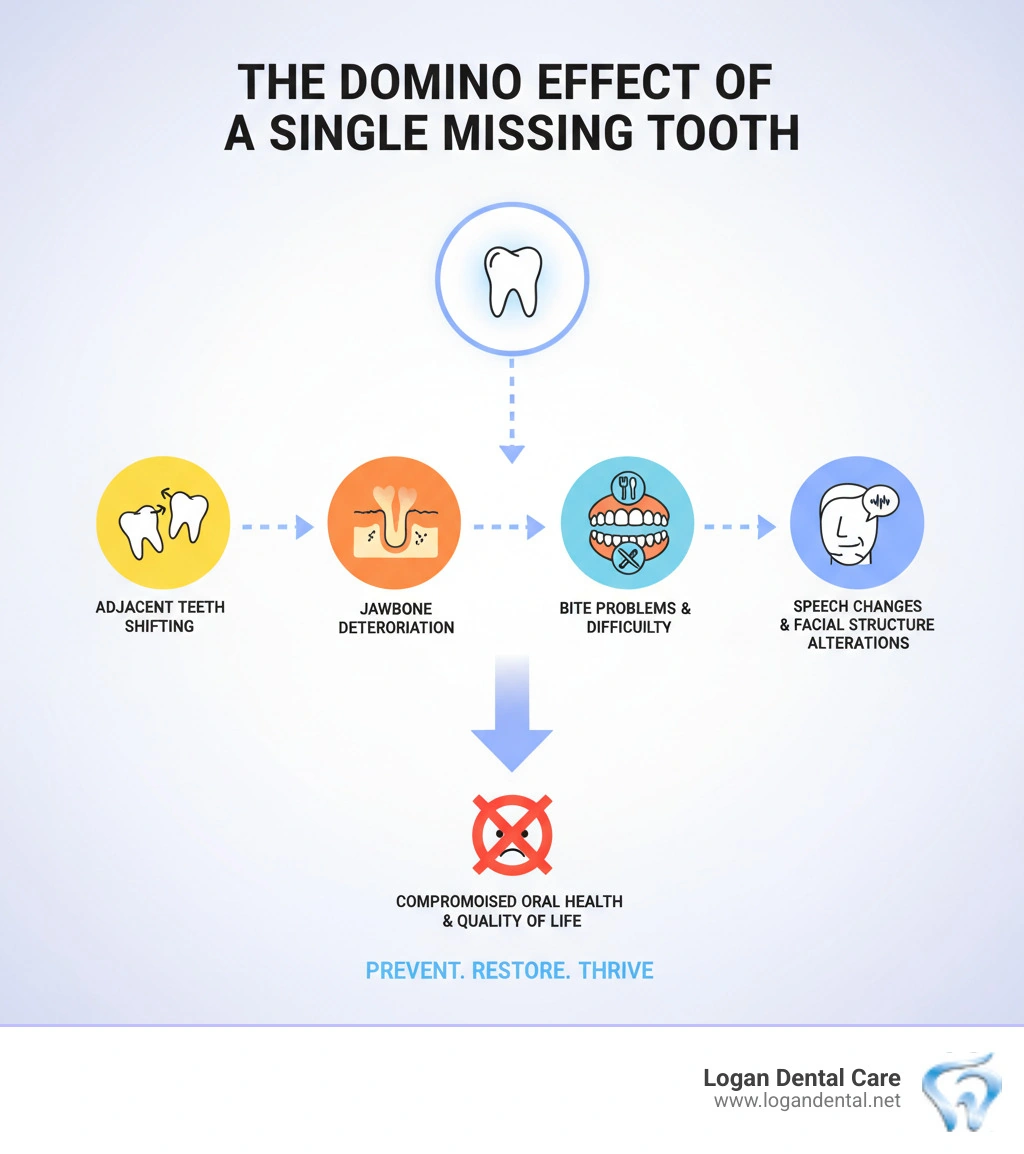
Missing teeth create a domino effect in your mouth. When you lose even one tooth, the remaining teeth start shifting to fill the gap. Your jawbone begins to deteriorate without the tooth root's stimulation. This can change your facial structure over time and make eating certain foods difficult.
But here's what many people don't realize: replacing missing teeth isn't just about looks. It's about maintaining your overall health, nutrition, and quality of life.
The average adult between ages 20-64 has three or more decayed or missing teeth. If you're dealing with tooth loss, you're part of a large community - and there are proven ways to get your smile back.
Missing teeth definitions:
Why Missing Teeth Are More Than Just a Gap in Your Smile
That empty space in your mouth might seem like just a cosmetic concern, but missing teeth create problems that go far deeper than what meets the eye. Whether you've lost a tooth recently or you're dealing with gaps that have been there for years, understanding the full impact can help you make better decisions about your oral health.
The truth is, tooth loss affects your entire body in ways you might not expect. Your mouth is connected to your overall health, and when something goes wrong with your teeth, it can trigger a chain reaction that impacts everything from your nutrition to your confidence.
There are two main ways people end up with missing teeth. Acquired tooth loss happens when you lose teeth that were once there - maybe from decay, injury, or gum disease. Congenital tooth loss means you were born without certain teeth because they never developed in the first place. Both situations need attention, but for different reasons.
Understanding the Causes of Missing Teeth
Every patient we see at Logan Dental Care has a unique story about how they lost their teeth. Sometimes it's a slow process that took years, other times it happens in an instant. Here's what we see most often in our Bellefontaine practice.
Tooth decay remains the number one reason people lose teeth. When cavities go untreated, they keep growing deeper until the tooth can't be saved. It's actually the most common health condition worldwide, which shows just how important good oral hygiene really is.
Gum disease, especially the advanced form called periodontitis, is another major culprit. This bacterial infection doesn't just affect your gums - it destroys the bone and tissue that hold your teeth in place. Many people don't realize they have gum disease until it's quite advanced. The American Academy of Periodontology has detailed information about the link between gum disease and tooth loss if you want to learn more.
Injury and trauma can knock out even perfectly healthy teeth. We see this a lot with sports injuries, car accidents, or simple falls. The good news is that many of these injuries can be prevented with properly fitted mouthguards during contact sports.
Sometimes, missing teeth aren't caused by anything that went wrong - some people are simply born without certain teeth. This condition, called hypodontia, affects between 2% and 8% of people. The teeth most commonly missing are the upper lateral incisors, upper second premolars, and lower second premolars. It often runs in families and can sometimes be part of broader genetic conditions.
Your overall health plays a bigger role than you might think. Systemic conditions like diabetes, heart disease, and rheumatoid arthritis all increase your risk of tooth loss. People with diabetes, for example, are more likely to develop gum disease, which can eventually lead to missing teeth.
The Consequences of Leaving Gaps Unchecked
Here's where things get serious. Ignoring a missing tooth isn't like ignoring a small scratch on your car - it's more like ignoring a crack in your foundation. The problems just keep getting worse over time.
Your remaining teeth start moving almost immediately after you lose a tooth. They shift and tip into the empty space, creating bite problems that can affect how you chew. The tooth above or below the gap can also over-erupt, making the whole situation more complicated.
Your jawbone begins to shrink without the tooth root to stimulate it. This happens surprisingly fast - you can lose one-quarter of the bone width in just one year. As the bone shrinks, your facial features change, often making you look older than you are.
Eating becomes more difficult when you're missing teeth, especially the back molars that do most of the grinding work. Many of our patients tell us they've given up foods they love because they're too hard to chew. This can lead to poor nutrition if you start avoiding healthy foods like fresh fruits and vegetables.
Speech problems are common, particularly when front teeth are missing. You might develop a lisp, have trouble pronouncing certain words, or notice whistling sounds when you speak. This can be embarrassing and affect your confidence in social and work situations.
Your face changes shape as the jawbone shrinks and teeth shift. The chin may rotate forward, the corners of your mouth can turn downward, and your cheeks might appear sunken. These changes contribute to an aged appearance that goes far beyond the visible gap. As we discuss in our article about Dental Implants: Improving Oral Health and Facial Aesthetics, replacing missing teeth can help maintain your facial structure.
Self-confidence takes a hit when you're dealing with missing teeth. We see patients who cover their mouths when they laugh, avoid smiling in photos, or feel self-conscious about eating in public. These feelings are completely understandable, but they don't have to be permanent.
The important thing to remember is that all of these consequences are preventable - but only if you act before they become severe. That's why we always encourage our patients not to wait when it comes to replacing missing teeth.
Finding Your Solution: Replacement Options and Prevention
Here's the wonderful news about missing teeth: you absolutely don't have to live with them forever. Today's dental solutions are remarkable, offering options that can completely restore your smile's function and beauty. Whether you're looking for a permanent fix or exploring more budget-friendly alternatives, we have the tools and expertise to help you find exactly what works for your unique situation.
The best part? While we love helping people restore their smiles, we're even more passionate about helping you keep the teeth you have. Prevention truly is the best medicine when it comes to your oral health.
Modern Solutions for Replacing Missing Teeth
Choosing the right replacement for your missing teeth feels like a big decision - because it is! You want something that looks great, functions well, fits your budget, and will last. Let's walk through your options together, so you can make the choice that's perfect for you.
Dental implants are often called the gold standard for replacing missing teeth, and for good reason. Think of an implant as creating a brand-new tooth from the ground up. We place a small titanium post into your jawbone, where it actually fuses with your bone over several months. Then we attach a beautiful, custom-made crown that looks and feels just like your natural tooth.
What makes implants so special? They're the only replacement option that prevents jawbone loss because they stimulate your bone just like natural tooth roots do. You'll brush and floss them exactly like your other teeth, and with proper care, they can last decades or even a lifetime. The Cost of Dental Implants Per Tooth typically ranges from $3,000 to $6,000, making them an investment in your long-term oral health.
Dental bridges offer another excellent solution, especially when you have healthy teeth on both sides of the gap. We create a custom bridge where a replacement tooth is anchored by crowns placed on your neighboring teeth. The result looks completely natural and feels solid when you eat and speak.
Bridges cost between $3,000 and $5,000 and typically last 5 to 15 years with good care. They're fixed in place, so you never have to worry about removing them. We offer various Fixed Partial Denture Options that can work beautifully for different situations.
Dentures have come a long way from what your grandparents might have worn. Today's partial and complete dentures look incredibly natural and can restore both function and confidence. Partial dentures work wonderfully when you still have some healthy teeth, while complete dentures replace an entire arch.
The cost ranges from $1,500 to $3,000, making them the most budget-friendly option. While they do require daily removal for cleaning and may take some getting used to, many of our patients love their dentures once they adjust. You can Explore your denture options with us to learn more about what might work best for your situation.
Dental implants: Typically cost $3,000-$6,000 per tooth. They can last decades to a lifetime, look and feel very natural, and are cared for with normal brushing and flossing.
Dental bridges: Often cost $3,000-$5,000. They usually last 5-15 years, look natural, and need special flossing underneath the bridge.
Partial dentures: Usually cost $1,500-$3,000. They tend to last 5-10 years, offer a natural-looking appearance, and should be removed daily for cleaning.
For a more detailed cost breakdown, the Dental cost estimator can help you plan your investment in your smile.
How to Prevent Future Tooth Loss
While we love helping people replace missing teeth, we're even more excited about helping you keep the teeth you have! The good news is that most tooth loss is completely preventable with the right habits and care.
Daily brushing and flossing might sound basic, but they're your strongest defense against tooth loss. Brush twice a day for two minutes with fluoride toothpaste, and floss daily to remove plaque and food particles. These simple habits prevent the decay and gum disease that cause most tooth loss.
Regular visits to our office are absolutely crucial. We recommend seeing us every six months for cleanings and check-ups. During these visits, we can catch small problems before they become big ones. Adults who visit the dentist regularly for check-ups have significantly fewer decayed, missing, or filled teeth compared to those who only come when something hurts.
What you eat matters more than you might think. A balanced diet rich in fruits, vegetables, and calcium keeps your teeth and gums strong. Limiting sugary snacks and drinks dramatically reduces your risk of cavities. Your teeth will thank you for choosing water over soda!
Protecting your teeth from injury is especially important if you play sports. A custom-fitted mouthguard can save you from losing teeth to trauma. We've seen too many preventable injuries over the years - don't let yours be one of them.
Managing your overall health plays a bigger role in oral health than many people realize. Conditions like diabetes increase your risk of gum disease, which can lead to tooth loss. Working with your doctor to manage these conditions helps protect your smile too.
The National Institute on Aging offers excellent Tips for taking care of your teeth that can help you maintain your oral health as you age.
Taking the Next Step in Bellefontaine
Dealing with missing teeth doesn't have to feel overwhelming. Here at Logan Dental Care, we've helped countless neighbors in Bellefontaine and Logan County restore their smiles and confidence. We understand that every situation is unique, and we're committed to finding the solution that's perfect for you.
When should you call us? The answer is simple: as soon as possible. Whether you just lost a tooth, have been living with gaps for years, or notice your child might be missing teeth, early action prevents bigger problems down the road. The sooner we address missing teeth, the more options you'll have and the better your results will be.
What makes us different? We treat every patient like family, taking time to really listen to your concerns and explain all your options clearly. You'll never feel rushed or pressured here. We combine that warm, small-town care you deserve with the latest dental technology to give you the best possible results.
Your consultation with us will be thorough and comfortable. We'll examine your mouth, discuss your goals and concerns, and explain every treatment option available to you. We'll talk about costs, timelines, and what to expect every step of the way. By the time you leave, you'll have all the information you need to make the best decision for your smile.
Don't let missing teeth hold you back from laughing freely, eating the foods you love, or feeling confident in social situations. Your best smile is waiting, and we're here to help you achieve it with the personalized, family-like care that sets Logan Dental Care apart.
Ready to take the next step? Contact us today to schedule your consultation. We can't wait to welcome you to our dental family and help you restore your beautiful, healthy smile!