
The Real Cost of Metal Dental Crowns

What Does a Metal Dental Crown Actually Cost?
Metal crown dental cost is one of the most common questions patients ask before committing to restorative treatment — and for good reason. A single crown is a real investment, and the price can vary widely depending on the material, your location, and your insurance plan.
Here's a quick snapshot to answer your question right away:
- Metal crowns (base alloy): $900-$2,500
- Gold alloy crowns: $900-$2,500
- Porcelain-fused-to-metal (PFM) crowns: $800-$2,400
- All-porcelain or ceramic crowns: $1,000-$2,500
- Zirconia crowns: $1,000-$2,500
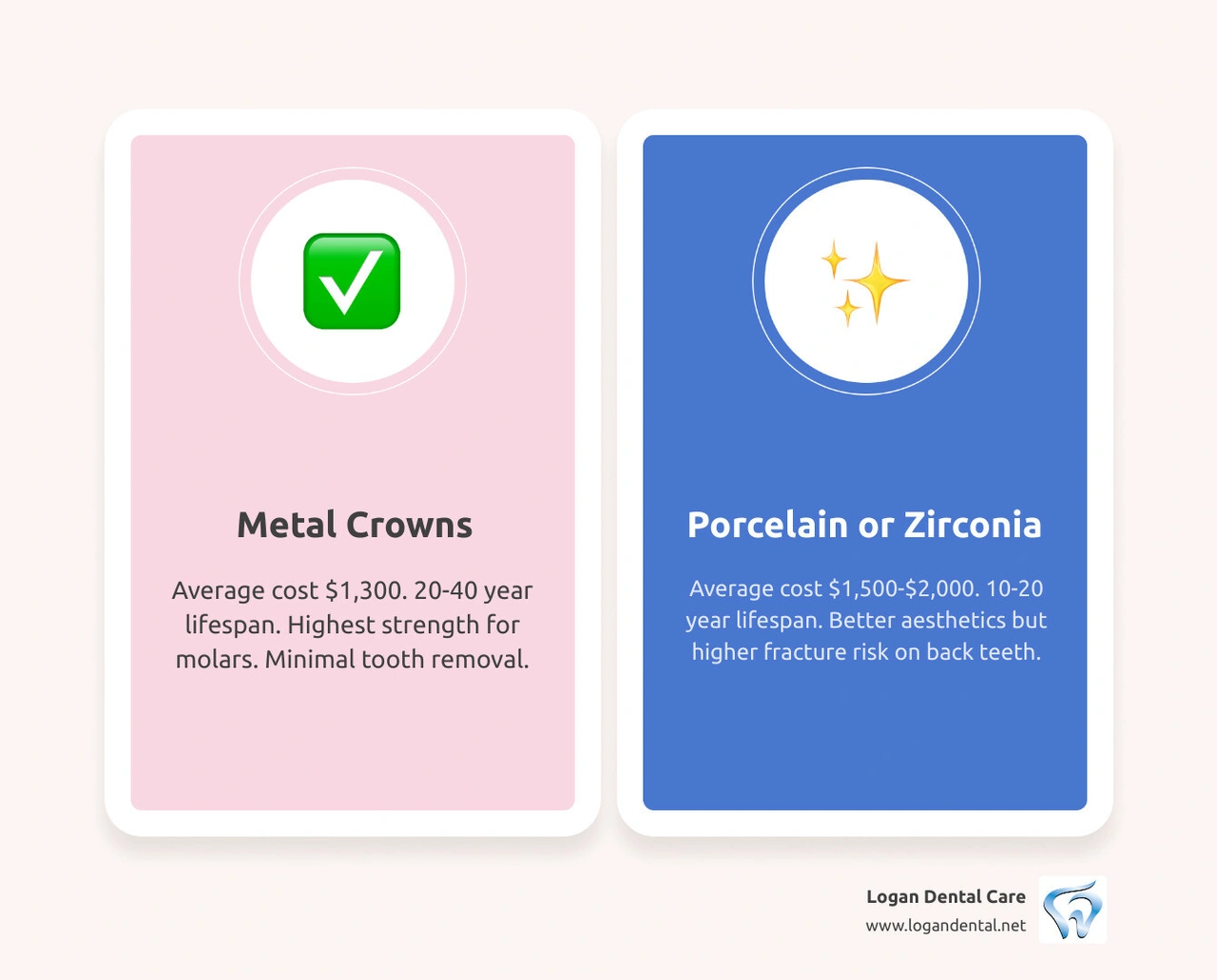
The national average for a metal crown is around $1,300 per tooth without insurance. Most dental insurance plans cover roughly 50% of the cost when the crown is medically necessary, subject to your deductible and annual maximum.
Metal crowns are typically placed on back molars, where strength matters more than appearance. They're often less expensive than porcelain or zirconia alternatives — and they tend to last longer too.
But the sticker price is only part of the story. Additional procedures, your choice of provider, and your insurance coverage can all shift what you actually pay out of pocket.
This guide breaks down everything you need to know — material by material, cost by cost — so you can make a confident, informed decision.
Understanding the Metal Crown Dental Cost in 2026
In 2026, the usual range for a metal crown without insurance is broad, but the average falls around the middle of that range. That spread happens because "metal crown" is not just one thing. It can mean a base-metal alloy crown, a high noble crown, or a gold alloy crown.
In simple terms:
- Base-metal or silver-colored alloy crowns are usually the lower-cost metal option
- Gold alloy crowns often cost more upfront
- High noble metal crowns may carry a premium because of the metal content
- Molars are the most common place for metal crowns because they handle heavy chewing forces
If you are comparing options, it helps to look at the full picture, not just the upfront fee. A crown that lasts longer may be the better value over time. For a broader look at crown pricing, see our Dental Crown Cost guide.

Base-metal alloy: Usually the lower-cost option, known for strength and a lower upfront price.
Gold alloy: Often mid to higher in cost, valued for its long track record and durability.
High noble metal: Typically higher priced, chosen for biocompatibility and favorable wear characteristics.
Factors Influencing Your Metal Crown Dental Cost
Several details can change what a patient pays, even for the same type of crown.
- Tooth location: Back teeth often suit metal crowns well, but the exact tooth still affects preparation and lab work
- Alloy composition: Crowns with more noble metal typically cost more than basic alloys
- Lab fees: Custom crowns are made to fit your bite, and lab quality matters
- Dentist expertise: Diagnosis, preparation, fit, and bite adjustment are part of the value
- Related treatment needs: If a tooth needs more support before the crown, the total rises
- Insurance status: In-network versus out-of-network care can change out-of-pocket costs
Another factor is how much healthy tooth structure remains. A badly broken tooth may need more than "just a crown." Our Dental Crown Consultation Complete Guide explains what we evaluate before treatment.
Longevity and Value of a Metal Crown Dental Cost
This is where metal crowns really shine. Not literally in every case, but sometimes yes, if you choose gold.
Research consistently shows that metal crowns are among the longest-lasting crown options. Gold alloy crowns often have the best long-term clinical track record, with many lasting decades. In general:
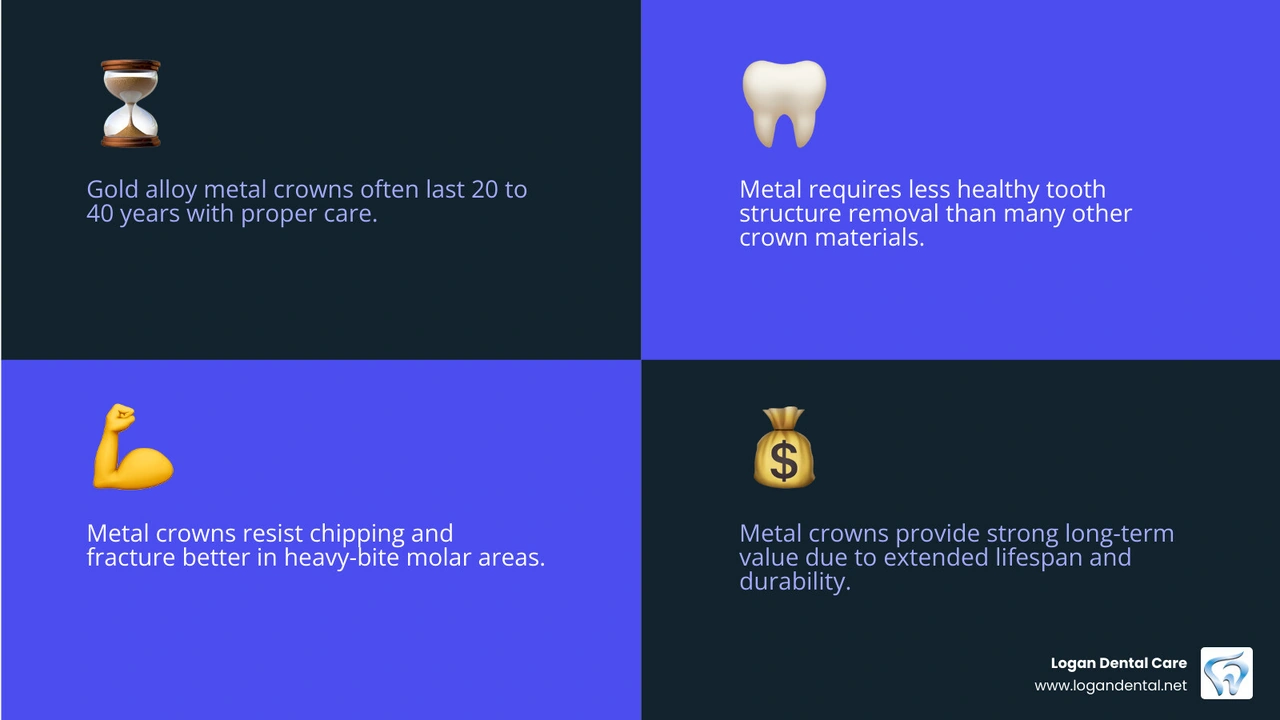
- Gold alloy crowns may last 20 to 40 years or longer
- Many metal crowns outlast porcelain-based crowns in heavy-bite areas
- Metal is highly resistant to chipping and fracture
- Metal crowns usually require less tooth reduction than some other materials
That last point matters. Less removal of healthy tooth structure is usually a good thing.
If your goal is long-term function on a molar, a metal crown can offer strong return on investment. For more on premium metal options, visit our High Noble Metal Crown Price page.
Comparing Metal Crowns to Other Restorative Materials
When patients compare metal crown dental cost to other crown materials, the biggest tradeoff is usually simple: strength versus appearance.
Here is the short version:
- Metal crowns: Excellent durability, usually lower cost than zirconia or all-porcelain, weaker on looks
- Porcelain or ceramic crowns: Better match for natural teeth, but can cost more and may be more prone to chipping depending on the case
- Zirconia crowns: Strong and tooth-colored, often priced above basic metal alloys
- PFM crowns: A middle-ground option that combines a metal base with porcelain on top
Base-metal crowns are often a few hundred dollars less than zirconia or all-porcelain crowns. That cost gap can matter, especially if more than one tooth needs treatment.
PFM crowns can be a practical compromise, but they do have limits. Over time, the metal underneath may show near the gumline, especially if gums recede. If you want a full comparison of materials, our Dental Crown Options Ultimate Guide is a helpful next read. If you are specifically comparing layered crowns, see Porcelain Fused to High Noble Metal Crown Cost.
Insurance Coverage and Additional Procedure Expenses
Dental insurance often helps with crowns, but "helps" is doing some heavy lifting here.
Most plans classify crowns as a major restorative service. That usually means:
- Coverage around 50% when the crown is medically necessary
- A deductible may apply first
- Annual maximums can limit how much the plan pays
- Waiting periods may apply on newer plans
- Cosmetic crowns are less likely to be covered
So yes, insurance often covers metal crowns, but not always in full and not always right away. Many patients are surprised to learn that a plan may pay roughly half while the rest comes out of pocket.
For a broader cost and insurance overview, read our Dental Crowns Cost Complete Guide.
Hidden Costs: From Temporary Crowns to Root Canals
A crown fee is not always the only fee.
Depending on the tooth, you may also need:
- Initial exam
- X-rays
- Local anesthesia
- Temporary crown
- Core build-up
- Post and core
- Protective restoration
- Root canal therapy
- Crown lengthening in some cases
These extras are why two people can both need a "metal crown" but receive very different treatment estimates.
Traditional crowns often require two visits, and a temporary crown is commonly worn in between. Same-day crowns can reduce extra appointments in some cases, though same-day options are more often discussed with ceramic materials than cast metal. Learn more in our Dental Crown Same Day article.
If a tooth is badly weakened after decay or a root canal, a build-up or post may be necessary before the final crown can be placed. Our Crowns and Bridges page explains how crowns help restore and protect damaged teeth.
Pros, Cons, and Risks of Metal Dental Crowns
Metal crowns are not glamorous, but molars are not usually entering beauty pageants.
Here are the biggest advantages.
Pros:
- Very durable under heavy chewing pressure
- Resistant to chipping and breaking
- Often less expensive than porcelain or zirconia
- Can last decades with good care
- Usually require less enamel removal than some other crown types
- Especially well suited for back teeth
Cons:
- Metallic appearance is the obvious drawback
- Usually not the first choice for visible front teeth
- Some alloys may not be ideal for patients with metal sensitivities
- Metal can conduct temperature more than some other materials
- Gold alloy crowns may cost more than base-metal crowns
Potential risks and disadvantages include:
- Allergy or sensitivity: Nickel-containing alloys can be an issue for some people
- Aesthetic concerns: Silver or gold color is noticeable
- Bite adjustment needs: Any crown has to fit your bite properly
- Edge visibility: In layered crowns like PFM, a dark line may become visible near the gums over time
If a patient has a known metal allergy, we take that seriously. Material choice should always be personalized, especially for anyone with a history of reactions to jewelry or metal dental work.
Frequently Asked Questions about Metal Crown Costs
Are metal crowns cheaper than porcelain or zirconia?
Often, yes. Silver-colored metal alloy crowns are generally less expensive than porcelain or zirconia crowns. Research commonly places the savings in the range of a few hundred dollars per tooth.
But cheaper upfront does not always mean lower quality. For molars, metal crowns can be one of the best long-term values because they are so durable. If you are replacing a crown in a heavy-use area, long lifespan matters just as much as initial cost.
How can I save money on a metal dental crown?
A few strategies may help lower your out-of-pocket cost:
- Use dental insurance if the crown is medically necessary
- Choose an in-network provider when possible
- Ask for a pre-treatment estimate
- Use HSA or FSA funds
- Ask about payment plans
- Consider dental savings plans
- Compare itemized treatment plans, not just total price
- If appropriate, consider a dental school clinic for reduced fees
We also recommend asking whether the estimate includes the exam, X-rays, temporary crown, and any build-up. That prevents sticker shock later. The cheapest quote is not always the lowest final bill.
Do metal crowns cause allergies or sensitivity?
Most patients do fine with metal crowns, but some can have issues with certain alloys, especially nickel-chromium. Possible concerns include:
- Allergic reactions in sensitive individuals
- Temporary hot-and-cold sensitivity after placement
- A metallic look that some patients dislike
- More noticeable appearance if placed where the crown shows when smiling
Gold and high noble alloys are often considered more biocompatible than some base-metal options. If you have concerns, tell us before treatment. Material selection should never be a guessing game.
Conclusion
When you are comparing metal crown dental cost, the best choice is not only about price. It is about where the tooth is, how much force it handles, how long you want the restoration to last, and whether appearance is a priority.
For many patients in Bellefontaine, Logan County, West Liberty, Lakeview, Russells Point, Zanesfield, Valley And nearby communities, metal crowns remain a smart option for back teeth because they are strong, reliable, and often cost less than more cosmetic materials.
At Logan Dental Care, we believe treatment decisions should feel clear, not confusing. We take time to explain your options, answer questions, and help you understand what is driving the cost so you can choose with confidence.
If you are weighing crown options for a damaged molar or want a personalized estimate, Schedule your consultation for Crowns and Bridges.