
The Golden Standard: Understanding High Noble Metal Crown Pricing
Why Understanding High Noble Metal Crown Pricing Matters
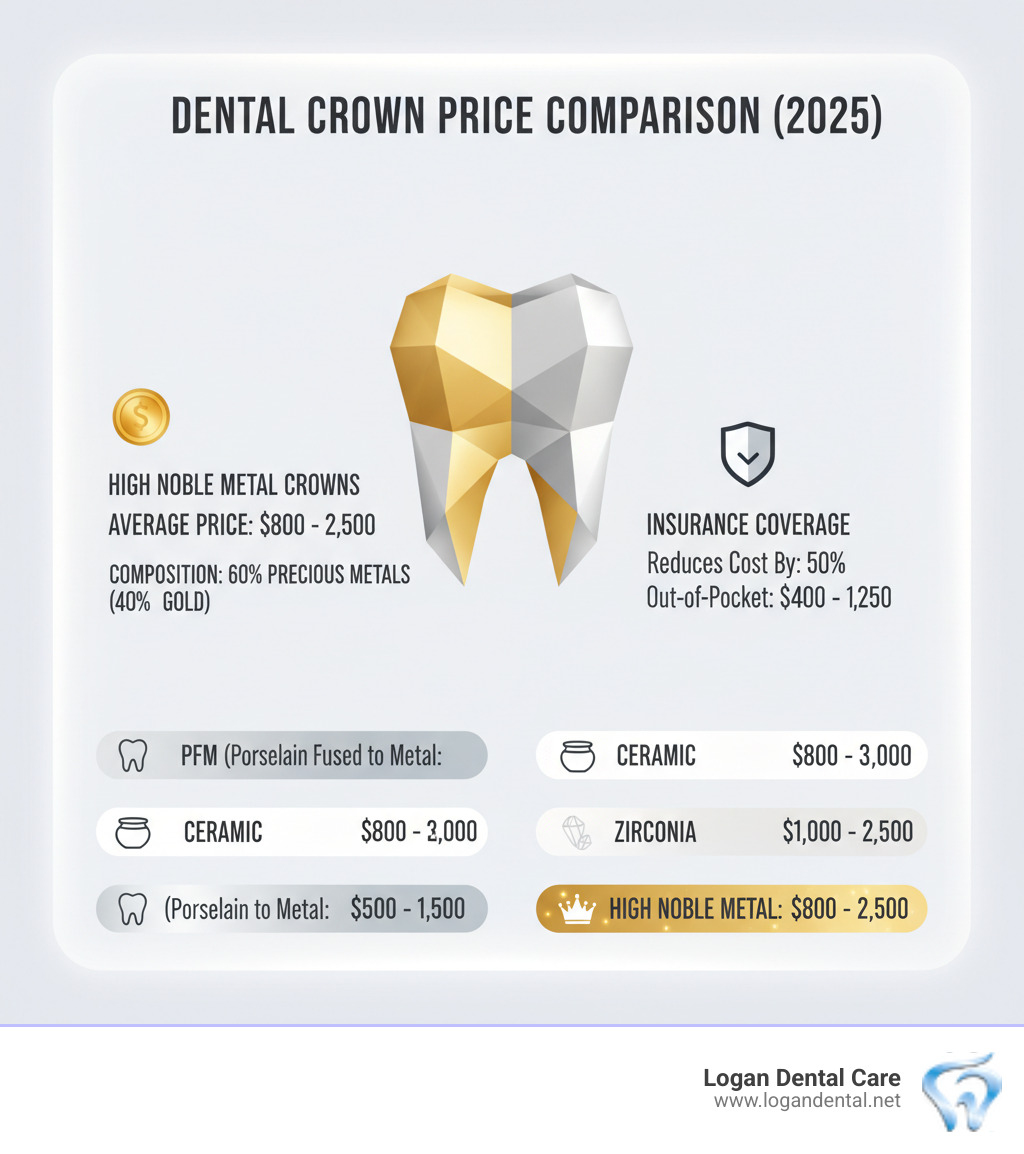
When you need a dental crown, understanding the high noble metal crown price is crucial. These premium restorations typically cost between $800 and $2,500 per tooth. They contain at least 60% precious metals (with a minimum of 40% gold), making them incredibly durable—often lasting 30 years or more—but also more expensive than other options.
Quick Price Breakdown:
- With Insurance: Often 50% coverage, bringing your out-of-pocket cost to $400-$1,250
- Without Insurance: Full cost of $800-$2,500
- 2020 ADA Survey Average: $1,121-$1,169 for a 3/4 cast high noble metal crown
- Additional Costs: May include exams, X-rays, and tooth preparation
Understanding these costs upfront helps you plan financially. While the price tag might seem high, these crowns offer proven longevity and require minimal tooth removal. The final cost varies based on your specific needs, such as preliminary work like a root canal, fluctuating gold prices, and your geographic location. A crown in a major city often costs more than in a smaller town like Bellefontaine.
At Logan Dental Care, we believe in making sure you understand all your treatment options, including the costs associated with different types of dental crowns. We're here to guide you through the process of choosing a dental cap for a damaged tooth, ensuring you feel confident and informed. Let's explore what makes high noble metal crowns a "golden standard" in dental care.
Understanding High Noble Metal Crowns: Composition, Benefits, and Procedure
A dental crown is a custom-made cap that fits over a damaged tooth, restoring its shape, size, and strength. Among the available materials, high noble metals have been the gold standard for generations.
What Defines a "High Noble" Dental Crown?
The term "high noble" is a classification based on precious metal content. A high noble metal crown must contain at least 60% precious metals by weight, with a minimum of 40% gold. These metals, including gold, platinum, and palladium, are blended with others to create a strong, workable alloy. This is distinct from "noble" alloys (at least 25% precious metal) and "base metal" alloys (less than 25%).
Dentists prefer high noble metals for three key reasons:
- Biocompatibility: Your body accepts them with a very low risk of allergic reaction or gum irritation.
- Corrosion Resistance: They stand up beautifully to the warm, wet, acidic environment of your mouth.
- Workability: They can be shaped with high precision for a perfect fit.
For more detailed information about dental crowns and their classifications, the American Dental Association offers excellent resources.
The Pros and Cons: Best Durability vs. Aesthetics
Every dental restoration has trade-offs. Here's a look at the pros and cons of high noble metal crowns.
Advantages:
- Best Durability: They offer best strength, handling chewing forces without chipping or cracking. A high noble metal crown can easily last 30 years or more, making the initial high noble metal crown price a worthwhile investment.
- Preserves Tooth Structure: They require less removal of your natural tooth compared to porcelain or ceramic options.
- Gentle on Opposing Teeth: They wear at a rate similar to natural enamel, protecting the teeth they bite against.
Disadvantages:
- Metallic Color: The main drawback is aesthetics. The gold or silver color makes them best suited for back molars, where they aren't visible.
- Upfront Cost: Due to the precious metal content, the initial investment can be higher than other options, and prices can fluctuate with the metal market.
If you're considering a crown after a root canal, understanding how different crown types fit into your overall treatment plan is important. Our guide on root canals and crowns walks you through those connections.
The Two-Visit Crown Placement Process
Getting a high noble metal crown is typically a two-visit process to ensure a perfect, custom fit.

Visit 1: Preparation
- After a consultation and X-rays, the area is numbed.
- The dentist reshapes the tooth, removing decay and creating space for the crown. High noble crowns require minimal tooth removal.
- An impression (mold or digital scan) of the tooth is taken and sent to a dental lab.
- A temporary crown is placed to protect the tooth while your permanent one is crafted.
Visit 2: Placement
- About two to three weeks later, your permanent crown is ready.
- The temporary crown is removed, and the tooth is cleaned.
- The dentist checks the fit and bite of the new high noble metal crown, making any necessary adjustments.
- Once the fit is perfect, the crown is permanently cemented into place.
This careful process ensures you receive a custom restoration built to last for decades. At Logan Dental Care, we take the time to do it right because we're treating you like family.
Breaking Down the High Noble Metal Crown Price and Making Your Decision
Now that we understand what high noble metal crowns are, let's talk about the cost. We know the high noble metal crown price is a significant consideration, and we believe in being transparent about what you can expect to pay.
What is the Typical High Noble Metal Crown Price?
The cost of a high noble metal crown typically ranges from $800 to $2,500 per tooth. The 2020 American Dental Association survey found an average cost of around $1,121 to $1,169.

Without insurance, you would pay the full amount. However, many dental insurance plans cover about 50% of the cost for restorative work, significantly reducing your out-of-pocket expense.
That the price can be a moving target due to the fluctuating market cost of precious metals. Additionally, the total cost will increase if preliminary work is needed, such as a root canal. For a broader look at what crowns cost, take a look at our Dental Crown Cost article.
Factors That Influence the Final Cost of Your Crown
Several factors influence your specific high noble metal crown price:
- Geographic Location: Costs in major cities are typically higher than in smaller communities like Bellefontaine.
- Dentist's Experience: Specialists with advanced training may have higher fees, which often corresponds with expertise.
- Case Complexity: A crown on a hard-to-reach or severely damaged tooth will cost more than a straightforward procedure.
- Preliminary Treatments: The total investment increases if you need a root canal, core build-up, or gum treatments before the crown is placed.
- Dental Insurance: Your coverage depends on your specific plan's details (often 50-80% coverage) and whether your dentist is in-network or out-of-network. At Logan Dental Care, we accept most PPO plans and help you steer your benefits.
How the High Noble Metal Crown Price Compares to Other Options
Choosing a crown involves balancing cost, durability, and aesthetics. Here’s how high noble metal crowns compare to other popular options.
| Crown Type | Cost (Average Per Tooth) | Durability | Aesthetics | Best Use |
|---|---|---|---|---|
| High Noble Metal | $800 - $2,500 | Excellent (30+ years) | Metallic (not tooth-colored) | Posterior teeth (molars) where strength and longevity are paramount, and visible color is not a concern. Ideal for patients with heavy bites or bruxism. |
| Porcelain-Fused-to-Metal (PFM) | $500 - $1,500 | Very Good (10-15 years, metal base) | Good (porcelain exterior, but metal can show) | Can be used for both front and back teeth. Offers a balance of strength and aesthetics. Less expensive than all-ceramic or high noble. Potential for a dark line at the gumline over time. |
| All-Ceramic/Porcelain | $800 - $3,000 | Good (5-15 years, can chip/fracture) | Excellent (most natural appearance) | Front teeth where aesthetics are the primary concern. Biocompatible and metal-free. Less durable than metal options, may not be recommended for heavy biting surfaces. Ceramic Teeth Cap |
| Zirconia | $1,000 - $2,500 | Excellent (15+ years, extremely strong) | Very Good (natural-looking, but can be opaque) | Both front and back teeth, especially for patients needing high strength and good aesthetics. Often considered a "metal-free" alternative to PFM. Can be challenging to adjust and may wear opposing teeth if not polished properly. Zirconia is known to be ten times stronger than natural enamel. |
- Porcelain-fused-to-metal (PFM) crowns ($500 - $1,500) offer a good balance of strength and tooth-colored appearance, but a dark metal line can sometimes become visible at the gumline.
- All-ceramic or porcelain crowns ($800 - $3,000) provide the best aesthetics and are ideal for front teeth. However, they are less durable than metal-based options. Learn more in our article on the Ceramic Teeth Cap.
- Zirconia crowns ($1,000 - $2,500) are extremely strong and look natural, making them a popular metal-free choice for both front and back teeth.
The Cleveland Clinic offers helpful general crown cost information from Cleveland Clinic.
While the high noble metal crown price may be higher upfront, its remarkable longevity of 30+ years often makes it the most cost-effective option long-term. At Logan Dental Care, we help you weigh all the factors to make an informed decision. We'd love to discuss your options in our Crowns and Bridges services.
Conclusion
Choosing the right dental crown is a key decision for your long-term oral health. High noble metal crowns have earned their "golden standard" reputation for a reason: their superior durability, longevity, and biocompatibility make them an excellent choice, especially for back teeth.
While the high noble metal crown price may seem higher initially, a restoration that can last 30 years or more is often the most cost-effective choice over time. It's an investment in your smile's future.

At Logan Dental Care, we believe in transparent, family-focused care. We take the time to explain your options in plain language, helping you make decisions that work for your life and budget right here in Bellefontaine, Ohio. We'll also help you steer your insurance benefits to maximize your coverage.
Ready to take the next step toward a stronger, healthier smile? We'd love to discuss your specific needs in a personalized consultation.
Contact Logan Dental Care today to schedule your consultation.