
Clear Aligners for Teeth: The Transparent Truth About Straightening
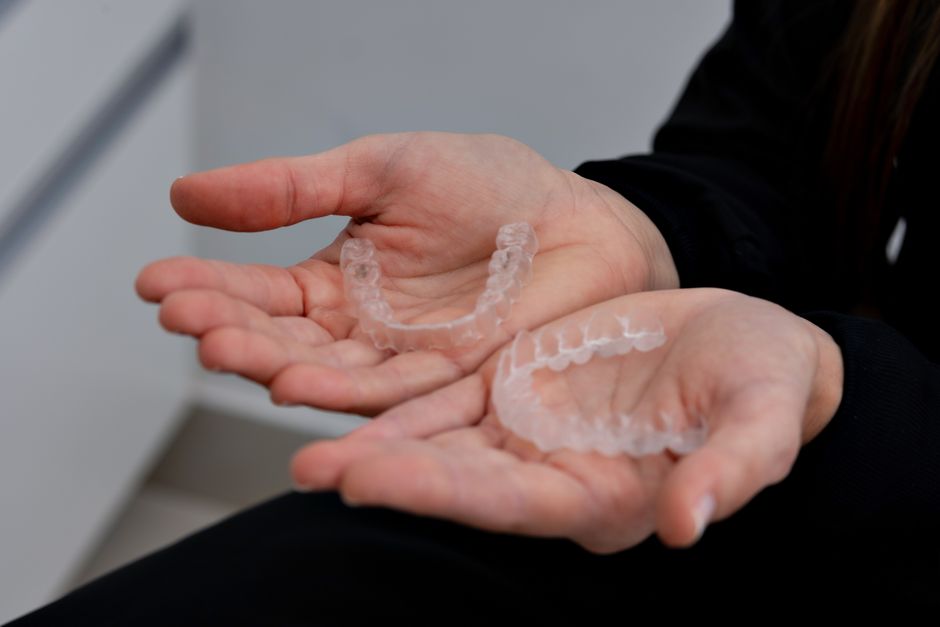
Why 75% of Americans Could Benefit from Clear Aligners for Teeth
Clear aligners for teeth are one of the most popular ways to straighten your smile today - and for good reason. They're nearly invisible, removable, and comfortable enough to wear every day without disrupting your life.
Here's a quick look at what you need to know:
- What are they? Custom plastic trays that gently move teeth into place.
- Who are they for? Kids 6+, teens, and adults with mild to moderate alignment needs.
- How long does treatment take? Usually 6 to 18 months, depending on your case.
- Are they noticeable? Not much. They are nearly invisible when worn.
- Can I eat normally? Yes. Just remove them for meals and drinks.
- Does insurance help? Often, yes. Some plans cover up to $3,000.
An estimated 75% of Americans have some form of misaligned bite. That's a lot of people living with crooked teeth, gaps, or bite issues - many of whom assume fixing it means years in metal braces.
It doesn't have to be that way.
As of May 2026, clear aligner technology has advanced dramatically. Treatment is faster, more predictable, and more accessible than ever before. Whether you're a busy parent, a working adult, or looking into options for your child, clear aligners may be a better fit for your lifestyle than you think.
This guide walks you through everything - how they work, what they treat, what they cost, and how to decide if they're right for you.
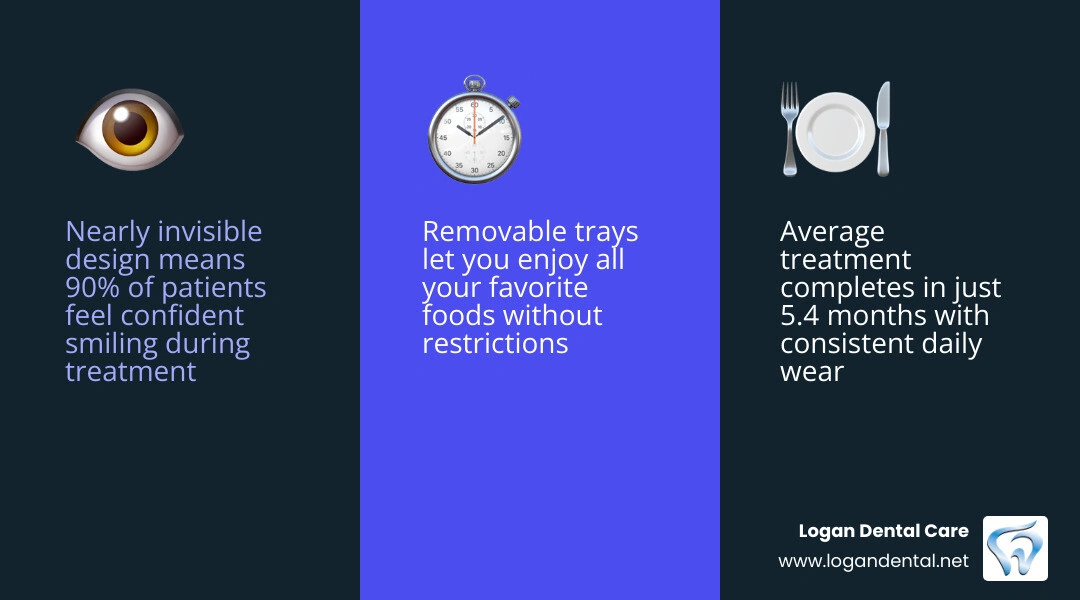
Clear aligners for teeth terms simplified:
How Clear Aligners for Teeth Work
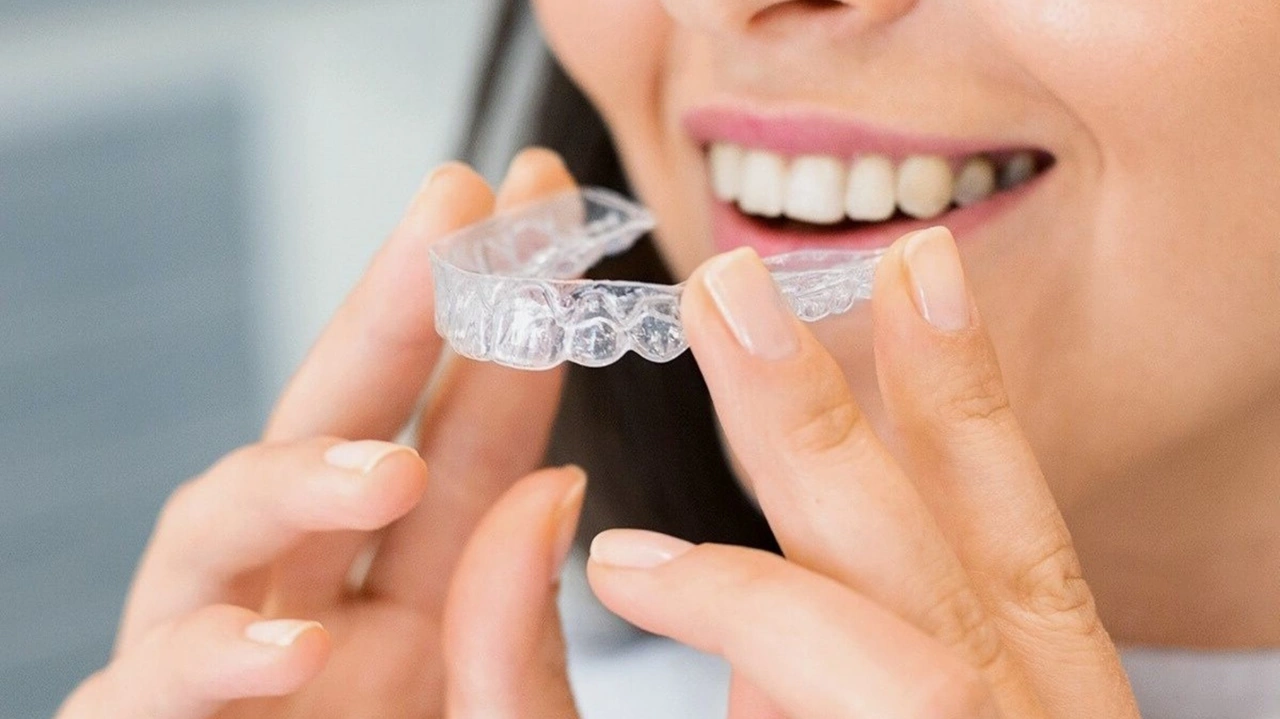
Clear aligners are a series of thin, custom-made trays that fit snugly over your teeth. Each tray is designed to move certain teeth a tiny amount at a time. You wear one set for the prescribed period, then switch to the next. Bit by bit, your smile shifts into a healthier position.
If you want a broader overview, see what clear aligners are.
Most patients wear aligners about 20 to 22 hours a day. That means they come out for meals, brushing, flossing, and special occasions if needed, but otherwise they should stay in place. Teeth are a little like toddlers: they do best with consistent guidance.
The Science of Tooth Movement
Orthodontic movement is not magic. It is biology.
When an aligner applies gentle, controlled pressure to a tooth, the periodontal ligament around that tooth responds. Bone on one side of the tooth is gradually resorbed, while new bone forms on the other side. This process is called bone remodeling, and it is what allows teeth to move safely over time.
That is one reason treatment planning matters so much. Each movement must be staged in the right order and with the right force. Our goal is not just straighter teeth, but a bite that functions comfortably and looks natural. You can also learn more in our article on what Invisalign is.
Custom Fabrication and Materials
Modern aligners are typically made from clear, BPA-free thermoplastic material. Before treatment begins, we capture digital images or scans of your teeth and bite. That data is used to create a 3D model and a step-by-step movement plan.
From there, a series of custom-fit trays is fabricated specifically for your mouth. This is why clear aligners are not one-size-fits-all. A proper fit is part of what makes treatment more comfortable and more predictable. For related reading, visit Align.
Clear Aligners vs. Traditional Braces
Choosing between aligners and braces depends on your goals, your bite, and how much flexibility you want in daily life. We also cover this in Braces vs Invisalign®: Which Orthodontic Treatment Is Right for You.
Clear aligners and traditional metal braces differ in a few practical ways:
- Appearance: Clear aligners are nearly invisible. Metal braces use visible brackets and wires.
- Removal: Aligners are removable. Braces stay fixed in place.
- Eating: Aligners come out for meals. Braces often require food restrictions.
- Brushing and flossing: Aligners make cleaning easier. Braces usually take more time to clean around.
- Comfort: Aligners use smooth plastic, which may cause less irritation for many patients. Braces can rub against cheeks and lips.
- Best for: Aligners often work well for mild to moderate cases, and some complex cases. Braces are often used for moderate to complex cases.
- Compliance: Aligners only work when worn consistently. Braces keep working because they are not removable.
Aesthetics and Lifestyle
This is where aligners shine. Because they are clear and low-profile, many adults and teens like that treatment is much less noticeable in school, at work, in photos, and during social events. Read more about invisible aligners.
They also fit more easily into active lifestyles. You remove them to eat, so there are no popcorn emergencies or surprise spinach situations trapped in brackets. They can also be more convenient for athletes because there are no metal edges rubbing against the inside of the mouth.
Treatment Efficiency and Results
Clear aligners can be very effective for mild to moderate crowding, spacing, and many common bite concerns, including cases with crowding or spacing up to about 6 mm. Some patients begin noticing changes within weeks, and certain mild cases may be completed in as little as 6 months. More typical treatment falls in the 6- to 18-month range.
That said, braces may still be the better option for significant tooth rotations, larger jaw discrepancies, severe crowding, impacted teeth, or complex bite corrections. In other words, aligners are powerful, but they are not a superhero cape for every orthodontic problem.
For more on broader planning, visit Orthodontic Treatment.
The Treatment Journey: From Consultation to Retention

Starting clear aligners is usually simpler than people expect. At Logan Dental Care, we focus on making the process feel clear, comfortable, and personalized for families in Bellefontaine and nearby communities. You can also explore SureSmile aligner benefits and process and our Orthodontics service page.
The Step-by-Step Process
Consultation and exam
We examine your teeth, gums, and bite to make sure aligners are appropriate. If you need a cleaning or other dental work first, we usually recommend completing that before treatment.Digital impressions or 3D scan
A digital scan creates a precise model of your smile without old-fashioned goopy impressions in many cases.Treatment planning
Your provider maps out how your teeth should move from start to finish. This includes estimated treatment time and whether you may need attachments or elastics.Aligner fabrication and delivery
Your custom trays are made and delivered. At your fitting visit, we make sure they fit properly and review wear instructions.Wearing your trays
Most patients wear aligners 22 hours per day and switch to a new set every 1 to 2 weeks, depending on the plan.Progress checks
We monitor progress through in-office visits and, in some cases, remote monitoring tools. This helps catch small issues before they become bigger delays.Refinements if needed
Some cases need additional trays at the end to fine-tune the result.
Attachments are small tooth-colored shapes bonded to certain teeth to help the aligners grip and create more precise movements. Elastics may also be used in some cases to improve bite correction. These extras may sound dramatic, but they are just tools that help treatment stay on track.
Post-Treatment and Long-Term Care
Once your active aligner phase is complete, retention begins. This is the part people are tempted to underestimate, and it is the part we gently but firmly do not recommend ignoring.
Teeth naturally want to drift. Retainers help keep them where they belong. Most patients start by wearing retainers more consistently, then move to nighttime wear long term based on our guidance.
To care for retainers or aligners:
- Rinse them when removed
- Clean them daily with mild soap and a soft-bristled toothbrush
- Use room-temperature water, not hot water
- Store them in a protective case when not in use
- Brush and floss before putting them back in
Candidacy and Investment
Clear aligners work well for many patients, but not every case should be treated the same way. A professional evaluation matters. For more background, see Invisalign® Clear Aligners: A Modern Solution for Straightening Teeth.
Who is a Candidate for Clear Aligners for Teeth?
Good candidates often include:
- Adults who want a discreet orthodontic option
- Teens who can wear aligners responsibly
- Some children age 6 and up in selected orthodontic situations
- Patients with mild to moderate crowding
- Patients with spacing or gaps
- Certain overbite, underbite, crossbite, and open bite cases
- Patients whose teeth have shifted after earlier orthodontic treatment
Braces may still be recommended for:
- Severe crowding
- Teeth that need major rotation
- Impacted teeth
- Significant jaw or skeletal discrepancies
- Cases where compliance may be difficult
If you are local, our Invisalign Bellefontaine article may also be helpful.
Factors Affecting the Cost of Clear Aligners for Teeth
We do not believe orthodontic decisions should be made on price alone, but cost is naturally part of the conversation.
In general, clear aligner treatment often falls in the same broad range as braces, with total cost influenced by:
- Case complexity
- Length of treatment
- Number of trays needed
- Whether refinements are required
- Use of attachments or elastics
- Type of professional oversight
- Insurance benefits
- FSA or HSA eligibility
- Available payment plans
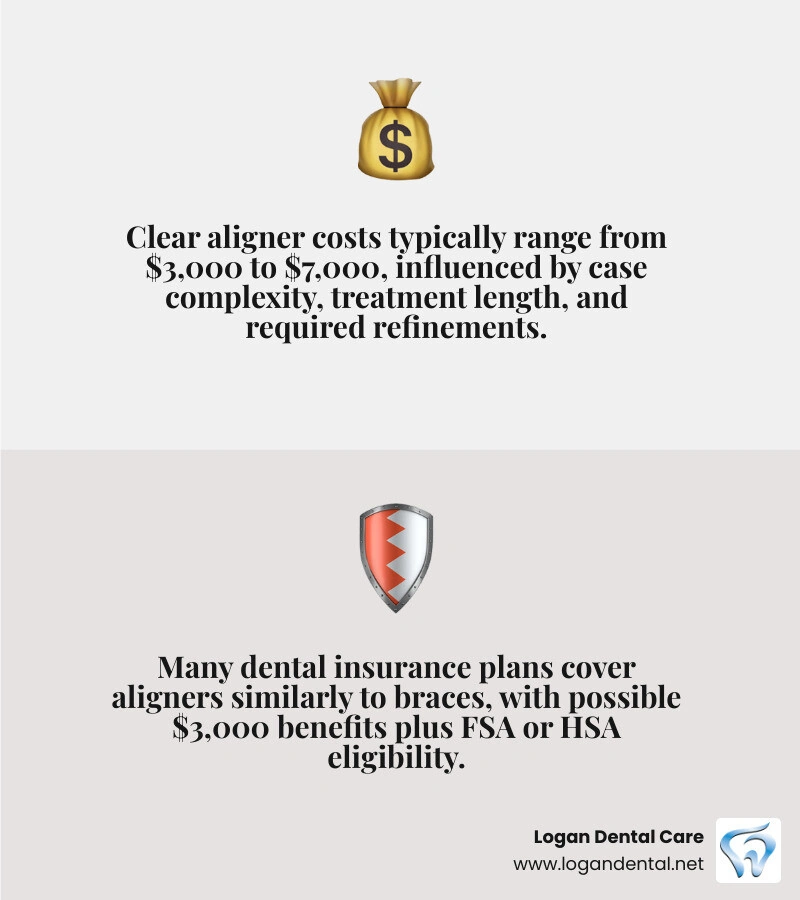
Many dental insurance plans that include orthodontic benefits may help with clear aligner treatment, and some plans cover aligners similarly to braces. During your consultation, we can review your benefits and discuss financing options available in our Bellefontaine office.
Frequently Asked Questions about Clear Aligners for Teeth
How long does treatment typically take?
Many patients finish in about 6 to 18 months, though mild cases may be faster. Some published aligner systems report average treatment times around 5.4 months for selected patients, but that is not universal. Your timeline depends on how complex your case is, how consistently you wear the trays, whether refinements are needed, and how your body responds biologically.
Are clear aligners as effective as metal braces?
For many mild to moderate orthodontic problems, yes. Clear aligners can produce excellent results when the case is chosen well and the patient wears them as directed. Research and manufacturer data also suggest high rates of finishing close to plan in properly managed cases. However, metal braces may still be more efficient for certain complex movements and major bite corrections. The best choice is the one that fits your teeth, not just your Instagram preferences.
How do I clean and maintain my aligners?
Keep it simple and consistent:
- Rinse aligners every time you remove them
- Clean them daily with a soft toothbrush and mild soap
- Avoid hot water, which can warp the plastic
- Do not eat with aligners in place
- Remove them for coffee, tea, soda, and anything sugary or deeply colored unless it is plain water
- Brush and floss before reinserting
- Keep them in a case, not wrapped in a napkin where they mysteriously become restaurant casualties
Conclusion
Clear aligners for teeth offer a modern, discreet way to straighten your smile without the look and feel of traditional braces. They can be an excellent option for children, teens, and adults, especially when convenience, appearance, and easier hygiene matter.
At Logan Dental Care, we are proud to provide family-focused, personalized care for Bellefontaine, West Liberty, Lakeview, Russells Point, Zanesfield, Valley And nearby Logan County communities. If you are thinking about orthodontic treatment, we would be happy to help you compare your options and decide what makes sense for your smile.
Ready to take the next step? Schedule your consultation for Orthodontics.