
The Real Reason You Should Skip the Milkshake After Your Tooth Extraction

What You Need to Know About Why No Dairy After Tooth Extraction
Why no dairy after tooth extraction is one of the most common questions patients ask after leaving the dentist's chair — and the short answer is this:
Dairy can interfere with healing in several key ways:
- Nausea and vomiting risk — Dairy combined with anesthesia or pain medication can upset your stomach. Vomiting can dislodge the blood clot that protects your extraction site.
- Bacterial growth — Dairy leaves a residue in your mouth that can feed bacteria near the open wound.
- Inflammation — For many people, especially the roughly one-third of Americans who are lactose intolerant, dairy can trigger an inflammatory response that slows healing.
- Medication interactions — Dairy can reduce the effectiveness of certain antibiotics prescribed after surgery.
Most dentists recommend avoiding dairy for at least 24 to 48 hours after a tooth extraction. Some situations call for a longer window — your dentist will let you know.
After a tooth extraction, your body immediately gets to work. A blood clot forms in the empty socket. That clot is everything — it shields the underlying bone and nerve from air, food, and bacteria. Anything that disturbs it can lead to a painful condition called dry socket.
That's why what you eat in those first hours and days matters more than most people expect. Dairy seems harmless — maybe even soothing. But it can quietly work against your recovery in ways that aren't obvious at first.
This guide breaks down exactly why dairy is a problem after extraction, what the science actually says, and what you can safely eat instead.
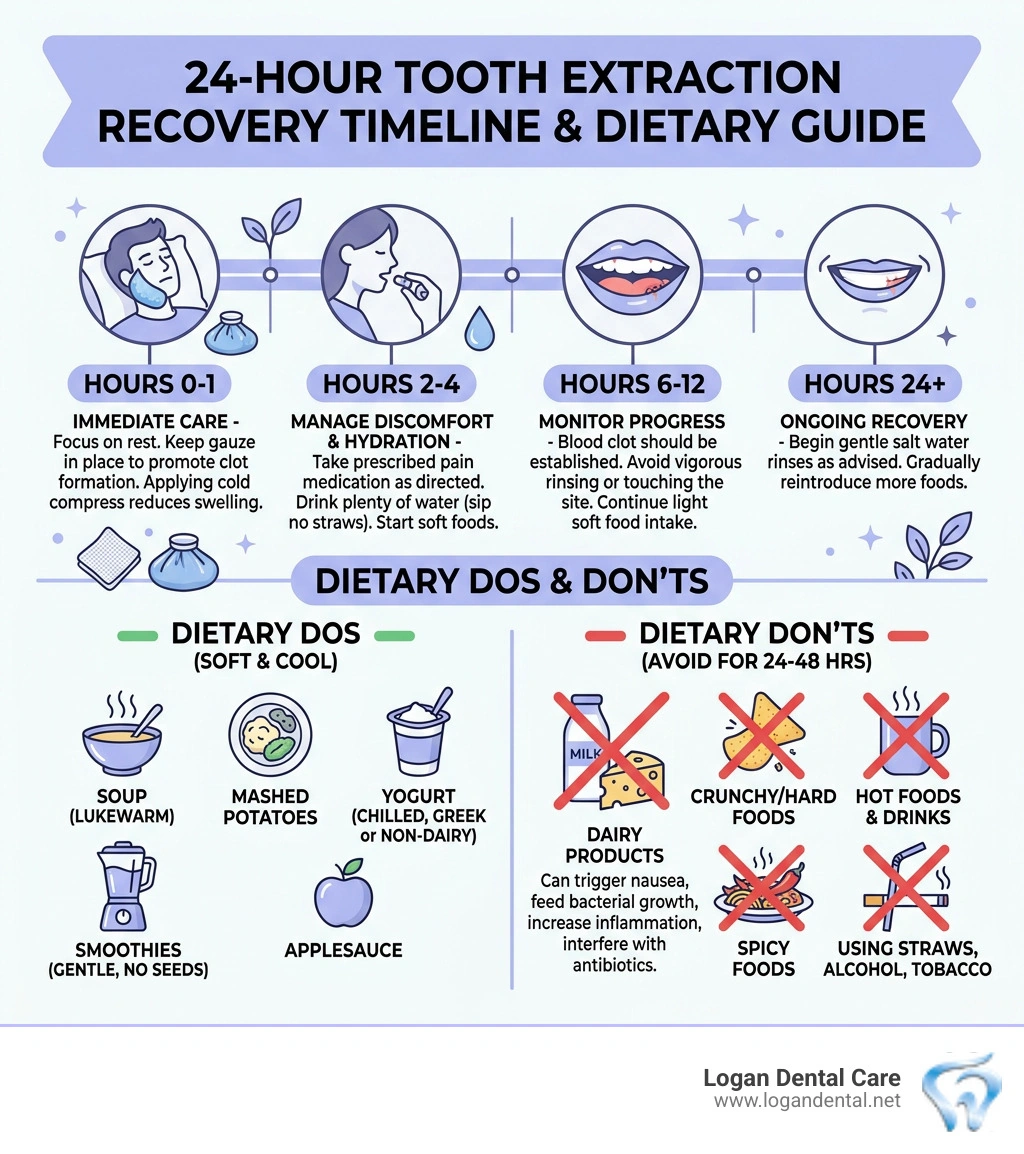
Why No Dairy After Tooth Extraction is a Standard Recommendation
When we perform tooth extractions in Bellefontaine, we prioritize your comfort and a speedy recovery. While a cold milkshake might sound like the perfect treat for a sore mouth, it is often the last thing your surgical site needs. The recommendation to avoid dairy isn't just a tradition; it is rooted in protecting the delicate healing process.
The primary goal after any tooth extraction is the preservation of the blood clot. This clot acts as a biological "scab" for the jawbone. If this clot is dislodged or fails to form, you may experience "dry socket," a condition where the bone and nerves are exposed, leading to intense pain.
Dairy products, particularly milk and cheese, can interfere with this process. One major concern is the interaction between dairy and the medications used during and after your procedure. If you received sedation or general anesthesia, your stomach is already sensitive. Consuming rich dairy products can trigger nausea. If that nausea leads to vomiting, the physical pressure and acidity can easily dislodge the blood clot, setting your recovery back significantly.
Furthermore, dairy contains lactic acid and natural sugars that can encourage bacterial growth. In an open oral wound, we want to keep the environment as clean as possible. Dairy leaves a thin, film-like residue in the mouth that acts as a magnet for bacteria, potentially leading to localized inflammation or infection. To ensure you stay on the right track, following these tooth extraction recovery tips is essential for a complication-free experience.
The Science Behind Dairy and Post-Surgical Complications
The "no dairy" rule isn't just about the physical state of your mouth; it’s also about how your body processes medicine. One of the most critical scientific reasons to skip the dairy involves antibiotic bioavailability.
Research shows that milk and dairy products can reduce the bioavailability of tetracyclines—a class of antibiotics sometimes used in dental care—by up to 80%. The calcium in dairy binds to the antibiotic in the digestive tract, preventing your body from absorbing the medicine. While common dental antibiotics like amoxicillin are less affected, the general rule of thumb is to keep dairy away from your medication schedule to ensure you are getting the full protective dose.
There is also the "mucus factor." Dairy is known to stimulate mucus production and thicken phlegm. For a patient who has just had oral surgery, an increase in phlegm can lead to persistent coughing or the need to clear the throat forcefully. This internal pressure is dangerous for a fresh extraction site and can disrupt the healing tissues.
Finally, dairy products are lipid-rich. This means they leave a film on the oral tissues that promotes "bacterial adherence." Essentially, the fats in milk make it easier for bacteria to stick to the surgical site and form a biofilm. If you find yourself in pain due to an infection or a dislodged clot, you may need emergency dental care to clean the site and restart the healing process.
Understanding the Risk of Infection and Why No Dairy After Tooth Extraction Matters
The oral microbiome is a delicate balance of "good" and "bad" bacteria. When you have a surgical wound, that balance is easily tipped. Dairy products serve as a perfect substrate (or food source) for bacteria that cause oral infections.
In some regions, particularly with non-UHT (unpasteurized or lightly pasteurized) milk, there is a risk of introducing live bacteria directly into the wound. While most milk in the United States is pasteurized, the sticky residue left behind by yogurt, milkshakes, and cheese still provides the sugar and protein that resident mouth bacteria need to thrive. Maintaining high standards of dental hygiene is harder when a dairy film is coating your teeth and the extraction site.
Lactose Intolerance and the Inflammatory Response
Did you know that approximately 33% of Americans—over one-third of the population—are lactose intolerant? For these individuals, dairy doesn't just cause a stomachache; it triggers a systemic inflammatory response.
When your body is fighting to digest something it can't process, it diverts energy away from healing your mouth. Furthermore, systemic inflammation can make the localized swelling around your jaw feel much worse. If you are among the millions who experience gut sensitivity to dairy, consuming it after surgery is a recipe for a slow, uncomfortable recovery.
Safe Alternatives and What to Eat Instead
Just because the milkshake is off the menu doesn't mean you have to go hungry! There are plenty of nutrient-dense, delicious alternatives that will keep you full without risking your dental health.
The Best Non-Dairy Recovery Foods:
- Plant-Based Smoothies: Use almond, soy, or oat milk. These provide a creamy texture without the dairy proteins that cause mucus or inflammation. (Remember: No straws!)
- Mashed Potatoes: Prepare them with broth or a dairy-free butter substitute for a comforting, soft meal.
- Scrambled Eggs: A fantastic source of protein that is easy to chew and gentle on the extraction site.
- Pureed Soups: Lukewarm butternut squash or tomato soup (without heavy cream) provides essential vitamins.
- Applesauce and Sorbet: Great for satisfying a sweet tooth while keeping the area cool to reduce swelling.
Instead of dairy, choose soft, non-dairy options that are easier on your healing mouth:
- Swap cow's milk for almond, soy, or oat milk
- Swap traditional yogurt for coconut or soy yogurt
- Swap ice cream for fruit sorbet or mashed frozen bananas
- Swap cheese for hummus or avocado mash
- Swap creamy soups for vegetable or bone broth
For our neighbors in Logan County, we always suggest stocking up on these items before your appointment at our Bellefontaine office. Having a "recovery station" ready at home makes it much easier to stick to your diet.
When to Safely Reintroduce Milk and Why No Dairy After Tooth Extraction is Temporary
The good news is that you won't have to skip the cheese forever. Most patients can begin to reintroduce dairy after the 72-hour milestone.
- First 24-48 Hours: Strict no-dairy policy. Stick to clear liquids and non-dairy soft foods.
- Day 3-5: You can gradually reintroduce soft dairy like room-temperature yogurt or soft cheese, provided you aren't experiencing unusual pain or swelling.
- Day 6 and Beyond: Most patients can return to their normal dairy intake, but always listen to your body. If a cold glass of milk causes a "zing" of sensitivity, wait another day or two.
Other Foods and Behaviors to Avoid for a Smooth Recovery
While dairy is a major player in recovery, it isn't the only thing that can cause trouble. To protect that vital blood clot, you should also avoid:
- Straws: This is the #1 rule! The suction created by using a straw can pull the blood clot right out of the socket. Always sip directly from a cup.
- Spicy Foods: Compounds like capsaicin can irritate the raw tissue and increase blood flow to the area, leading to more swelling.
- Crunchy or Sharp Foods: Chips, nuts, and popcorn can physically poke the wound or get lodged in the socket, causing a painful infection.
- Alcohol and Carbonation: These can dissolve the developing blood clot and interact poorly with pain medications.
- Strenuous Activity: Keep your heart rate down for the first 48 hours. Excessive blood flow to the head can cause the extraction site to start bleeding again.
Frequently Asked Questions about Dairy and Dental Surgery
Can I eat yogurt after a tooth extraction?
We generally recommend waiting at least 48 to 72 hours. While yogurt is soft, it contains live active cultures and lactic acid. In a fresh wound, these can sometimes lead to irritation or bacterial imbalance. Once the initial healing phase has passed, plain, room-temperature yogurt can actually be a good way to restore gut health if you are taking antibiotics.
Does ice cream help with swelling if it is cold?
While the cold temperature of ice cream can feel soothing, the high sugar and dairy content make it a risky choice for the first two days. A better alternative is a dairy-free fruit sorbet or even a cold damp cloth held to the outside of your cheek. If you must have ice cream, wait until at least day three and choose a plain flavor without nuts or chocolate chunks.
What happens if I accidentally drink milk too soon?
Don't panic! If you had a sip of milk, simply rinse your mouth very gently with lukewarm salt water. Do not swish aggressively; just let the water roll around and spill out into the sink. Monitor the site for increased redness, swelling, or a foul taste, which could indicate the beginning of an infection.
Conclusion
At Logan Dental Care, we treat our patients like family. Whether you are coming in from Zanesfield, West Liberty, or right here in Bellefontaine, we want your recovery to be as boring and uneventful as possible—because in dentistry, "boring" means you are healing perfectly!
Skipping the dairy for a few days might feel like a chore, but it is a small price to pay for a mouth that heals quickly and without pain. By choosing non-dairy alternatives and protecting your blood clot, you are giving your body the best environment to repair itself.
If you have questions about an upcoming procedure or need to schedule your consultation for tooth extractions, our team is here to help. We combine modern technology with small-town warmth to ensure every patient feels comfortable and informed. Let us help you get back to your healthiest smile!