
Natural Root Canal Remedies
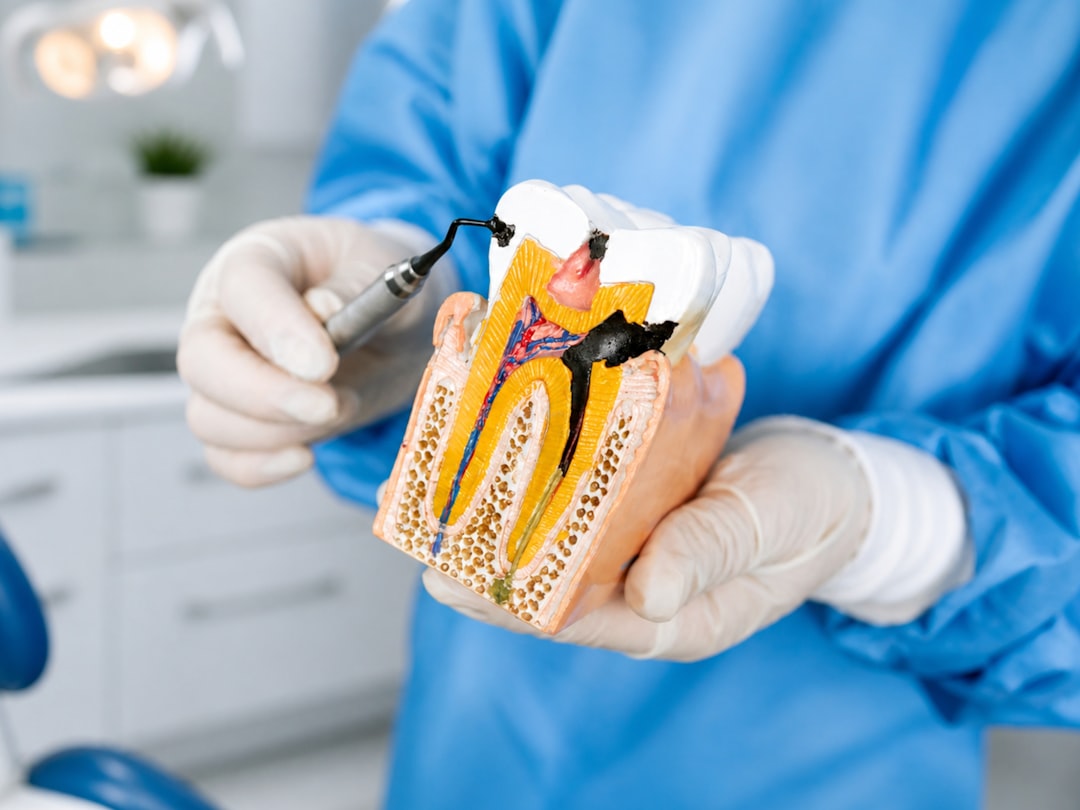
Are There Real Natural Root Canal Remedies? Here's What You Should Know First
Natural root canal remedies range from home symptom-relief options to clinically tested plant-based treatments used inside the tooth itself. Here's a quick overview:
Quick Answer: Common Natural Root Canal Remedies
Ozone therapy: May help disinfect early-stage problem areas. It can sometimes reduce the need for a root canal when the tooth is treated early.
Laser bacterial removal: Targets bacteria more precisely in certain cases. It may be an option for early infections, but it does not replace treatment for advanced root damage.
Vital pulp therapy: Best for mild pulp inflammation before the nerve tissue dies. If caught early, it may help preserve the tooth without a full root canal.
Clove oil or turmeric compress: May offer short-term toothache relief. These do not treat the source of a root canal infection.
Oil pulling with coconut oil: Can support general oral hygiene. It does not remove deep infection inside a tooth.
Saltwater rinse: May ease swelling and reduce surface bacteria. It is helpful for comfort, but it cannot replace dental care.
Herbal intracanal medicaments: Some plant-based materials are being studied for canal disinfection. They are still under clinical investigation and are not a proven at-home replacement.
Getting a root canal recommendation can stop you in your tracks. It's completely normal to wonder whether there's a gentler path forward — one that feels less invasive and more in line with how you approach your overall health.
The honest answer? It depends on how far the infection has progressed.
Some natural and holistic approaches do show real promise — especially in early-stage tooth decay or mild pulp inflammation. Others provide temporary relief but can't address what's happening deep inside the tooth. And in some cases, delaying professional treatment can turn a manageable problem into a serious health risk.
This guide breaks it all down clearly — what the research actually says, which remedies work (and which don't), and when it's time to stop waiting and call your dentist.
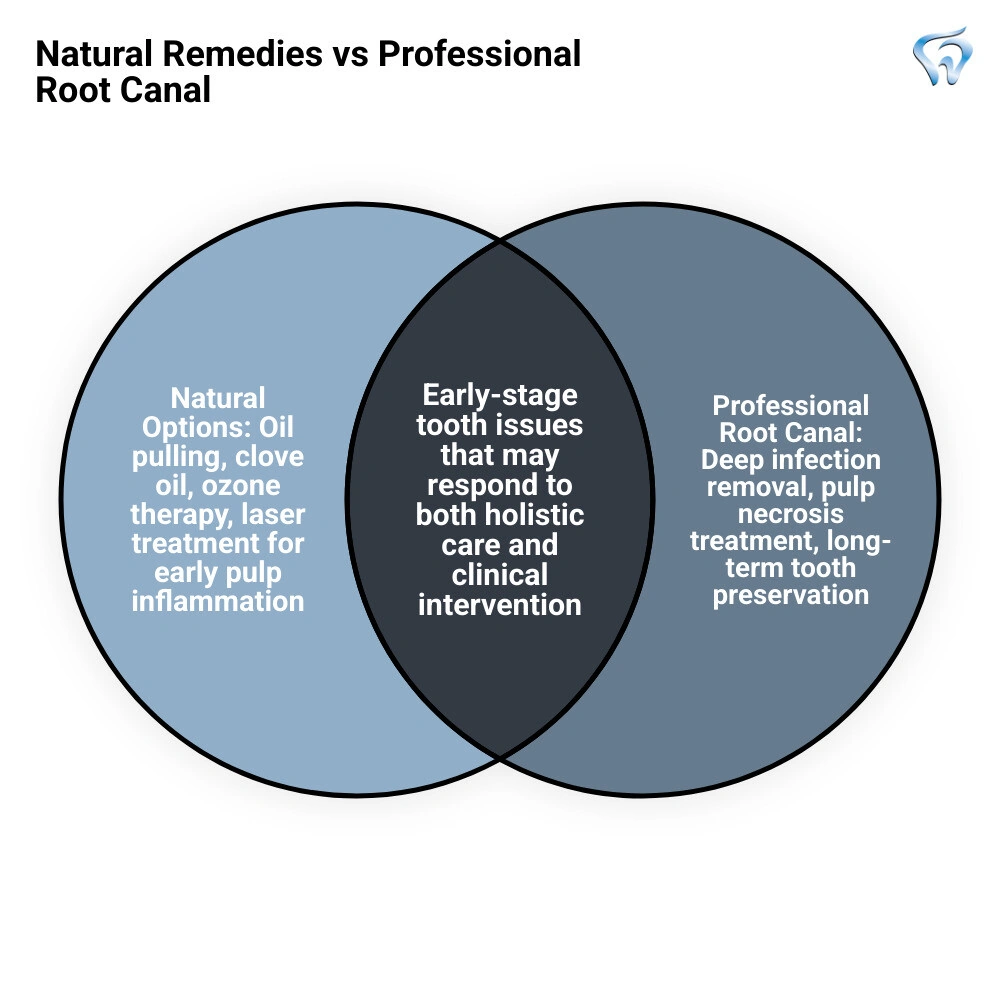
What Are Natural Root Canal Remedies?
When people search for natural root canal remedies, they are usually looking for ways to avoid the traditional drill-and-fill procedure. In the dental world, natural or holistic alternatives focus on preserving as much of the living tooth structure as possible, utilizing biocompatible materials, and supporting the body's natural healing capabilities.
For very early-stage decay or mild pulp irritation, conservative procedures like vital pulp therapy (including direct or indirect pulp capping and partial pulpotomies) can sometimes save the tooth's nerve. These therapies protect the pulp from bacteria and stimulate the tooth to heal itself by laying down new dentin.
However, once a tooth's inner pulp becomes deeply infected or dies, a standard Root Canal Treatment is often the only way to save the physical tooth structure. When faced with this situation, many patients weigh the pros and cons of a Root Canal vs Extraction. While extraction removes the infection, it leaves a gap that can cause surrounding teeth to shift, making preserving your natural tooth always the preferred first choice.
The Role of Biological Dentistry in Washington and Beyond
Biological and holistic dentistry practices have popularized the use of minimally invasive, chemical-free disinfection methods. Instead of relying solely on harsh synthetic chemicals, biological practices utilize natural elements like medical-grade ozone gas and targeted laser light.
These practices focus on:
- Biocompatible Materials: Restoring teeth with substances that are highly compatible with your body's immune system.
- Ozone Therapy: Using ozone gas to sterilize microscopic crevices in the tooth structure that traditional tools cannot reach.
- Laser Bacterial Removal: Utilizing concentrated light energy to vaporize harmful bacteria inside the canal. You can learn more about how this works in our Root Canal Laser Treatment Complete Guide.
While these biological concepts gained early popularity in coastal wellness hubs, modern family dental practices across the country—including right here in Bellefontaine, Ohio—are increasingly blending these gentle, patient-first philosophies with conventional endodontic care.
Top 5 Holistic and Natural Alternatives Explored
To help you understand your options, we have compiled a comparison of the most commonly discussed natural approaches versus conventional root canal therapy:
Ozone Therapy
Medical-grade O3 gas may be used in a dental setting to reduce bacteria and support local healing. It has the best fit for early-stage decay or mild pulp inflammation, not advanced root infections.Laser Therapy
Dental lasers use focused light energy to help reduce bacteria inside affected tooth structures. This can be useful as an adjunct to clinical treatment, especially in early to mid-stage infection.Oil Pulling
Swishing coconut or sesame oil may help lower plaque levels and support daily oral hygiene. But it cannot reach bacteria sealed inside an infected tooth root, so it is best for prevention only.Herbal Compresses
Clove oil, turmeric paste, or similar topical remedies may offer short-term relief from pain or inflammation. They can help manage symptoms temporarily, but they do not remove deep infection.Dietary Changes
Eating more mineral-rich foods and getting enough vitamins D and K2 can support tooth and bone health. Reducing processed sugar also helps lower future decay risk. This is best for long-term prevention and recovery support.
Evaluating the Efficacy of Natural Root Canal Remedies at Home
If you are currently dealing with a throbbing tooth, home remedies can be incredibly helpful for managing your symptoms while you arrange to see a dentist.
- Clove Oil: Clove contains eugenol, a natural anesthetic and antiseptic. Applying a drop diluted in a carrier oil (like coconut oil) to a cotton ball can provide rapid, temporary relief.
- Turmeric Compress: Known for its anti-inflammatory properties, a paste made of turmeric and water can soothe irritated gum tissue.
- Saltwater Rinse: Swishing with warm saltwater helps cleanse the mouth, draw out fluids, and reduce localized swelling.
While these home remedies are fantastic for temporary comfort, it is vital to remember they cannot cure an infection inside the tooth. If you are struggling with pain, read our tips on How to Get Rid of a Toothache Fast and explore other methods for Toothache Pain Relief.
Advanced Clinical Alternatives: Ozone and Laser Therapy
For patients seeking advanced, non-invasive clinical care, ozone and laser therapies represent the cutting edge of modern dentistry.
During ozone therapy, medical-grade ozone gas is applied directly to the tooth. Because ozone is a gas, it can penetrate deep into the microscopic tubules of the dentin, sterilizing the area without the need for heavy drilling.
Similarly, laser bacterial removal uses highly focused light wavelengths to target and destroy bacterial cell walls inside the root canal system without damaging the surrounding healthy tooth structure. This process is quiet, highly precise, and often requires far less local anesthesia. To see if this high-tech approach is right for you, check out our Root Canal Laser Treatment Complete Guide.
Scientific Evidence Behind Natural Intracanal Medicaments

When a dentist performs a root canal, they place a temporary medicament inside the cleaned canal to keep it sterile between appointments. Historically, synthetic compounds like calcium hydroxide have been the gold standard. However, in May 2026, researchers are heavily focusing on natural, plant-based alternatives to combat rising antibiotic resistance.
How Researchers Test Natural Root Canal Remedies in the Lab
Recent peer-reviewed in-vitro and clinical studies have yielded fascinating data on how natural extracts perform against Enterococcus faecalis (the stubborn bacterium most commonly blamed for root canal failures) and Candida albicans:
- Mangosteen & Chitosan: In a randomized clinical trial, combining ozone therapy with mangosteen and chitosan extracts achieved an impressive 84.57% reduction in Enterococcus faecalis colony-forming units (CFUs) after 7 days of treatment.
- Sea Buckthorn: An in-vitro study evaluating a novel sea buckthorn extract-based herbal medicament showed the lowest CFU counts against E. faecalis when compared directly to standard calcium hydroxide, 2% chlorhexidine gel, and their combinations.
- Cashew Apple & Guava Leaf: Agar diffusion tests revealed that cashew apple and guava leaf extracts demonstrated statistically significant antimicrobial activity against both E. faecalis and C. albicans, outperforming several other natural extracts.
- Pandan Leaf Extract: When pandan leaf extract (at a concentration of 32 mg/mL) was combined with calcium hydroxide, researchers observed enhanced antibacterial efficacy against E. faecalis and a significant boost in dentin remineralization.
- Mustard Gel: In a laboratory study using extracted teeth, mustard gel reduced E. faecalis bacterial counts to a median of 400 CFU/ml, compared to 1,550 CFU/ml in teeth treated with traditional calcium hydroxide paste after one week.
- Black Seed Oil & Bactil: Research comparing natural products to standard 2.5% sodium hypochlorite (bleach) found that only 0.4% black seed oil and 0.2% Bactil achieved minimum bactericidal concentrations comparable to the conventional chemical irrigant.
While these laboratory findings are incredibly exciting, they are currently used as adjuncts to professional treatment rather than DIY home remedies.
The Risks of Relying Solely on Natural Alternatives
It is easy to see why the idea of treating a tooth infection entirely at home with essential oils or dietary changes is appealing. However, relying solely on natural remedies for a deep, established infection carries severe risks.
Once bacteria reach the dental pulp, the blood supply inside the tooth begins to shut down. Without a blood supply, your body’s immune cells—and any oral antibiotics or natural supplements you swallow—cannot physically reach the inside of the tooth to fight the infection.
If left untreated, the bacteria will eventually escape through the tip of the root, leading to:
- A Painful Tooth Abscess: A localized pocket of pus at the root tip.
- Jawbone Damage: The infection can dissolve the bone supporting your tooth.
- Systemic Infection: The bacteria can enter your bloodstream, potentially leading to life-threatening conditions.
Before letting fear delay your care, read our Root Canal Side Effects Complete Guide to understand the safety of modern procedures, and find peace of mind by answering the age-old question: Do Root Canals Hurt? (Spoiler: they are designed to relieve pain, not cause it!).
When to Seek Immediate Professional Dental Care
How do you know when your tooth has crossed the line from "mild inflammation" to "dental emergency"? You should seek Emergency Dental Care immediately if you experience any of the following warning signs:
- Severe, throbbing toothache that does not respond to over-the-counter pain medication.
- Extreme tooth pain where you can't sleep through the night (see our guide on handling Extreme Tooth Pain Cant Sleep).
- Sharp, lingering pain when biting down or chewing (learn more about Tooth Pain When Biting Down).
- Visible swelling in your gums, face, cheek, or neck.
- A pimple-like bump on your gums near the painful tooth.
- Darkening or discoloration of the painful tooth.
Frequently Asked Questions about Natural Root Canal Remedies
Can a root canal infection heal on its own with natural remedies?
No. Once a tooth reaches a state of irreversible pulpitis (where the nerve cannot recover) or pulp necrosis (where the nerve tissue has died), the infection cannot heal on its own. While natural remedies like warm saltwater or clove oil can provide temporary pain relief, they cannot penetrate the sealed chamber of the tooth to eliminate the bacteria. If your pain started with a simple cavity, reading about Toothache Due to Cavity can help you understand how decay progresses.
What is the most effective natural alternative to a root canal?
If caught in the very early stages of pulp inflammation, vital pulp therapy (such as pulp capping) combined with clinical ozone therapy or laser bacterial removal is the most effective biological alternative. These treatments disinfect the area and encourage the nerve to heal. However, if the infection is deep, the only true alternatives are a standard root canal followed by a protective crown (explained in Your Guide to Root Canals and Crowns) or extracting the tooth entirely.
Are natural intracanal medicaments used in standard dental practices?
While calcium hydroxide remains the clinical standard, holistic and biological endodontists are increasingly integrating herbal extracts like tea tree oil, triple antibiotic pastes, and ozone gas into their disinfection protocols. These natural agents are backed by promising clinical trials, but they are always applied by a licensed dental professional during a controlled Root Canal Treatment Procedure Step-by-Step to ensure maximum safety and efficacy.
Conclusion
When it comes to your smile, preventive care and early intervention are your absolute best defenses. Catching a cavity early means you can avoid the need for a root canal altogether.
At Logan Dental Care, we are committed to providing comfortable, high-quality family dentistry to our neighbors in Bellefontaine, Ohio, and surrounding communities like West Liberty, Zanesfield, and Russels Point. We believe in treating you like family, offering transparent guidance, and balancing modern dental technology with a warm, supportive atmosphere.
If you are experiencing tooth pain or want to discuss your options for conservative, comfortable endodontic care, we are here to help. Schedule an appointment today to explore our personalized Root Canal Treatment Services.