
Quick Guide to Emergency Dentist Visits for Missing Fillings

Act Quickly When a Filling Falls Out
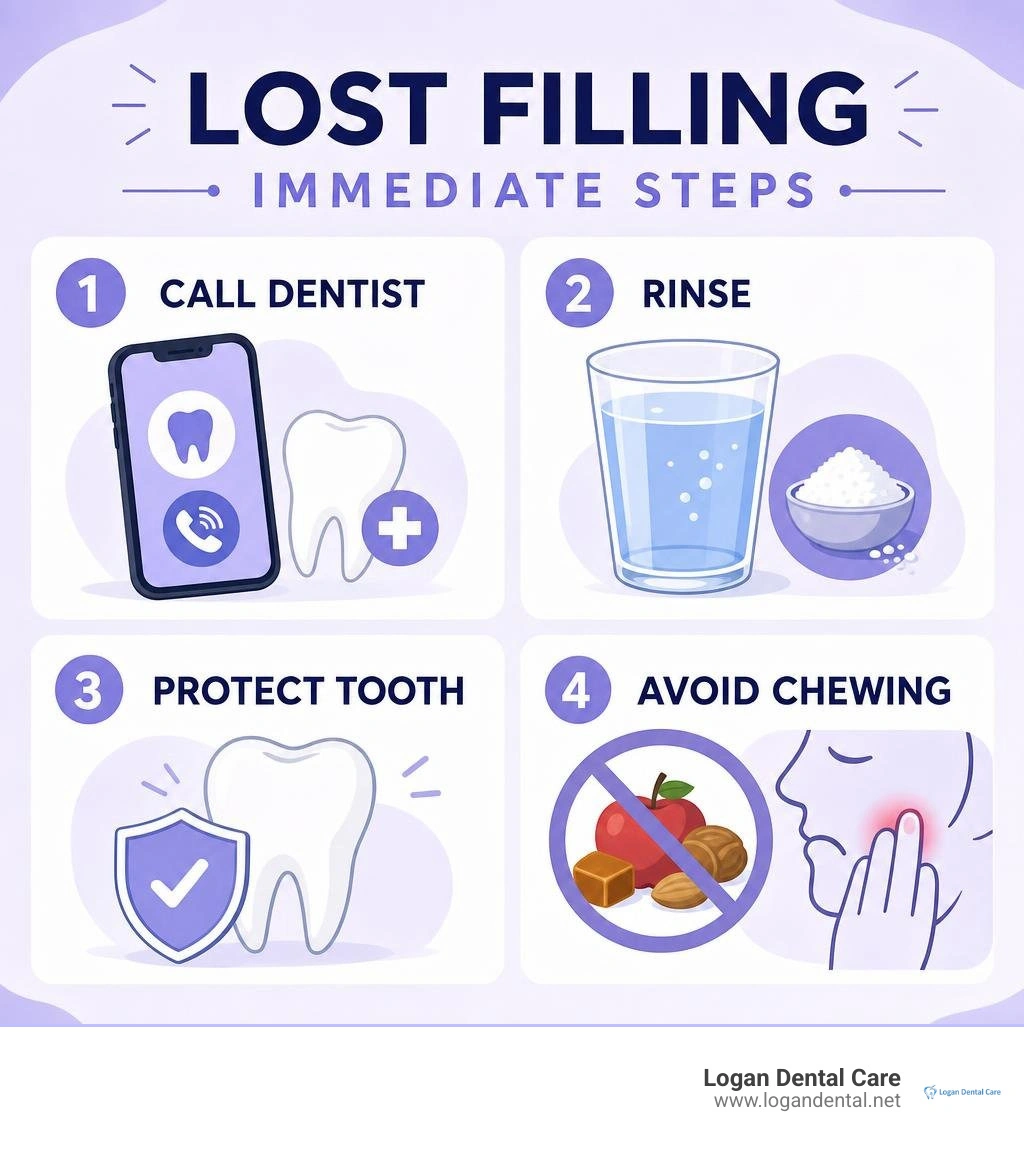
A lost filling needs prompt dental care. Call a lost filling emergency dentist as soon as you can, ideally the same day or within 24 to 48 hours. Until you are seen, rinse gently with warm salt water, avoid chewing on that side, and stay away from hard, sticky, very hot, very cold, or sugary foods.
A missing filling leaves part of the tooth exposed. That can cause sharp sensitivity, trap food, and allow new decay to grow faster. It may not be a life-threatening emergency, but severe pain, swelling, fever, trouble swallowing, or trouble breathing requires urgent help. Go to the ER for swelling that affects breathing or swallowing, heavy bleeding, or serious facial injury.
At Logan Dental Care, our family-focused team serves Bellefontaine and Logan County at 1021 N. Main Street in Bellefontaine, Ohio. We are accredited members of the American Dental Association and Ohio Dental Association and hold an A+ BBB rating; please note that we do not offer payment plans or sedation dentistry.
Relevant articles related to lost filling emergency dentist:
When to See a Lost Filling Emergency Dentist
When a restoration dislodges while you are enjoying a meal, it can feel like a sudden shock. While a missing restoration might not always trigger intense discomfort right away, it leaves the vulnerable inner layers of your tooth exposed to bacteria, saliva, and biting pressure. Knowing when to call a professional makes all the difference in preserving your natural tooth structure.
Our emergency dental care services guide outlines how quickly oral conditions can evolve when protective barriers are compromised. Without a filling sealing off the inner tooth, microscopic food debris and oral bacteria penetrate deep into the space. What begins as a small void can rapidly turn into deep, secondary decay underneath the remaining enamel. Prompt clinical evaluation ensures the tooth is cleaned and resealed before complex complications develop.
Risks of Delaying Treatment for an Exposed Tooth
Underneath the hard outer enamel lies dentin, a softer, porous layer containing thousands of microscopic fluid-filled channels leading directly to the tooth pulp. Dentin decays roughly eight times faster than enamel once exposed. Because this layer offers far less resistance to acids produced by oral bacteria, a tooth that was stable yesterday can develop a deep new cavity within days of filling loss.
Delaying care past 48 hours dramatically elevates the risk of infection reaching the delicate nerve tissue inside the pulp chamber. Furthermore, a hollowed-out tooth lacks structural support. Biting down normally on an unsupported enamel wall can cause the tooth to fracture below the gumline, potentially turning a simple repair into an extraction.
Evaluating Tooth Sensitivity with a Lost Filling Emergency Dentist
Tooth sensitivity serves as an early warning system. When dentin is exposed, temperature changes from hot coffee or cold water cause fluid movement within the dentin channels, triggering nerve discomfort. You might also notice a sharp twinge when biting down or a lingering ache after eating sweets.
However, the absence of pain does not mean your tooth is safe. Silent decay can advance steadily without noticeable discomfort until it reaches the nerve. Reviewing our resource on handling dental emergencies your guide to urgent oral care can help you monitor subtle symptoms like localized gum tenderness or pressure sensitivity before severe inflammation takes hold.
Immediate First-Aid Steps While Waiting for Care
Taking proper steps at home protects the tooth and minimizes discomfort until our team can see you.
Here is a straightforward first-aid protocol to follow right away:
- Rinse gently: Swish warm salt water (half a teaspoon of table salt in eight ounces of warm water) after meals to clear away loose debris and reduce bacteria.
- Adjust your diet: Stick to soft foods like yogurt, applesauce, and scrambled eggs.
- Chew on the opposite side: Avoid putting any direct biting pressure on the affected tooth.
- Protect sharp edges: If the remaining tooth wall feels sharp against your tongue or cheek, cover it with a tiny piece of dental wax or sugar-free gum.
To prevent further structural damage or sudden pain spikes, strictly avoid these foods while your tooth remains unsealed:
- Hard candies, nuts, and ice cubes
- Sticky sweets like caramels, taffy, and gummy candies
- Crunchy snacks like popcorn kernels, hard pretzels, and chips
- Extremely hot liquids and ice-cold beverages
- Highly acidic or heavily sugary foods and juices
What to Do at Home and What to Strictly Avoid
Maintain good oral hygiene, but brush very gently around the exposed tooth using a soft-bristled toothbrush to avoid irritating the area. If you experience mild discomfort, over-the-counter pain relievers such as ibuprofen or acetaminophen can provide temporary relief when taken as directed on the packaging. Applying a cold compress to your cheek in 15-minute intervals can also help soothe localized inflammation.
Never apply aspirin directly to the tooth or gum tissue, as this causes chemical burns. Most importantly, never attempt to fix a tooth with household superglue. Superglue contains harsh, cytotoxic chemicals that can destroy living nerve tissue, cause pulp death (necrosis), and make professional restorative care far more difficult and invasive.
Can You Use Over-the-Counter Temporary Filling Kits?
Drugstore temporary filling materials containing zinc oxide cement can serve as a helpful, short-term measure. These over-the-counter kits provide a mild mechanical seal that buffers exposed dentin against air, cold liquids, and loose food particles.
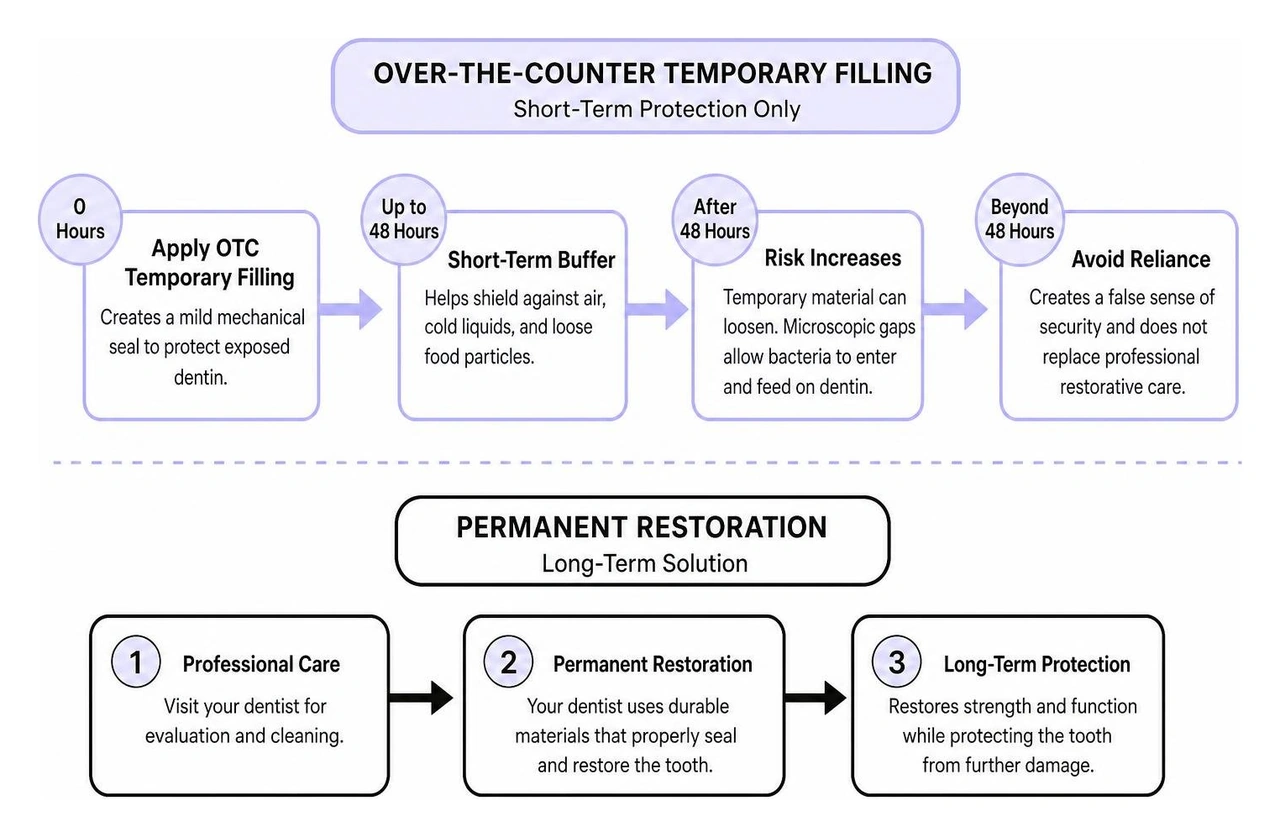
It is important to remember that temporary materials do not bond chemically to the tooth and are only designed to last a short time. Relying on an over-the-counter kit for more than 48 hours creates a false sense of security; microscopic gaps around the temporary seal still allow bacteria to enter and feed on unprotected dentin.
What to Expect During a Same-Day Repair Appointment
When you arrive at our Bellefontaine office, our priority is relieving your discomfort, assessing the tooth, and restoring your oral health in a comfortable environment.
Diagnostic Steps and Clinical Treatment Options
Your visit begins with a gentle visual examination and digital radiographs (X-rays) to inspect the tooth's root, pulp health, and bone structure. From there, we determine the best restorative path forward:
- Composite Resin Restorations: If the remaining tooth structure is sound and decay is minimal, we place a durable, tooth-colored composite filling.
- Tooth Bonding: For smaller chips or smoothing out rough margins, conservative bonding restores smooth contours and protects the enamel wall.
- Ceramic Inlays or Onlays: When a substantial portion of the chewing surface is missing but the tooth does not require full coverage, a custom porcelain onlay provides long-term strength.
- Full Protective Caps: If extensive tooth structure has fractured or decayed, a crown shields the entire remaining structure. Understanding the general dental crown cost and treatment steps ensures you make an informed decision for your smile.
- Root Canal Therapy: If recurrent decay has penetrated the pulp chamber causing severe nerve inflammation, cleaning out the infected canal restores health before placing a protective crown.
Booking Same-Day Treatment with a Lost Filling Emergency Dentist
During your appointment, local anesthesia is applied around the area so you remain entirely comfortable throughout the procedure. We gently remove any recurrent decay and thoroughly sanitize the interior of the tooth.
Next, a bonding adhesive is applied, followed by the tooth-colored composite resin. The resin is carefully sculpted to mirror the natural grooves of your tooth and cured in seconds using a specialized light. Finally, we check your bite alignment to ensure your upper and lower teeth meet evenly without placing excess pressure on your new restoration.
Replacement Costs, Insurance, and Long-Term Prevention
Restoring a missing filling quickly is far more cost-effective than addressing deep, advanced decay down the road.
Understanding Restoration Costs and Coverage
The cost to restore an exposed tooth depends on several factors, including the number of tooth surfaces involved, the location of the tooth in the mouth, and whether advanced procedures like crowns are required.
Most dental benefit plans classify routine fillings as basic restorative care, often covering a significant portion of the cost after your deductible is met. Major services like crowns or root canals are typically covered at different benefit tiers. To avoid surprise out-of-pocket expenses, our administrative team reviews your specific plan details with you before treatment begins.
For uninsured individuals and families across Logan County, we proudly offer our Smile Protection Savings Plan. This in-house membership provides predictable, transparent value and significant savings on preventive and restorative treatments, ensuring access to quality care without the complexity of traditional insurance.
How to Prevent Fillings from Falling Out
While modern composite fillings are strong and last many years, everyday wear and habits influence their lifespan:
- Manage Teeth Grinding (Bruxism): Clenching and grinding while sleeping is the leading cause of premature filling failure in adults. We fabricate custom-fitted nightguards to protect your restorations and natural enamel from excessive pressure.
- Protect Your Smile During Activity: Custom sports mouthguards are a smart investment for athletes of all ages, shielding teeth from sudden impact.
- Avoid Using Teeth as Tools: Never use your teeth to tear open packaging, bite fingernails, or crack ice.
- Maintain Routine Preventive Care: Regular checkups and cleanings allow our team to detect tiny marginal cracks, worn adhesive, or new decay around old restorations years before a filling suddenly falls out.
Frequently Asked Questions About Lost Fillings
How long can I safely wait before replacing a lost filling?
You should aim to have a lost filling replaced within 24 to 48 hours. If you are experiencing no pain, waiting up to 72 hours is generally manageable if you keep the area clean and avoid chewing on that side. Waiting longer than a week significantly increases the risk of rapid dentin decay, painful nerve inflammation (pulpitis), and more complex treatments.
When should I go to the ER instead of a dental clinic?
Visit a hospital emergency room immediately if you experience severe facial or jaw swelling, difficulty breathing or swallowing, a high fever, uncontrollable bleeding, or major trauma to your facial bones. These symptoms point to an airway-compromising infection or severe physical trauma that requires immediate medical stabilization.
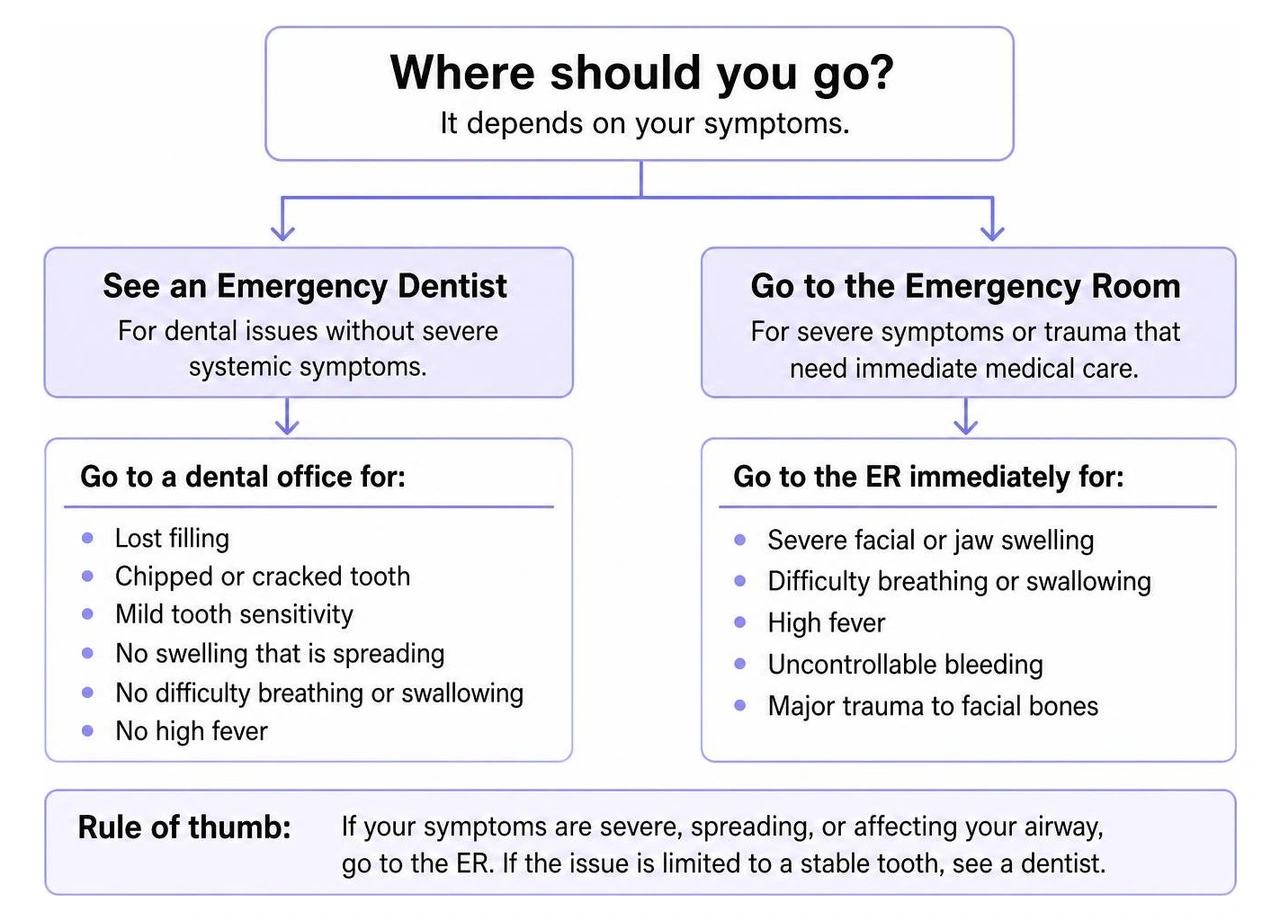
For a stable tooth with a lost filling, chipped enamel, or mild tooth sensitivity without spreading swelling, an emergency dental office is the appropriate destination. If you need urgent hospital medical care for severe symptoms, finding a nearby dental emergency room near me will guide you toward hospital-based emergency services.
Can superglue be used to fix a loose restoration at home?
No. You should never use superglue or household adhesives in your mouth. Superglue contains toxic compounds that burn oral tissues and can permanently destroy the living pulp inside your tooth, turning a straightforward filling repair into an emergency root canal or extraction.
Conclusion
A lost filling leaves your tooth exposed to rapid decay, sensitivity, and structural fractures, but prompt dental care restores your smile quickly and comfortably. Taking fast action prevents minor issues from developing into extensive oral health challenges.
At Logan Dental Care, we treat every patient like a member of our extended family. Located at 1021 N. Main Street in Bellefontaine, Ohio, our practice is an accredited member of the American Dental Association and the Ohio Dental Association, proudly maintaining an A+ BBB rating. To ensure complete clarity regarding our practice policies, please note that we do not offer payment plan options or sedation dentistry.
If you have lost a filling or have questions about restorative treatments, review our complete guide to dental crowns and costs or reach out to our welcoming team today to restore comfort and protection to your smile.