
How to Clean a Mouth Guard Retainer in Less Than an Hour a Day

Daily Step-by-Step Guide: How to Clean a Mouth Guard Retainer
Taking proper care of your appliance doesn't require a lot of time, special tools, or expensive supplies, but it does require regular consistency. By building a simple care routine into your daily schedule, you protect your overall oral health, prevent unwanted dental issues, and significantly extend the life of your guard or retainer.
When you practice basic oral hygiene, you remove harmful plaque and bacteria from your teeth before they cause decay or inflammation. The exact same principle applies directly to your oral appliances! Every night or athletic session, bacteria, salivary proteins, and debris collect on the surface of your guard, creating a thin layer known as biofilm.
According to a 2022 study in the Journal of Clinical Medicine, simply rinsing your appliance with cold tap water immediately after removing it can clear away up to 91% of salivary proteins. These proteins act like sticky glue for bacteria, so flushing them off right away gives biofilm far less opportunity to establish a foothold on your hard work.
Morning Routine: How to Clean a Mouth Guard Retainer Quickly
When you wake up in the morning or finish up sports practice, follow this simple step-by-step sequence to keep your appliance in top shape:
- Rinse immediately: As soon as you take your guard out of your mouth, run it under cool or lukewarm water. Never use hot or boiling water, as extreme heat can instantly warp the custom-molded fit.
- Brush gently: Use a separate soft-bristled toothbrush that is reserved exclusively for your retainer or night guard to prevent transferring lingering bacteria from your regular daily toothbrush.
- Apply mild liquid soap: Put a small drop of non-abrasive liquid dish soap or fragrance-free liquid hand soap directly onto your dedicated brush. Gently scrub every surface, crevice, ridge, and inner corner of the appliance.
- Rinse thoroughly: Wash away all remaining soap residue completely with cool water so your appliance tastes fresh and clean for its next scheduled use.
If you want to read more about specific daily tools, maintenance habits, and protective care techniques, check out this trusted guide on How to Clean a Retainer or Mouthguard.
Proper Air Drying Techniques Before Casing
Once your retainer or mouthguard is clean and rinsed, don't rush to snap the storage case closed! Storing a wet or damp appliance inside an airtight protective box creates a warm, humid environment where mold, mildew, and bacteria thrive rapidly. In fact, trapped humidity can boost bacterial and microbial growth by 30% in just 24 hours.
Instead, set your freshly washed appliance on a clean paper towel, microfiber cloth, or washcloth in a well-ventilated space. Allow it to air dry completely for 15 to 30 minutes. Once it is 100% dry to the touch, place it inside its protective ventilated storage container.
Safe Deep Cleaning Soaks and Products to Avoid
Even with thorough daily brushing, microscopic bacterial buildup and stubborn mineral deposits from your saliva can slowly accumulate on clear plastics over time. Incorporating a weekly deep soak into your self-care routine keeps your dental appliance crystal clear, smooth, and smelling fresh. Building this regular habit into your schedule is a prime example of daily dental care integrating oral health into your self-care routine.

Safe Effervescent Tablets, Hydrogen Peroxide, and Vinegar Soaks
You do not need harsh or aggressive industrial chemicals to perform a safe, highly effective deep clean. Here are three dentist-approved soaking methods you can safely use once a week to break down persistent buildup:
- Effervescent Cleaning Tablets: Drop a specialized retainer or mouthguard cleaning tablet into a glass of warm (never hot) water. Submerge your appliance completely for 5 to 15 minutes (or as directed on the manufacturer box), then give it a thorough rinse with cool water.
- Diluted White Vinegar Soak: Mix 1 part white distilled vinegar with 3 parts cool water in a clean cup. Soak your appliance for 15 to 30 minutes to dissolve tough mineral buildup, white calcium spots, and persistent tartar calcification.
- 3% Hydrogen Peroxide Soak: Mix equal parts standard 3% hydrogen peroxide and cool water in a container. Soak the guard for 15 to 30 minutes to sanitize the plastic material, kill deep-seated bacteria, and neutralize stubborn lingering odors.
For more details on weekly chemical sanitation and deep maintenance, explore How to Clean a Retainer or Mouthguard: A Step-by-Step Guide - Reuters Guide.
Damaging Chemicals, Toothpaste, and Boiling Water to Avoid
Knowing what not to use on your appliance is just as crucial as knowing how to clean a mouth guard retainer correctly. Avoid these common cleaning mistakes that routinely destroy appliances and shorten their lifespan:
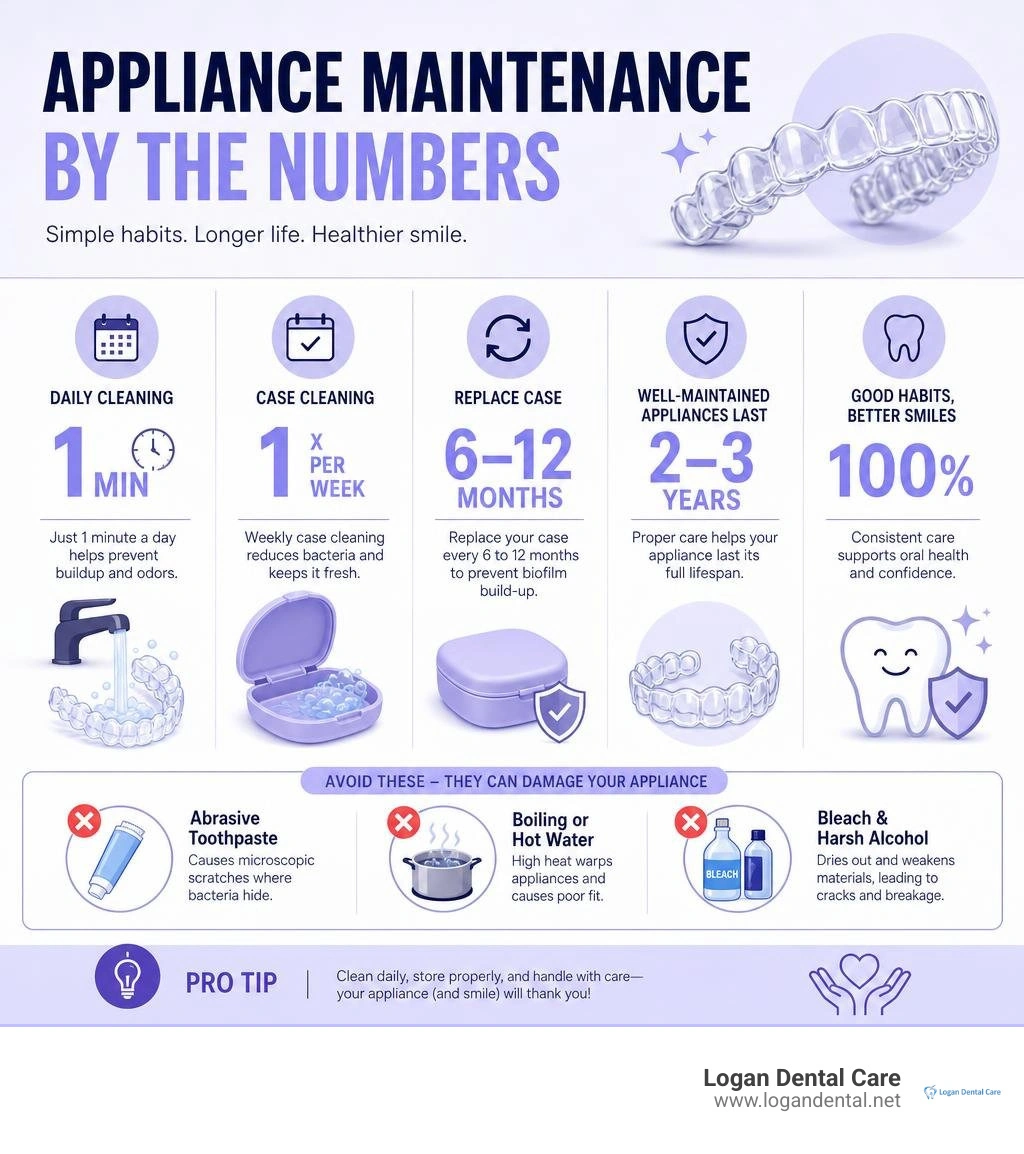
- Abrasive Toothpaste: Regular, tartar-control, and whitening toothpastes contain tiny abrasive particles (like hydrated silica or calcium carbonate). Scrubbing your plastic appliance with toothpaste creates microscopic scratches across the clear material. These micro-grooves act as safe havens where odor-causing bacteria hide and multiply.
- Boiling or Hot Water: High heat distorts thermoplastic materials almost instantly. Once an appliance warps or shrinks from hot water, it permanently loses its precise, custom-molded fit and can cause unwanted tooth movement or painful jaw alignment issues.
- Bleach and Harsh Alcohol: Never soak oral appliances in household bleach or alcohol-based mouthwashes. Harsh chemical alcohol dries out and degrades soft and hard plastics alike, causing them to yellow, crack, and break down prematurely.
Proper Storage Habits and Case Care
Cleaning your mouthguard or retainer every morning won't do much good if you pop it right back into a dirty, contaminated storage case. Taking proactive care of your protective storage container is a vital but often overlooked part of overall appliance maintenance.
Cleaning and Sanitizing Your Appliance Storage Case
Think of your retainer case as a direct extension of your daily oral hygiene routine. It collects residual saliva, airborne dust, household debris, and environmental bacteria every single time you put your guard away. Following solid oral health advice expert tips for a healthy mouth includes treating your storage case with equal care and attention:
- Wash weekly: Thoroughly scrub the inside and outside of your plastic case with warm, soapy water and a clean sponge at least once a week.
- Let it dry upside down: Leave the case wide open to air dry completely on a counter before placing your dried appliance inside.
- Replace periodically: Plan on swapping out your old storage case for a brand-new one every 6 to 12 months to prevent persistent biofilm and mold build-up from taking root in plastic pores.
Environmental Factors and Protecting Appliances from Damage
Where you leave your case matters just as much as how carefully you clean it. Keep these practical protective tips in mind to guard against accidental damage:
- Ensure adequate ventilation: Choose a rigid, sturdy, BPA-free case equipped with small ventilation holes so air can circulate freely while your guard rests.
- Avoid steam and excessive heat: Storing your case in a humid bathroom cabinet, next to a sunny window, or leaving it on a hot car dashboard can easily cause delicate dental plastics to warp over time.
- Keep high away from pets: Household dogs and cats consider used night guards and retainers delicious chew toys due to familiar scents! Always store your case high up on a closet shelf or tucked safely inside a closed drawer far out of reach of curious furry friends.
Frequently Asked Questions About Appliance Care
How to Clean a Mouth Guard Retainer That Still Smells Bad?
If your guard retains a funky or stale odor even after daily scrubbing, the smell usually stems from three main sources: trapped moisture inside an unventilated case, deep bacterial biofilm trapped in microscopic surface scratches, or hidden micro-cracks in the acrylic material.
To fix persistent odors, give your storage case a thorough soap-and-water scrub and leave it open to dry. Next, perform a two-step deep soak on your appliance: first submerge the guard in a 1:3 white vinegar solution for 30 minutes to dissolve mineral deposits, rinse thoroughly with cool water, and then soak it in equal parts 3% hydrogen peroxide and cool water for another 30 minutes to eliminate bacterial odors. If the unpleasant smell still persists after deep soaking, the appliance material may be worn out and ready for replacement.
Can I Use Mouthwash or Denture Tablets on My Appliance?
You can use non-colored, alcohol-free mouthwash for a fast 60-second rinse in a pinch, but avoid soaking your appliance in standard commercial mouthwash for long periods. The ethanol found in alcohol-based formulas dries out thermoplastic polymers, causing micro-fractures over time, while bright artificial dyes can permanently stain clear retainers green or blue. Denture tablets and specialized retainer cleaning tablets are safe, gentle, and highly effective choices for weekly deep soaking routines!
When Should I Replace My Retainer or Night Guard?
Even with meticulous care and cleaning habits, all custom oral appliances eventually reach the end of their functional lifespan:
- Custom Night Guards: Typically last between 3 to 5 years, though severe teeth grinders (bruxers) may wear through the durable material in 1 to 2 years.
- Clear Retainers and Aligners: Usually last 2 to 5 years before losing structural tension, clarity, or alignment hold.
- Athletic Mouthguards: Should be inspected regularly and replaced every sports season or school year, especially for growing children and teens whose dental arches are expanding.
If you spot visible cracks, tears, major discoloration, or if your appliance feels unusually loose or tight when worn, bring it in to be evaluated by a dental professional.
Keeping Your Smile Safe in Bellefontaine
Learning how to clean a mouth guard retainer is one of the easiest, most rewarding investments you can make in your long-term oral health and everyday comfort. With just a quick rinse and brush in the morning, complete air drying before storage, and a gentle weekly deep soak, you can keep your appliance clear, hygienic, and fresh for years to come.
At Logan Dental Care, we take pride in treating every patient like a valued member of our extended family. Located conveniently right at 1021 N. Main Street in Bellefontaine, Ohio, our friendly, approachable team is always here to help you and your loved ones enjoy personalized, high-quality care in a welcoming setting. Whether you need a check-up on your current night guard, a fresh custom athletic guard for the upcoming school sports season, or expert guidance on orthodontic retainers, we have your family covered under one roof.
If your night guard or retainer feels worn out, scratched, uncomfortable, or loose, come visit us! Check out our custom nightguards and mouthguards services online or give our Bellefontaine office a call today to schedule your next visit. We look forward to seeing your bright, healthy smile!