
The Complete Guide to High Quality Post Op Care

Why High Quality Post Op Care Makes the Difference in Recovery
High quality post op care is one of the most important factors in how well — and how quickly — a patient heals after surgery.
Here's a quick summary of what it means and why it matters:
- What it is: A structured, proactive approach to recovery that goes beyond basic monitoring. It includes patient education, early mobilization, pain management, wound care, and personalized follow-up.
- Who needs it: Anyone recovering from surgery — from major abdominal procedures to routine tooth extractions.
- Why it works: Research shows it can reduce wound infection rates from 36.7% to just 6.7%, cut hospital stays by nearly two days, and significantly improve quality of life scores.
- What's at risk without it: Complications like delirium, falls, infections, blood clots, and delayed healing — especially in older adults.
Surgery itself is only part of the equation. What happens after the procedure — in the hospital, at home, and at follow-up visits — often determines the final outcome.
For families in Bellefontaine and Logan County, understanding what good post-op care looks like helps you ask the right questions, spot problems early, and support your loved ones through a smoother recovery.
This guide covers everything: the clinical evidence, the key interventions, the warning signs, and how these same principles apply to dental procedures like tooth extractions.
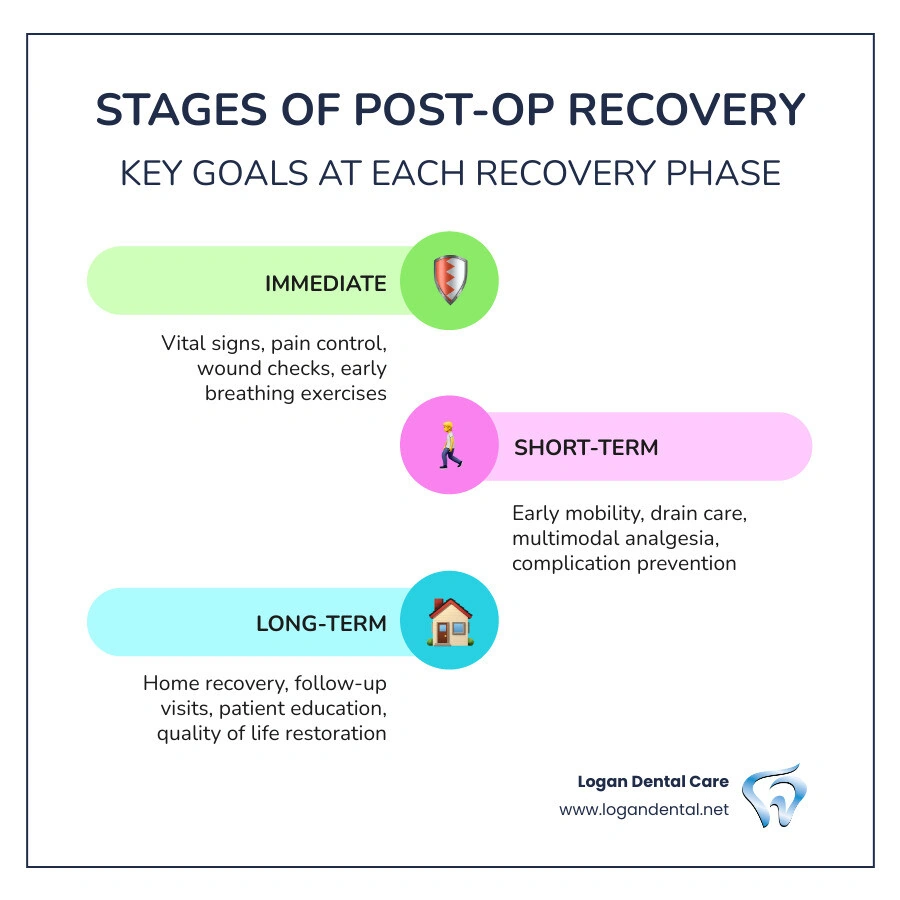
What High Quality Post Op Care Really Means
When we talk about high quality post op care, we aren't just talking about making sure a patient is breathing and has a bandage. We are talking about a patient-centered, proactive philosophy that anticipates problems before they happen. In May 2026, medical standards have moved toward "transitional care," meaning the support doesn't stop just because you left the operating room.
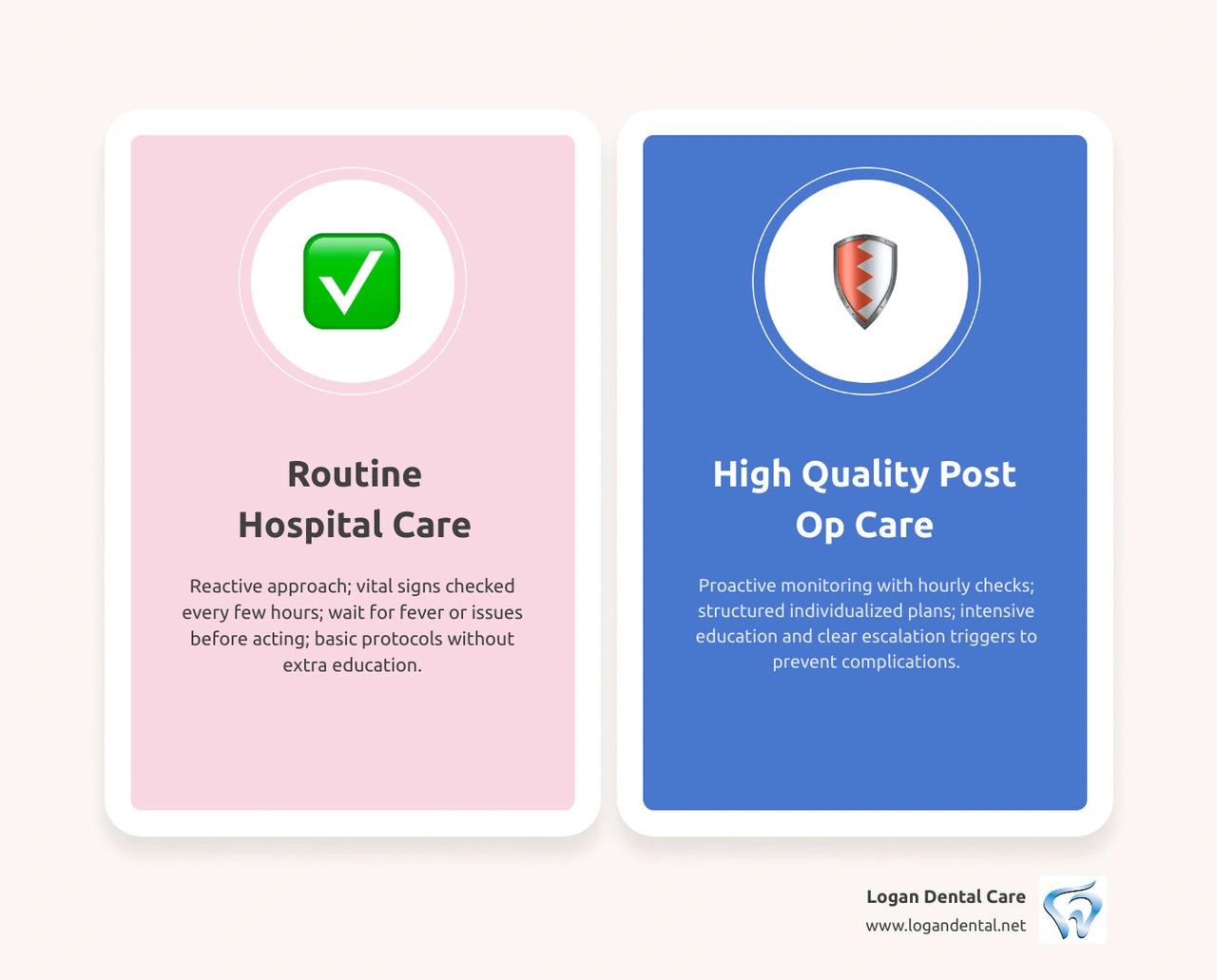
How high quality post op care differs from routine hospital care
Routine care is often reactive—you wait for a fever to happen, then you treat it. High quality post op care is the opposite. It uses structured protocols and individualized plans. For example, instead of checking vital signs every few hours, high-quality nursing involves hourly monitoring for the first critical window. It also includes intensive patient education and clear "escalation" triggers so that if something feels off, the team acts immediately.
The core goals of high quality post op care
The primary objective is to return the patient to their normal life as safely as possible. This involves:
- Effective Pain Control: Using a "multimodal" approach (more on that later) to keep you comfortable without over-sedation.
- Early Mobility: Getting you out of bed to prevent blood clots and muscle loss.
- Wound Healing: Keeping the surgical site clean and monitoring for early signs of infection.
- Mental Status Monitoring: Especially for our older neighbors in Zanesfield or West Liberty, checking for confusion or delirium is vital.
Why High Quality Post Op Care Improves Outcomes
Data doesn't lie. Research into major surgeries, such as common bile duct explorations, shows that when nursing staff follow high-quality protocols, the results are staggering.
Evidence that high quality post op care reduces complications
In clinical studies, patients receiving high-quality nursing care saw wound infection rates plummet from 36.7% to just 6.7%. Problems with surgical drains (like T-tubes) dropped from 26.7% to 3.3%. By focusing on specific interventions, we can drastically lower the risk of bile leaks, pulmonary infections, and residual stones.
How high quality post op care speeds recovery milestones
Recovery is often measured by "milestones." High-quality care helps patients reach them faster:
- Length of Stay: Patients get home sooner—averaging 8.2 days compared to nearly 10 days with routine care.
- First Flatus: A fancy medical term for passing gas, which proves the digestive system is waking up.
- Ambulation: Getting up and walking sooner.
How fewer complications improve quality of life
Using the Abdominal Surgery Impact Scale, researchers found that patients with high-quality care saw their quality of life scores jump from 54.4 to 77.8. This covers everything from physical function and sleep patterns to psychological health. When you aren't fighting an infection, you can focus on getting back to your family.
The Essential Interventions in a High Quality Post Op Care Protocol
A successful recovery is built on a checklist that starts before the first incision is even made.
Preoperative steps that set up safer recovery
High-quality care begins with education. We want you to know exactly what to expect. This includes learning breathing exercises and leg movements before surgery so they become second nature afterward. We also recommend preparing your home in Bellefontaine—clearing trip hazards and stocking the fridge—and performing a thorough medication review.
Intraoperative nursing actions that support recovery
While you're asleep, the nursing team is working to protect you. This includes using forced-air warming devices to prevent hypothermia, maintaining strict fluid balance, and ensuring proper positioning to avoid nerve damage (like ulnar nerve palsy).
Postoperative nursing interventions that matter most
Once in recovery, the focus shifts to vigilance. This includes:
- Hourly Vital Signs: Monitoring blood pressure and heart rate closely.
- Urine Output: A key indicator of kidney health and fluid status.
- Incentive Spirometry: Using a breathing device up to 10 times an hour to keep the lungs clear.
High quality post op care for drains, wounds, and oral surgery sites
Whether it’s a complex T-tube or a tooth extraction site, the principles are the same: keep it clean, keep it protected, and monitor the drainage. For dental patients, this means checking the extraction socket for a healthy clot and avoiding anything that could dislodge it.

The Highest-Risk Complications to Prevent After Surgery
Awareness is your best defense. There are several "red flags" that high-quality care is designed to catch.
Common complications after major abdominal surgery
Infection and bile leakage are the big ones. We also watch for "Wind" (pneumonia), "Water" (UTIs), and "Walking" (blood clots in the legs). These are part of the "six Ws" framework clinicians use to identify the cause of a post-op fever.
Special risks for older adults and high-risk patients
For our seniors in Logan County, the stakes are higher. Older adults can lose up to 5% of their muscle mass per day with complete bed rest. Delirium is also the most common complication for aging adults post-surgery. High-quality care involves frequent mental status checks and avoiding certain medications that increase confusion.
Warning signs patients and families should never ignore
If you are recovering at home, call your doctor immediately if you experience:
- Shortness of breath or chest pain.
- Sudden confusion or agitation.
- A fever over 101.5°F.
- Pus or foul-smelling drainage from the wound.
- Uncontrolled pain that isn't helped by medication.
Patient Education, Mobility, Pain Control, and Home Recovery
The transition from hospital to home is where high quality post op care truly shines.
Why patient education is a pillar of high quality post op care
We use "simple language" and "teach-back" methods. If you can explain the care instructions back to us in your own words, we know you've got it. Written instructions are essential so you don't have to rely on memory while you're still a bit groggy from anesthesia.
The role of early mobilization and breathing exercises
Walking is medicine. It prevents DVT (blood clots), helps the bowels start moving, and prevents "sarcopenia" (muscle wasting). Even a short walk down the hallway in your home can make a massive difference.
Smarter pain management without overreliance on opioids
We advocate for "multimodal" analgesia. This means combining different types of pain relief—like Tylenol, anti-inflammatories, and non-drug techniques—to reduce the need for heavy opioids. This keeps you alert and helps prevent the dreaded post-op constipation.
Applying high quality post op care principles to tooth extraction aftercare
At Logan Dental Care, we apply these same high standards to our surgical patients. After a tooth extraction, your "high quality" plan includes:
- Bleeding Control: Firm pressure on gauze for the first 30-60 minutes.
- Swelling Management: Using ice packs in 20-minute intervals.
- Dietary Logic: Knowing why no dairy after tooth extraction is important (it can sometimes interfere with healing or cause nausea when mixed with meds).
- Gentle Hygiene: Maintaining daily dental care without scrubbing the surgical site.
- Recovery Tips: Following specific tooth extraction recovery tips to avoid "dry socket."
How Surgical Units and Patients Can Standardize High Quality Post Op Care
Standardization ensures that no patient falls through the cracks.
Best practices hospitals and nursing teams should adopt
Units should use "protocol bundles"—sets of evidence-based steps that are proven to work. This includes regular staff training, quality audits, and making sure there is a multidisciplinary team (doctors, nurses, and therapists) all talking to each other.
What families can do to support recovery at home
If you are the primary caregiver for a loved one in Lakeview or Russels Point, you can help by:
- Coordinating transportation to follow-up visits.
- Preparing soft, high-protein meals.
- Using a medication chart or app to stay on schedule.
- Simply being there—companionship reduces the anxiety that can slow down healing.
Building a recovery plan that supports long-term health
A recovery plan isn't just for the first week. It’s about building long-term habits. This includes oral care tips for seniors to prevent secondary infections and mastering basic oral hygiene to keep the rest of your body healthy. At Logan Dental Care, we believe that treating you like family means looking out for your health long after the stitches are out.
Frequently Asked Questions About High Quality Post Op Care
What makes post-op care “high quality” instead of standard?
Standard care is functional; high-quality care is optimal. It’s the difference between "you're stable" and "we are actively working to ensure you have the best possible long-term result." It involves more vigilance, more education, and a more personalized touch.
How soon should a patient start walking after surgery?
In most cases, the goal is the same day! As soon as the anesthesia wears off and it is safe to stand, your care team will want you moving. This is the best way to jumpstart your circulation and bowel recovery.
When should patients call a clinician after going home?
Don't "wait and see." Call if you have a high fever, sudden shortness of breath, new confusion, or if the surgical site starts bleeding heavily. It is always better to ask a question than to ignore a potential complication.
Conclusion
Recovery shouldn't be a game of chance. By insisting on high quality post op care, you are choosing a path with fewer setbacks, less pain, and a faster return to the things you love. Whether you are recovering from a major hospital procedure or visiting us for tooth extractions, your actions—and the quality of the nursing support you receive—are the keys to a successful outcome.
At Logan Dental Care, we are proud to serve the Bellefontaine community with the warmth of a small-town practice and the high standards of modern medicine. If you have questions about an upcoming procedure or your recovery plan, we are here to help you every step of the way. Stay safe, stay mobile, and let’s get you back to feeling your best!