
Brushing Up on Basics: Essential Dental Care Tips for Parents

Why Baby Teeth Matter: More Than Just a Temporary Smile
Dental care tips for parents are something every family needs — but it's easy to feel overwhelmed about where to start, how much toothpaste to use, or when to book that first dentist visit.
Here's a quick overview of the most important steps:
- Start early — wipe your baby's gums before teeth even appear, and brush with a rice-sized smear of fluoride toothpaste as soon as the first tooth comes in
- Brush twice daily for 2 minutes using age-appropriate fluoride toothpaste amounts
- Floss as soon as two teeth touch — use floss picks to make it easier for little hands
- Book the first dental visit by age 1 — or within 6 months of the first tooth appearing
- Limit sugary snacks and drinks, especially in bottles or sippy cups at bedtime
- Ask your dentist about fluoride varnish and dental sealants for added protection
The numbers tell a sobering story. Nearly 1 in 4 children between ages 2 and 5 already have cavities. By age 8, more than half of kids have had tooth decay in their baby teeth. And children with poor oral health are three times more likely to miss school due to dental pain.
The good news? Most of this is preventable with simple, consistent habits — and it starts at home.
Dental care tips for parents word list:
It is a common misconception that baby teeth (primary teeth) don't matter much because "they’re just going to fall out anyway." At Logan Dental Care, we like to remind our Bellefontaine families that these little teeth have a big job to do! They aren't just placeholders; they are the foundation for a lifetime of oral health.
First, baby teeth are essential for proper speech development. Try saying "thumb" or "teeth" without using your front teeth — it’s nearly impossible! Children need these teeth to learn how to form words and speak clearly. If a child loses baby teeth too early due to decay, it can lead to speech delays that may require therapy later on.
Second, baby teeth act as natural "space maintainers." They hold the exact spot needed for the permanent adult teeth waiting underneath the gums. If a baby tooth is lost prematurely, the surrounding teeth can shift into that empty space, causing the adult tooth to come in crooked or become "impacted" (stuck). This often leads to a need for more extensive orthodontic work down the road. You can learn more about how early timing affects these outcomes in our guide on Pediatric Orthodontics The Best Time to Start and What Parents Should Expect.
Finally, baby teeth are vital for nutrition. A child with painful cavities will struggle to chew crunchy fruits and vegetables, often reverting to soft, processed foods that lack the nutrients needed for growth. Keeping these teeth healthy ensures your child can eat a balanced diet comfortably.
Age-by-Age Dental Care Tips for Parents
Managing a child's dental health changes as they grow. What works for a six-month-old won't work for a second grader! To keep things simple, we’ve broken down the essential dental care tips for parents into a handy comparison table.
Infants (0-12 months): Use water and a clean cloth, or a very soft baby toothbrush. Gently wipe gums twice daily.
Toddlers (1-3 years): Use a rice-sized smear of fluoride toothpaste. Brush with small circular motions twice daily.
Preschoolers (3-6 years): Use a pea-sized amount of toothpaste. Brush teeth and tongue with circular motions twice daily.
School-aged kids (6+ years): Keep using a pea-sized amount. Let them brush more independently, but supervise twice daily.
One of the most important things to remember across all ages is Teething Pain Relief. When those first teeth start poking through around six months, your little one might be fussy or lose their appetite. Gently rubbing the gums with a clean, cold washcloth can work wonders.
Early Childhood Dental Care Tips for Parents (0-3 Years)
Dental care should actually start before the first tooth even erupts. We recommend wiping your baby's gums twice a day with a soft, clean, damp cloth after feedings. This removes bacteria and gets them used to the sensation of having their mouth cleaned.
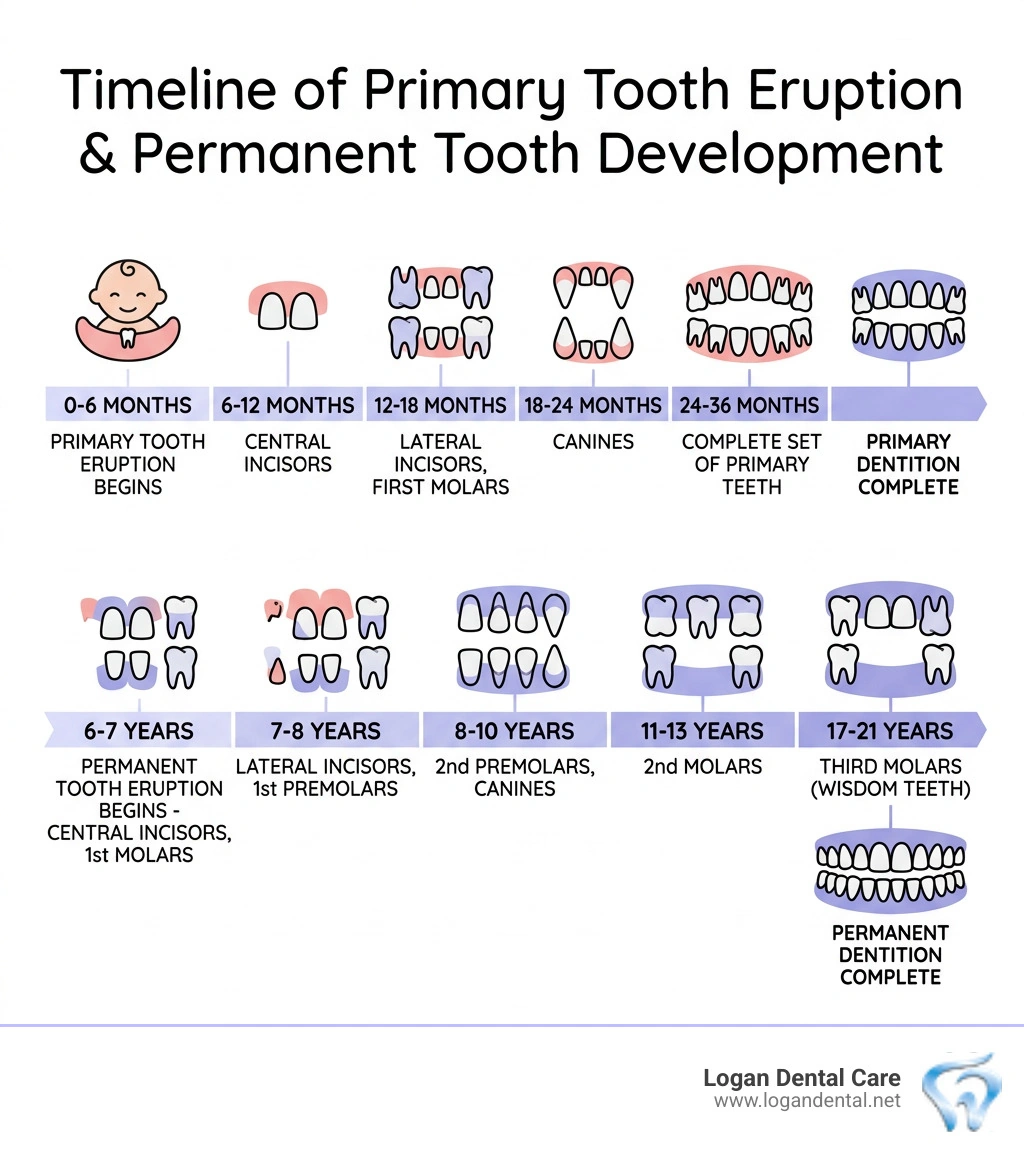
Once that first tooth makes its grand appearance (usually between 6 and 12 months), it’s time to upgrade to a toothbrush. Use a soft-bristled, child-sized brush and a tiny "smear" of fluoride toothpaste — no bigger than a grain of rice. At this age, babies haven't learned how to spit, so using this tiny amount keeps it safe if they swallow a little.
When brushing, use gentle circular motions along the gum line. It’s also important to be mindful of "bacteria transmission." Did you know you can actually "catch" cavities? Bacteria like Streptococcus mutans can be passed from parent to baby through shared spoons, kissing on the lips, or cleaning a pacifier in your own mouth. To protect your baby, keep your own oral health in top shape! You can find more details on proper form in our article on Mastering Tooth Brushing Techniques and Tips for a Healthy Smile.
School-Age Dental Care Tips for Parents (4-10 Years)
As children get older, they want more independence, but they still need your help. Most children do not have the manual dexterity to brush effectively on their own until they can tie their own shoelaces or write in cursive (usually around age 7 or 8).
For kids aged 3 to 6, you can increase the toothpaste amount to a pea-sized dollop. Encourage them to "spit, don't rinse." Rinsing with water immediately after brushing washes away the concentrated fluoride that helps strengthen the enamel.
This is also the age where flossing becomes non-negotiable. As soon as two teeth touch each other, plaque and food particles get trapped where a toothbrush can't reach. Pre-threaded flossing sticks are a lifesaver for parents! They are much easier to navigate in a small mouth than traditional string floss. For more age-specific advice, check out our Dental Hygiene Tips and Tricks.
Preventing Cavities Through Diet and Professional Care
What your child eats is just as important as how they brush. Cavity-causing bacteria thrive on sugar. Every time your child eats something sugary, those bacteria produce acid that attacks the tooth enamel for about 20 minutes.
- Smart Snacking: Instead of fruit snacks or crackers (which are sticky and turn into sugar), reach for "teeth-friendly" snacks like cheese, yogurt, apples, or carrots. Cheese is especially great because it helps neutralize mouth acids.
- Ditch the Bedtime Bottle: Never put your baby to bed with a bottle of milk, juice, or formula. The liquid pools around the teeth all night, leading to "baby bottle tooth decay." If they need a bottle for comfort, fill it only with water.
- Hydration: Encourage water over juice. The CDC notes that communities with fluoridated tap water (like many in the Logan County area) see significantly fewer cavities in children.
Beyond home care, professional preventive treatments are your best defense. We often recommend fluoride varnish, which can prevent about 33% of cavities in baby teeth. For older kids, dental sealants are a game-changer. These are thin, protective coatings applied to the chewing surfaces of the back molars. They act as a shield against food and plaque, preventing up to 80% of cavities in those hard-to-reach spots. These are basic but powerful tools in Basic Oral Hygiene.
Making Oral Hygiene Fun: Dental Care Tips for Parents to Use at Home
Let’s be honest: getting a toddler to brush their teeth can sometimes feel like a wrestling match. To avoid the "brushing blues," we suggest making it a family event!
- The 2-Minute Dance Party: Use a timer or a favorite song that lasts exactly two minutes. There are even apps and YouTube videos designed specifically to keep kids entertained while they brush.
- Character Power: Let your child pick out their own toothbrush and toothpaste. Whether it’s a sparkly blue paste or a brush with their favorite cartoon character, giving them a choice makes them feel in control.
- Sticker Charts: Reward consistency! A simple sticker chart where they get a gold star for brushing morning and night can be a huge motivator. After a week of stars, maybe they earn a small "treasure chest" prize.
- Lead by Example: Kids love to mimic their parents. Brush your teeth alongside them! When they see you prioritizing your own Daily Dental Care Integrating Oral Health into Your Self-Care Routine, they are much more likely to follow suit.
Your Child’s First Visit and Beyond
The American Academy of Pediatric Dentistry recommends that a child’s first dental visit happen by their first birthday or within six months of their first tooth appearing.
This first visit is mostly about education and "acclimatization." We want your child to feel comfortable in our Bellefontaine office. We’ll check for proper growth, look for early signs of decay, and talk about habits like thumb sucking or pacifier use. Establishing a "dental home" early means that if an emergency ever happens — like a fall that loosens a tooth — you already have a team you trust.
We strive to make every visit positive. We never use dental visits as a threat or punishment. Instead, we talk about the "tooth camera" (X-rays) and "tickling the teeth" (cleaning) to keep things light and fun. Whether you are looking for Pediatric Dentists Near Me or a practice that can handle the whole family's needs through Family Dentistry, we are here to help.
Frequently Asked Questions about Pediatric Dental Care
When should my child start flossing?
You should start flossing your child's teeth as soon as any two teeth are touching. For most children, this happens around age 3 or 4. Because kids don't have the coordination to floss themselves until about age 10, you'll need to handle this part of the routine for them. Floss picks are often the easiest way to get into those tight spaces without causing discomfort.
Is fluoride safe for my child?
Yes! When used in the correct amounts, fluoride is a safe and highly effective way to prevent cavities. It works by "remineralizing" the tooth enamel, essentially repairing small amounts of damage before they turn into full-blown cavities. Between fluoridated tap water, fluoride toothpaste, and professional varnish treatments at our office, your child can get the protection they need to keep their smile strong.
How does oral health affect school performance?
There is a direct link between a healthy mouth and a successful student. According to the ADA, children with poor oral health are three times more likely to miss school because of dental pain. When a child has a toothache, they can't concentrate on their math problems or reading; they are focused only on the discomfort. Regular check-ups are one of the best "back-to-school" preparations you can make. You can read more about maintaining a healthy smile for all ages in our Good Dental Health Tips.
Conclusion
At Logan Dental Care, we are proud to be a part of the Bellefontaine and Logan County community. We know that as a parent, you have a million things on your plate, from school schedules in West Liberty to weekend trips to Russels Point or Lakeview. Our goal is to make your family's dental care the easiest part of your week.
We treat every patient like a member of our own extended family, providing high-quality care with a warm, small-town feel. From that very first "baby's first birthday" visit to braces for your teenagers and check-ups for yourself, we are here for every stage of life.
Ready to start your child on the path to a lifetime of healthy smiles? Schedule your child's next dental hygiene appointment today at our 1021 N. Main Street location. We can't wait to see those bright smiles!