
Managing the Bill: A Practical Guide to Dental Crown Payment Options

Understanding the Average Cost of Dental Crowns
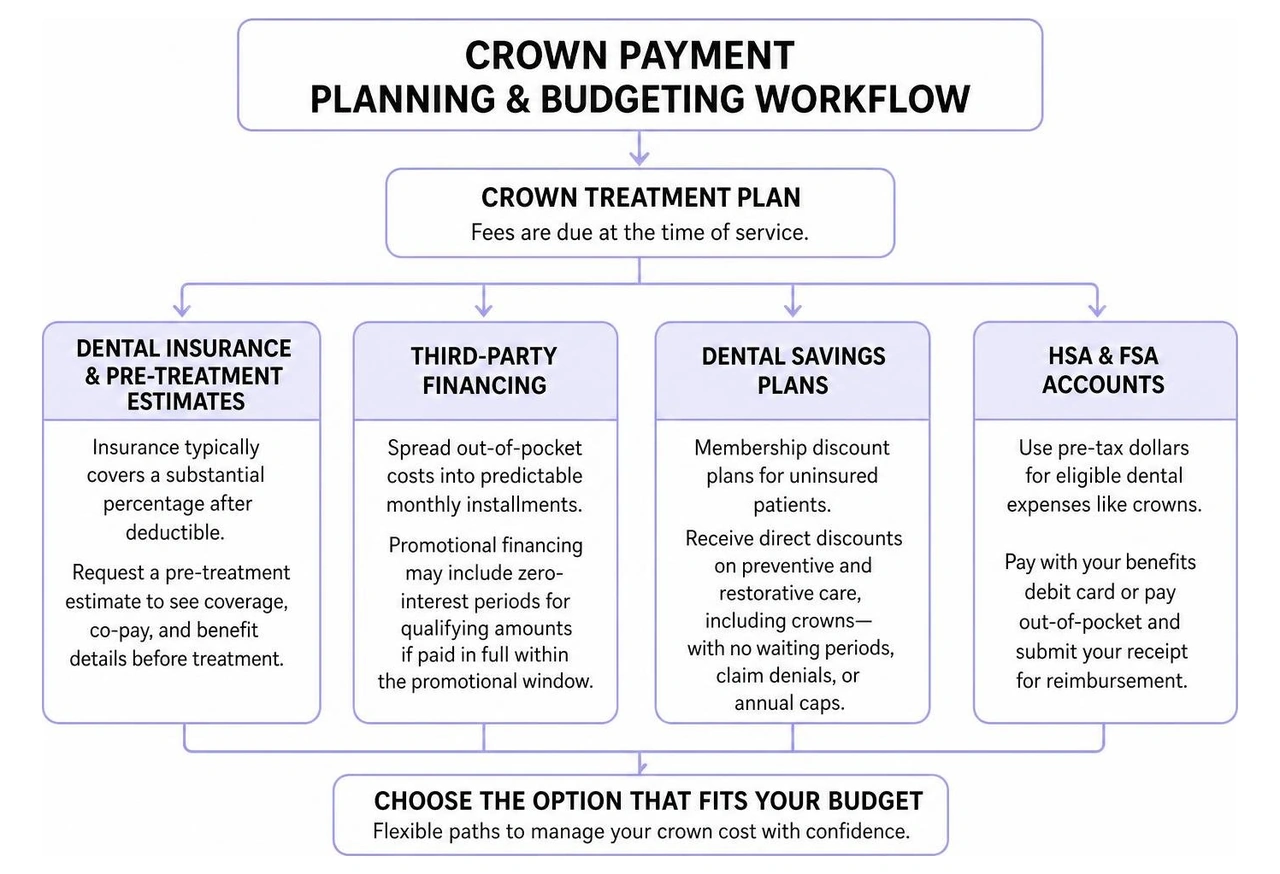
When planning restorative care, exploring your crown cost payment options helps you manage treatment expenses smoothly. Patients typically fund a dental crown through four primary pathways: traditional dental insurance benefits, third-party healthcare financing (such as CareCredit), membership-based dental savings plans, and tax-advantaged health accounts like HSAs or FSAs. Combining these payment strategies with transparent fee-for-service budgeting ensures you receive necessary tooth protection without financial stress or unexpected surprises at checkout.
When a natural tooth is severely cracked, heavily decayed, compromised by a large failing filling, or worn down from chronic clenching, a crown acts as a durable, custom-fitted cap that restores strength, function, and aesthetics. Understanding the clinical factors behind the dental crown cost empowers you to make informed decisions that match both your clinical needs and your personal financial situation. A well-placed, high-quality restoration can last fifteen years or longer, serving as an enduring investment in your long-term oral health and daily bite stability.
The overall financial investment for restoring a tooth depends on several key clinical variables:
- Material Selection: The type of restorative material you choose plays a significant role in price. For back molars requiring immense chewing strength, metal crown dental cost considerations often come up. Meanwhile, aesthetic front teeth often require all-ceramic, zirconia, or a porcelain fused to high noble metal crown.
- Tooth Preparation and Core Buildup: If the natural tooth underneath has extensive decay or structural loss, your dentist must perform a foundational core buildup to create a stable, retentive base before placing the final cap.
- Diagnostic Imaging and Laboratory Craftsmanship: High-resolution digital X-rays, specialized optical intraoral scans, custom shade matching, and custom dental laboratory fabrication all contribute to the final treatment fee.
Every smile is unique, and reviewing the cost of tooth cap restorations upfront gives you complete clarity so you can choose the ideal restorative approach for your lifestyle.
Comparing Your Dental Crown Cost Payment Options
Navigating healthcare expenses is much simpler when you understand the distinct payment channels available to you. While dental fees are due at the time of service, patients frequently leverage several practical strategies to keep their restorative treatment predictable, affordable, and stress-free.
At Logan Dental Care, the goal is to review fees before treatment begins so you can make decisions with confidence. Because Logan Dental Care does not offer payment plan options directly through the practice, the team focuses on clear estimates, insurance coordination, third-party financing resources, savings plan discounts, and accepted payment methods that help patients prepare for care without confusion.
Traditional Dental Insurance and Pre-Treatment Estimates
If you carry private or employer-sponsored dental insurance, your policy typically categorizes a permanent crown as a major restorative procedure. According to guidelines from the American Dental Association, dental benefit plans evaluate restorative necessity based on clinical documentation and radiographs. Depending on your specific policy structure, dental insurance often covers 50% to 80% of the allowable fee once your annual deductible has been met, up to your plan's annual maximum allowance.
To understand your precise out-of-pocket cost of a crown with dental insurance, we recommend requesting a pre-treatment estimate prior to starting procedure appointments. Your dental administrative team submits the detailed treatment plan, clinical charting, diagnostic photographs, and digital X-rays directly to your insurance payer. The insurer then returns a formal explanation of benefits breakdown showing the covered amount, your exact co-pay obligation, and your remaining annual benefit balance.
Third-Party Financing as Crown Cost Payment Options
For individuals and families who prefer spreading their out-of-pocket balance across predictable monthly installments rather than paying the full total in a single lump sum, specialized third-party healthcare lenders provide convenient options. Many patients turn to CareCredit financing to manage out-of-pocket medical and dental care expenses.
Third-party healthcare lenders operate independently from the dental practice, offering promotional financing terms-including deferred or zero-interest periods for qualifying purchase amounts when paid in full within the agreed promotional window. We provide practical guidance on navigating CareCredit so you can review credit requirements, apply securely, and select repayment terms that align with your monthly household budget.
Dental Savings Plans and Crown Cost Payment Options
For patients without traditional dental insurance benefits, in-office membership discount programs offer a dependable, cost-effective alternative. These programs are not insurance products; instead, they are annual membership plans designed to provide substantial direct discounts across preventive, cosmetic, and major restorative treatments.
Our Smile Protection Savings Plan provides uninsured patients with transparent pricing and complete peace of mind. Members receive routine preventive dental care-including bi-annual exams, professional cleanings, and diagnostic X-rays-along with immediate percentage savings on restorative procedures like custom crowns, all without waiting periods, claim denials, pre-authorizations, or annual spending limits.
Tax-Advantaged Accounts: HSA and FSA Benefits
Health Savings Accounts (HSAs) and Flexible Spending Accounts (FSAs) allow individuals to allocate pre-tax income toward qualified medical and dental expenses. Because dental crowns are medically necessary restorative procedures designed to restore masticatory function and structural integrity, they qualify under IRS guidelines for pre-tax account spending.
Utilizing pre-tax funds effectively reduces your net treatment cost by your personal marginal income tax rate, providing instant savings. You can swipe your HSA or FSA benefits debit card directly at the time of checkout, or pay using standard payment methods and submit an itemized receipt to your benefits administrator for prompt reimbursement.
Cost-Saving Strategies: Same-Day Crowns and Itemized Estimates
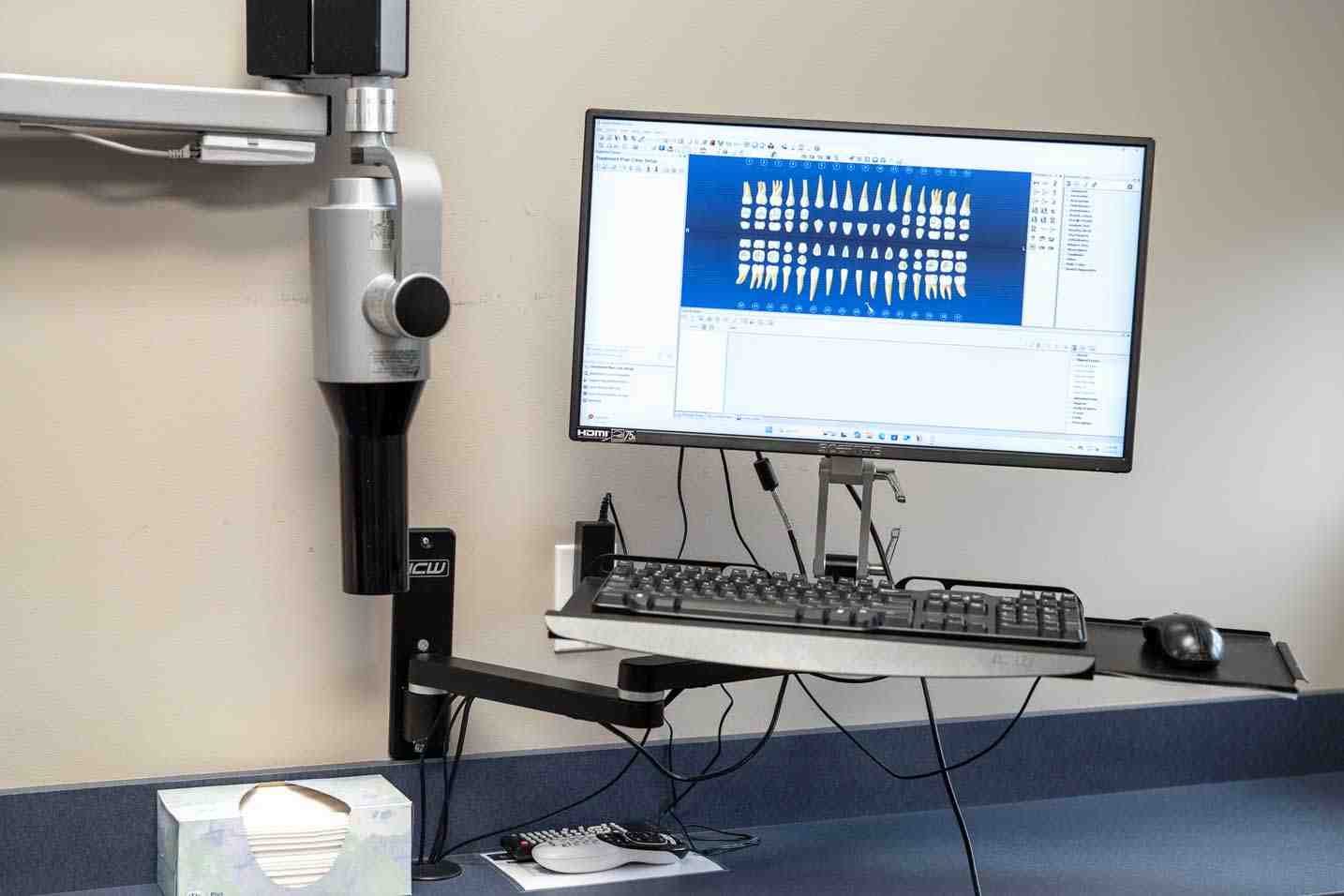
Modern dental technology has transformed restorative care, delivering greater precision and substantial time savings for patients. Innovations in computer-aided design and computer-aided manufacturing (CAD/CAM) allow dental practices to design, mill, and bond durable, high-grade ceramic restorations right in the office during a single appointment.
Opting for a same-day dental crown eliminates the need for wearing a fragile temporary crown for several weeks, while sparing you the time, fuel expenses, and missed work hours associated with a second visit. When evaluating CEREC crown cost factors, the convenience of completing tooth preparation, 3D optical scanning, precision in-house milling, and permanent placement in one seamless appointment offers exceptional overall value.
During your comprehensive dental crown consultation, your dentist will thoroughly assess your tooth, surrounding bone, and bite alignment to determine whether a single-unit crown or multi-unit crowns and bridges represent the most reliable, long-lasting solution. Requesting a written, itemized treatment breakdown before beginning care ensures total transparency.
Helpful questions to ask your dental team during your treatment discussion include:
- Does this itemized estimate include the core buildup, local anesthetic, digital imaging, and temporary crown?
- Are there any outside dental laboratory fees that could alter the final invoice?
- Which restorative material (such as zirconia, ceramic, or metal) is ideal for this specific tooth location and bite force?
- How much will I save on this procedure by using our in-house dental savings plan membership?
- Can your administrative staff submit a formal pre-treatment estimate to my insurance company prior to my procedure date?
Frequently Asked Questions About Crown Financing
What is the average out-of-pocket cost for a dental crown without insurance?
Out-of-pocket fees for a dental crown without insurance generally depend on geographic location, tooth position (anterior front teeth versus posterior molars), the necessity of underlying core buildups, and the chosen restorative material (such as solid zirconia, all-ceramic, porcelain-fused-to-metal, or gold alloy). Requesting a written, itemized estimate during your initial consultation allows you to review material alternatives and select a solution that meets your restorative needs and budget.
How do pre-treatment estimates assist with dental crown budgeting?
A pre-treatment estimate serves as a formal pre-determination inquiry submitted to your dental insurance provider before any clinical preparation begins. It details the exact percentage your insurance will pay, applies your deductible, checks your remaining annual benefit allowance, and calculates your precise patient co-payment, completely removing financial ambiguity before you sit in the dental chair.
Can HSA or FSA funds be combined with other payment methods?
Yes. Patients frequently combine their HSA or FSA accounts with other payment sources. For example, you can apply your primary dental insurance coverage or in-house savings plan discount first, and then pay the remaining out-of-pocket balance with your HSA or FSA debit card. You can also split balances between a tax-advantaged healthcare card and a major credit card at the time of service.
Conclusion
Restoring a damaged or weakened tooth preserves your natural bite, alleviates pain, and prevents costly, complex dental complications in the future. By evaluating your dental crown options and understanding how insurance pre-estimates, dental savings plans, tax-advantaged HSA/FSA accounts, and third-party healthcare financing work together, you can restore your smile with complete confidence and budget transparency.
Logan Dental Care is a family-focused dental practice located at 1021 N. Main Street in Bellefontaine, Ohio. We are dedicated to providing warm, honest, and high-quality oral healthcare as an accredited member of the American Dental Association and the Ohio Dental Association, holding an A+ BBB rating. Please note that Logan Dental Care does not offer payment plan options or sedation dentistry.
If you are ready to explore restorative solutions for your smile, review our dental crowns cost complete guide or contact our friendly Bellefontaine team today to schedule your personalized dental crown consultation.