
Understanding Dental Crown Pricing Factors and Insurance Options

What Shapes the Typical Price for a Dental Crown?
The typical price for a dental crown depends on the material, the tooth being treated, and any work needed before the crown is placed. Insurance may reduce what you pay, but deductibles and coverage limits matter. To compare quotes fairly, ask for a written estimate that shows what is included and what costs extra.
We're the Logan Dental Care Team in Bellefontaine, Ohio, and we'll help you understand your options, including our Smile Protection Savings Plan if you don't have insurance. For a broader look at how restorative dentistry fits into tooth preservation, the American Dental Association offers helpful patient resources on crowns.
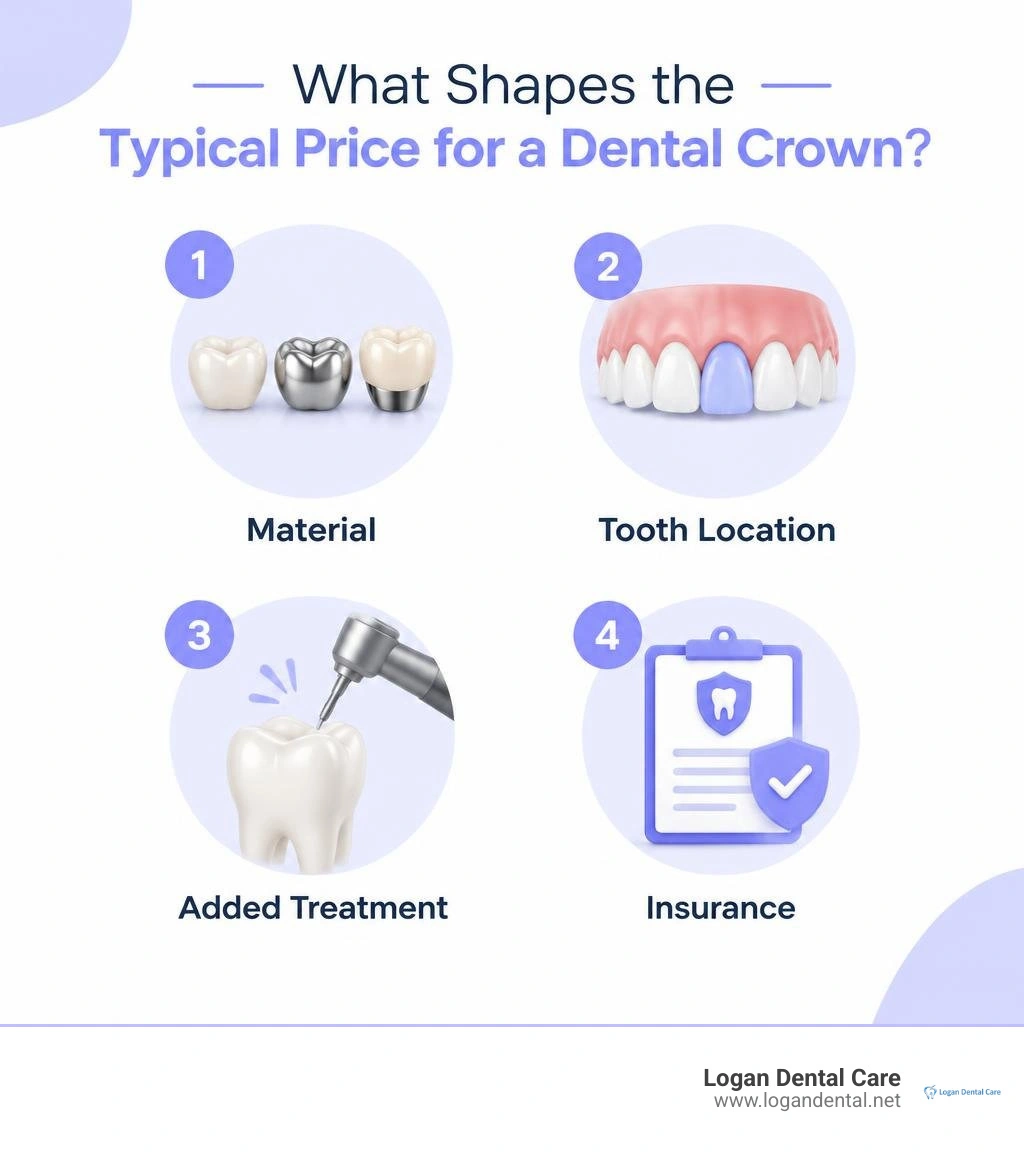
Basic typical price for a dental crown terms:
What Is the Typical Price for a Dental Crown Without Insurance?
When paying out of pocket, evaluating dental crown cost starts with looking at self-pay rates and local geographic factors. Without dental insurance, the base fee generally covers the preparation of the tooth, digital impressions or physical molds, the fabrication of the custom cap, and the final cementation.

Because dental offices have different operational overheads and laboratory partnerships, cash rates can shift from one community to another. Understanding the components of your treatment plan ensures you can benchmark quotes effectively and choose a solution that protects both your smile and your household budget.
Evaluating the Typical Price for a Dental Crown by Material
The material chosen for your restoration plays a major role in overall expense and clinical durability. Dentists use several distinct types of teeth crown to balance biting strength with natural aesthetics:
- Monolithic Zirconia: Known for exceptional fracture resistance, zirconia is ideal for back molars that endure heavy chewing forces while still matching natural tooth shades.
- Lithium Disilicate (E-max / All-Ceramic): Highly translucent and lifelike, all-ceramic designs are favored for front teeth where seamless cosmetic blending is critical.
- Porcelain-Fused-to-Metal (PFM): Combines a strong metal framework with an outer porcelain layer. While durable, the porcelain can sometimes chip, and a dark metal margin may become visible near the gumline over time.
- Full-Cast Gold Alloy: An exceptionally biocompatible and long-lasting choice that causes minimal wear to opposing teeth, though its visible metallic appearance means it is usually reserved for hidden back teeth.
- Composite Resin: A budget-conscious option often utilized for temporary crowns or short-term repairs, though it wears down much faster than ceramic or metal.
Tooth Location and Same-Day CEREC Technology Considerations
Where a damaged tooth sits in your mouth directly impacts treatment planning. Front teeth require precise shade matching, custom laboratory characterization, and careful gingival contouring to replicate natural enamel. Back molars demand dense, fracture-resistant materials to withstand daily chewing.
Modern digital dentistry also introduces dental crown same day options using in-office computer-aided design and milling (CAD/CAM). These systems allow your dentist to scan your tooth digitally, mill a custom ceramic crown right in the office, and bond it in a single visit. This eliminates the need for temporary plastic crowns and messy putty impressions, saving busy families valuable time.
Common Additional Procedures That Impact Overall Restoration Costs
It is common for an initial quote to differ from the final invoice because a crown is rarely placed on an unprepared tooth. Restorative dentistry requires a stable, healthy foundation before a permanent cap is cemented into place.

Necessary Preparatory Treatments and Clinical Add-Ons
If a tooth has suffered extensive decay or physical trauma, preparatory treatments are necessary to ensure the restoration does not fail:
- Core Build-Up: When a large portion of natural enamel is missing, your dentist places composite filling material to rebuild the tooth's core structure so the crown has sufficient surface area to grip.
- Root Canal Therapy: If deep decay or a crack reaches the inner dental pulp, the nerve must be cleaned and sealed before capping to prevent painful abscesses.
- Crown Lengthening: If a fracture extends below the gumline, minor periodontal recontouring exposes sound tooth structure to secure a proper fit.
- Post and Core Placement: After a root canal, a small post may be inserted into the root canal space to anchor the core build-up securely.
Addressing a severe issue like a broken molar repair cost early prevents complications that could jeopardize the entire tooth.
Comparing Crown Value Against Large Fillings and Dental Implants
When deciding on a treatment plan, it helps to understand how crowns compare to other restorative procedures:
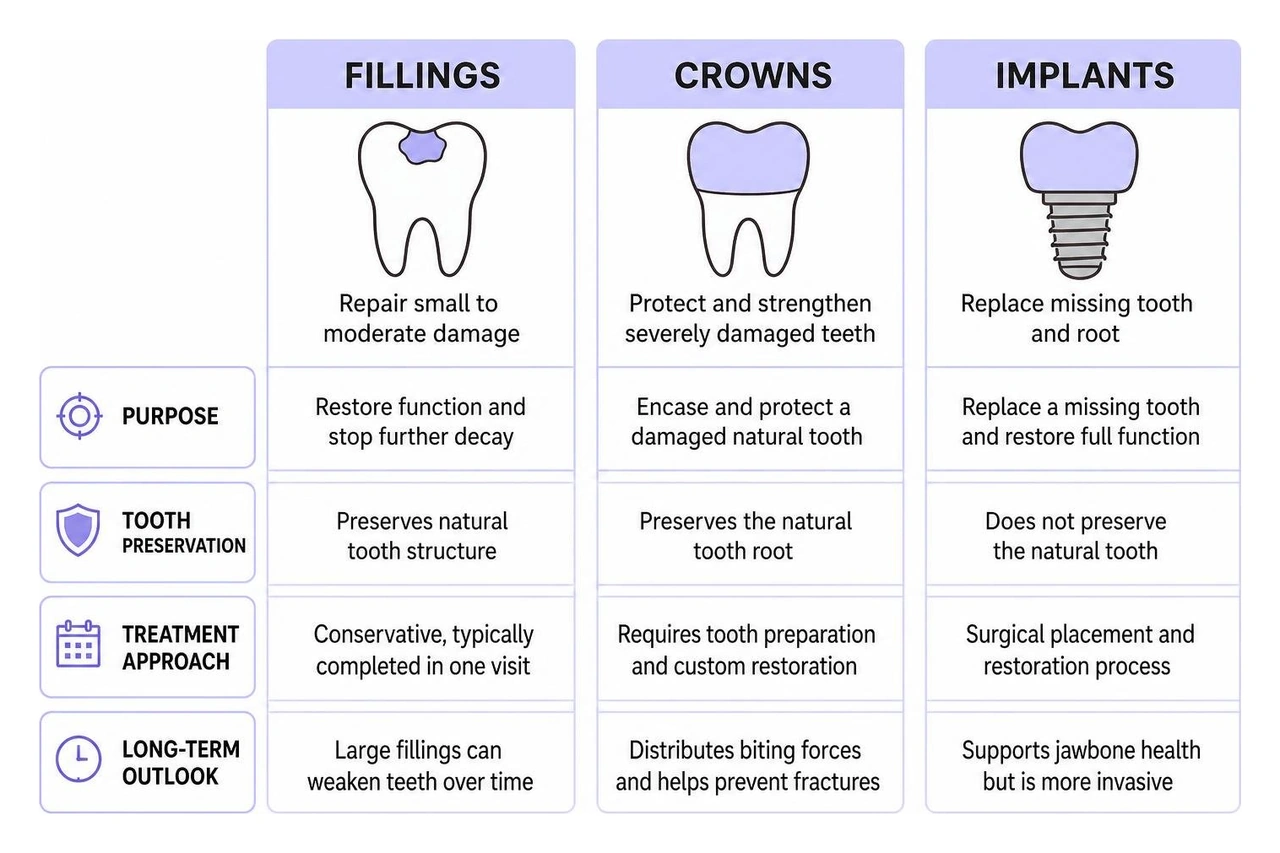
While a large resin filling might seem like a quick fix, placing oversized fillings in heavily damaged teeth often leads to structural fractures over time. Conversely, a crown acts like a protective helmet, distributing biting forces evenly.
If a tooth is damaged beyond repair, extracting it and placing an implant-supported crown is an alternative. However, preserving your natural tooth root with a crown is generally less invasive, requires fewer appointments, and maintains your natural jawbone structure. Exploring durable crowns and bridges remains one of the most reliable ways to protect your oral health for the long haul.
Navigating Dental Insurance Coverage and Out-of-Pocket Expenses
Dental benefit plans classify dental crowns as a major restorative service rather than basic preventive care. Understanding how your policy handles major dental work makes budgeting straightforward and prevents surprise bills.
Calculating the Typical Price for a Dental Crown With Insurance
Insurance plans generally share the expense for medically necessary crowns once your annual deductible has been met. However, your cost of a crown with dental insurance depends on several variables:
- Co-insurance Rates: Policies typically cover a set percentage of major services, leaving the remaining portion as the patient's responsibility.
- In-Network Fee Schedules: In-network providers agree to contracted rates, which lower the total allowable charge before insurance percentages are calculated.
- Annual Maximums: Most dental policies cap total yearly benefits. If a crown procedure utilizes most of your annual limit, any remaining dental care for the year must be paid out of pocket.
Requesting a formal pre-treatment estimate allows your dental team to submit digital x-rays and clinical notes to your insurer, giving you an exact breakdown of your estimated co-pay before treatment begins.
Overcoming Coverage Caps, Waiting Periods, and Replacement Rules
To effectively manage your crown out of pocket cost, watch for common policy limitations:
- Five-Year Replacement Clauses: Insurers typically decline to pay for a replacement crown on the same tooth unless a specified number of years have passed since the original placement.
- Waiting Periods: New individual insurance policies often enforce waiting periods before major restorative benefits activate.
- Cosmetic Exclusions: If a crown is placed purely to alter appearance rather than repair structural decay or damage, benefits may be denied. Detailed clinical documentation and diagnostic photos from your dentist establish medical necessity.
Practical Strategies for Making Dental Restorations Affordable
High-quality dental care should always be accessible. With clear communication and proactive planning, you can budget for restorative treatments smoothly.
In-House Savings Plans, Pre-Tax Accounts, and Community Options
If you do not have employer-sponsored dental insurance, several options can help you manage out-of-pocket expenses:
- Pre-Tax Healthcare Accounts: You can use funds from Health Savings Accounts (HSAs) or Flexible Spending Accounts (FSAs) to pay for dental restorations with pre-tax dollars.
- In-House Membership Programs: Many families take advantage of a structured dental membership plan designed specifically for uninsured patients, offering predictable discounts on restorative procedures alongside routine cleanings.
- Phased Treatment Planning: If you require multiple restorations, your dentist can prioritize urgent structural needs first, scheduling remaining work across benefit years to maximize annual coverage.
Long-Term Crown Maintenance to Maximize Treatment Value
A dental crown is an investment in your health. Practicing thorough daily hygiene ensures your restoration lasts for decades:
- Protect the Gumline Margins: While porcelain and zirconia cannot decay, the natural tooth structure underneath the crown edge remains vulnerable to plaque buildup and cavities.
- Brush and Floss Daily: Clean along the restoration border twice daily with a soft-bristled toothbrush and floss carefully around the crown.
- Wear a Custom Nightguard: If you clench or grind your teeth at night (bruxism), wearing a custom protective guard prevents micro-fractures in ceramic materials.
- Keep Regular Cleanings: Professional exams allow your dentist to evaluate crown margins, check bite alignment, and polish the restoration.
Frequently Asked Questions About Dental Crown Costs
How long does a permanent dental crown last?
A well-crafted dental crown typically lasts between 10 and 15 years, and many last 20 to 30 years with diligent oral hygiene and regular dental checkups. Longevity depends on the material selected, your bite forces, and whether you protect the tooth from grinding.
Why does a crown quote sometimes exceed the advertised base fee?
Advertised baseline fees often reflect only the fabrication and cementation of the crown itself. The total investment frequently includes essential foundation steps, such as diagnostic x-rays, core build-ups, local anesthetic, and temporary restorations needed to prepare the tooth properly.
Do dental crowns hurt during or after placement?
The preparation and placement appointments are completed under gentle local anesthesia, ensuring you remain comfortable throughout the visit. After the numbness wears off, you might notice mild gum tenderness or slight temperature sensitivity for a few days as the tooth adjusts.
Conclusion
Understanding restorative dental care helps you make confident, informed choices for your smile. Logan Dental Care is a family-focused dental practice located at 1021 N. Main Street in Bellefontaine, Ohio, serving Bellefontaine and surrounding Logan County communities. Logan Dental Care is an accredited member of the American Dental Association and the Ohio Dental Association, and holds an A+ BBB rating.
Our welcoming team provides general and preventive dentistry, family dentistry, cosmetic dentistry (teeth whitening, veneers, smile makeovers), orthodontics (Invisalign and traditional braces), restorative dentistry (implants, crowns, bridges), emergency dental care (including same-day and outside standard business hours availability), the Smile Protection Savings Plan (our in-house membership for uninsured patients), and custom nightguards/mouthguards. Please note that Logan Dental Care does not offer payment plan options and does not offer sedation dentistry.
For an in-depth breakdown of procedure steps and restoration types, explore our dental crowns cost complete guide. Contact our friendly Bellefontaine office today to schedule your consultation and receive a transparent, personalized treatment estimate.