
Cash Discount Dental Survival Guide
Navigating Cash Discount Dental Models vs. Traditional Insurance
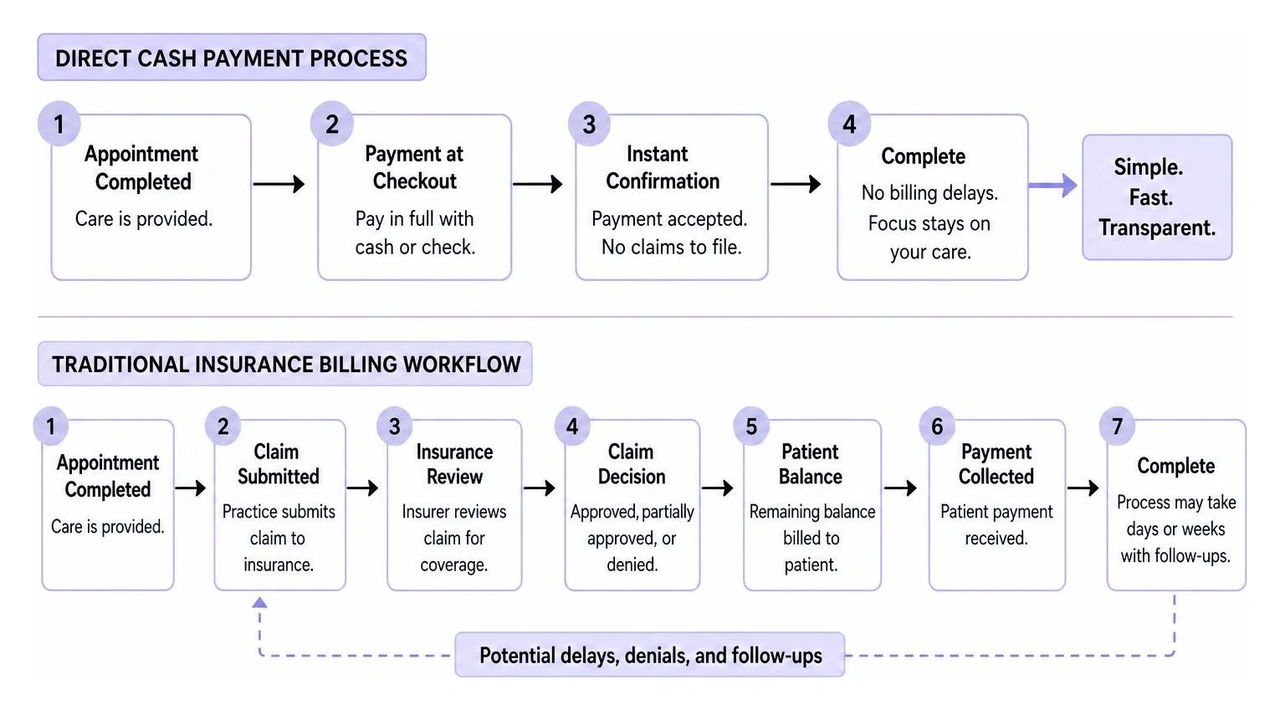
Choosing how to finance your dental care shouldn't feel like a puzzle. When considering cash discount dental options alongside standard insurance, it helps to understand the administrative friction practices face. Processing insurance claims, dealing with claim denials, managing pre-authorizations, and handling credit card processing fees add significant overhead for any office. Direct payments eliminate billing delays and allow us to focus entirely on caring for your smile, keeping administrative costs low while delivering high-quality, personalized attention.
What is Cash Discount Dental Care and How Does It Work?
A cash pay or self-pay discount is a fee reduction extended to patients who cover their bill out of pocket at the time of service using cash or a check. Many practices consider offering these options to lower billing administration costs, as noted by the American Dental Coders Association. When dental administrative staff do not have to spend hours filing electronic claims, re-submitting documentation, or tracking down overdue third-party remittances, those operational savings can directly benefit self-paying patients.
When patients pay directly on the day of their appointment, it streamlines checkout and allows offices to pass along meaningful savings. Out-of-pocket guidance from ToothCostGuide shows that asking about upfront payment pricing can help patients budget accurately without surprises. By establishing a clear prompt-pay model, patients enjoy complete financial clarity and true freedom over their treatment schedules without waiting for third-party approvals.
How In-House Membership Plans Compare to Fee Discounts
While simple cash discounts apply on a visit-by-visit basis, structured in-house membership options offer predictable, comprehensive savings for uninsured families. Rather than paying full out-of-pocket costs for every checkup or relying on intermittent fee adjustments, an annual membership bundles routine preventive care into a simple subscription. This ensures that routine checkups, cleanings, and diagnostic X-rays are completely covered throughout the year.
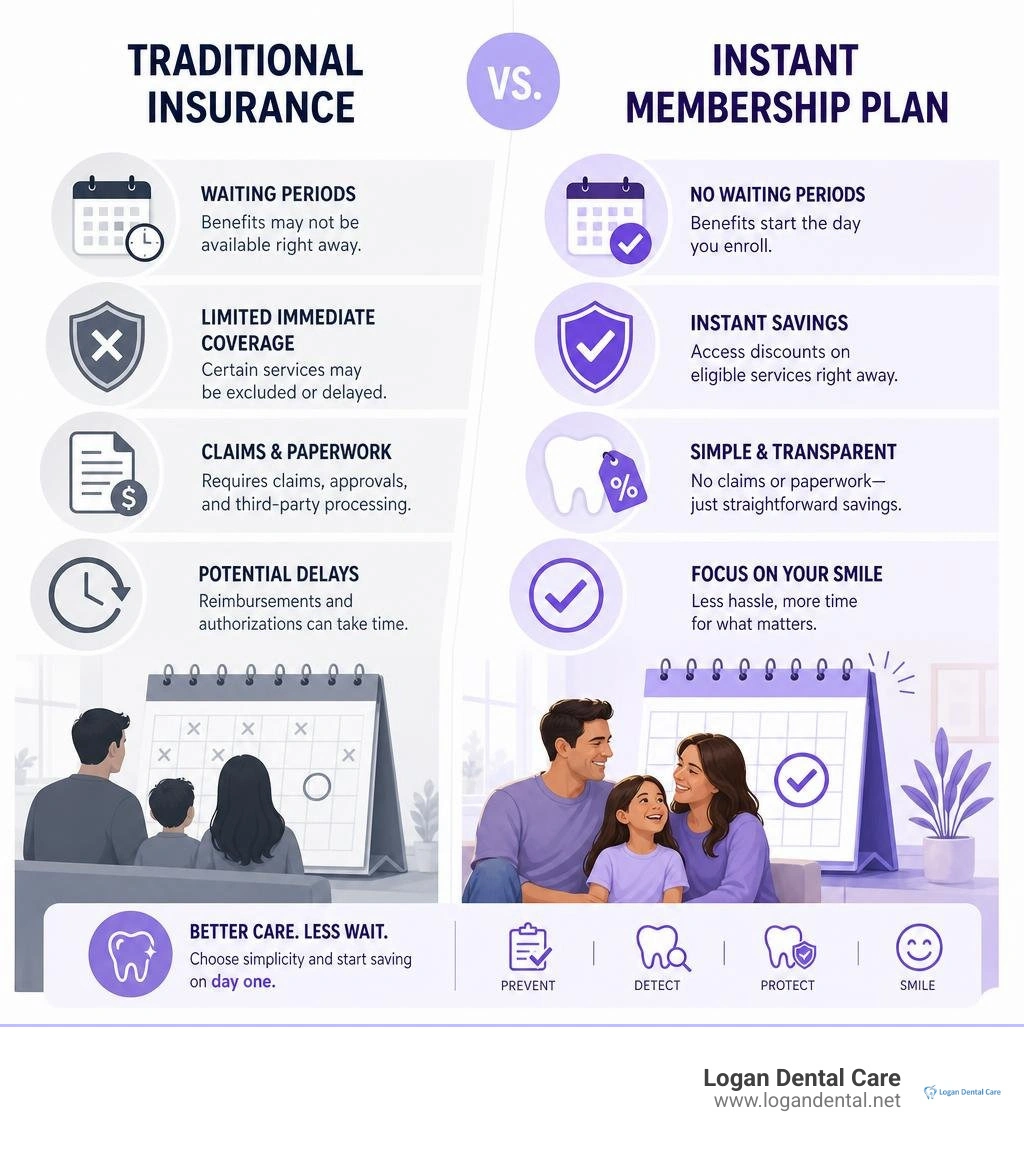
Our Smile Protection Savings Plan provides an accessible alternative to complex insurance policies. Uninsured patients gain transparent value, covering regular checkups and providing predictable discounts on standard treatments without waiting periods, deductible minimums, or claim forms. We view general and preventive care as the foundation of a long-term, trusting relationship with our practice, helping families maintain optimal health in a relaxed, low-pressure environment.

Comparing Costs: Out-of-Pocket Dental Rates vs. Insurance Premiums
Evaluating cash discount dental savings requires looking at the total picture, including monthly premiums, annual deductibles, procedure copays, and strict annual benefit limits that often cap total coverage.

How Cash Discount Dental Savings Compare to Insurance Plans
Traditional dental insurance usually covers routine preventive visits, but patients pay monthly premiums all year round whether they use the policy or not. Insurance policies also enforce strict annual maximum caps—typically between $1,000 and $1,500 per year—and enforce lengthy waiting periods for major procedures. When extensive treatment is required, patients frequently find themselves reaching their benefit cap early in the year, leaving remaining costs entirely out-of-pocket.
If you only need routine maintenance, paying out-of-pocket for bi-annual cleanings can cost significantly less than 12 months of insurance premiums. Prioritizing routine Dental Hygiene visits protects your oral health and keeps long-term costs manageable. General and preventive care serves as a relaxed, comfortable starting point for long-term health, allowing patients to maintain strong smiles without financial stress. You can learn more about standard checkup expenses in our breakdown of Dental Cleaning Cost.
Average Costs for Common Dental Procedures in 2026
To understand out-of-pocket care and budget effectively, it helps to know average cash rates across the dental industry:
- Routine Cleaning: ~$100
- Composite Resin Filling: ~$200 per tooth
- Tooth Extraction: $75 to $250 for a simple extraction
- In-Office Teeth Whitening: ~$500
- Dental Crown: $800 to $2,500
- Root Canal: ~$1,200 (varying by tooth location)
- Single Dental Implant: $3,000 to $7,000
Understanding these averages helps you make informed choices about your care. When restorative or cosmetic procedures are needed, modern options offer incredible value for your health and self-esteem. For instance, cosmetic treatments build personal confidence and brighten daily interactions, while restorative solutions preserve oral structure. For more detail on specific restorative options, explore our guides on Dental Crown Cost and How Much Is A Tooth Implant.
Practice Management and Compliance: Managing Cash Discounts Safely
Offering fee reductions requires careful administrative management and strict protocols. Dental practices must maintain meticulous accounting and legal compliance to ensure all patients receive fair, consistent treatment while adhering to professional standard guidelines.
Fraud, Embezzlement, and Internal Control Risks
From a risk management standpoint, inconsistent or unrecorded cash discounts create administrative vulnerabilities. Unmonitored cash handling policies can open doors to internal accounting errors or theft, such as cash skimming, where logged discount amounts do not match actual payments received.
To maintain total administrative integrity and financial accuracy, dental practices rely on clear written financial policies, separation of administrative duties, signed employee policy acknowledgments, and routine accounting audits. Establishing rigorous internal controls protects both the practice and the patient, guaranteeing transparent and consistent billing practices across every appointment.
Written Financial Policies and Insurance Contract Compliance
Practices must also comply with state regulations and commercial insurance provider contracts. Many insurance agreements feature "lowest fee" or "most favored nation" clauses, which require practices to report any fee reductions offered to self-pay patients or maintain fee uniformity. Guidelines from the American Dental Association stress that practices must apply fee policies consistently and accurately report fee adjustments on insurance paperwork to avoid allegations of improper billing or non-compliance.
Practical Strategies to Find Affordable Cash-Pay Dental Care
Finding high-quality, accessible dental care doesn't have to be overwhelming. Clear communication, transparent fee discussions, and proactive habits make managing out-of-pocket dental expenses simple and predictable.
Leveraging Transparent Pricing and Treatment Prioritization
The best starting point for managing dental costs is transparent financial communication. Asking for a written itemized treatment estimate before starting care allows you to plan your budget confidently and avoid unexpected expenses.
When extensive care is necessary, your dental team can help prioritize treatment steps. Addressing active decay or pressing structural issues first stabilizes your oral health. This phased treatment approach allows you to complete major restorative work over time without compromising your household budget. In addition to preventive cleanings and restorative care, proactive investments like custom Nightguards and Mouthguards offer smart, long-term protection against teeth grinding, jaw clenching, or sports-related injuries, preventing costly damage before it occurs.
Evaluating In-House Dental Savings Plans and Annual Membership Fees
When looking at an in-house practice membership, consider these key evaluation factors:
- Inclusions: Does the plan cover 100% of routine preventive cleanings, exams, and annual diagnostic X-rays?
- Restorative Discounts: What percentage discount applies to standard treatments like fillings, crowns, or extractions?
- Waiting Periods: Are benefits accessible immediately on the day you enroll, without multi-month waiting periods?
- Transparent Fee Schedules: Are treatment costs standardized using American Dental Association procedure codes?
For families without traditional insurance, our Smile Protection Savings Plan delivers immediate value and complete pricing transparency without third-party claim delays or denial paperwork.
Frequently Asked Questions About Cash Pay Dental Care
Can you negotiate a dental bill for paying in cash?
Independent practices often have the flexibility to offer prompt-pay discounts for patients paying out-of-pocket with cash or check at the time of care. Asking for an itemized treatment plan prior to your appointment allows the practice manager to outline all direct payment options clearly. Discussing pricing upfront before care begins ensures complete clarity for both you and the office staff.
Does paying cash for dental care save money compared to insurance?
For patients with healthy teeth who primarily require routine preventive checkups, paying cash or using an in-house membership plan can cost significantly less than paying year-round insurance premiums. Without monthly premiums, deductibles, or annual maximum caps, self-pay options eliminate unnecessary overhead. However, traditional insurance may still help some patients manage larger, unexpected treatment needs depending on the policy, benefit limits, exclusions, and timing of care.
Can cash discounts be combined with traditional dental insurance?
Generally, no. Commercial insurance provider contracts prevent practices from mixing self-pay discounts directly with covered claim submissions. However, patients who exhaust their annual insurance benefit maximum mid-year, or who choose elective services excluded by insurance, may ask whether direct payment rates are available for those specific treatments.
Conclusion
Navigating out-of-pocket dental expenses gets much easier when you have clear facts, transparent treatment pricing, and a dental team dedicated to your family's overall well-being. Focusing on routine general and preventive dentistry keeps your smile healthy while helping you avoid unexpected, high-cost restorative procedures down the road.
At Logan Dental Care, we treat every patient like a member of our extended family, celebrating community connections, staff milestones, and long-term relationships. Located at 1021 N. Main Street in Bellefontaine, Ohio, our practice provides warm, community-focused care for patients across Logan County, including West Liberty, Zanesfield, Valley Logansville, Russells Point, and Lakeview. We are an accredited member of the American Dental Association and the Ohio Dental Association, holding an A+ rating with the Better Business Bureau. Please note that Logan Dental Care does not offer payment plan options or sedation dentistry.
Whether you need a routine checkup or are interested in proactive treatments like custom Nightguards and Mouthguards to protect against clenching or grinding, we are here to support your oral health. Explore our comprehensive services or learn more about our transparent Smile Protection Savings Plan today!